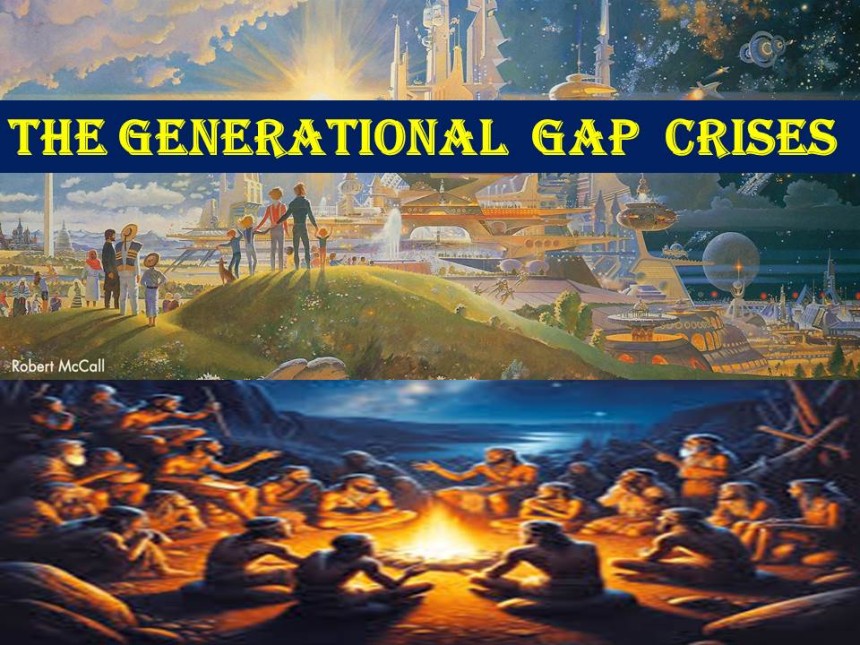

The Generational Gap Crises
The human story from generation to generation refers to the continuity of human life journeys, heritage, and experiences, values, and challenges passed down from one generation to the next. This write up "The Generational Gap Crises" is an attempt to summarize the said story of humans to reach current happenings in the world; especially the spark ignition of generation zee and labelled as generational gap crises.
بِسۡمِ ٱللهِ ٱلرَّحۡمَـٰنِ ٱلرَّحِيمِ
In the name of ALLAH, the Most Gracious, the Most Merciful
The Generational Gap Crises
A generation gap is the difference in attitudes, values, beliefs, and behaviors between different age groups, often leading to misunderstandings, but it's a natural part of society shaped by distinct formative experiences like technology and culture. While historically significant (like the 1960s), gaps arise from differing worldviews (e.g., work ethic, technology use), but empathy, communication, and appreciating diverse perspectives help bridge them, fostering learning and connection.
The generational gap crisis refers to the widening divide in values, technology, and economic circumstances between, primarily, Baby Boomers/Gen X and Millennials/Gen Z, causing increased societal, workplace, and familial friction. Driven by rapid technological advancement and economic disparity, this separation has arisen a debate about so called "The Generational Gap Crises". This essay attempts to bridge gap in comprehension about "The Generational Gap Crises"
If we are not believers in any religion and the decree of science is the only truth, then we can say that the history of the human race is a vast journey that began in Africa; which began sixty million years ago; when the human lineage began with chimpanzees; (Currently, we assume and understand this with out any objection). Early humans gradually began to adopt defining traits; such as bipedalism, increased brain size, and the ability to make and use tools. About 300,000 years ago, anatomically modern humans, Homo sapiens, emerged in Africa and eventually migrated across the globe, adapting to diverse continental environments.
This is said to have been followed by an early human species called Neanderthals, who began to live and breed together. They were the leaders in the pursuit of maximum survival for their fellow humans. They were nomadic and lived as hunter-gatherers. However, the Neolithic Revolution, about 12,000 years ago, is considered a turning point; when humans began to domesticate plants and animals, leading to permanent settlements, the rise of agriculture, and an increase in the human population. This cultural transition gave rise to complex societies and the first civilizations; which then gave rise to writing systems, and facilitated rapid technological advancement; Which reshaped human civilization and history on the planet; and which helped us humans become the dominant species on planet Earth.
Human evolution is a complex process, which includes the journey from ape-like ancestors to modern humans (Homo sapiens), with important stages including Australopithecus (walking on two legs), Homo habilis (tool making), Homo erectus (use of fire and migration), and finally the emergence of Homo sapiens (wise man). Which is like a "web" in evolutionary history; and just as the trunk and branches of plants grow stronger with the growth of trees; similarly, the existence of humans also grew but in brain power, which was expressed in a diverse culture with complex thinking; industry and crafts.
The story of man from generation to generation refers to the continuity of human life journeys, heritage, and experiences, values, and challenges passed down from one generation to another, which includes joy, sorrow, struggle, and positive and negative traditions; It is not just a family history but also a reflection of the development of civilization, which is related to family history to the national and global levels, such as the continuity seen in the arts, politics, and social attitudes, in which generations learn from each other and move forward (The Generational Gap Crises is modern age dogma).
The past two thousand years of human history have been a dynamic period of immense change, beginning around 25 AD with empires such as the Roman Empire and the Han Dynasty in China, which ruled a significant portion of the world's population. This period saw the spread and evolution of major world religions, extensive global trade routes, and the subsequent rise and fall of vast empires on all continents.
Moving towards the modern era; the Western world headed for an unprecedented cultural, economic, and political ascendancy; resulting in widespread European colonization in the Americas, Africa, and Asia. Key developments include the Renaissance, the Age of Discovery, the Scientific Revolution, the Industrial Revolution with inventions such as the steam engine, and the 20th-century acceleration of technology, medicine, and communications, including powered flight, computers, and nuclear power. The world's population also grew dramatically, from about 310 million in 1001 to about 6 billion by 2000 and 8 billion today. This period culminated in increasing globalization, two world wars, and the rise of international institutions such as the United Nations, which created the complex, interconnected modern world.
There are six major periods of world history, commonly used in educational contexts within the school and college system. These are described as the Foundations, Classical, Postclassical (Middle Ages), Early Modern, Modern, and Contemporary periods; covering human history prior to the present.
Human history is broadly divided into prehistory (Stone, Bronze, Iron Ages) and recorded history, which is further divided into the Classical period, the Middle Ages, the Early Modern period, and the Modern period, with sub-periods such as the Renaissance and the Industrial Age falling within these major divisions, cultural and cultural markers. The following are brief descriptions of the periods and their specific names, as given by historians; they may vary slightly:
The Foundations (Prehistoric to 600 BC): Covers early human development, the Stone Age, the emergence of agriculture, and the first civilizations (Mesopotamia, Egypt, Indus Valley, China).
The Classical Period (600 BC – 600 AD): The dominance of major empires such as Greece, Rome, Persia, Han China, and Maurya/Gupta India, establishing basic philosophies and political structures.
The Post-Classical Period (600 – 1450 AD): The Islamic Caliphate, Byzantine Empire, Tang/Song China, feudal Europe, Mongol Empire, and the Americas (Maya, Indus,"Middle Ages" marked by the (Aztec) civilization.
Early Modern Period (1450 - 1750 AD): Renaissance, Reformation, Age of Discovery, rise of European maritime empires, Scientific Revolution, and powerful Asian states (Ottoman, Mughal, Ming/Qing China).
Modern Period (1750 - 1900 AD): Enlightenment, Revolutions (American, French), Industrial Revolution, Imperialism, and Nationalism, fundamentally transforming society and technology.
Modern Age Period (1900 - present): World Wars, Cold War, Decolonization, Globalization, Technological Acceleration (Digital Age), and Ongoing Global Challenges.
Modern Myth; Man and Technology
The Generational Gap Crises is a dogma of current "Modern Age Period". The Modern Period saw somewhat more rapid development; largely due to the advancement of technology; And as a result, the differences between human generations began to become apparent as soon as a new technological tool was made available to vast usages; and the differences from one generation to another began to be seen as a possible threat or crises in a short period of time. So the timeline of one generation to another began to be described by the years of birth; this generation timeline can be described in a map with the names of the generations as follows:-
Silent Generation (1928-1945),
Baby Boomers (1946-1964),
Generation X (1965-1980),
Generation Y (Millennials) (1981-1996),
Generation Z (1997-2012),
And now Generation Alpha (Generation Alpha) who are born after 2012;
The generation before 1928 is not officially named, but the generation before 1900 includes the "Lost Generation" (those who were young and fought during World War I) and the "Greatest Generation" (those born between 1900 and 1928), while the "Silent Generation" is made up of those born between 1928 and 1945.
This sequence identifies groups of people born in different decades. Note that this classification was started after World War I and the new classification is given from one generation to the next with a fifteen-year gap.
What are the good and bad of the modern age generation?
The Silent Generation (1928-1945) grew up under the system of a new world order that emerged after World War I and, unlike the previous generation, this generation fought for "system change"; but this silent generation is known as the “system-building” generation. The Silent Generation’s childhood came at a time of crisis. The youngest Silents grew up through both the Great Depression (including, for some, Dust Bowl dislocations) and the terrible upheavals of World War II. The Silent Generation did this by keeping their heads down and working hard, thus earning themselves the label “silent.” Their attitude was one of risk-averseness and playing it safe.
The Silent Generation, born between 1928 and 1945, was dubbed “The Lucky Few” by American historian and economist Neil Ho because they were relatively few in number and yet made the greatest leaps in education, wealth, and life expectancy in history. The Silent Generation is often described as secure and hardworking. They grew up during a time of great upheaval, and they learned to value hard work, discipline, and self-reliance. They are known for their sense of duty and patriotism.
Baby Boomers (born ~1946-1964) were born after World War II and are known for their strong work ethic, financial strength, and cultural transformation in a new world established by the Silent Generation under a United Nations; but they are also criticized for contributing to economic inequality, environmental problems, and resistance to change; while younger generations sometimes blame them for failing to address modern challenges. They are still the ones who hold the world's key power centers even today. This generation drove the post-World War II prosperity, championed civil rights, and is still now influential consumers and grandparents with far more resources as compared to their elders; but negative perceptions focus on their ineffective role in the resource scarcity and low adaptability of the workplace in a growing world population, away from their own localities. Let's follow a little more about Baby Boomers in below:-
Strong work ethic and productivity: Often highly motivated, hardworking, and productive.
Economic Power: Emerging as the wealthiest generation, they have accumulated a lot of spending power and contribute a lot to the economy.
Social Progress: Driven significant social change, including the civil rights movement, and have become more tech-savvy and active online.
Generational Support: Many are now grandparents who are using their wealth to support younger family members.
Advocacy: Show increasing engagement in environmental causes and content creation.
Economic Stress: Benefited from economic opportunities (such as affordable education/housing); but they are all now scarce for younger generations; potentially increasing inequality.
Resistance to Change: Faced with change due to technology in the office environment; and may sometimes clash with younger generation colleagues over work-life balance.
Environmental Impact: Faced with criticism for their high consumption of fossil fuels and contributing to climate problems.
"Get off my lawn" mentality: Some become resistant to new ideas or change, clinging to old perspectives.
Boomers are a powerful, influential generation that has occupied key positions of power in the new millennium; and are known for significant achievements and economic contributions, but also for behaviors and decisions that have created dangerous challenges and intergenerational tensions, especially in the areas of economic justice and adaptation. Baby Boomers are still highly active and influential in a variety of fields, including politics, business, and entertainment. Many hold senior leadership positions or are prominently involved in the workforce and society, driven by a desire for long, healthy lives and continued engagement. Prominent Baby Boomers still lead the way. Aside from specific individuals, the Baby Boomer generation as a whole is notable for its consistently higher labor force participation rate than previous generations at the same age.
Many Boomers in the workforce are still working past the traditional retirement age of 65, either staying in their current jobs, pursuing new careers, or becoming consultants and coaches. Boomers command a significant percentage of disposable income and wealth in the United States and other countries around the world, making them a dominant force in consumer spending, especially in areas such as travel and housing. They remain a large and politically active voting bloc, with significant representation in politics and state legislatures. This trend indicates that the Baby Boomers are increasingly influencing the world’s culture, economy, and politics as they age.
Generation X (1965-1980); Generation Xers are a financial powerhouse. They are the highest-earning generation, and they have built real wealth over time. They are also more likely to own property than Baby Boomers, with some of them reducing their rent, moving in with family, or moving into senior living communities.
Gen X is often called the “forgotten generation” as well as the “resilient” generation, “because they were often left unsupervised at home or after school until their parents came home from work. But this “resilient generation” became resourceful at a young age due to the absence of parents.
Gen X grew up during the AIDS epidemic, the end of the Cold War, the Challenger disaster, the crime wave of the late 80s and early 90s, 9/11, the Great Recession, COVID-19, and managed to survive after the cancellation of “my so-called life.” According to The Economist, Gen X is the most financially disadvantaged generation. Unlike Boomers, who thrived in the post-war prosperity, or Millennials, who embraced the digital economy, Gen X has faced the collapse of stable wages, insecure jobs, and the collapse of traditional pension systems.
Gen X Gen Xers are focused on leaving behind a fear of the unknown and chaos. They will become the sandwich generation; they will care for aging parents while raising children; they will witness firsthand what happens when someone dies without preparation? Generation Xers are generally described as resourceful, independent, and the first generation to grow up with personal computers. Gen Xers often have liberal views on social issues.
Celebrities from Generation X include actors such as Brad Pitt, Jennifer Aniston, Leonardo DiCaprio, Will Smith, Julia Roberts, and Robert Downey Jr., musicians such as Kurt Cobain, tech leaders such as Elon Musk, and cultural icons such as Princess Diana and J.K. Rowling. Generation Xers are known for their diverse talents and are known for their independence, resourcefulness, and shaping early internet culture.
Generation Y (Millennials) (1981–1996). Generation Y is tech-savvy, experience-oriented, Collaborative, and known for valuing authenticity, they often challenge old structures for positive change. However, they also face criticisms such as entitlement, short attention spans due to constant digital input, preference for instant gratification, and economic challenges (such as high debt) that affect traditional markers such as home ownership, leading to perceptions of frugality or materialism.
This gen is highly adept with technology, seamlessly integrating it into everyday life, making them excellent problem solvers in digital spaces. They value experiences (travel, adventure) over possessions, seeking personal growth and unique moments. Prefer team-based work environments and challenge rigid categorization by bringing in new perspectives. Appreciate real brands and causes, seek purpose and real connection, and are less influenced by traditional advertising. Greater awareness of social and environmental issues often leads to positive change.
Multi-screen use can cause low attention spans and make it difficult to focus on deep work Can become. The demands for immediate feedback, flexibility, and rapid career advancement can clash with older generation, which is sometimes perceived as entitlement. This gen is facing higher education debt and unaffordable housing, which shifts values from owning things (difficult), to experiencing things (more accessible). They can be overly concerned with documenting experiences for social approval. They sometimes seen as less committed to traditional employers. This generation also seems to contradict the work ethic of previous generations, preferring new challenges or flexible arrangements.
Generation Z (1997-2012) are digital natives who focus on their technological fluency, mental health, diversity, and purpose-driven values, making them innovative and inclusive. However, they face challenges such as increased anxiety, digital addiction, phone dependence, and economic pressures (cost of living, student), who are likely to be laid off if needs are not met and lack flexibility, although they are often practical and resourceful.
Generation Z is a generation that is highly comfortable with technology, social media, and digital communication, driving innovation. They prioritize purpose, authenticity, inclusiveness, diversity, and mental well-being in work and life. Despite challenges, they often focus on saving, investing, and financial stability due to economic realities. They are independent, adaptable, and quick learners, often seeking information online. They are strong advocates for social justice, equality, and changing systems. A growing number are defining their own paths through freelancing and creating online businesses.
Generation Z experiences high rates of anxiety, depression, and stress, which are linked to constant online comparisons and social pressure. They are addicted to phones/screens, have short attention spans due to short-form content, and are constantly focused on social media judgment. They face competition from high living costs, student debt, and delayed milestones like home ownership. If employers don’t meet the demands for flexibility, purpose, or good mental health support, it’s sometimes seen as a lack of loyalty. They can be criticized for being sensitive or inflexible, although this is often linked to navigating unique digital pressures. They also face rising rates of vaping (nicotine) use and sleep deprivation.
Generation Z’s strengths lie in their digital fluency and desire for a more just, authentic world, while their challenges stem from the very environment they grew up in — a hyperconnected, economically unstable digital age.
The Grim Tale of the Modern Age Generation
The above information might suggest that the story of the past 100 years of the human race is like a romantic film full of joys and songs that can be proudly told to future generations. But it’s not; this is an opportunity to look at history correctly and whenever this story is comprehended carefully and objectively, then this era full of joyous songs; will become a sorrowful and painful tale and one may understand the dark deeds of this tragic era in a meaningful way.
From the Silent Generation (1928-1945) to the generations born after Generation Alpha 2012, this story identifies groups of people born in different decades in a sequence; and it is noteworthy that this classification begins after the First World War. And secondly, this is all the story of Western civilization or developed countries and poor countries cannot be related to it. So we should go back a little and look at the era before the First World War.
Before the First World War, the world lived under the Pax Britannica; the era under the British Crown, about which it was said that the sun never set on its power. The British Crown, along with France and other European countries, had colonized most of Asia and Africa as colonial rulers. Only the Ottoman Empire (a Muslim caliphate based in Turkey and Arabia) was outside its control.
All generations born after World War I to Generation Z have grown up with respect and courtesy for their elders and it is possible to ignore all the interpretations, assumptions, concepts and structures they established. Before World War I, there were no borders and the structure of the existence of nations and countries was different and peace and prosperity in the world was better; because migration and transportation of goods and trade were free and there was no grouping and alignment in land areas. Humans lived on their instincts or preferences. Until then, despite the occupation of the feudal system, Western civilization and technology had not taken hold of the whole world.
Humans were living on the instinct of survival of the species which was based on some physical needs; Which are food, water, air (oxygen), shelter, and sleep/rest; which are the basis of human body life; then there are safety/security (protection from harm, health, stability) and essential cultural social/emotional needs; such as love, belonging, companionship, and self-esteem, are important needs for all hierarchical levels of life. Human instincts are centered on survival and reproduction, which are often categorized into basic drives such as self-preservation (fight/flight, fear), social connection (kinship, group structure, tribalism), and reproduction/sexuality, curiosity, nurturing, need for food, aggression, etc.
Two movements went hand in hand in Western European nations; scientific progress and colonial conquest; this journey of cultural superiority developed in the eighteenth century and was followed by complete conquest of the earth in the nineteenth century. But the journey of science continued and in the twentieth century discoveries and inventions accelerated communication and mobility. Human instincts and needs remained the same, but it became easier and faster for humans to achieve it. It would have been better if humans had established a system of fair distribution of intercontinental needs and available resources and promoted harmony among them; but the opposite happened.
The leaders of European nations, under a secret movement, devised a system of division and plunder. They killed millions of people through World Wars I and II; spread hunger and poverty; and divided humans into developed nations and underdeveloped nations or First World and Third World or Global North and Global South with philosophies and incentives. And they devised a system of unequal preferential markets and fueled discrimination and hatred among humans. Silent Generation born from (1928-1945) to Generation Y (Millennials) (1981-1996) accepted these assumptions and formations and chose their own paths in life. These generations took advantage of high-speed communication (by air, water and land) and received news and information from around the world through radio and television waves, but did not pay attention to the hatred and discrimination that spread between people across continents; because they were taught the lesson of dividing borders and nations and discrimination was justified.
Closing Remarks
With the growing penetration of Generation Z (1997-2012), world affairs have started to deteriorate; this generation is still young and has not yet reached any positions of power in the world's system of affairs; but its element of rebellion is starting to show up. And this has become possible only because of the activation of the digital age. This is the era of high-speed internet and every young person has a mobile / cell phone in their hands, which connects them to the whole world; and especially without any discrimination or hatred. And the most important element is that they are more in numbers in the third world.
The world leaders championed and taught the whole world the lessons of democracy under the United Nations by propagating values of Western civilization; and assured the superiority of human rights, freedom (person, expression, communication), and the advancement of human values. And it was said that it is important for all humans to work together for peace and prosperity. This message has been well-received since the Second World War. After Pax Britannica, Pax Americana gave American elite a big push as super power; which conducted a lot of air and military operations for peace and were justified n the name of world order. But the high-speed public information received on a cell phone exposed the propaganda that has been going on for fifty years. The lies and magic of Zionist Judaism were caught and the truth is starting to appear black and white.
Generation Z is a generation living a new lifestyle and is truly a global village citizen; who is growing up with a mindset that transcends borders of any kind. They are perhaps the generation that best reflects the United Nations Charter; the concept of an international human being that may not have come out of utopia but is embedded in the thoughts of this Generation Z. Generation Z is perhaps seeing man today through the eyes of man and in this reflection, no color, language or region and religion is becoming a barrier. They are born in one country, live in another country and have taken citizenship; but are working and earning in another country. The Generation Zee is citizen of the digital age and breathe; eat; drink and live life through cell phones. They truly believe in the dignity and respect of man and live beyond political differences. This is why Generation Z protested in universities around the world against Israel’s inhumane attack on Gaza. This protest was an expression of Generation Z’s compassion for one another and hatred and anger for the oppressors.
Now no celebrity, no critic and no so called intellectual can fake an event. And the principles under which this Generation Z (1997-2012) has gone through the stages of education and training and the criteria to which they are bound by training; under which they have come to know the truth; and which they are also expressing openly. This undesired reflection of generation Z is a severe shock to Baby Boomers and Generation X and the idea that they (Generation Boomers and Xers) have spent their entire lives in a deception is even more painful. The sudden tragic end of a good romantic action film is also fatal; and perhaps this is also the reason why Baby Boomers and Xers have declared Generation Z as rebels.
Conclusion
The trajectory of human civilization has indeed spanned millennia, evolving from small nomadic groups to complex global societies, often moving at a pace dictated by necessity, agriculture, and slow technological adaptation. While the early, long-term history of humanity (99% of which was in the Stone Age) was characterized by slow, incremental changes in survival techniques, it was not always entirely calm, as it was often punctuated by harsh environmental conditions and high infant mortality.
The development of families, tribes, and social structures was central to human evolution, acting as a "coevolving suite" of traits that provided a competitive advantage in survival and resource control. This social organization allowed early humans to manage a long developmental period, secure resources, and nurture the next generation through cooperation rather than individual effort. Generation gap was not a crises but a responsibility of older ones to offer safe and secure future to next generation and this continued till advent of modern age.
Reducing the generational gap crisis requires a combination of empathy, open communication, and intentional efforts to foster mutual respect between different age groups, both within families, in the workplace and larger context of societies and world citizen ship. The gap is primarily driven by rapid technological advancement, cultural shifts, and differing values, but it can be bridged by focusing on nurturing families and societies based on mutual human and moral ethical values. Let’s work for our safe and secure future and guide our “Kids” Gens Zee, Alpha and Beta to be good humans for whole of humanity across the globe.

Why Is Dubai Yacht Leisure the Best Way to Relax Both Body and Mind?
Quick Answer: Why Can Dubai Yacht Leisure Help Visitors Truly Relax Both Body and Mind?


How to Write Flirty Text Messages That Actually Get a Reply
Learn how to write Flirty Text Messages that feel natural, fun, and confident. Get practic...


Counter-IED Market to Reach US$ 1,406.7 Million by 2025 as Defense Req...
