
What Headwear Do Arabians Wear? Muslim Garments Explained
Learn what headwear Arabians wear, its meaning, types, regional styles, and connection with Muslim garments and cultural identity.
What Headwear Do Arabians Wear? Inside Muslim Garments and Cultural Identity
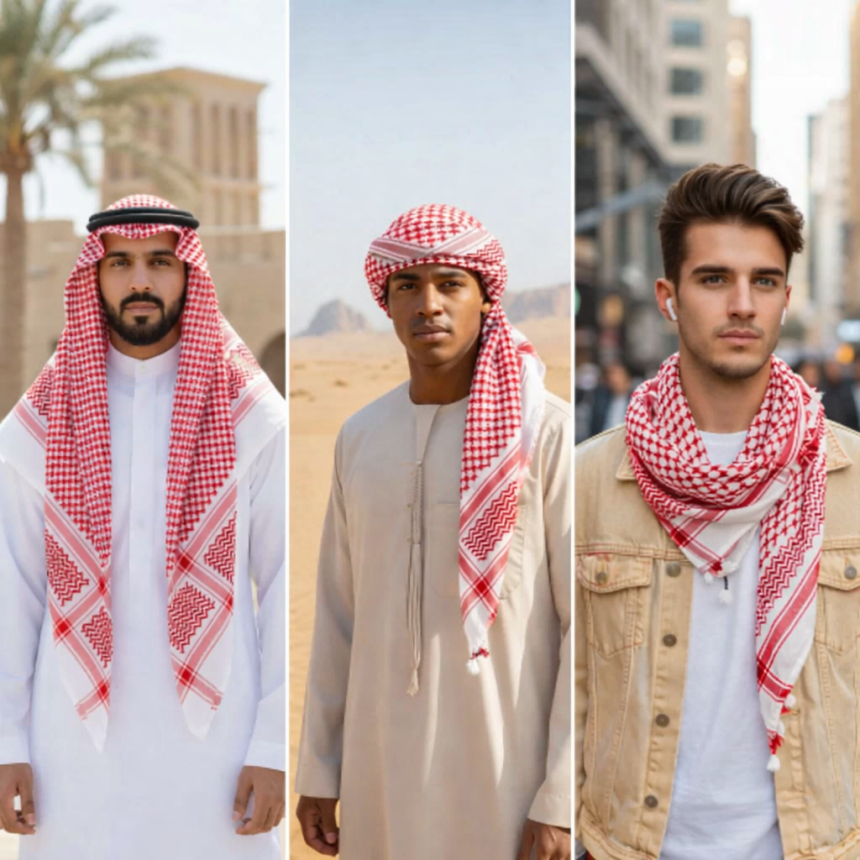
Arabians wear different types of traditional head coverings depending on their region and culture. There is no single universal style.
The most common forms include:
- Keffiyeh – patterned cloth commonly worn in Levant regions
- Ghutra – plain white head covering popular in Gulf countries
- Shemagh – red-and-white patterned variation used in desert regions
- Agal – black rope used to secure the head covering
- Turban-style wraps – found in North Africa and rural areas
Each of these belongs to the wider category of Muslim garments, but each carries its own identity and cultural meaning.
So when asking what headwear do Arabians wear, the correct answer is: it depends on the region, tradition, and lifestyle.
What Headwear Do Arabians Wear?
Arabians wear different types of traditional head coverings depending on their region and culture. There is no single universal style. The most common forms include: Keffiyeh – patterned cloth commonly worn in Levant regions Ghutra – plain white head covering popular in Gulf countries Shemagh – red-and-white patterned variation used in desert regions Agal – black rope used to secure the head covering Turban-style wraps – found in North Africa and rural areas Each of these belongs to the wider category of Muslim garments, but each carries its own identity and cultural meaning. So when asking what headwear do Arabians wear, the correct answer is: it depends on the region, tradition, and lifestyle.
Why Arab Headwear Exists
Arab headwear was not originally designed for style. It was created out of necessity and later became a cultural identity.
Protection from environment
Arab regions often have extreme weather conditions, so headwear helps protect from: strong sunlight heat exposure sand and dust storms
Practical everyday use
The fabrics used are: lightweight breathable easy to adjust during movement This made headwear ideal for people working outdoors or traveling long distances.
Cultural transformation
Over time, practical use turned into tradition. What began as survival clothing became a symbol of: identity heritage social belonging This is why it is strongly linked with Muslim garments, where clothing is both functional and meaningful.
Regional Styles of Arab Headwear
Arab headwear changes significantly depending on geography.
Gulf Countries (Saudi Arabia, UAE, Qatar)
In Gulf countries, men typically wear: white ghutra or red-and-white shemagh secured with a black agal paired with a thobe This style is neat, structured, and widely recognized. It represents formality, unity, and cultural tradition.
Levant Region (Palestine, Jordan, Syria, Lebanon)
In this region, headwear is more expressive: black-and-white keffiyeh worn loosely on the head or shoulders strong cultural symbolism It is often associated with history, identity, and heritage rather than formality.
North Africa (Morocco, Algeria, Tunisia)
In North Africa, headwear is more flexible: turban-style wraps loose cloth coverings adapted to desert and rural lifestyles These styles are more practical and influenced by local traditions
Cultural Meaning Behind Arab Headwear
Arab headwear is not only practical , it carries deep meaning. It often represents: cultural identity family or tribal belonging respect and tradition historical continuity In many societies, what headwear do Arabians wear can even indicate where a person comes from or what cultural group they belong to.
Connection Between Headwear and Muslim Garments
Headwear is part of a complete clothing system rather than an isolated piece.
Traditional Muslim garments include:
- thobe or dishdasha (long robe)
- loose-fitting clothing designed for modesty
- breathable fabrics suitable for hot climates
Headwear completes this system by adding:
- protection from environment
- cultural identity
- traditional appearance
Together, they form a unified expression of Arab culture and Islamic modesty.
Modern Use of Arab Headwear
Today, Arab headwear is not limited to traditional settings. It is commonly seen in: cultural and religious events everyday wear in Gulf countries modern fashion adaptations global cultural influence in streetwear This shows that Muslim garments are evolving while still preserving their roots.
Why Arab Headwear Still Matters
Even in modern society, headwear continues to play an important role because: it preserves cultural identity it connects generations it remains practical in harsh climates it represents heritage and tradition So, what headwear do Arabians wear is not just a clothing question , it is a cultural one.
FAQ Section
What headwear do Arabians wear?
Arabians wear keffiyeh, ghutra, shemagh, and turbans depending on the region. These are traditional coverings that form part of Muslim garments and cultural identity.
What is Arabian headwear called?
Arabian headwear is commonly called keffiyeh, ghutra, or shemagh. The name depends on style and region.
What do Saudi Arabians wear on their heads?
Saudi men usually wear a white ghutra or red-and-white shemagh secured with a black agal, often paired with a thobe.
Is keffiyeh Palestinian or Arab?
The keffiyeh is an Arab cultural garment worn across many countries. It is strongly associated with Palestine but is not limited to one nation.
Conclusion
So, what headwear do Arabians wear? It is not a single item but a diverse system of traditional coverings including keffiyeh, ghutra, shemagh, and turbans. Each style reflects a different region, environment, and cultural identity. These head coverings are part of Muslim garments, blending practicality with tradition. They continue to represent heritage, identity, and cultural pride across the Arab world.