Understanding MTBF Prediction & Calculations: What It Means for Product Reliability
Learn what MTBF (Mean Time Between Failures) really means, how it’s calculated, and why it matters for everyday products and electronics. A simple guide for consumers and professionals.
MTBF Prediction & Calculations: A Practical Guide to Product Reliability
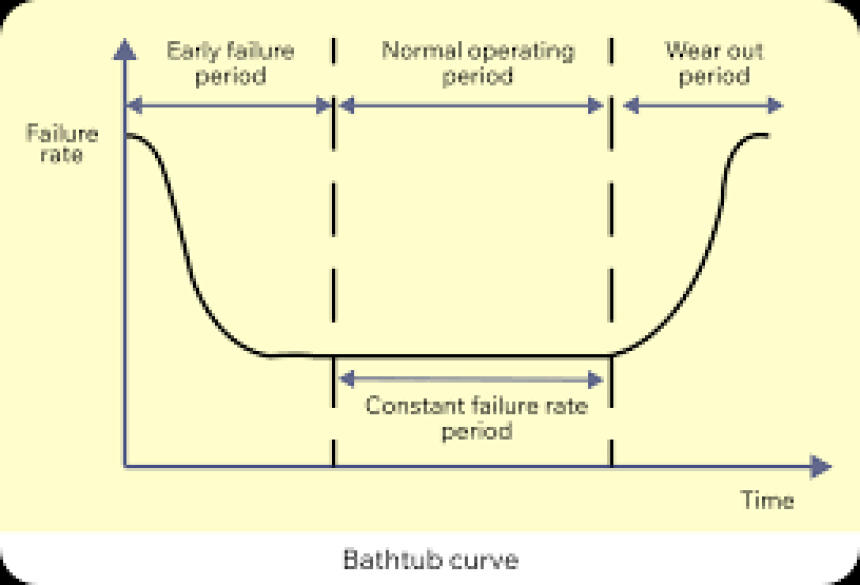
When you purchase a piece of technology—whether it's a smartphone, laptop, or a home appliance—you're investing not just in performance, but in reliability. One key factor that influences product reliability is MTBF, or Mean Time Between Failures. But what does that really mean? And how does it affect your experience as a consumer?
In this blog post, we'll explore what MTBF is, how it's predicted and calculated, and why it plays such a crucial role in product design and long-term value.
What is MTBF?
MTBF (Mean Time Between Failures) is a standard measure used to predict the reliability of a product. It represents the average time a device operates before experiencing a failure. For example, if a manufacturer claims an MTBF of 100,000 hours, it means that on average, the device can operate for 100,000 hours before failing.
It’s important to note that MTBF is a statistical prediction, not a guaranteed lifespan. It doesn't mean every single product will last that long, but rather, it's an average across a large number of units.
Why Does MTBF Matter?
For consumers, MTBF predictionhelps answer the big question: “How reliable is this product?”
Here’s why MTBF is important:
- Informs buying decisions: Higher MTBF typically suggests higher reliability.
- Predicts downtime: MTBF helps estimate how often a product might fail, which is crucial for mission-critical applications.
- Supports warranty and maintenance planning: Products with lower MTBF may require more frequent maintenance or replacements.
For industries such as aerospace, healthcare, or data centers, MTBF is vital. But even for everyday users, it offers insight into how much trust you can place in a product.
MTBF vs Lifespan: What’s the Difference?
It's easy to confuse MTBF with a product’s expected lifespan, but they’re not the same.
- MTBF refers to the average time between failures in repairable systems.
- Lifespan or End of Life (EOL) refers to the total time a product is expected to function before it becomes unusable or obsolete.
For example, a laptop may have an MTBF of 50,000 hours and a lifespan of 5 years. This means within those 5 years, it's statistically expected to operate reliably for most of the time, with occasional failures.
How is MTBF Calculated?
The MTBF formula is fairly straightforward for basic calculations:
MTBF = Total Operating Time / Number of Failures
Example:
Let’s say 100 devices were tested, and together they ran for 1,000,000 hours before 10 of them failed.
MTBF = 1,000,000 hours / 10 failures = 100,000 hours
Considerations in Real-World MTBF Predictions:
While the formula looks simple, real-world MTBF calculations can get complex due to:
- Environmental conditions (temperature, humidity, usage patterns)
- Component failure rates (semiconductors, fans, hard drives, etc.)
- Operating stress (voltage, mechanical load, frequency of use)
Because of this, companies often use prediction models like MIL-HDBK-217, Telcordia SR-332, or software like Reliability Workbench for accurate MTBF forecasting.
MTBF in Electronics and Consumer Products
If you've ever noticed the term "MTBF rating" on electronics like servers, routers, or SSDs, that’s no accident. In the electronics industry, MTBF is often used to:
- Demonstrate product reliability
- Support warranty claims
- Differentiate premium models from lower-cost versions
Real-World MTBF Examples:
Solid State Drives (SSDs): Often rated with MTBF values of 1 million to 2 million hours.
Data center equipment: Enterprise routers and switches may show MTBF values over 200,000 hours.
Consumer electronics: Devices like laptops or smart TVs may not always advertise MTBF, but internal components (like fans or hard drives) are often rated this way.
Limitations of MTBF
It’s important to interpret MTBF with a healthy dose of realism. Here are a few limitations to keep in mind:
- Statistical, not guaranteed: Just because a product has a 1 million hour MTBF doesn’t mean it’ll last 114 years.
- Doesn’t predict the first failure: MTBF doesn’t tell you when the first failure will occur.
- Best suited for large-scale analysis: MTBF is more meaningful when analyzing large batches, not single units.
- Not always comparable across vendors: Different companies may use different calculation methods, making apples-to-apples comparison tricky.
Why Consumers Should Care About MTBF
While MTBF might sound like a behind-the-scenes engineering term, it can help you:
- Make informed purchases by comparing product reliability.
- Assess warranty value: Higher MTBF may mean less need for extended warranties.
- Choose between brands: Some brands back up their quality claims with high MTBF ratings.
- Understand failures better: Knowing MTBF helps contextualize when a device fails unexpectedly.
Final Thoughts
MTBF prediction and calculations may seem technical, but they play a huge role in the everyday products we rely on. Whether you're buying a new hard drive or setting up a home office, knowing how to interpret MTBF can help you make smarter, longer-lasting investments.
Next time you see an MTBF rating in a product spec sheet, you’ll know—it’s not just a number; it’s a statistical promise of reliability.
Eight Mistakes Buyers Make With .22 LR and Big-Bore Rifle Ammunition
Eight common mistakes with .22 LR and big-bore ammunition, from mixing look-alike .458s to...

Eight Mistakes Buyers Make With .22 LR and Big-Bore Rifle Ammunition
Eight common mistakes with .22 LR and big-bore ammunition, from mixing look-alike .458s to...

Crypto Algo Trading Software Development: Cost, Process, and Business...