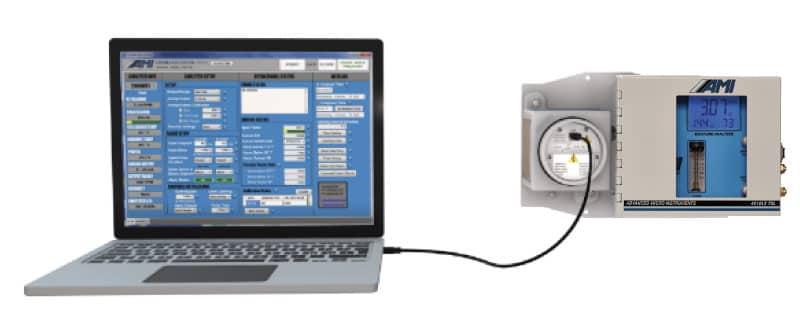

Trace Moisture Analyzer | Complete Guide to Ultra-Low Moisture Measurement
A Trace moisture meter is designed to detect extremely low moisture levels, often measured in parts per million (ppm) or parts per billion (ppb).
In many industrial processes, even a tiny amount of moisture can create serious problems. Excess water vapor can cause corrosion, reduce product quality, damage equipment, and interrupt production systems. Because of these risks, industries rely on advanced instruments that can measure tiny amounts of moisture in gases and liquids. One of the most reliable instruments used for this purpose is the Trace moisture analyzer.
A Trace moisture meter is designed to detect extremely low moisture levels, often measured in parts per million (ppm) or parts per billion (ppb). These devices are widely used in industries such as natural gas processing, petrochemicals, pharmaceuticals, and semiconductor manufacturing, where precise moisture control is essential.
What Is a Trace Moisture Analyzer?
A Trace moisture analyzer is a specialized instrument used to measure tiny concentrations of water vapor in gases or liquids. Unlike basic humidity meters, these analyzers are capable of detecting moisture at extremely low levels.
Many modern analyzers can measure moisture down to the ppb level, providing highly accurate readings for sensitive industrial processes. For example, some advanced analyzers can measure water molecules in industrial gases with extremely high sensitivity and real-time monitoring capabilities.
These devices help engineers monitor and control moisture levels in systems where even a slight change in humidity could affect product quality or process performance.
How a Trace Moisture Analyzer Works
The working principle of a Trace moisture meter depends on the sensor technology used. Several different technologies are used to detect ultra-low moisture levels.
Electrolytic sensors measure moisture through an electrochemical reaction that follows Faraday’s law of electrolysis. This method can measure moisture concentrations ranging from very low ppb levels to several thousand ppm.
Quartz crystal microbalance technology is another commonly used method. It measures changes in the frequency of a crystal caused by water molecules attaching to the sensor surface. This allows the instrument to detect tiny moisture levels with high accuracy.
Surface acoustic wave sensors are also used in some advanced systems. These sensors detect slight changes in wave propagation caused by moisture interacting with the sensor surface.
Importance of Measuring Trace Moisture
Monitoring trace moisture levels is critical in many industrial applications. Even a small amount of water vapor can create serious operational issues.
For example, in natural gas pipelines, moisture can lead to hydrate formation and corrosion. In semiconductor manufacturing, moisture contamination can damage sensitive electronic components. Pharmaceutical production also requires extremely dry environments to maintain product stability.
A Trace moisture meter helps industries maintain strict moisture control, ensuring safe operations and high product quality.
Key Applications of Trace Moisture Analyzers
Trace moisture measurement is important across many industries. One of the most common applications is in the petrochemical industry, where moisture monitoring helps maintain gas purity and protect pipelines.
Industrial gas production also relies heavily on moisture monitoring. High-purity gases used in manufacturing must remain extremely dry to maintain performance.
Power generation plants use moisture analyzers to monitor gases used in turbines and generators. Excess moisture can reduce efficiency and cause equipment damage.
In addition, a Trace moisture meter is commonly used in semiconductor manufacturing, pharmaceuticals, aerospace systems, and chemical processing plants where moisture control is critical for product reliability.
Features of Modern Trace Moisture Analyzers
Modern moisture analyzers include many advanced features that improve performance and reliability.
High sensitivity is one of the most important features. Many instruments can measure moisture concentrations from ppb to ppm levels.
Fast response time is another key advantage. Advanced analyzers can quickly detect changes in moisture levels, allowing operators to take action before problems occur.
Some systems also include multiple measurement channels, allowing them to monitor several processes at the same time. In addition, modern analyzers often feature digital displays, data logging, and communication interfaces for integration with industrial control systems.
These features make the Trace moisture meter a powerful tool for continuous process monitoring.
Advantages of Using Trace Moisture Analyzers
There are several benefits to using Trace moisture meter in industrial environments.
First, they provide extremely accurate moisture measurements. This accuracy helps industries maintain strict environmental conditions and avoid costly contamination issues.
Second, these analyzers support continuous monitoring, allowing operators to track moisture levels in real time.
Third, they help reduce maintenance costs by preventing corrosion and equipment damage caused by excess moisture.
A Trace moisture meter also improves production efficiency by ensuring that gas and air systems remain within the required moisture limits.
Factors to Consider When Choosing a Trace Moisture Analyzer
Selecting the right moisture analyzer requires careful evaluation of several factors.
Measurement range is one of the most important considerations. Different applications require different moisture detection ranges, from ppm to ppb levels.
Sensor technology is another key factor. Different sensor types offer different advantages in terms of accuracy, response time, and maintenance requirements.
Environmental conditions must also be considered. Some analyzers are designed for laboratory use, while others are built to operate in harsh industrial environments.
Choosing the right Trace moisture meter ensures reliable performance and long-term measurement stability.
Maintenance and Calibration
Like any precision instrument, moisture analyzers require periodic maintenance and calibration to maintain accuracy.
Regular calibration ensures that the analyzer continues to provide reliable measurements over time. Many modern analyzers include automated calibration features or internal verification systems to simplify maintenance.
Routine inspection of sampling systems, filters, and sensors also helps maintain accurate readings and extend the lifespan of the instrument.
Future of Trace Moisture Measurement Technology
Advances in sensor technology and digital monitoring systems are improving the capabilities of moisture analyzers. New instruments offer higher sensitivity, faster response times, and improved durability.
Wireless connectivity and cloud-based monitoring systems are also becoming more common. These technologies allow engineers to monitor moisture levels remotely and analyze data more efficiently.
As industries continue to demand higher product quality and process reliability, the role of the Trace moisture meter will become even more important in modern industrial operations.
Conclusion
Moisture control plays a vital role in many industrial processes. Even tiny amounts of water vapor can affect product quality, damage equipment, and reduce system efficiency.
A Trace moisture analyzer provides precise measurement of ultra-low moisture levels, helping industries maintain optimal operating conditions. With advanced sensor technologies, the ability to monitor in real-time, and dependable performance, these analyzers are crucial for industries that need precise moisture measurement and control.


WOP Slot: A Modern Online Gaming Experience for Entertainment Enthusia...
WOP Slot: A Modern Online Gaming Experience for Entertainment Enthusiasts