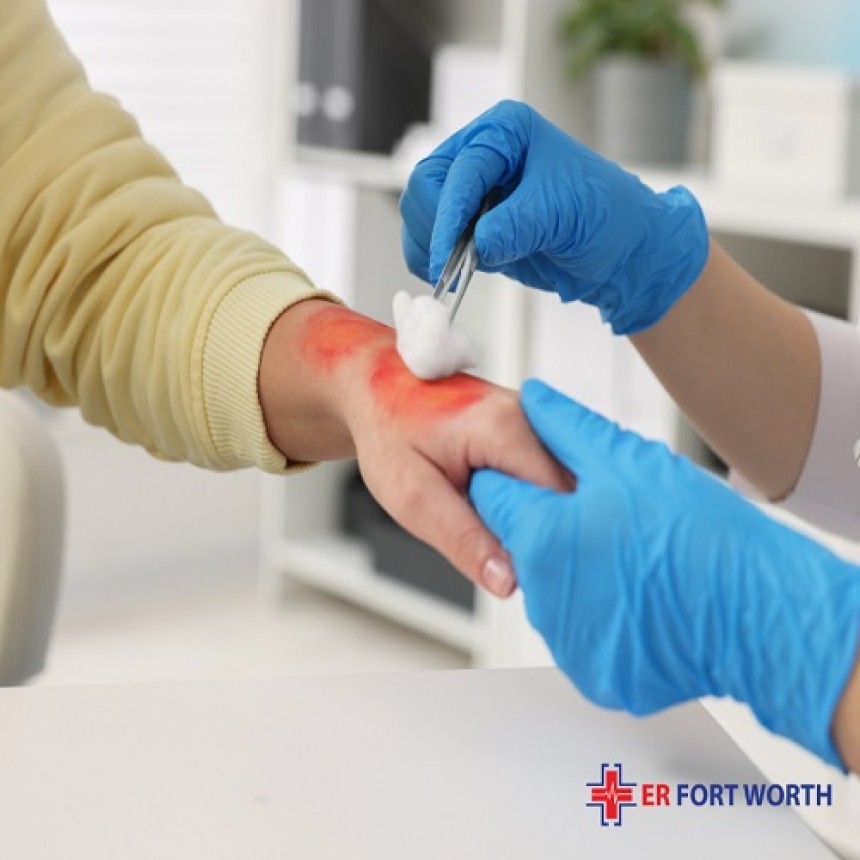

Burn injuries are common in homes, workplaces, and daily life. Whether cooking, ironing, ironing, handling hot water, or touching a hot object, anyone can face a small burn unexpectedly. Knowing how to respond immediately is important because timely care helps reduce pain, prevent infection, and support faster healing. In this guide, we will explore minor burn treatment in easy words, step by step, so anyone can understand and apply it safely. We also explain when a burn is no longer minor and requires professional medical help from trusted emergency centers like ER OF FORT WORTH, where expert doctors are ready 24/7 to provide fast and reliable care.
Before starting treatment, it is important to understand what a minor burn is. Burns are classified in three main levels:
1️⃣ First-Degree Burns
- Affect only the top layer of skin
- Cause redness, mild swelling, and pain
- No blisters
Examples:
- Touching a hot pot briefly
- Mild sunburn
2️⃣ Second-Degree (Small) Burns
- Affect deeper skin layers
- Cause redness, pain, swelling, and blisters
- Can still be considered minor if small and not on sensitive areas
Sensitive Areas Where Burns Are More Serious
Even small burns are serious if they occur on:
- Face
- Hands
- Feet
- Private areas
- Across major joints
- On children or elderly adults
In these cases, immediate medical attention is recommended.
✔ Step 1: Remove the Heat Source
If clothing, metal, or objects are still hot, move away immediately to stop further damage to the skin.
✔ Step 2: Cool the Burn
Place the burned area under cool running water for 10–20 minutes.
Benefits:
- Reduces pain
- Limits skin damage
- Prevents deeper burning
Avoid:
- Ice (can damage the skin more)
- Very cold water
✔ Step 3: Gently Clean the Area
Use mild soap and clean water.
Do NOT scrub aggressively.
✔ Step 4: Do Not Burst Blisters
Blisters protect the area from germs.
Only a professional should drain them.
✔ Step 5: Apply Burn Ointment
Suitable options include:
- Aloe vera gel
- Antibiotic ointment
- Silver sulfadiazine cream (if recommended)
✔ Step 6: Cover with a Sterile Bandage
Use:
- Non-stick gauze
- Medical tape
Avoid cotton that sticks to skin.
✔ Step 7: Manage Pain
Over-the-counter medicines can help with discomfort:
- Acetaminophen
- Ibuprofen
Many home remedies can support healing when used correctly:
🌱 Aloe Vera
- Soothes pain
- Fights bacteria
- Helps skin heal faster
🥚 Honey
- Natural antibacterial
- Reduces inflammation
🥛 Cool Milk Compress
- Relieves burning sensation
- Moisturizes skin
🌿 Coconut Oil (After 24–48 Hours Only!)
- Helps skin heal
- Should not be applied to fresh burns
🧊 Cold Compress
- Reduces swelling
- Relieves pain
- Must not be frozen ice
🥒 Cucumber Slices
- Naturally cooling
- Hydrates the skin
These items may worsen the burn:
🚫 Butter
🚫 Toothpaste
🚫 Turmeric paste
🚫 Kitchen oil on fresh burns
🚫 Raw egg
These trap heat or increase infection risk.
Changing dressing daily keeps the area clean and infection-free.
Steps
- Wash hands
- Remove old dressing gently
- Clean the wound with mild soap and water
- Pat dry with clean towel
- Reapply ointment
- Cover with new sterile bandage
Signs of Infection
- More redness
- Pus
- Increased pain
- Foul smell
- Fever
- If you notice any of these signs, seek help immediately at ER OF FORT WORTH.
Seek emergency care if:
🔥 Burn is larger than 3 inches
🔥 Burn is on the face, private area, feet, or hands
🔥 There are deep blisters
🔥 Skin turns white, brown, or black
🔥 Pain becomes severe
🔥 Infection signs appear
🔥 Burn happens in children or elderly adults
Emergency rooms like ER OF FORT WORTH offer:
- Immediate medical attention
- Professional wound dressing
- Pain management
- Advanced burn care
Burns in children are sensitive and need gentle handling.
Do
✔ Cool the burn under water
✔ Use mild ointments
✔ Cover with sterile bandage
✔ Give child-friendly pain relief
Don’t
❌ Apply toothpaste
❌ Let the child scratch or peel skin
❌ Ignore swelling or fever
If a child is in pain or the burn looks deep, visit ER OF FORT WORTH immediately.
Emergency rooms offer advanced care such as:
- Debridement (removing damaged tissue)
- Professional blister management
- IV antibiotics
- Pain control
- Specialized dressings
- Tetanus shots if needed
This ensures faster and safer healing.
Good nutrition helps the body repair itself.
Best Foods
- Eggs
- Milk
- Chicken
- Fish
- Spinach
- Apple
- Carrots
- Nuts
- Vitamin C-rich fruits
Drink Plenty of Water
Hydration supports tissue repair.
🧡 How to Prevent Minor Burns at Home
In the Kitchen
- Use oven gloves
- Turn pot handles inward
- Keep kids away from hot surfaces
With Children
- Keep hot drinks away from edges
- Use stove guards
- Check bathwater temperature
Around the House
- Unplug irons when not in use
- Avoid placing metal near heat
- Keep flammables away from stoves
Outdoors
- Use sunscreen
- Stay hydrated
- Wear protective clothing
1️⃣ Should I apply ice on a burn?
No. Ice can damage the skin further. Use cool running water instead.
2️⃣ Can I pop blisters?
Not at home. Blisters protect the skin. Only professionals should drain them.
3️⃣ What helps with burning pain quickly?
Running cool water for 10–20 minutes is the best first response.
4️⃣ When should I visit ER OF FORT WORTH?
If the burn is large, painful, infected, on sensitive areas, or in children or elderly patients.
5️⃣ Can toothpaste be used?
No. It increases infection risk and delays healing.
6️⃣ How long does a minor burn take to heal?
Typically 3–21 days depending on depth and care.