
The Technology Behind Microsoft Azure Peering Service
The fast and reliable cloud connectivity is crucial for businesses in today’s tech world; Microsoft Azure Peering Service is designed to provide organizations with optimized
The fast and reliable cloud connectivity is crucial for businesses in today’s tech world; Microsoft Azure Peering Service is designed to provide organizations with optimized, private, and high-performance connections to Azure, enabling seamless cloud experiences. But what makes this service technically robust and highly efficient? Let’s explore the technology behind it and its benefits for enterprises.
Optimized Routing with Microsoft Azure Peering Service
At the core of the Microsoft Azure Peering Service is intelligent routing. By leveraging Microsoft’s global network, it ensures that customer traffic follows the most efficient path to reach Azure endpoints. This reduces latency, minimizes packet loss, and enhances overall network performance. The service also allows businesses to reach Azure services in multiple regions without the complexity of configuring separate connections, making cloud adoption simpler and more secure.
Integration with Internet Exchange Services
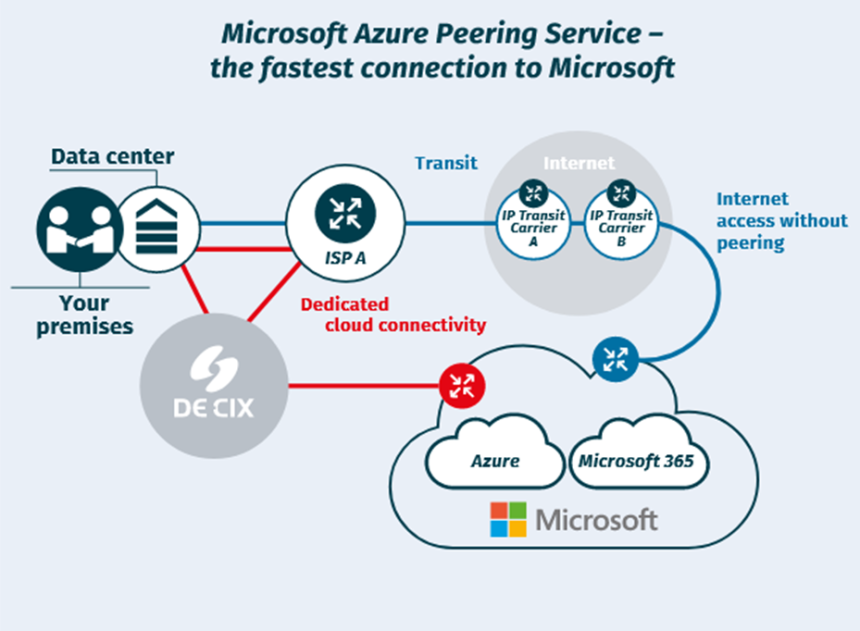
A key component enabling Microsoft Azure Peering Service is its integration with Internet Exchange Services. By connecting through established IXPs, businesses gain direct access to Microsoft’s network, bypassing traditional public internet routes. This connection not only improves performance but also provides better redundancy and reliability, essential for mission-critical applications. DE-CIX India, as a leading internet exchange platform, facilitates these high-speed connections, ensuring that enterprises can leverage low-latency pathways to Azure services efficiently.
Enhanced Security and Reliability
Security is another advantage of using the Microsoft Azure Peering Service. By routing traffic over private and trusted networks instead of the public internet, the risk of exposure to potential cyber threats is reduced. Additionally, the service supports built-in redundancy and failover mechanisms, ensuring consistent uptime for critical business workloads. Enterprises can confidently run applications in Azure without worrying about connectivity interruptions or degraded performance.
Scalability for Growing Businesses
The service is designed to scale alongside business needs. Organizations can increase their bandwidth requirements as traffic grows, without the need for major infrastructure changes. Coupled with the robust architecture of Internet Exchange Services, the Microsoft Azure Peering Service offers a future-ready solution that adapts to evolving cloud demands.
Conclusion
The Microsoft Azure Peering Service combines optimized routing, integration with Internet Exchange Services, enhanced security, and scalable connectivity to deliver an efficient cloud networking experience. By leveraging this technology, businesses in India and worldwide can ensure faster, safer, and more reliable access to Azure, empowering digital transformation initiatives.






Loto188 Blue: A Trusted Platform for Modern Online Gaming
Loto188 Blue: A Trusted Platform for Modern Online Gaming
