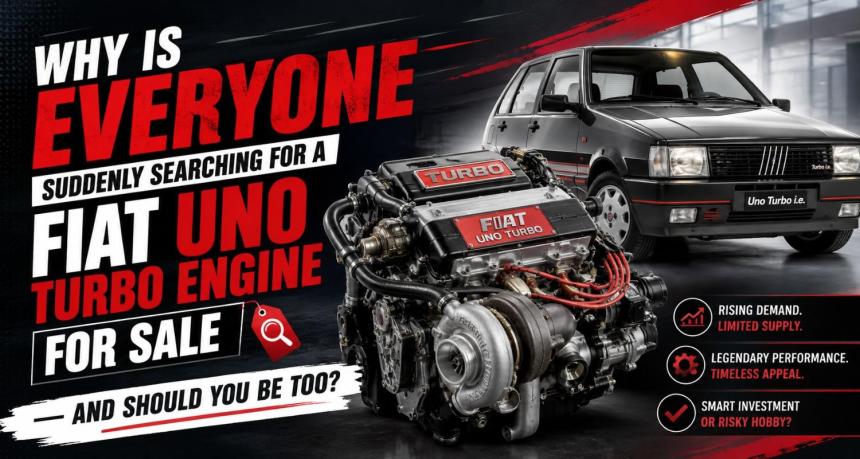

Searching for a Fiat Uno Turbo Engine for Sale?
The Fiat Uno Turbo engine is a rare and iconic turbocharged powerplant known for lightweight performance, collector appeal, and classic hot hatch driving excitement.
If you have been browsing the specialty performance parts market lately and noticed a growing number of listings for a fiat uno turbo engine for sale, you are witnessing something that the broader automotive world is only beginning to catch up to — the rediscovery of one of the most underrated hot hatchback engines Europe ever produced. The Fiat Uno Turbo was a genuine icon of 1980s performance motoring, a pocket rocket that terrified larger, more expensive cars on Italian mountain roads and rally stages alike, and the turbocharged engine at its heart is now attracting serious attention from collectors, restorers, and swap enthusiasts who understand exactly what this little powerplant represents. This guide is going to tell you everything that matters before you commit to a purchase — from understanding the engine's architecture to knowing what a fair price looks like in today's market.
The Engine That Made the Uno Turbo a Legend
The Fiat Uno Turbo used a 1.3-liter turbocharged inline-four cylinder engine that, in its most celebrated form, produced 105 horsepower — a figure that sounds modest until you remember that it was propelling a car weighing approximately 830 kilograms. The power-to-weight ratio that results from that combination was genuinely startling for its era, and the engine's character — turbocharged, aggressive, and willing to rev with an enthusiasm disproportionate to its displacement — made the Uno Turbo a benchmark for affordable performance in Europe throughout the mid-to-late 1980s.
The engine itself is the 1301 cc single overhead cam unit with Magneti Marelli electronic fuel injection and a small IHI turbocharger that spools quickly given the modest displacement it's charged with pressurizing. The intercooler in later, more developed versions of this engine improved charge air density and pushed output closer to 118 horsepower in some market specifications. The bottom end uses a cast iron block with an aluminum head — a conventional but durable combination that, when maintained correctly, has proven remarkably resilient over the four decades since the engine was first produced.
What gives the Uno Turbo engine its contemporary appeal goes beyond nostalgia. Its compact dimensions, relatively simple architecture, and willingness to respond enthusiastically to modifications make it a compelling proposition both for restoration projects seeking correct-specification originality and for creative builders who see in its compact turbocharged package the basis for something genuinely interesting in a lightweight application. The rally community in particular has long valued this engine's tunability, and its reputation in that world has contributed to the growing demand that is pushing prices upward across the European and increasingly the global market.
Why These Engines Are Harder to Find Than You Expect
The supply of genuine Fiat Uno Turbo engines in the current market is far more restricted than casual browsing might suggest. The Uno Turbo was produced primarily for European markets — Italy, France, Spain, and Germany were the largest volume markets — and relatively few examples made their way to North America or Australia through official channels. The cars that survive in running condition are increasingly cherished by their owners, and the enthusiast community around them has grown protective and knowledgeable in equal measure.
The other complicating factor is age. These engines are now approaching or exceeding forty years old in their earliest examples, and the attrition of time, neglect, and parts unavailability has thinned the supply of serviceable examples significantly. Engines that come to market typically do so from one of three sources: restoration projects where the original engine was found to be beyond economical repair and a replacement was sourced from a better-preserved donor, collection rationalization where an owner parts out a non-running car to fund restoration of a better example, or European specialty importers who source cars and components specifically for the global enthusiast market.
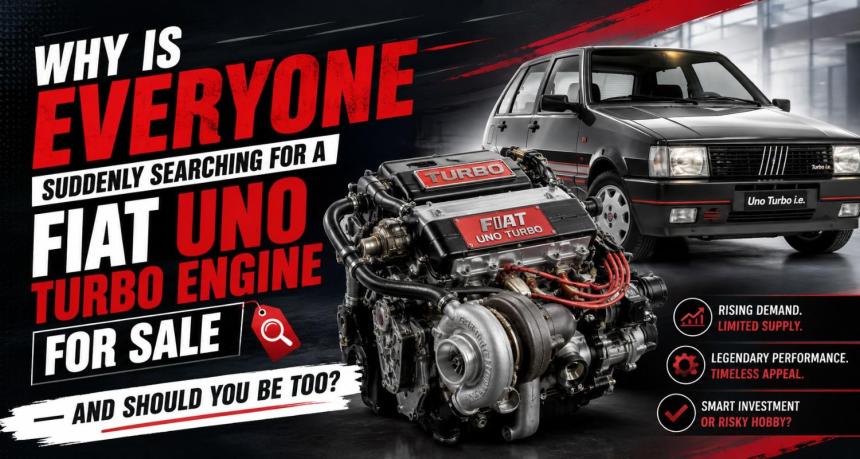
Inspection Priorities for a Used Uno Turbo Engine
The inspection of any used Fiat Uno Turbo engine needs to account for both its age and its turbocharged nature. Start with the basics — a compression test across all four cylinders should show readings between 140 and 175 PSI with consistent results. Given the engine's age, some variation is normal, but any cylinder reading more than fifteen percent below the others indicates wear that needs detailed investigation before proceeding. The aluminum cylinder head is particularly important to evaluate for warping, which can occur on any engine that has experienced overheating — and engines of this age, particularly those that have spent time in storage or in the custody of owners with varying maintenance standards, have a higher likelihood of having experienced thermal events at some point in their history.
The turbocharger condition is the second critical inspection point. The IHI unit on these engines is small and relatively simple, but it is also old and potentially running on decades-old oil that may have been degraded, contaminated, or simply too infrequently changed to maintain proper lubrication of the turbine shaft bearings. Check for excessive shaft play — more than a small amount of axial play in either direction indicates bearing wear that will cause the turbo to fail quickly in service. Inspect the turbo inlet and compressor housing for oil residue that would indicate seal degradation, and check the wastegate actuator for freedom of movement and correct response to pressure.
The fuel injection system components — particularly the Magneti Marelli control unit and the injectors themselves — are aged electronics that may need reconditioning or replacement regardless of the engine's mechanical condition. Factor this into your total acquisition budget before committing to a purchase, because correct-specification Magneti Marelli components for the Uno Turbo application are not sourced from generic suppliers.
Pricing, Sourcing, and What to Realistically Expect
Genuine Fiat Uno Turbo engines in serviceable condition are currently priced between $2,500 and $6,500 depending on the specific variant, the completeness of the assembly, and the geographic market. European sources — particularly Italian and Spanish specialist dismantlers — offer the deepest supply, though import costs and the challenge of evaluating engines without in-person inspection add complexity to overseas sourcing. Engines already in the United States, sourced through specialty Italian car dealers or the Fiat enthusiast community, command premiums that reflect their relative scarcity domestically but offer the advantage of accessible inspection.
Complete assemblies with the turbocharger, intake manifold, fuel injection system, and exhaust manifold are significantly more valuable than bare long blocks — the correct-specification ancillary components for these engines are not easily substituted, and sourcing them individually adds both cost and frustration that a complete assembly eliminates. Prioritize completeness alongside condition, and budget realistic amounts for the age-related reconditioning that any forty-year-old turbocharged engine will require before entering extended service.
🔧 Turbo Auto Parts — Specialty and Performance Engines, Backed by a 3-Year Warranty
Whether you're tracking down a rare European performance engine or sourcing a reliable replacement for an everyday vehicle, Turbo Auto Parts delivers quality, transparency, and the warranty protection your investment deserves. Every used engine we sell is covered by our 3-Year Parts Warranty — real coverage with clear terms and a claims process built around the buyer. We ship free to any address in the continental United States, with specialist support for even the most unusual sourcing requests. Buy with confidence from a team that earns it.
READ MORE : - A Smart Buyer's Roadmap to the Dodge Viper Engine Market
What Factors Should You Consider Before Choosing Female Viagra Pills?
Before choosing a product, identify the concern you want to address. Low sexual desire, di...



Top High-Puff Disposables Ranked - Why Maskking IceX Leads the Cooling...
Discover Inspiring Music Education for Children and Adults in Singapor...