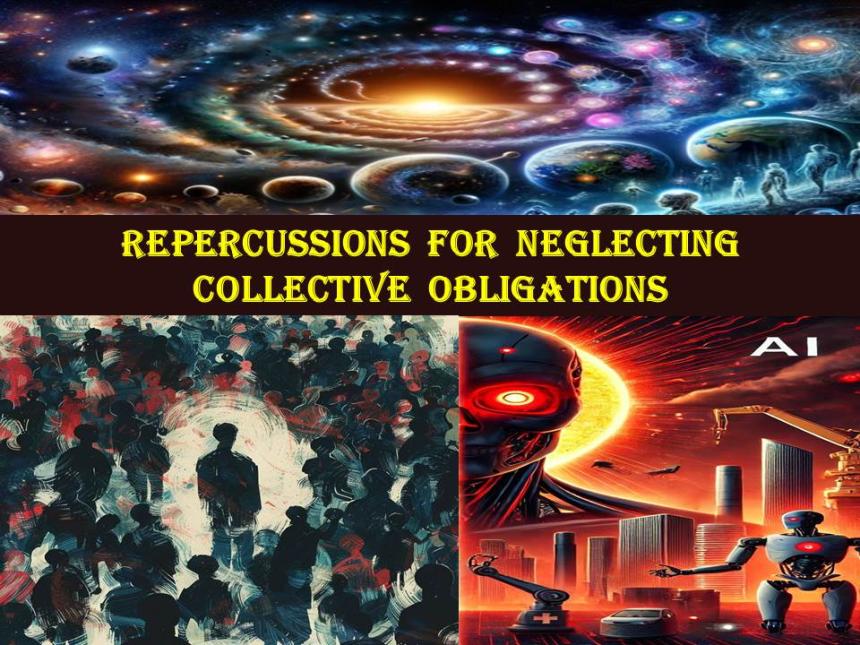

Repercussions for Neglecting Collective Obligations
The religion of Islam provides a complete code of life. Through the Quran, Allah has conveyed a message to the entire world—specifically and explicitly—to provide clear guidance. Every son of Adam is accountable for his own deeds, yet every human being will also be questioned regarding collective responsibilities. This write up "Repercussions for Neglecting Collective Obligations" is about the Ummah’s heedlessness and willful neglect regarding *furḍ al-kifāyah* (communal obligations).
أَعُوذُ بِاللّٰهِ مِنَ الشَّيْطَانِ الرَّجِيمِ
بِسۡمِ ٱللهِ ٱلرَّحۡمَـٰنِ ٱلرَّحِيمِ
اللہ کے نام سے شروع جو بڑا مہربان نہایت رحم کرنے والا ہے
In the name of ALLAH, the Most Gracious, the Most Merciful
Repercussions for Neglecting Collective Obligations
The repercussions of the Ummah’s heedlessness and willful neglect regarding *furḍ al-kifāyah* (communal obligations), and its restriction of religiosity to *furuḍ al-a‘yān* (individual obligations) and voluntary acts of worship.
There were repercussions for the nation's (Ummah) negligence and disregard for collective obligations, and its limitation of religious practice to individual duties and supererogatory acts, as they proved among the most serious calamities that befell the nation after the collapse of the Rightly Guided Caliphate. This led to its transformation from a caliphate to tribal monarchy at times, and to sectarian, factional, and doctrinal monarchy at others. It also resulted in the despotism of rulers, who placed all aspects of public life—including transactions, social relations, and all systems of life, as well as international relations in peace and war—in the hands of these despotic rulers.
This could be explained based on the principle from Quran; which says: "...Pharaoh said, 'I show you only what I see, and I guide you only to the path of righteousness'" (Surah Ghafir 29).
And it is also reflected in what the hypocritical poet Ibn Hani said to Al-Mu'izz li-Din Allah al-Ubaydi: "Do as you please, not as fate dictates; so rule, for you are the One, the Subduer." Abdul Aziz Atiq, Alam Al-Badi’, p. 112,
And what is common in traditional political literature: “People follow the religion of their rulers.” Ibn Kathir, Al-Bidaya wa’l-Nihaya, vol. 9, p. 165; Ahmad ibn Ismail al-Kurani, Al-Kawthar al-Jari ila Riyad Ahadith al-Bukhari, vol. 7, p. 24; Mulla Ali al-Qari, Al-Asrar al-Marfu’a fi al-Ahadith al-Mawdu’a, letter Nun, p. 352.
And Abu al-Atahiyah said: "People are only with the world and its master; however it turns, they turn with it. They exalt the brother of the world, and if it turns against him one day with what he does not desire, they turn against him." Ibn Abd al-Barr, Bahjat al-Majalis, p. 235.
As a result of this idle talk, which often accompanies the rule of despots, Muslims, under the legitimization of the rule of the usurper for fear of sedition, have become limited to matters pertaining to individual personal affairs, neglecting other aspects of religion. They have adopted the ways of their religion from the People of the Book, and the ways of their lives from the Persians and Romans, with legal justifications—that is, following what the despotic kings with power and influence decree.
Thus, what the Prophet (peace and blessings be upon him) warned against has come to pass: “You will surely follow the ways of those who came before you, span by span, cubit by cubit, until if they entered a lizard’s hole, you would enter it too.”
We asked, “O Messenger of God, the Jews?” And the Christians? He said: Who else? (Sahih al-Bukhari, No. 3456; Sahih Muslim, No. 2669;
And in another narration: “The Hour will not come until my nation follows the ways of the generations before it, span by span, and cubit by cubit.” It was said, O Messenger of God, like the Persians and the Romans. He said: Who else among the people but those?” Sahih al-Bukhari, Hadith No. 7319.
Thus, the Muslims lost true religiosity and became practically unconcerned with any religious obligation outside the realm of rituals and acts of worship, and what the ruler permitted in terms of sermons, legal matters related to family structure, some transactions, social relations, and certain individual and collective moral values that impact security and social peace.
Consequently, for Muslims, practicing Islam became not a call to establish the religion and bear its burdens; so that all people's judgment in life would be for God Almighty, making the word of God supreme on Earth and the word of the disbelievers inferior, and so that life would be imbued with the character of God Almighty.
Nor was it a comprehensive, integrated, divinely ordained civilizational project whose realization depends on the combined efforts and energies of a collective, cooperative, and mutually supportive manner from all section of Ummah. Rather, Islam and practicing it became limited to individual spheres of salvation and deliverance on the Day of Judgment, according to their belief, and this was in accordance with the religious framework imposed by the ruler.
It has become common among Muslims, both the general public and the elite, and among many religious scholars, those learned in Islamic sciences, and thinkers and intellectuals interested in Islamic studies. They have fallen into this pattern of authoritarian religious practice, which is precisely what ALLAH God Almighty warned previous nations against when He said:
“Do you then believe in part of the Scripture and disbelieve in other part? Then what is the recompense for those who do that among you except disgrace in worldly life; and on the Day of Resurrection they will be sent back to the severest punishment. And God is not unaware of what you do. Those are the ones who…” They have purchased the life of this world in exchange for the Hereafter, so their punishment will not be lightened, nor will they be helped. (Al-Baqarah: 85-86).
This is nothing but a result of the authoritarian religious stereotyping that the nation (Ummah) has been afflicted with as a result of the successive tribulations that befell it after it turned from the Rightly Guided Caliphate to monarchy, and its coexistence with those despotic conditions for long centuries, during which the offspring of Muslims were formed religiously, intellectually, and politically in a way that deviated from the religious standard that ALLAH God Almighty permitted, and which was the religious state in the Prophetic era and the beginning of the Rightly Guided Caliphate.
This was followed by what befell the Muslims of spiritual emptiness, weakness, apathy, material backwardness, intellectual decline, political confusion and bewilderment, and societal turmoil. Because of what has been obscured from the true religion, and their turning away from the path of divine guidance and righteousness, to the point that the Muslim no longer cares about religion and practicing it except what is related to individual personal obligations of beliefs, worship and moral values, without caring about the legal obligations related to what is known in Islamic jurisprudence as collective obligations, on which the majority of legal obligations are based, and they are considered a major basis in the existence of Islam and the realization of its legal requirements individually and collectively.
And the existence of the Islamic nation and the Islamic civilizational development depend on them, since most of the legal obligations on which the existence of true Islam depends, and practicing it in the right way, and the correct legal way to address human problems in life, and how to implement those solutions in reality, and how to preserve Islam as a belief, law and way of life, and how to carry the call to Islam, and carry the call to Muslims to resume their Islamic life in a true Islamic state, and so on, are dependent on commitment to collective obligations, as the divine obligation to them came in the context of directing the address to the Muslim community.
Because in reality, it is something that cannot be achieved in practice and in reality except through the combined efforts and energies in a collective cooperative manner, and the life of the nation as an Islamic nation cannot be Islamically sound unless the efforts of its people are integrated in bearing the legal responsibilities to fulfill those legal obligations.
Hence, one of the erroneous religious formations employed by the Sultanate to divert Muslims from the true religious path of Islam was the widespread definition of collective obligation as: "an obligation which, if fulfilled by some, absolves everyone." This is, in fact, a fallacy and not an accurate definition of collective obligation. Rather, it is a description of a punitive consequence that is realized after sufficiency is achieved in some common, but not specific, obligations within the community.
The correct and more precise definition of a collective obligation is: "It is the obligation which, if fulfilled sufficiently, absolves the rest of the obligation, or it is the obligation that ALLAH God Almighty has made common within the community, not specific, where its practical realization depends on the combined efforts and collective energies, such as mobilizing armies, and ensuring that the nation possesses all the elements of its advancement and survival, and the necessary requirements for its strength and protection, and what is needed to meet its needs in terms of thinkers, scholars, and experts in various fields of life that are indispensable to Islamic society and the Muslim nation, such as doctors, engineers, industrial craftsmen, judges, educational and media experts, experts in the arts, administrative and military affairs, strategic policies, those with advanced industrial and agricultural skills, experts in political and administrative affairs, contemporary financial and economic affairs, and specialists in all fields."
This is what the life and strength of society depends upon. This inherited religious deviation among Muslims, which is a primary cause of their apathy, their religious weakness and corruption, their material backwardness, intellectual decline, and civilizational isolation, is their responsibility. They are not absolved of the sin of this deviation from the true Islamic path by justifying it with their fear of tyrannical rulers who have come to control the destinies of nations.
These rulers are not content with merely controlling the government; they also work to mislead people in their religion, preoccupying them with personal concerns and distracting them with trivialities and absurdities that only increase their confusion. This is because ALLAH God Almighty has established proof against them by warning them against misleading leaders, as the Prophet (peace and blessings be upon him) said:
“The thing I fear most for my nation is the misleading leaders…” (Sahih Muslim, no. 1920; Sunan al-Tirmidhi, no. 2229; Musnad Ahmad, no. 22393).
The Prophet (PBUH) has obligated them to oppose these leaders and not to follow them. Accepting their error and their leading others astray, and restraining them, as the Prophet (peace and blessings be upon him) said in this regard:
"...Indeed, there will be rulers over you who will be pleased for themselves with what they are not pleased for you. If you obey them, they will lead you astray, and if you disobey them, they will kill you." They said: "What should we do, O Messenger of Allah?" He said: "As the companions of Moses did; they were crucified and sawn in two. By Him in Whose Hand is the soul of Muhammad, death in obedience to Allah is better than life in disobedience to Him." (Al-Tabarani, Al-Mu'jam Al-Saghir, vol. 2, p. 42; Musnad Al-Shamiyyin, vol. 1, p. 379).
And he (peace and blessings be upon him) said: "There will be rulers over you, and you will recognize some of their actions as good and others as bad. Whoever dislikes them is absolved, and whoever rejects them is safe." But whoever is pleased with and follows him—that is, whoever is pleased with and follows him—then upon him is sin and punishment from God Almighty—…”Sahih Muslim, No. 18554.
And in a hadith traced back to al-Husayn ibn Ali ibn Abi Talib, he said: “O people, the Messenger of God, may God bless him and grant him peace, said: ‘Whoever sees a tyrannical ruler, who permits what God has forbidden, who breaks God’s covenant, who opposes the Sunnah of the Messenger of God, who acts with sin and aggression towards God’s servants, and does not change him by deed or word, then it is incumbent upon God to make him enter where he enters.’” Al-Tabari, History of the Prophets and Kings, Vol. 5, p. 403; Ibn al-Athir, Al-Kamil, vol. 3, p. 159,
And what confirms that the responsibility for correcting the religious, intellectual, and political conditions of Muslims falls upon the entire nation, that is, rulers and ruled alike, is the statement of God Almighty:
“He said, ‘Enter into the Fire with the nations of jinn and mankind who passed away before you. Every time a nation enters, it curses its sister [i.e., the previous one] until, when they have all caught up with one another therein, the last of them will say to the first of them, “Our Lord, these are the ones who led us astray, so give them a double punishment of the Fire.”’” He said, “For each [of them] is double, but you do not know.” (Al-A’raf: 38)
And they will say, “Our Lord, indeed we obeyed our masters and our dignitaries, and they led us astray from the right path. Our Lord, give them double the punishment and curse them with a great curse.” O you who have believed, do not be like those who abused Moses, but God cleared him of what they said. And he was honorable in the sight of God. O you who have believed, fear God and speak words of appropriate justice. He will then amend for you your deeds. And He will forgive you your sins. And whoever obeys Allah and His Messenger has certainly attained a great victory. (Al-Ahzab: 67-71)
ALLAH Almighty has spoken the truth.
Dr. Ihsan Samara
Thursday: 24 Muharram 1448 AH - 9 July 2026 CE
Additional Comments
The religion of Islam provides a complete code of life. Through the Quran, Allah has conveyed a message to the entire world—specifically and explicitly—to provide clear guidance. Allah has designated the Muslim Ummah as the *Ummah-e-Wast* (a balanced and exemplary community) and appointed it as a witness over other nations. As stated in Surah Al-Baqarah, Verse 143: "And thus We have made you a balanced community (a moderate and excellent nation) so that you may be witnesses over the people, and the Messenger may be a witness over you."
Every son of Adam is accountable for his own deeds, yet every human being will also be questioned regarding collective responsibilities. Foremost among these collective responsibilities is the stewardship of the earth (*Khilafat-e-Arzi*). The earth is a temporary abode for humanity—a trust—and man serves as its guardian.
This concept signifies that man is Allah’s vicegerent and representative on earth; its fundamental purpose is to establish justice and fairness and to spread goodness. On the Day of Judgment, an account will have to be rendered for every single responsibility. Every human being—and the Muslim Ummah in particular—has been created to conduct the affairs of the world in accordance with Allah's commands. It is the collective responsibility of every individual to eradicate oppression, injustice, and evil from society. Assisting the vulnerable members of society and enjoining what is good constitute a vital part of this responsibility.
It is the duty of Muslim Ummah to bear true witness—through its character and actions—to the nature of the path of Allah. This Ummah must adopt the path of justice and goodness, enjoining what is right and forbidding what is wrong. This implies a community free from excess or deficiency—one that maintains a perfect balance in both worldly and Hereafter-related affairs. This forms the foundation of Islamic teachings, which instruct Muslims to spread goodness and establish justice in the world. Not fulfilling collective responsibility will result in serious repercussions in this world and dire consequences on the Day of Judgement.
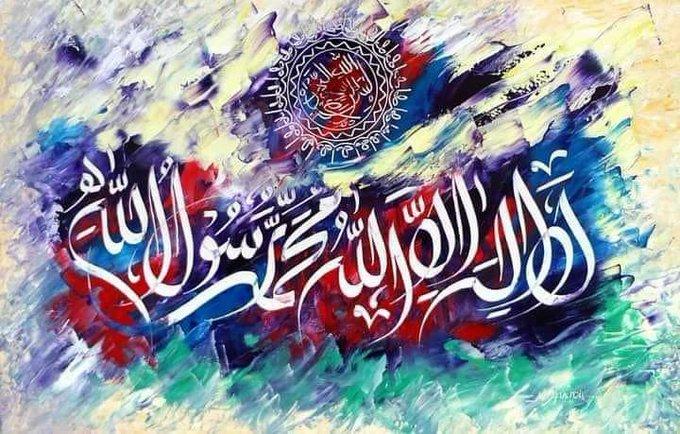
بسم الله الرحمن الرحيم
تداعيات غفلة الأمّة وتغافلها عن فروض الكفاية، وقصرها التدين على فروض الأعيان والنوافل
من أخطر ما مُنيت به الأمّة بعد انتقاض عروة الحكم الراشدي، وتحولها عن الخلافة إلى الملك القبليّ حيناََ، والملك الفرقيّ والطائفيّ والمذهبيّ حيناََ آخر، واستبداد الملوك بالسلطة، وجعل شؤون الحياة العامّة في المعاملات، والعلاقات المجتمعية والنظم الحياتية كلها، والعلاقات الدولية في السلم والحرب، بيد المستبدين بالحكم، على قاعدة: (... قَالَ فِرْعَوْنُ مَا أُرِيكُمْ إِلَّا مَا أَرَىٰ وَمَا أَهْدِيكُمْ إِلَّا سَبِيلَ الرَّشَادِ) غافر: (٢٩)، وما قاله الشاعر المنافق ابن هانئ في المعز لدين الله العبيدي:
ما شئت لا ما شاءت الأقدار فاحكم فأنت الواحد القهار
عبد العزيز عتيق، علم البديع، ص١١٢، وما شاع في الأدبيات السياسية التراثية: "الناس على دين ملوكهم" ابن كثير، البداية والنهاية، ج9، ص١٦٥؛ أحمد بن إسماعيل الكوراني، الكوثر الجاري إلى رياض أحاديث البخاري، ج7، ص٢٤؛ ملا علي القاري، الأسرار المرفوعة في الأحاديث الموضوعة، حرف النون، ص٣٥٢.
وقول أبو العتاهية:
ما الناس إلا مع الدنيا وصاحبها كيف ما انقلبت يوما به انقلبوا
يعظمّون أخا الدنيا وإن وثبت يوما عليه بما لا يشتهي وثبوا
ابن عبد البر، بهجة المجالس، ص٢٣٥، فمن جراء ذلك اللغو الذي في الغالب يصاحب حكم المستبدين، غلب على المسلمين في ظل شرعنة حكم المتغلب خشية الفتن، أضحى التدين بالإسلام قاصراََ على ما يتعلق بالأمور الفردية الشخصية، مُفرِّطين فيما سوى ذلك من أمور الدين، وأصبحوا في طرائق تدينهم على سنن أهل الكتاب، وفي شؤون حياتهم على سنن الفرس والروم بمسوغات شرعيّة، أي تبعاََ لما يمضيه الملوك المستبدون بالسلطان والنفوذ، وبذلك حق فيهم ما حذر منه بقوله: "لتتبعن سنن من قبلكم، شبراََ بشبر، وذراعاََ بذراع، حتى لو سلكوا جحر ضب لسلكتموه، قلنا يا رسول الله: اليهود والنصارى؟ قال: فمن؟ "صحيح البخاري، رقم: "٣٤٥٦"؛ صحيح مسلم، رقم: "٢٦٦٩"؛ وفي رواية: "لا تقوم الساعة حتى تأخذ أمّتي بأخذ القرون قبلها شبراََ بشبر، وذراعاََ بذراع، فقيل يا رسول الله؛ كفارس والروم، فقال: ومن من الناس إلا أولئك". صحيح البخاري، رقم: "٧٣١٩"، فبذلك افتقد لديهم التدين الحق، وأضحوا غير معنيين عمليّاََ بأيّ تكليف شرعيٍّ خارج نطاق الطقوس والشعائر التعبدية، وما يسمح به السلطان من المسائل الوعظية، والمسائل الفقهية المتعلقة بالبنية الأسريّة، وبعض المعاملات، والعلاقات المجتمعية، وبعض القيم الخُلقيّة الفرديّة الشخصيّة والجماعية، التي لها أثر في الأمن والسلم المجتمعي، وأصبح التدين بالإسلام لدى المسلمين بمقتضى ذلك، ليس دعوة لإقامة الدين، وحمل أعباء ذلك لتكون دينونة الناس في الحياة كلها لله تعالى، وجعل كلمة الله هي العليا في الأرض وكلمة الذين كفروا السفلى، ولتصطبغ الحياة بصبغة الله تعالى، ولا هو مشروعا حضاريّاََ ربانيّاََ شاملاََ متكاملاََ، يتوقف تحقيقه على تظافر الجهود والطاقات بشكل جماعيّ تعاونيّ تكافليّ، وإنّما أضحى الإسلام والتدين به لا يتعدى المجالات الفردية للنجاة والخلاص يوم القيامة بحسب ظنهم، وذلك بمقتضى التأطير التدينيّ السلطانيّ، الذي بات شائعاََ في نظر عامّة المسلمين وخاصتهم، والكثير من العلماء ذوي الحرف الدينية، والمتعلمين للعلوم الشرعية، والمفكرين والمثقفين المهتمين بالدراسات الإسلاميّة، فوقعوا بهذا النمط التدينيّ السلطاني فيما حذر الله تعالى منه الأمم السابقة بقوله سبحانه: (…أَفَتُؤْمِنُونَ بِبَعْضِ الْكِتَابِ وَتَكْفُرُونَ بِبَعْضٍ ۚ فَمَا جَزَاءُ مَن يَفْعَلُ ذَٰلِكَ مِنكُمْ إِلَّا خِزْيٌ فِي الْحَيَاةِ الدُّنْيَا ۖ وَيَوْمَ الْقِيَامَةِ يُرَدُّونَ إِلَىٰ أَشَدِّ الْعَذَابِ ۗ وَمَا اللَّهُ بِغَافِلٍ عَمَّا تَعْمَلُونَ أُولَٰئِكَ الَّذِينَ اشْتَرَوُا الْحَيَاةَ الدُّنْيَا بِالْآخِرَةِ ۖ فَلَا يُخَفَّفُ عَنْهُمُ الْعَذَابُ وَلَا هُمْ يُنصَرُون)َ البقرة: (٨٥-٨٦)، وما ذلك إلا نتيجة للتنميط التدينيّ السلطاني، الذي ابتليت به الأمّة من جراء الفتن التي توالت عليها، بعد تحولها عن الخلافة الراشدة إلى الملك، وتعايشها مع تلك الأوضاع الاستبداديّة لقرون طويلة، تم فيها تشكيل ذراري المسلمين دينيّاً وفكريّاََ وسياسيّاََ، تشكيلاََ منحرفا عن السويّة التدينيّة التي أذن بها الله تعالى، وكانت عليها الحالة التدينيّة في العهد النبوي وصدر الخلافة الراشدة، وتبع ذلك ما حل ّبالمسلمين من خواء روحيٍّ، ووهن وغثائية، وتخلف ماديٍّ، وانحطاط فكريٍّ، وغفلة وحيرة وتوهان سياسيٍّ، واضطراب مجتمعيٍّ، بسبب ما عُمّي من الدين الحق، وتنكبهم لسبيل الهدى والرشاد الربانيّ، حتى أنه لم يعد يعني المسلم من الدين والتدين به إلا ما يتعلق بالتكاليف الشخصية الفردية من العقائد والعبادات والقيم الخلقية، غير مبالين بالتكاليف الشرعية المتعلقة بما يعرف في الفقه الإسلامي بفروض الكفاية، التي مدار غالبية التكاليف الشرعية عليها، وهي تُعدّ أساساََ رئيساََ في وجود الإسلام وتحقيق مقتضياته الشرعيّة فرديّاََ ومجتمعيّاََ، ويتوقف عليها وجود الأمّة الإسلاميّة، والصيرورة الحضارية الإسلامية، حيث إنّ معظم التكاليف الشرعية التي يتوقف عليها وجود الإسلام الحق، والتدين به حق التدين، والكيفية الشرعية الصحيحة لمعالجات مشاكل الإنسان في الحياة، وكيفية تنفيذ تلك المعالجات في الواقع، وكيفية المحافظة على الإسلام عقيدة وشريعة ومنهاج حياة، وكيفية حمل الدعوة للإسلام ،وحمل الدعوة لاستئناف المسلمين حياتهم الإسلامية في دولة إسلامية حقيقية، ونحو ذلك إنما هي متوقفة على الالتزام بفروض الكفاية، حيث جاء التكليف الإلهي بها في سياق توجيه الخطاب لجماعة المسلمين؛ لأنها في واقعا ممّا لا يتأتى تحقيقها فعليّاََ وواقعيّاََ إلا بتظافر الجهود والطاقات بشكل تعاونيّ جماعيّ، وأن حياة الأمّة بوصفها أمّة إسلاميّة لا تستقيم إسلاميّاََ، إلا إذا تكاملت جهود أبنائها في حمل المسؤوليات الشرعية للوفاء بتلك التكاليف الشرعيّة.
ومن هنا كان من التشكيل التدينيّ السلطاني الخاطئ لحرف المسلمين عن السويّة التدينيّة بالإسلام الحق ما شاع من تعريف فرض الكفاية أنه: "الفرض الذي إذا قام به البعض سقط عن الجميع". وهذا في الحقيقة مغالطة، وليس تعريفًا دقيقًا لفرض الكفاية؛ بل هو توصيفٌ لنتيجةٍ جزائية تتحقق بعد حصول الكفاية في بعض الفروض الشائعة في الجماعة لا على التعيين،... أما التعريف الصحيح والأدق لفرض الكفاية أنه: "هو الفرض الذي إذا تحققت به الكفاية سقط الإثم عن الباقين، أو هو الفرض الذي جعله الله تعالى شائعا في الجماعة لا على التعيين، حيث يتوقف تحقيقه عمليّاََ على تظافر الجهود والطاقات الجماعية، مثل تسيير الجيوش، وما به ضمان امتلاك الأمة لجميع مقومات نهضتها وبقائها، ومقتضيات عززتها ومنعتها الضرورية، وما يلزم لسد حاجاتها من المفكرين، والمجتهدين، والعلماء في شتى المجالات الحياتية التي لا غنى للمجتمع الإسلاميّ، والأمّة الإسلاميّة عنها كالأطباء، والمهندسين، والحرفيين الصناعيّين، والقضاة، والخبراء التربويّين والإعلاميّين، والخبراء في الفنون والشؤون الإدارية، والعسكريّة، والسياسات الإستراتيجيّة، وذوي المهارات الصناعيّة، والزراعيّة المتطورة، والخبراء في الشؤون السياسية والإداريّة، والشؤون الماليّة والاقتصادية المعاصرة، وذوي الاختصاص في كل ما تتوقف عليه حياة المجتمع وقوته. فهذا الانحراف التدينيّ المتوارث لدي المسلمين، والذي هو سبب رئيس لغثائيتهم، وماهم عليه من وهن وفساد تدينيّ، وتخلف ماديّ، وانحطاط فكريّ، وانزواءٍ حضاريّ، هم مسؤولون عنه، ولا يعفيهم من إثم ذلك الانحراف عن السويّة الإسلاميّة، التبرير لذلك الانحراف ما هم عليه من الخوف من حكام الجور الذين باتوا يتحكمون بمصائر الشعوب، ولا يكتفون بالسيطرة على الحكم فقط؛ بل يعملون على تضليل الناس في دينهم، ومشاغلتهم بهموم فردية شخصية، وإلهائهم بتفاهات وسخافات لا تزيدهم إلا خبالا، وذلك لأن الله تعالى أقام الحجة عليهم بتحذيرهم من الأئمة المضلّين بقوله : "إن أخوف ما أخاف على أمتي الأئمة المضلون…"صحيح مسلم، رقم: "١٩٢٠"؛ سنن الترمذي، رقم: "٢٢٢٩"؛ مسند أحمد، رقم: "٢٢٣٩٣"، وأوجب عليهم منابذتهم، وعدم القبول بضلالهم وتضليلهم، والأخذ على أيديهم حيث قال بهذا الخصوص: "...ألا إنه سيكون عليكم أمراء يرضون لأنفسهم ما لا يرضون لكم، إن أطعتموهم أضلوكم، وإن عصيتموهم قتلوكم، قالوا: وما نفعل يا رسول الله؟ قال: كما فعل أصحاب موسى، حملوا على الخشب، ونشروا بالمناشير، فوالذي نفس محمد بيده، لموت في طاعة الله خير من حياة في معصيته". الطبراني، المعجم الصغير، ج2، ص٤٢؛ مسند الشاميّين، ج1، ص٣٧٩؛ وقوله : "إنه يستعمل عليكم أمراء، فتعرفون وتنكرون، فمن كره فقد برئ، ومن أنكر فقد سلم؛ ولكن من رضي وتابع-أي من رضي وتابع فعليه من الله تعالى الإثم والعقوبة-،…"صحيح مسلم، رقم: "١٨٥٥٤"، وفي حديث مرفوع عن الحسين بن علي ابن أبي طالب قال: "يا أيها الناس، إن رسول الله قال: "من رأى سلطانا جائراََ، مستحلاََ لحرم الله، ناكثا لعهد الله، مخالفا لسنة رسول الله، يعمل في عباد الله بالإثم والعدوان، ولم يغير عليه بفعل ولا قول، كان حقا على الله أن يدخله مدخله." الطبري، تاريخ الرسل والملوك، ج5، ص٤٠٣؛ ابن الأثير، الكامل، ج3، ص١٥٩، ومما يؤكد أن المسؤوليّة في تصويب أوضاع المسلمين التدينيّة والفكرية والسياسية إنّما تقع على عاتق الأمّة بمجموعها، أي الحكام والمحكومين على حدٍّ سواء لقوله سبحانه: (قَالَ ادْخُلُوا فِي أُمَمٍ قَدْ خَلَتْ مِن قَبْلِكُم مِّنَ الْجِنِّ وَالْإِنسِ فِي النَّارِ ۖ كُلَّمَا دَخَلَتْ أُمَّةٌ لَّعَنَتْ أُخْتَهَا ۖ حَتَّىٰ إِذَا ادَّارَكُوا فِيهَا جَمِيعًا قَالَتْ أُخْرَاهُمْ لِأُولَاهُمْ رَبَّنَا هَٰؤُلَاءِ أَضَلُّونَا فَآتِهِمْ عَذَابًا ضِعْفًا مِّنَ النَّارِ ۖ قَالَ لِكُلٍّ ضِعْفٌ وَلَٰكِن لَّا تَعْلَمُونَ) الأعراف: (٣٨)؛ (وَقَالُوا رَبَّنَا إِنَّا أَطَعْنَا سَادَتَنَا وَكُبَرَاءَنَا فَأَضَلُّونَا السَّبِيلَا رَبَّنَا آتِهِمْ ضِعْفَيْنِ مِنَ الْعَذَابِ وَالْعَنْهُمْ لَعْنًا كَبِيرًا، يَا أَيُّهَا الَّذِينَ آمَنُوا لَا تَكُونُوا كَالَّذِينَ آذَوْا مُوسَىٰ فَبَرَّأَهُ اللَّهُ مِمَّا قَالُوا ۚ وَكَانَ عِندَ اللَّهِ وَجِيهًا يَا أَيُّهَا الَّذِينَ آمَنُوا اتَّقُوا اللَّهَ وَقُولُوا قَوْلًا سَدِيدًا يُصْلِحْ لَكُمْ أَعْمَالَكُمْ وَيَغْفِرْ لَكُمْ ذُنُوبَكُمْ ۗ وَمَن يُطِعِ اللَّهَ وَرَسُولَهُ فَقَدْ فَازَ فَوْزًا عَظِيمًا) الأحزاب: (٦٧-٧١) صدق الله العظيم.
د. إحسان سمارة
الخميس:٢٤/محرم/١٤٤٨ه.-٢٠٢٦/٧/٩م.

Upgrade Your Rotation: U4GM MLB The Show 26 Gavin Williams Guide
Gavin Williams is a strong target for Diamond Dynasty players looking to add another power...

Flower Box Stand for Opening Ceremony and Condolences
Flower Box Stand for Opening Ceremony and Condolences


Looking for Tax Debt Relief Services in Canada? Read This Guide
Discover how tax debt relief services work in Canada, from CRA payment arrangements and ta...