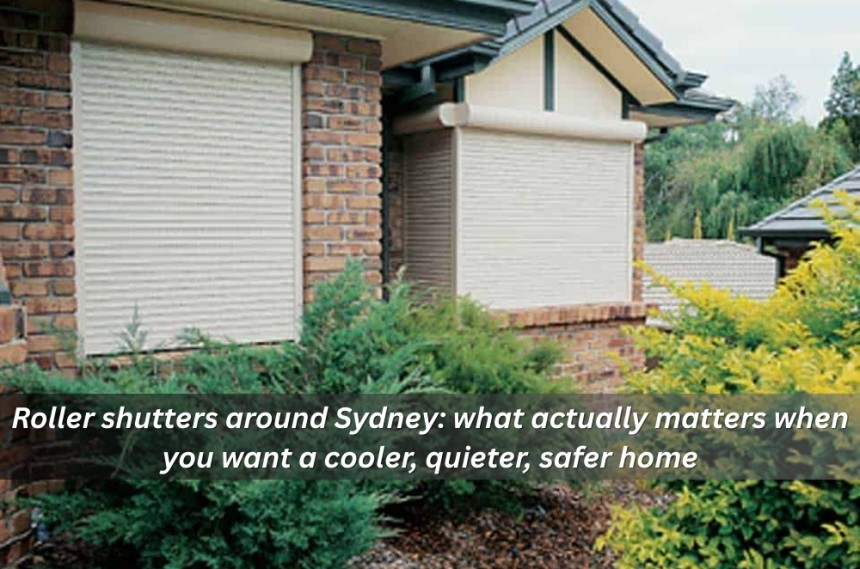

Roller shutters around Sydney: what actually matters when you want a cooler, quieter, safer home
If you live in Sydney (or down the coast in Wollongong, up around the Central Coast, or over in Newcastle), you’ll know the feeling.
That late-afternoon sun hits one side of the house, and suddenly the living room turns into an oven.
You can shut the curtains, sure.
But the heat still hangs around.
Roller shutters are one of those upgrades people often put in the “maybe later” basket… until summer rolls through, the street gets noisier, or privacy starts to feel like a daily battle.
When they’re chosen well, they’re simple. They just work.
When they’re chosen badly, they become that thing you avoid using because they’re noisy, awkward, or feel flimsy.
This guide is about getting the basics right, without the sales talk.
A roller shutter is a set of slats that roll up into a box (the hood) above a window or door. The curtain runs down inside the side tracks (guides) and sits near the sill when closed.
You can operate them manually (usually with a winder) or by motor.
They’re not the same as a flyscreen or a standard security screen. They’re a full barrier over the opening.
They’re also not magic. If your home is poorly sealed and full of drafts, shutters won’t fix everything on their own.
But they can make a noticeable difference to comfort and privacy, and they add another layer of protection at the glass.
Local conditions matter more than people think.
In the Sydney basin, you’ve got hot sun, changing weather, and plenty of hard surfaces that bounce noise around.
Coastal areas add salt air, which can speed up wear on cheaper components.
And many suburbs have tighter blocks now, so windows often look straight into the neighbour’s place (or onto a busy footpath).
A roller shutter is basically a “control layer” you can use when you need it.
Heat.
Glare.
Privacy.
Noise.
A bit more security.
Not all at once, perfectly, every time… but often enough that it changes how the home feels.
The big win is blocking direct sun before it hits the glass. That’s where a lot of heat build-up starts.
If you’ve got west-facing windows, you’ll know exactly which ones they are. They’re the rooms you avoid at 4 pm.
Shutters let you take the edge off without living in darkness.
Even half-closed can be enough to stop glare bouncing off the telly or turning your desk into a spotlight.
Curtains help at night. Blinds help during the day.
But privacy isn’t always a nighttime thing, especially if you’re working from home or your windows face a walkway.
Roller shutters give you a clean, no-fuss privacy option when you want it.
No fiddling.
No gaps.
This is where people get a bit carried away in marketing, so let’s keep it sensible.
Roller shutters don’t make your home “impossible to break into”.
What they can do is add time and effort. That matters with opportunistic break-ins.
They can also protect glass in rough weather and reduce the feeling that your place is “open” from the street.
Most modern residential roller shutters are aluminium. It’s a solid choice because it’s strong, lighter than steel, and generally handles Australian weather well.
Still, “aluminium” alone doesn’t tell you much.
The details are what change the day-to-day experience.
Here’s what’s worth paying attention to:
- How the slats feel: Thin slats can rattle more and feel flimsy. More rigid slats tend to run quieter.
- Side guides: A good fit in the guides helps the shutter stay stable in the wind and reduces movement noise.
- Fixings and end plates: These keep everything square. If the frame flexes or shifts, you’ll notice it.
- Coastal durability: If you’re near the ocean, finishes and hardware quality really matter. Salt finds everything.
A shutter can look fine from the street and still feel annoying every time you use it.
That’s why build quality isn’t a “nice to have”. It’s the difference between daily use and “we stopped touching them”.
People often ask this as if it’s a luxury question.
It’s more of a habit question.
Manual shutters can suit smaller windows, occasional-use areas, and tighter budgets.
They’re also simple. Less to go wrong.
But if you plan to open and close them every day (especially multiple shutters), manual operation can become a chore.
And chores don’t get done consistently.
Motorised shutters make daily use easier, especially for larger openings or if you have more than a couple.
They’re handy when you want quick control for privacy or heat. One switch and you’re done.
They can also be a better option for accessibility and households where different people need to operate them without fuss.
A practical way to decide: if you’ll use the shutter more than once a day, electric tends to feel worth it.
If it’s a “sometimes” window, a manual can make sense.
Roller shutters can help with temperature control by adding another layer between the room and the outside.
They can also reduce drafts slightly, depending on how your window is sealed and how the shutter fits.
Noise is where expectations need to be grounded.
You’ll usually notice a reduction in general noise—traffic hum, voices, random street sounds.
But if you live near a main road and the issue is deep, heavy noise (trucks and engine braking), shutters alone may not deliver the dream outcome.
They can still help, especially at night.
Just don’t expect silence.
If noise is your main problem, shutters work best as part of a broader plan: good seals, decent glazing, and soft furnishings inside.
If you’re adding shutters mainly for security, start with the obvious spots:
- Ground-floor windows that are easy to reach
- Side access windows and doors
- Openings hidden by fences, shrubs, or alleyways
- Properties that sit empty during business hours
Then look at how the shutter actually closes and holds:
- Does it sit firmly in the guides?
- Is the bottom rail solid and well-fitted?
- Does it feel stable when down?
- Is the hardware properly fixed into the sound surfaces?
A “security feature” that feels loose is just a noisy curtain.
This sounds simple, but it’s where most people go wrong.
They either do every window (and blow the budget), or they start with a random room because it’s “the front”.
Walk the house at the times it annoys you most.
Late afternoon.
Early morning.
Bedtime.
Make a quick list:
- Rooms that overheat
- Windows that get blasted by glare
- Spots where privacy is a constant issue
- Openings that feel vulnerable or exposed
- Bedrooms where you want darkness and quiet
If you choose the “pain points” first, you’re more likely to love the result.
And you’re more likely to use the shutters.
This is the part that doesn’t show up in product photos.
Controls need to fit your routine.
If you’ve got kids, you’ll want something safe and simple.
If you work from home, you’ll want quick glare control without turning the office into a cave.
If you’re doing a shopfront or street-facing space, you’ll want reliable open/close patterns that staff can manage.
If you’re comparing shutter styles and options, it can help to browse a clear product overview like this roller shutter range to get a feel for different configurations without overcomplicating it.
The biggest issues I’ve seen aren’t about the shutters “failing”. They’re about friction in everyday use. If the shutter is awkward to operate, people stop using it, even if it solves the problem. And if it rattles in the wind or scrapes in the guides, it becomes a nightly annoyance—right when you’re trying to relax.
A small clinic in the Central Coast has big front windows that cope with afternoon glare.
Staff also want privacy after hours without making the place look like a bunker all day.
They start by addressing the hottest, brightest front panes first.
They chose motorised shutters for the windows that staff will use every day.
They keep a simpler manual shutter for a small side window that’s rarely touched.
They test the travel and noise level before the installer packs up.
That’s a very normal, very sensible way to approach it.
Here are the unglamorous things that often decide whether you stay happy with shutters:
- Alignment: If the guides aren’t straight, you’ll hear it and feel it.
- Wind exposure: Some homes get hammered by gusts. Stability matters.
- Clearances: Doors and windows need enough space for the hood and guides.
- Maintenance access: Tracks collect grit. If you can’t clean them easily, you won’t.
One line that’s worth remembering: if it’s smooth and quiet from day one, it stays easier to live with.
More isn’t always better. Start with the windows that affect comfort and privacy daily.
If you won’t wind it up and down, you won’t get the benefits. Convenience matters.
Salt air changes the equation. Better finishes and hardware can pay off over time.
If the basics aren’t right—fit, guides, alignment—extras won’t save it.
Practical opinion #1: Solve the hottest and noisiest rooms first. They deliver the quickest relief.
Practical opinion #2: Choose controls that make daily use easy, not impressive.
Practical opinion #3: A tidy install beats a fancy feature list. Every time.
Good news: roller shutters don’t need much.
A little care goes a long way:
- Clear leaves and grit from the tracks
- Rinse off salt residue occasionally if you’re coastal
- Don’t force a shutter if it feels stuck
- Pay attention to new scraping sounds (they usually get worse, not better)
If you catch small issues early, they stay small.
The bottom line
Roller shutters can make homes and small premises around Sydney and the NSW coast more comfortable, more private, and a bit calmer.
They work best when you treat them like a practical tool, not a décor trend.
Pick the right openings.
Choose the operation you’ll actually use.
Prioritise a solid install.
Then enjoy the part that matters: a room that feels usable again, even when the weather isn’t playing nice.
- Roller shutters are most effective when you install them on the rooms that overheat, glare, or need privacy daily.
- Build quality shows up in quiet operation, stability in wind, and how well the shutter runs in the guides.
- Manual suits smaller, occasional-use windows; electric suits daily use and larger openings.
- Expect improvements to comfort and general noise, but keep expectations realistic for heavy traffic noise.
- Installation quality and simple maintenance often matter more than “extra” features.
Common questions we hear from Australian businesses
Usually, the best first pick is the opening that causes the biggest daily headache—heat, glare, privacy, or after-hours exposure. Walk the property at the time it bothers you most (late arvo is the classic), and you’ll spot the culprit fast. Next step: choose one or two “high impact” openings and start there instead of spreading the budget thin across everything.
It depends on how often staff will use them and how big the openings are. In most cases, if shutters go up and down every day, the electric keeps things consistent and avoids the “no one can be bothered” problem. Next step: list which shutters would be used daily and motorise those first; keep manual for back windows that are rarely touched.
Usually, it comes down to fit and alignment, not the idea of roller shutters itself. Guides need to be straight, fixings need to be solid, and the shutter curtain should run smoothly without wobble. Next step: when the job’s done, test each shutter fully up and down a few times and listen for rubbing—especially if you’re in windy parts of Sydney or along the coast.
In most cases, you’ll want to pay extra attention to finishes and hardware quality because salt air is relentless. Even a short drive from the water can make a difference in exposed areas. Next step: identify which side of the building cops the sea breeze and treat those openings as “coastal grade” priorities for materials and upkeep.

Academic Excellence in AI and Data Science Engineering | HOD's Desk at...

Carbon Fibre Price Trend Q2 2026 | Price Trends, Forecast, Chart, Pric...



How LED Channel Letter Signs Can Enhance Branding and Energy Efficienc...
