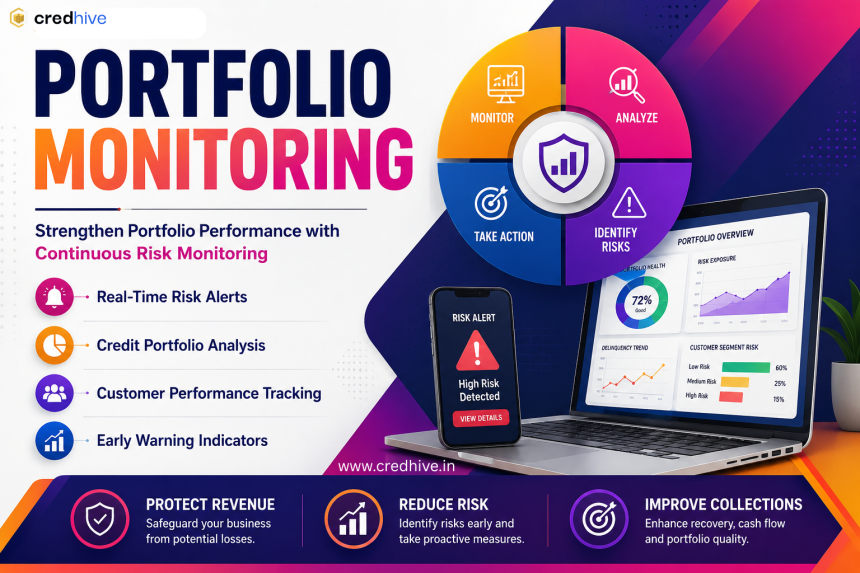

Portfolio Monitoring: A Complete Guide to Smarter Risk Management
Portfolio Monitoring is the process of continuously tracking the financial performance, risk profile, compliance position, and significant developments associated with customers, borrowers, investments, suppliers, or counterparties.
Financial risk does not remain constant after a loan is approved, an investment is made, or a business relationship begins. A company's financial position, compliance status, ownership, credit behavior, and operating conditions can change over time. This makes ongoing risk assessment essential for organizations managing large portfolios.
Portfolio Monitoring is the process of continuously tracking the financial performance, risk profile, compliance position, and significant developments associated with customers, borrowers, investments, suppliers, or counterparties.
For banks, NBFCs, fintech companies, lenders, insurers, and enterprises, effective Portfolio Monitoring provides visibility beyond the initial underwriting or due diligence process. It helps risk teams identify early warning signals, prioritize accounts for review, and take timely action when a customer's risk profile changes.
Table of Contents
- What Is Portfolio Monitoring?
- Why Is Portfolio Monitoring Important?
- What Does Portfolio Monitoring Track?
- How Does Portfolio Monitoring Work?
- Role of Technology and AI
- Benefits of Portfolio Monitoring
- Best Practices
- FAQs
- Conclusion
What Is Portfolio Monitoring?
Portfolio Monitoring is the continuous assessment of entities and exposures within a business or financial portfolio.
Unlike initial credit assessment, which provides a snapshot of a customer at a specific point in time, portfolio monitoring focuses on what happens after onboarding or approval.
Depending on the organization, monitoring may cover:
- Financial performance
- Credit exposure
- Payment behavior
- Compliance status
- Litigation and legal events
- Ownership changes
- Director changes
- Business activity
- Industry developments
- Early warning indicators
For example, a lender may approve a business loan after reviewing strong financial statements. Several months later, the company's revenue could decline, debt could increase, or new litigation could emerge. Portfolio Monitoring helps the lender identify such changes and determine whether the account requires further assessment.
Why Is Portfolio Monitoring Important?
Identifying Emerging Risk
A company that appears financially stable during onboarding may face financial or operational difficulties later. Continuous monitoring helps identify these changes before they become significant problems.
Supporting Better Decisions
Updated portfolio information helps risk teams make informed decisions about credit limits, renewals, pricing, collections, exposure, and account reviews.
Improving Operational Efficiency
Traditional monitoring often requires employees to manually collect information from multiple sources. Automated Portfolio Monitoring can consolidate relevant information and reduce repetitive research.
Strengthening Compliance
Monitoring corporate and regulatory developments can help organizations identify compliance concerns and determine whether further investigation is required.
Protecting Portfolio Quality
Early identification of deteriorating accounts allows organizations to respond proactively and potentially reduce financial losses.
What Does Portfolio Monitoring Track?
Financial Performance
Organizations can monitor revenue, profitability, debt, liquidity, cash flow, and other financial indicators to understand whether a business is becoming stronger or weaker.
Credit and Payment Behavior
Lenders can track repayment patterns, outstanding exposure, credit utilization, overdue payments, and other indicators relevant to borrower risk.
Legal and Litigation Events
New lawsuits, regulatory proceedings, insolvency developments, or other legal events can influence the risk associated with a customer or counterparty.
Compliance Developments
Changes in tax, corporate, licensing, or regulatory compliance can create financial and operational risks.
Ownership and Management Changes
Changes in directors, promoters, shareholders, or ownership structures may indicate important developments within a company.
Business Activity
Changes in business operations, industry exposure, geographic presence, or company structure can provide additional context for risk teams.
How Does Portfolio Monitoring Work?
An effective Portfolio Monitoring process generally follows a structured workflow.
1. Portfolio Segmentation
Accounts are categorized based on exposure, industry, geography, customer type, risk level, or other relevant characteristics.
2. Data Collection
Financial, business, legal, credit, and compliance information is collected from relevant internal and external sources.
3. Risk Analysis
Collected information is evaluated against predefined risk parameters, policies, and thresholds.
4. Alert Generation
Significant developments can trigger alerts. Examples include financial deterioration, new litigation, compliance changes, or ownership changes.
5. Investigation and Review
Risk professionals investigate important alerts to determine their potential impact.
6. Corrective Action
Depending on the findings, organizations may increase monitoring frequency, adjust exposure, conduct additional due diligence, or take other appropriate action.
Role of Technology and AI in Portfolio Monitoring
Technology is making Portfolio Monitoring more scalable, particularly for organizations managing thousands of customers or counterparties.
Artificial Intelligence
AI can analyze large amounts of structured and unstructured business information and identify relationships or patterns that may require attention.
Automation
Automated systems can refresh business information, track predefined events, generate alerts, and support periodic portfolio reviews.
Predictive Analytics
Predictive analytics can help identify accounts that may require closer attention based on historical outcomes and current risk indicators.
Centralized Dashboards
Portfolio dashboards can provide risk teams with a consolidated view of account-level developments, portfolio trends, alerts, and risk categories.
Technology should support rather than replace professional judgment. Strong data governance, model validation, clear policies, and human review remain important components of responsible risk management.
Benefits of Portfolio Monitoring
Effective Portfolio Monitoring can help organizations achieve:
- Earlier identification of emerging risks
- Better visibility into portfolio health
- Faster risk reviews
- Reduced manual research
- Improved compliance oversight
- More informed credit decisions
- Better allocation of risk resources
- Stronger portfolio quality
- Improved customer and counterparty management
For example, an NBFC managing a large SME loan portfolio may use automated monitoring to identify borrowers experiencing declining financial performance. Instead of manually reviewing every borrower at the same frequency, the risk team can prioritize accounts showing meaningful changes.
Best Practices for Portfolio Monitoring
Define Clear Monitoring Parameters
Organizations should establish which financial, legal, credit, and compliance indicators need to be monitored.
Use Risk-Based Monitoring
Higher-risk accounts may require more frequent monitoring than low-risk relationships.
Combine Multiple Risk Signals
A single indicator may not provide sufficient context. Combining financial, legal, compliance, ownership, and operational information can provide a more complete risk picture.
Maintain Current Data
Outdated information can lead to incorrect decisions. Data should be refreshed regularly and validated where necessary.
Create Actionable Alerts
Alerts should highlight meaningful developments rather than generating excessive notifications that teams cannot effectively review.
Maintain an Audit Trail
Organizations should document significant alerts, reviews, decisions, and actions to support accountability and governance.
Frequently Asked Questions
What is Portfolio Monitoring in banking?
Portfolio Monitoring in banking involves continuously tracking borrowers, credit exposures, financial performance, repayment behavior, compliance developments, and other risk indicators after credit has been approved.
Why is Portfolio Monitoring important for NBFCs?
It helps NBFCs manage large borrower portfolios by identifying early warning signals, prioritizing accounts for review, monitoring exposure, and supporting timely risk management decisions.
What are the key indicators used in Portfolio Monitoring?
Common indicators include financial performance, repayment behavior, credit exposure, litigation, regulatory compliance, ownership changes, director changes, and significant changes in business activity.
How does AI improve Portfolio Monitoring?
AI can analyze large volumes of business data, identify patterns across multiple risk indicators, automate repetitive monitoring tasks, and help risk teams prioritize accounts that may require further investigation.
What are early warning signals in Portfolio Monitoring?
Early warning signals are developments that may indicate increasing risk, such as declining revenue, rising debt, payment delays, new litigation, compliance issues, ownership changes, or significant business disruptions.
Conclusion
Portfolio Monitoring is an essential part of modern risk management because the financial and operational condition of a customer or counterparty can change significantly after the initial decision.
By continuously monitoring financial performance, credit behavior, legal developments, compliance, ownership, and other relevant indicators, organizations can identify emerging risks earlier and respond more effectively.
For banks, NBFCs, fintech companies, lenders, insurers, and enterprises, combining reliable data with automation, AI, analytics, and risk-based monitoring can improve operational efficiency and portfolio visibility. A proactive approach to Portfolio Monitoring ultimately helps organizations make better-informed decisions, protect portfolio quality, and manage changing risks with greater confidence.
Vigortrix Review: Is It Worth Trying? Results, Pricing & Where to Buy
What Is Vigortrix? Vigortrix is a men's vitality dietary supplement designed to support e...




The Connection Between Employee Development and Organizational Perform...
Golden Touch Fusion CBD – Premium Quality and Natural Wellness Support
What Are Golden Touch Fusion CBD? Golden Touch Fusion are a cannabidiol (CBD) supplement...