
Journey to the Top: Learn Where Mount Everest Stands in the World
Explore the breathtaking Himalayas and discover the exact location of Mount Everest, the world’s tallest peak.
Rising above the clouds, Mount Everest towers as the tallest peak on Earth. Standing at an awe-inspiring height of 8,848 meters (29,029 feet), this majestic mountain captures the imagination of adventurers, climbers, and nature lovers worldwide. Mount Everest is not just a peak; it is a symbol of human endurance, natural beauty, and the power of the Himalayas.
Mount Everest sits on the border between Nepal and the Tibet Autonomous Region of China. Its southern side lies in Nepal’s Khumbu region, while the northern side is in Tibet. The Everest region is part of the Himalayan mountain range, which spans several countries in South Asia. The Khumbu region in Nepal is especially famous for its trekking routes, Sherpa culture, and breathtaking mountain scenery.
Visitors approaching Mount Everest from Nepal often start their journey from Lukla, a small town with an airport that connects the region to the rest of the country. From there, trekkers pass through traditional Sherpa villages, Buddhist monasteries, and dense forests before reaching higher altitudes with panoramic views of the Himalayas.
For travelers who want to experience Mount Everest up close, the Everest Base Camp trek is the most popular route. Here are some key statistics:
- Average Trek Length: 12–14 days
- Total Distance: Approximately 130 kilometers (round trip)
- Maximum Elevation: 5,364 meters (Everest Base Camp)
This trek allows adventurers to experience stunning landscapes, glaciers, suspension bridges, and high-altitude villages. While climbing Mount Everest itself requires advanced mountaineering skills, the trek to base camp is achievable for many who are reasonably fit and prepared.
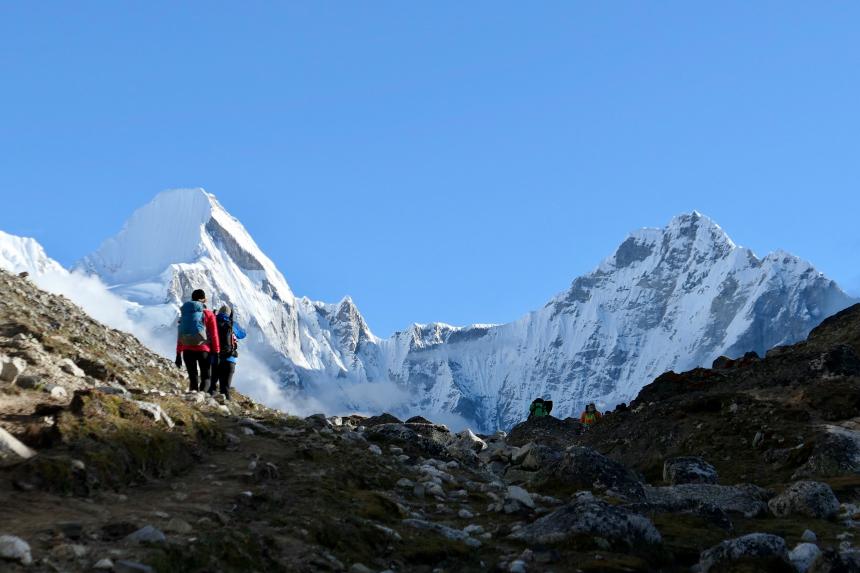
The trek begins in Lukla, where the mountains gradually reveal themselves. The trail passes through Namche Bazaar, a bustling Sherpa town that serves as a hub for trekkers. As you ascend, the terrain changes from forests to rocky landscapes. The air becomes thinner, and the snow-capped peaks of Everest, Lhotse, and Ama Dablam dominate the skyline.
Along the way, trekkers visit monasteries and local schools, gaining insight into Sherpa culture. Small tea houses and lodges provide rest and local cuisine, making the journey comfortable while maintaining an authentic Himalayan experience.
Mount Everest has long fascinated explorers, climbers, and scientists. Its height and challenging conditions make it a testing ground for human endurance. For trekkers, Everest is a symbol of adventure, inspiring visitors to push their limits and enjoy nature’s grandeur. Photographers and nature lovers are drawn to its dramatic vistas, glaciers, and wildlife.
Beyond the physical challenge, the region’s cultural heritage adds richness to the experience. The Sherpa people, who have lived in the Everest region for centuries, are known for their hospitality, mountaineering expertise, and spiritual traditions. Visiting monasteries and learning about their way of life creates a unique, meaningful journey.
- Plan Ahead: Booking flights to Lukla and accommodations in advance is essential, especially during peak trekking seasons (March–May and September–November).
- Acclimatize Properly: High altitudes can cause altitude sickness. Take rest days and hydrate frequently.
- Pack Smart: Layered clothing, sturdy boots, and trekking poles are essential.
- Hire a Guide: Experienced guides enhance safety, help with logistics, and provide local knowledge.
- Capture Memories: Bring a camera to photograph the stunning landscapes and local culture.
Mount Everest is more than a mountain; it is a symbol of adventure, culture, and natural wonder. Standing on the border of Nepal and Tibet, it dominates the Himalayas with unparalleled grandeur. Whether you dream of climbing it or trekking to its base, learning where Mount Everest stands and exploring its surroundings is an experience like no other. From the bustling Sherpa villages to the breathtaking glaciers, the journey offers memories that last a lifetime.
The Everest region invites travelers to challenge themselves, immerse in local culture, and witness the ultimate beauty of the world’s tallest peak. A journey to Mount Everest is not just a trip—it is an adventure that inspires and transforms.
Oil and Grease Paper Price Trend Q2 2026 | Price Trends, Forecast, Cha...

Cotton Yarn Price Trend Q2 2026 | Price Trends, Forecast, Chart, Price...
The Panerai Rubber Strap Deal Worth Grabbing This Halloween


How Can Childcare Centres Maintain Cleaner Playrooms and Rest Areas?

Polyester Industrial Yarn Price Trend Q2 2026 | Price Trends, Forecast...