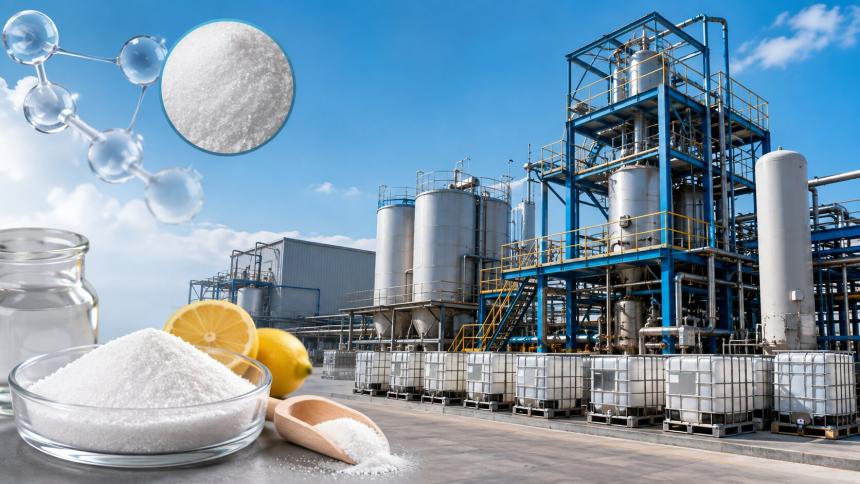

How to Set Up a Sodium Citrate Production Plant in 2026: Complete Business Guide
Sodium citrate is the sodium salt of citric acid, appearing as a white, crystalline, or granular powder that is highly soluble in water.
IMARC Group's comprehensive DPR report, "Sodium Citrate Production Plant Project Report 2026: Industry Trends, Plant Setup, Machinery, Raw Materials, Investment Opportunities, Cost and Revenue," provides a complete roadmap for setting up a sodium citrate production unit. The sodium citrate market is driven by increasing health awareness and innovations in food technology. The global sodium citrate market size was valued at USD 954.6 Million in 2025. According to IMARC Group estimates, the market is expected to reach USD 1,375.1 Million by 2034, exhibiting a CAGR of 4.01% from 2026 to 2034.
What is Sodium Citrate?Sodium citrate is the sodium salt of citric acid, appearing as a white, crystalline, or granular powder that is highly soluble in water. Commonly known as trisodium citrate or "sour salt," it serves as a versatile food additive (E331), functioning as a buffering agent, emulsifier, and preservative in products like processed cheese — enabling a smooth, non-greasy melt — and carbonated drinks. In medical applications, it acts as a critical anticoagulant in blood storage by chelating calcium ions. It is also used to treat metabolic acidosis and prevent kidney stones by raising blood and urine pH. With a slightly sour and salty taste, it is generally recognized as safe (GRAS) by the FDA and commonly used in molecular gastronomy.
Key Investment Highlights- Process Used: Fermentation (or direct neutralization of citric acid), neutralization with sodium hydroxide or sodium carbonate, purification (activated carbon treatment, ion exchange), evaporation and crystallization, centrifugation, drying, and packaging.
- End-use Industries: Food and beverage, pharmaceuticals, cosmetics and personal care, water treatment, construction, and cleaning products and detergents.
- Applications: Food additive E331 (buffering agent, emulsifier, preservative in processed cheese, soft drinks, confectionery), anticoagulant in blood collection and storage bags, buffering agent in pharmaceutical formulations, metabolic acidosis treatment, kidney stone prevention (urinary alkalizer), pH regulator in cosmetics and skincare, chelating agent and water softener in detergents, and sequestering agent in industrial processes.
The proposed production facility is designed with an annual production capacity ranging between 20,000–50,000 tons, enabling economies of scale while maintaining operational flexibility.
Sodium Citrate Plant Profit MarginsThe project demonstrates healthy profitability potential under normal operating conditions. Gross profit margins typically range between 30–40%, supported by stable demand and value-added applications.
- Gross Profit: 30–40%
- Net Profit: 15–22%
The operating cost structure of a sodium citrate production plant is primarily driven by raw material consumption, particularly citric acid (the primary feedstock for neutralization), which accounts for approximately 55–65% of total operating expenses (OpEx). Utility costs account for 15–20% of OpEx, reflecting the energy requirements of evaporation, crystallization, and drying operations.
- Raw Materials: 55–65% of OpEx (citric acid and sodium hydroxide/sodium carbonate as dominant inputs)
- Utilities: 15–20% of OpEx
- Food Industry: Used as an acidity regulator (E331), emulsifier, preservative, and flavor enhancer in processed cheese (enables smooth, non-greasy melt), carbonated soft drinks and energy drinks, confectionery, gelatin desserts, ice cream, and canned products.
- Pharmaceuticals: Acts as a buffering agent in oral and injectable formulations, anticoagulant in blood collection tubes and blood storage bags (chelates calcium to prevent clotting), urinary alkalizer for metabolic acidosis treatment and kidney stone prevention, and component in oral rehydration solutions.
- Cosmetics and Personal Care: Used to control pH and buffer formulations in skincare lotions, shampoos, conditioners, cleansers, and other personal care products, improving stability and skin compatibility.
- Detergents and Cleaning Agents: Functions as a water softener (chelating calcium and magnesium ions), sequestering agent, and biodegradable phosphate substitute in laundry detergents, dishwashing liquids, and industrial cleaning formulations, improving cleaning efficiency without environmental harm.
- Crucial Industrial and Food Ingredient: Sodium citrate serves as a key additive across food and beverages, pharmaceuticals, detergents, and personal care products, functioning as a buffering agent, emulsifier, preservative, and acidity regulator, making it an essential compound for product stability and safety.
- Moderate but Justifiable Entry Barriers: While not as capital-intensive as specialty chemicals, consistent quality standards, precise pH control, purity requirements, and compliance with food-grade and pharma-grade certifications create meaningful entry barriers that favor experienced and process-disciplined manufacturers.
- Megatrend Alignment: Rising demand for processed foods, ready-to-drink beverages, pharmaceuticals, and personal care products is driving steady growth for sodium citrate. Health-conscious consumption trends and expanding global food supply chains further reinforce long-term demand.
- Policy and Healthcare Push: Government focus on food safety regulations, pharmaceutical manufacturing, and domestic chemical production (including initiatives like Make in India) indirectly supports sodium citrate demand through stricter quality compliance and increased local manufacturing.
- Localization and Supply Chain Reliability: Food processors, pharma companies, and FMCG manufacturers increasingly prefer reliable local suppliers to ensure consistent quality, faster delivery, and reduced dependency on imports, creating strong opportunities for regional sodium citrate producers with efficient sourcing and production systems.
- November 2025: Jungbunzlauer announced the successful acquisition of AGI (Alliance Gums & Industries), an expert blending company that creates formulated texturising solutions, based in France and formerly owned by Roquette Ventures. Jungbunzlauer is a leading ingredients producer of natural origin based on fermentation focusing on acidulants, texturants, specialties, and sweeteners. The company serves customers across the food and beverage, nutrition and health, and household markets, extending its sodium citrate and citrate derivative product portfolio.
Request for a Sample Report: https://www.imarcgroup.com/sodium-citrate-manufacturing-plant-project-report/requestsample
Key Insights Covered in the Sodium Citrate Production Plant ReportMarket Coverage:- Market Trends: Analysis of current and emerging trends in the sodium citrate and specialty citrate salt market, including clean-label food additive demand, pharmaceutical blood anticoagulant applications, and eco-friendly phosphate substitute in detergents.
- Market Segmentation: Breakdown of the market by product form (anhydrous, dihydrate, granules, powder), purity grade (food grade, pharmaceutical grade/USP, industrial grade), and end-use application (food and beverage, pharmaceuticals, cosmetics, water treatment, cleaning products).
- Regional Analysis: Distribution and performance of the sodium citrate market across key regions including Asia-Pacific (China as the dominant producer), North America, Europe, and emerging markets in India and Latin America.
- Price Analysis: Evaluation of pricing trends for sodium citrate across grades, along with key feedstock cost trends including citric acid (molasses/corn syrup-based fermentation product, the dominant input) and sodium hydroxide/sodium carbonate.
- Impact of COVID-19: Examination of the effects of the COVID-19 pandemic on pharmaceutical ingredient supply chains, food processing demand disruptions, and the acceleration of domestic specialty chemical manufacturing investment.
- Market Forecast: Outlook and projections for the sodium citrate production industry through 2034 (CAGR of 4.01%, reaching USD 1,375.1 Million).
- Product Overview: Comprehensive description of sodium citrate products including chemical form (trisodium citrate dihydrate C₆H₅Na₃O₇·2H₂O, or anhydrous), assay (≥99.0% for food/pharma grade), pH of aqueous solution (7.5–9.0 for trisodium citrate), heavy metal limits (Pb, As, Hg within food/pharma grade limits), chloride and sulfate content, water content (for dihydrate and anhydrous grades), and compliance with applicable standards (E331, USP, BP/EP, FCC, JECFA specifications, and GRAS status).
- Unit Operations Involved: Step-by-step breakdown of the two primary production routes: (1) Direct neutralization route (most common) — citric acid receiving and quality inspection; dissolution of citric acid in purified water; controlled neutralization with sodium hydroxide solution or sodium carbonate to pH 7.5–8.5 (forming trisodium citrate solution); activated carbon treatment for decolorization and impurity removal; filtration; evaporation and concentration; controlled cooling or evaporative crystallization (to produce trisodium citrate dihydrate crystals); centrifugation; drying (to controlled moisture for dihydrate or anhydrous grade); screening and classification; quality inspection and release testing; and packaging. (2) Fermentation-integrated route — citric acid fermentation (Aspergillus niger on molasses/corn syrup substrate) → filtration and purification → in-situ or downstream neutralization with NaOH → crystallization → centrifugation → drying → packaging.
- Mass Balance and Raw Material Requirements: Calculations for material inputs and outputs, including quantities of citric acid required per tonne of sodium citrate dihydrate produced (approximately 0.78–0.80 tonnes of anhydrous citric acid per tonne of trisodium citrate dihydrate, based on stoichiometry: C₆H₈O₇ + 3NaOH → C₆H₅Na₃O₇·2H₂O), sodium hydroxide consumption, activated carbon, and packaging materials.
- Quality Assurance Criteria: Standards and procedures ensuring sodium citrate product quality including assay by acid-base titration or ICP, pH of aqueous solution, heavy metal content (Pb, As, Hg by AAS or ICP-OES), chloride and sulfate content, water content by Karl Fischer or loss on drying, organic volatile impurities (for pharmaceutical grade), microbial testing (TPC, E. coli, Salmonella absence for food and pharma grades), and compliance with USP/BP/EP monographs, E331 specification, FCC (Food Chemicals Codex), and JECFA standards.
- Technical Tests: Essential tests including assay by acid-base titration (EDTA or NaOH method) or ICP-OES, pH by electrometric method, heavy metal testing by AAS or ICP-OES, water content by Karl Fischer titration, chloride and sulfate by turbidimetric or ion chromatography methods, alkalinity test, color (APHA), and microbial plate count (TPC, Salmonella, E. coli absence per food and pharmaceutical specifications).
- Land, Location, and Site Development: The location must offer easy access to key raw materials such as citric acid (from citric acid producers in China, India, or domestic fermentation plants) and sodium hydroxide or sodium carbonate. Proximity to target markets (food and beverage manufacturers, pharmaceutical companies, detergent producers) will help minimize distribution costs. The site must have robust infrastructure, including reliable transportation, utilities, and waste management systems. Compliance with local food-grade chemical manufacturing zoning laws and environmental regulations must also be ensured. Site development costs include acid-resistant neutralization reactors, filtration equipment, evaporation and crystallization buildings, activated carbon treatment area, and finished goods warehouse with humidity-controlled storage.
- Plant Layout: The layout should be optimized to enhance workflow efficiency, safety, and minimize material handling. Separate areas for raw material (citric acid and NaOH) receiving and storage, dissolution and neutralization section, activated carbon treatment and filtration area, evaporation and crystallization section, centrifuge room, drying and classification area, quality control laboratory (with titration, ICP-OES, Karl Fischer instrumentation), packaging area (humidity-controlled), and finished goods warehouse must be designated. Space for future expansion should be incorporated.
- Machinery Requirements and Costs: High-quality, acid-resistant and food-grade machinery must be selected. Essential equipment includes citric acid dissolution tanks (stainless steel with agitators), NaOH dosing systems, pH-controlled neutralization reactors, activated carbon contactors, filter presses or leaf filters, multiple-effect evaporators or MVR evaporators, cooling or forced-circulation crystallizers, pusher or peeler centrifuges, fluidized bed or rotary dryers, vibrating screens and classifiers, IBC filling and sealing machines, and automatic bag filling machines. All machinery must comply with food-grade GMP standards (3A Sanitary, FDA 21 CFR equipment standards) and food safety hygiene requirements.
- Raw Material Requirements and Costs: Reliable suppliers must be secured for citric acid (the dominant raw material at 55–65% of OpEx, exposed to citric acid market price fluctuations linked to molasses and corn syrup feedstock prices), sodium hydroxide (caustic soda, food or pharma grade, UN 1824), activated carbon (for decolorization), and packaging materials (multilayer food-grade bags, HDPE drums, fiber drums with PE liners). Long-term contracts with citric acid producers should be negotiated to stabilize pricing.
- Packaging Requirements and Costs: Specifications for sodium citrate packaging: food-grade supply in 25 kg multilayer kraft bags with PE inner liner or HDPE drums; pharmaceutical-grade (USP/BP/EP) in fiber drums with double PE inner liner or HDPE drums in humidity-controlled conditions; bulk industrial supply in FIBC jumbo bags; retail food-grade packaging in consumer-size units for molecular gastronomy and home cooking markets; including food additive designation (E331), grade (food/pharmaceutical), lot number, best-before date, FSSAI/FDA/EC compliance markings, and SDS documentation.
- Transportation Requirements and Costs: Logistics planning and cost estimation for the inbound transport of citric acid (solid, by road in 25 kg bags, supersacks, or bulk tanker for liquid citric acid solution) and caustic soda (UN 1824, corrosive liquid road tanker or solid in bags), and outbound dispatch of finished sodium citrate to food and beverage manufacturers, pharmaceutical companies, detergent producers, and cosmetics ingredient distributors domestically and for export.
- Utility Requirements and Costs: Analysis of utility needs including electricity (for evaporators, crystallizers, centrifuges, dryers, and packaging lines), steam (for evaporation and drying), cooling water (for crystallizers and condensers), process water (for dissolution and washing), compressed air, and nitrogen (for inert atmosphere storage of moisture-sensitive pharmaceutical grade), along with their associated costs (15–20% of total OpEx, reflecting energy-intensive evaporation and drying).
- Human Resource Requirements and Costs: Workforce planning including chemical process operators, neutralization and crystallization technicians, quality control analysts (titration, ICP-OES, Karl Fischer competent), food safety and GMP compliance officers (for food and pharmaceutical grade production), packaging and dispatch staff, safety officers, maintenance engineers, and plant management, along with costs for labor, food safety and GMP training, and hygiene compliance.
- Capital Investment: The total capital investment depends on plant capacity, technology, and location. This investment covers land acquisition, site preparation, and necessary infrastructure. Machinery costs account for the largest portion of total capital expenditure, particularly multiple-effect evaporators, crystallizers, and centrifuges.
- Equipment Costs: Equipment costs for neutralization reactors, activated carbon contactors, filter presses, multiple-effect or MVR evaporators, crystallization units, centrifuges, drying ovens, and packaging machines represent a significant portion of capital expenditure. The scale of production and automation level will determine the total cost of machinery.
- Operating Costs: In the first year of operations, the operating cost for the sodium citrate production plant is projected to be significant, covering raw materials (55–65% of OpEx, dominated by citric acid), utilities (15–20% of OpEx), depreciation, taxes, packing, transportation, and repairs and maintenance. By the fifth year, the total operational cost is expected to increase substantially due to inflation, market fluctuations, and potential rises in the cost of key materials, particularly citric acid.
- Revenue Projections: Expected income from the sale of food-grade sodium citrate (E331, for food processors and beverage companies), pharmaceutical-grade sodium citrate (USP/BP/EP, for pharmaceutical manufacturers and blood bank supply), industrial-grade sodium citrate (for detergent formulators, water treatment, and personal care manufacturers), and potential premium molecular gastronomy/retail grade products.
- Taxation and Depreciation: Analysis of tax obligations, applicable government incentives for food and pharmaceutical ingredient manufacturing, Make in India benefits for specialty chemical production, export promotion for pharmaceutical-grade products, and asset depreciation over time.
- Profit Projections: Estimated profitability based on costs, revenues, production capacity utilization (20,000–50,000 MT/year), gross margin (30–40%), and net margin (15–22%) under prevailing market conditions.
- Financial Analysis: A detailed financial analysis, including income projections, expenditures, and break-even points, covering cash flow analysis, ROI, NPV, IRR, payback period, sensitivity analysis to citric acid feedstock price movements, and break-even point. This analysis aids in securing funding and formulating a clear financial strategy.
Ask Analyst for Customization: https://www.imarcgroup.com/request?type=report&id=9473&flag=C
Customization Options Available:- Plant Location: The report can be customized based on the location (country/region) of your sodium citrate production plant.
- Plant Capacity: The plant's capacity can be customized based on your requirements (20,000–50,000 MT/year or custom scale).
- Product Grade Focus: Configuration for food-grade (E331), pharmaceutical-grade (USP/BP/EP), or industrial-grade sodium citrate production.
- Plant Machinery and Costs: Plant machinery and costs can be customized based on your requirements.
- Any additions to the current scope can also be provided based on your requirements.
- How has the sodium citrate market performed so far and how will it perform in the coming years?
- What is the market segmentation of the global sodium citrate market?
- What is the regional breakup of the global sodium citrate market?
- What are the price trends of citric acid, sodium hydroxide, and other key feedstocks?
- What is the structure of the sodium citrate industry and who are the key players?
- What are the various unit operations involved in a sodium citrate production plant?
- What is the total size of land required for setting up a sodium citrate production plant?
- What is the layout of a sodium citrate production plant?
- What are the machinery requirements for setting up a sodium citrate production plant?
- What are the raw material requirements for setting up a sodium citrate production plant?
- What are the packaging requirements for setting up a sodium citrate production plant?
- What are the transportation requirements for setting up a sodium citrate production plant?
- What are the utility requirements for setting up a sodium citrate production plant?
- What are the human resource requirements for setting up a sodium citrate production plant?
- What are the infrastructure costs for setting up a sodium citrate production plant?
- What are the capital costs for setting up a sodium citrate production plant?
- What are the operating costs for setting up a sodium citrate production plant?
- What should be the pricing mechanism of the final product?
- What will be the income and expenditures for a sodium citrate production plant?
- What is the time required to break even?
- What are the profit projections for setting up a sodium citrate production plant?
- What are the key success and risk factors in the sodium citrate industry?
- What are the key regulatory procedures and requirements for setting up a sodium citrate production plant?
- What are the key certifications required for setting up a sodium citrate production plant?
Leading producers in the global sodium citrate industry include several multinational companies with extensive production capacities and diverse application portfolios. Key players include:
- Jungbunzlauer Suisse AG
- Cargill, Incorporated
- Archer-Daniels-Midland Company (ADM)
- Pan Chem Corporation
- Fuso Chemical Co., Ltd.
All of which serve end-use sectors such as food and beverage, pharmaceuticals, cosmetics, water treatment, construction, and cleaning products.
How IMARC Can Help?IMARC Group is a global management consulting firm that helps the world's most ambitious changemakers to create a lasting impact. The company provides a comprehensive suite of market entry and expansion services. IMARC offerings include thorough market assessment, feasibility studies, company incorporation assistance, factory setup support, regulatory approvals and licensing navigation, branding, marketing and sales strategies, competitive landscape and benchmarking analyses, pricing and cost research, and procurement research.
Services:- Plant Setup
- Factory Auditing
- Regulatory Approvals, and Licensing
- Company Incorporation
- Incubation Services
- Recruitment Services
- Marketing and Sales
IMARC Group
134 N 4th St. Brooklyn, NY 11249, USA
Email: [email protected]
Tel No: (D) +91 120 433 0800
United States: (+1-201-971-6302)




Convenient Ways to Buy Wine Online Ontario
Exploring options to buy wine online Ontario helps wine enthusiasts discover selections fr...
