
How Does Closed Cell Spray Foam Insulation Control Condensation in Wall Cavities?
Closed-cell spray foam prevents condensation by creating a total air seal and acting as a high-performance vapor retarder. By sealing gaps where warm, moist air meets cold surfaces, condensation risks are virtually eliminated because the material moves the dew point outside the wall assembly. This is one of the main reasons homeowners choose Closed Cell Spray Foam Insulation in mount-greenwood when looking to improve moisture control and indoor comfort.
This guide explains the mechanical and thermal properties that make this material a top choice for moisture management. You will learn how it functions in different climates and why it remains a preferred solution for long-term structural health.
Expert insulation installers rely on these properties to ensure buildings stay dry and energy efficient. The following details are based on industry standards for thermal boundaries and building science.
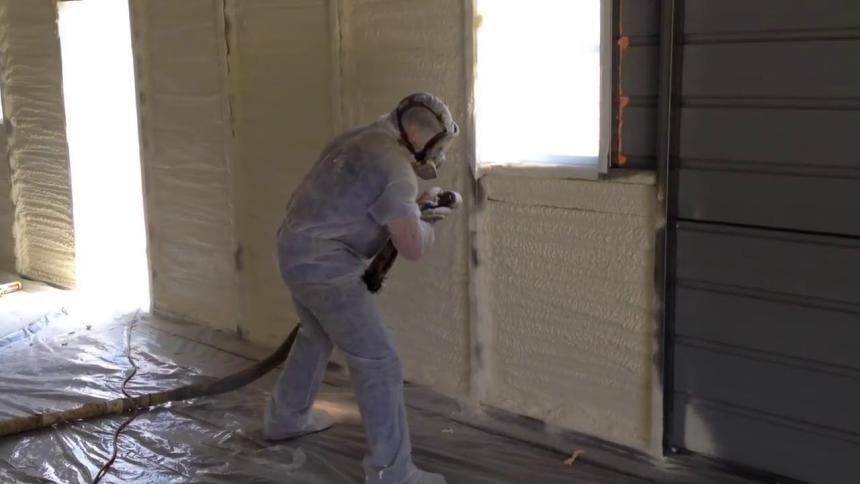
Mechanical process of moisture control in wall systems
Condensation happens when warm, humid air touches a cold surface and turns into liquid water. In a standard wall, this usually occurs on the back of the exterior sheathing during the winter months. Because closed-cell spray foam condensation control is built into the material’s density, it stops air from reaching those cold spots.
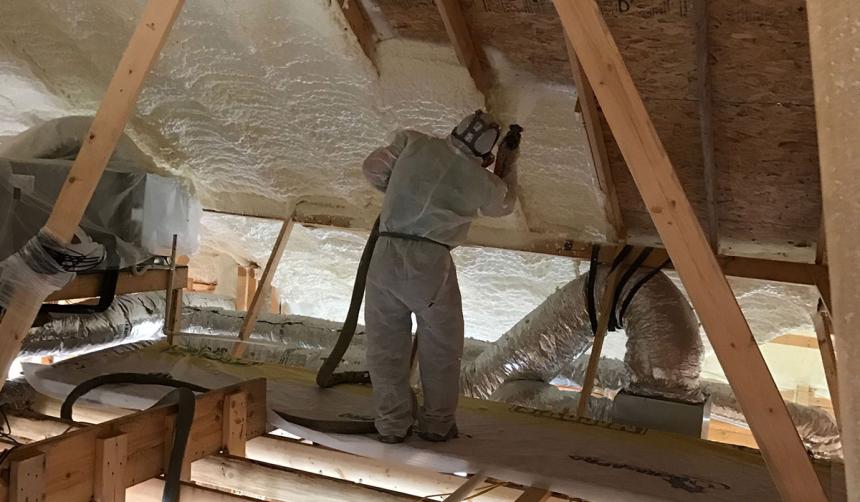
The foam is applied as a liquid that expands into a rigid state. This expansion fills every crack and crevice that traditional fiberglass batts or cellulose might miss. When you remove the air movement, you remove the vehicle that carries moisture into your walls.
This process is critical for maintaining the integrity of the building envelope. Without air leakage, there is no way for water vapor to hitch a ride into the hidden spaces of your home. It creates a static environment that is much easier to regulate with your HVAC system.
The functionality of a spray foam moisture barrier
A spray foam moisture barrier is created because the cells in the foam are closed and packed tightly together. This density prevents water from soaking through or being absorbed by the material. Unlike open-cell foam, which can hold water like a sponge, closed-cell versions repel liquid entirely.
This barrier is especially useful in flood-prone areas or high-humidity zones where exterior water might penetrate the siding. It provides a secondary line of defense against rain penetration and internal humidity. By keeping the wall cavity dry, you protect the wood studs and drywall from rot.
These physical protections translate into long-term financial benefits. Recent market data shows that homes with high-density foam insulation see a significant reduction in moisture-related repairs over a twenty-year period. This durability makes it a favorite for architects designing high-performance buildings.
Bonus Tip: If you live in a coastal area, using closed-cell foam adds structural strength to your walls. This helps them better resist high winds during storms.
Managing spray foam vapor permeability
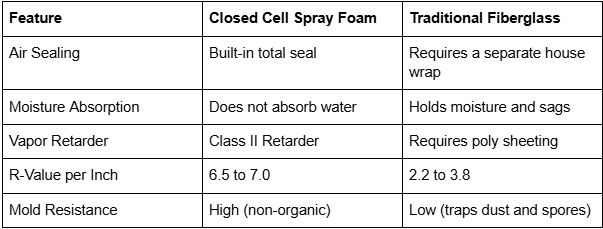
The concept of spray foam vapor permeability refers to how much moisture can pass through a material over time. Closed-cell foam has a very low perm rating, often below 1.0 perms at a two-inch thickness. This classifies it as a Class II vapor retarder.
In most building codes, this means you do not need to install an extra plastic vapor barrier. The foam does both jobs at once. This simplifies the construction process and reduces the chance of trapping moisture between two different layers of plastic or foil.
When closed-cell spray foam condensation is managed this way, the wall stays breathable enough to avoid internal "sweating" but tight enough to block bulk vapor. It is a balanced approach to modern building science.
Why is closed-cell foam waterproof?
Many property owners ask, " Is closed cell foam waterproof? While no building material is completely indestructible, closed-cell foam is considered water-resistant and is the only insulation material approved by FEMA to withstand floodwaters.
Because it does not absorb water, it maintains its R-value even after exposure to moisture. If a pipe leaks or a window fails, the foam won't sag or lose its shape. You can simply dry the area out, and the insulation remains fully functional.
Long-term mold resistance and air quality
A major benefit for homeowners is the natural mold resistance of spray foam. Mold needs three things to grow: moisture, a food source, and the right temperature. Standard insulation often traps dust and organic debris, which mold feeds on when it gets damp.
Spray foam insulation is made of inert polymer materials that do not serve as a food source for mold or pests. By controlling the temperature of the wall and blocking liquid water, it creates an environment where mold cannot survive. This leads to better indoor air quality and fewer allergens in the living space.
Buildings using this technology often report 40 percent lower allergen counts compared to those with traditional ventilated wall systems. It effectively blocks the entry of outdoor spores and pollutants.
Regional performance in extreme temperatures
In cold northern climates, the interior of a home is warm while the outside is freezing. Without proper sealing, indoor humidity can seep into the walls and freeze. Closed-cell foam keeps the interior side of the exterior sheathing warm enough to prevent this "sweat" from forming.
In hot, humid southern climates, the process is reversed. Cool air-conditioned interiors can cause moisture from the humid outdoor air to condense on the back of the drywall. The foam acts as a shield, keeping that heavy humidity away from the cool interior surfaces.
Regardless of the season, the goal is to keep the "dew point" inside the foam itself. Since the foam is air-impermeable, there is no air at that dew point to condense. This is the secret to why closed-cell spray foam condensation is rarely an issue for property owners.
Essential steps before you choose an insulation methodVerify wall cavity depth
Ensure your studs are deep enough to accommodate the required thickness for a vapor seal. Most codes require at least two inches of closed-cell foam to achieve a proper vapor retarder rating.
Evaluate current ventilation
Check if your attic or crawlspace has enough airflow to handle a tighter building envelope. When you seal the walls, you may need to adjust how your house breathes in other areas.
Check for existing damage
Repair any current wood rot or leaks before the foam is applied. The material is so effective at sealing that it will trap any existing moisture or damage behind it if not addressed first.
Assess contractor experience
Look for teams that understand the specific chemical mix needed for your local temperature. Professional application is the only way to guarantee the foam cures correctly and performs as expected.
Bonus Tip: Always ask for a "blower door test" after installation. This measures how airtight your home has become and confirms that the condensation control measures are working.
Structural integrity and building lifespan
Investing in high-quality spray foam insulation is about more than just a lower power bill. It is about protecting the "bones" of the building. Moisture is a leading cause of structural failure in residential properties. By managing the dew point, you stop the slow decay of wood and metal components.
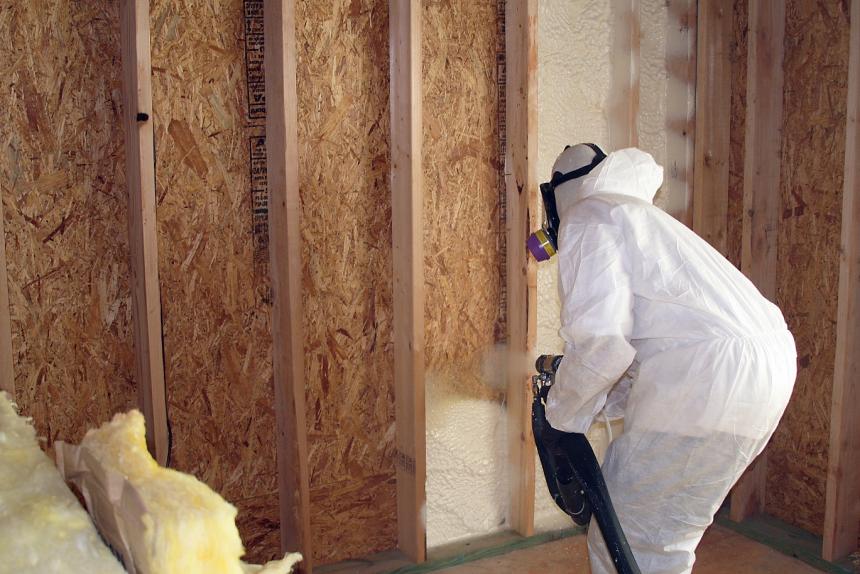
The rigidity of the foam also prevents the house from shifting or creaking as much. It bonds to the sheathing and the studs, creating a monolithic structure. This bond makes it much harder for water to find a path into the home through small gaps or nail holes.
Final thoughts on moisture management
Managing moisture in a building requires a balance of thermal resistance and air movement control. Closed-cell foam provides a solution by combining these needs into one application. It stops air leaks, resists water absorption, and acts as a vapor retarder to keep wall cavities dry.
This protection works in all seasons and climates. It ensures that your property remains structurally sound and energy efficient for years. You should evaluate your specific local weather patterns and building age to determine how this technology can best serve your needs.
Contact South Chicago Insulation for a professional consultation and free quote
If you are dealing with damp walls or high energy bills, getting a professional assessment is the best next step for your property. South Chicago Insulation offers expert guidance on how to properly seal your home or business using the latest foam technologies. You can reach their knowledgeable team at (779) 803-8025 or via email at [email protected] to discuss your specific project needs.
They provide detailed inspections and can help you understand the specific requirements for your building's layout. For a free quote or to see their location, visit their office at https://maps.app.goo.gl/FfiqVZBuVts5D5918 and discover how they can help protect your investment from moisture damage. Working with a dedicated provider ensures that your closed-cell spray foam condensation control is handled with the precision required for long-term success.
Common questions about foam and condensationCan I use closed-cell foam in an old house with existing moisture issues?
Yes, but the source of the moisture must be fixed first. The foam prevents new condensation from forming, but it should not be used to cover up a current leak or active wood rot.
Does the foam need a separate plastic vapor barrier?
In most cases, no. At a thickness of two inches or more, closed-cell foam acts as its own vapor retarder. Adding plastic over it can actually trap moisture and cause problems.
Will the foam cause the wood studs to rot?
No, it actually protects them. By sealing the wood and keeping it at a consistent temperature, the foam prevents the cycles of wetting and drying that lead to rot.
How long does the condensation protection last?
The physical properties of the foam are designed to last the lifetime of the building. It does not sag or settle over time, meaning the air seal remains intact for decades.
Is it safe for indoor air quality?
Once the foam has fully cured, which usually takes about 24 hours, it is inert. It improves air quality by blocking outdoor pollutants and mold spores from entering through the walls.

Why James Deller Believes Culture Drives Long-Term Performance
Why James Deller Believes Culture Drives Long-Term Performance