Emission Monitoring System Market: Compliance, Digitalization, and Growth Outlook (2025–2033)
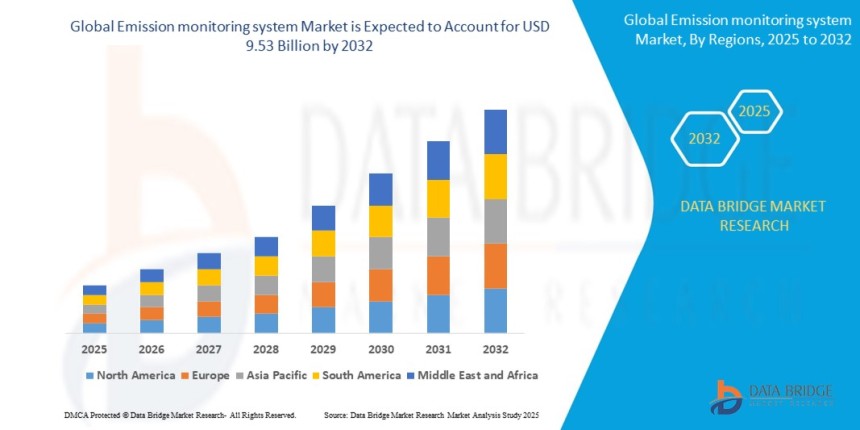
Introduction Emission Monitoring Systems (EMS)—including Continuous Emission Monitoring Systems (CEMS) and Predictive/Parametric Emission Monitoring Systems (PEMS)—are critical to verifying air-pollutant and greenhouse-gas compliance across power, oil & gas, chemicals, cement, metals, and waste-to-energy plants. As climate targets tighten and ESG disclosures mature, EMS is transitioning from a compliance checkbox to a core operational intelligence layer for heavy industry. Source - https://www.databridgemarketresearch.com/reports/global-emission-monitoring-system-market Market Overview 2024 Market Size: ~USD 3.8–4.2 billion 2033 Forecast: USD 6.0–6.8 billion CAGR (2025–2033): 5.5–6.5% Growth is driven by stricter regulations, plant modernizations, and digital upgrades (edge analytics, cloud dashboards, and cybersecurity-ready data handling). What’s Being Monitored Typical target species/parameters: NOx, SO₂, CO, CO₂, O₂, VOCs, NH₃ slip, HCl/HF, Hg (vapor), dust/PM, opacity, flow, pressure, temperature, moisture, and stack velocity—plus methane in upstream oil & gas and N₂O in nitric acid and adipic acid plants. Technology Landscape Extractive CEMS (hot/wet, dry) and in-situ probes dominate, supported by these analytical techniques: NDIR/NDIR-TDL for CO, CO₂, SO₂; TDLAS for NH₃, HCl/HF, H₂O; DOAS/UV for SO₂/NOx across wide pathlengths; FTIR for multi-component and low-level detection; Electrochemical for O₂ and specialty gases; Paramagnetic for O₂; Cavity Ring-Down/Quantum Cascade for trace gases and greenhouse gases. Particulate and opacity are addressed via laser scattering, triboelectric, and opacity monitors. Flow meters (ultrasonic, differential pressure) and moisture analyzers complete the stack. All feed a DAHS (Data Acquisition & Handling System) with audit trails, QA/QC, and reporting formats aligned to local rules. CEMS vs. PEMS CEMS: Direct, instrument-based measurement; preferred for high-risk stacks, waste incineration, and when required by permits. PEMS: Software models (e.g., neural/first-principles hybrids) infer emissions from process variables; attractive for multi-unit plants seeking lower capex/opex and redundancy. Many sites deploy hybrid EMS (PEMS with periodic CEMS validation). Regulatory Drivers (Illustrative) United States: EPA 40 CFR Part 60/75 for criteria pollutants and CO₂ in power and large industrial sources. Europe: Industrial Emissions Directive (IED), BAT/BREF conclusions, and carbon reporting obligations. Asia: Tightening standards in China, India (continuous online monitoring mandates for selected sectors), Japan, South Korea. Middle East & Latin America: New refineries, petrochemicals, and utilities require EMS for permits and lender ESG covenants. Global: Carbon pricing/ETS, CSRD/ISSB-aligned disclosures, and supply-chain auditing elevate data integrity needs. Market Segmentation By System Type CEMS (extractive, in-situ) PEMS (model-based, hybrid) Portable/Temporary CEMS for commissioning and audits By Component Gas analyzers, dust/opacity monitors, flow & moisture sensors Sampling/conditioning (probes, filters, chillers) DAHS & reporting software (edge gateways, historian, cloud) Services (installation, certification, RATA/AST, maintenance, data validation) By Industry Power & Heat (coal/gas, WtE, biomass, CHP) Oil & Gas (upstream flares, refineries, LNG) Cement & Lime Metals & Mining (sinter, furnaces) Chemicals & Fertilizers Pulp & Paper Marine & Ports (scrubber monitoring, shore power) Food & Beverages (boilers, CHP) By Monitoring Need Regulatory compliance (permit-driven) Process optimization & decarbonization (fuel shift, CCS readiness) Ambient/fence-line & fugitive emissions (LDAR integration) Regional Insights North America: Mature replacement market; demand for low-NOx verification, GHG reporting confidence, and life-extension of aging fleets. PEMS adoption grows for combined-cycle plants. Europe: Strong retrofit cycle under IED/BAT; waste-to-energy and biomass expansions; digital DAHS with cybersecurity and auditability is a differentiator. Asia-Pacific: Largest growth engine—new capacity in power, cement, chemicals and stricter national standards drive first-time CEMS deployments; price sensitivity favors robust but low-maintenance designs. Middle East: Refining/petrochem expansions and gas-to-power; SOx/NOx and scrubber performance monitoring in focus. Latin America & Africa: New industrial permits and multilateral financing push EMS adoption; vendors win with service-heavy models and portable CEMS during ramp-up. Key Trends (2025–2033) Digital EMS & Edge Analytics AI-assisted QA/QC, drift prediction, and auto-flagging of anomalies reduce downtime and compliance risk. Hybrid EMS Architectures CEMS + PEMS with shared DAHS: direct measurement for critical pollutants; models for redundancy and non-critical streams. Methane & Fenceline Focus Tighter methane reporting (energy sector) and fence-line benzene/VOC surveillance add perimeter monitoring to stack-only programs. Low-Maintenance Designs Hot/wet extractive systems with anti-plugging probes, auto-calibration, and extended-interval consumables cut lifecycle costs. ESG-Grade Data Integrity Cryptographic audit trails, role-based access, and SOC-type assurances turn DAHS into an assurance platform for lenders and auditors. Decarbonization & CCS Readiness High-accuracy CO₂ measurement under varying moisture/pressure; integration with oxy-fuel and amine systems. Challenges Total Cost of Ownership: Consumables (filters, pumps), calibration gases, and RATA testing add up; customers demand predictable service contracts. Harsh Environments: High dust/acid gas/temperature stacks require ruggedized probes and materials. Data Governance: Aligning plant OT networks with IT security and audit expectations. Skills Gap: Fewer on-site specialists mean vendors must deliver remote diagnostics and guided maintenance. Opportunities Service & Aftermarket: Multi-year performance-based contracts, remote monitoring centers, and subscription DAHS. Greenfield in APAC/ME: First-install CEMS with standardized skids to compress commissioning timelines. PEMS Upsell: Fast ROI where fuel/operations are stable and instrumentation density is high. Integrated Environmental Platforms: Consolidate air, water, waste, energy KPIs into one compliance/ESG cockpit. Portable & Temporary CEMS: For outages, validation, and permit modifications. Competitive Landscape (Selected) Global and regional leaders compete on analyzer breadth, DAHS capabilities, and service reach: ABB, Siemens, Honeywell, Emerson, Thermo Fisher Scientific, AMETEK, SICK, HORIBA, Teledyne, OPSIS, Fuji Electric, DURAG, ENVEA (and regional integrators/packagers). Winning playbooks: open DAHS APIs, cyber-hardening, multi-pollutant FTIR/TDLAS suites, and guaranteed uptime SLAs. Buyer Checklist (What End-Users Should Demand) Standards Fit: Clear mapping to permit (e.g., calibration frequency, drift limits, RATA/AST routines). Lifecycle Costing: Spares lists, MTBF, utility loads, and service intervals in writing. Data Assurance: Immutable audit logs, role-based access, time-sync, and e-sign workflows. Cybersecurity: Network segmentation, patch policy, and penetration-tested gateways. Maintainability: Tool-less filter swaps, self-diagnostics, and remote firmware updates. Scalability: Ability to add streams/pollutants and integrate ambient/fenceline nodes. Outlook (2025–2033) Expect steady mid-single-digit growth, with Asia-Pacific leading installations and Europe/North America driving upgrades and digital retrofits. By 2033, over half of large sites will operate hybrid EMS, and DAHS platforms will be tightly coupled to ESG reporting, predictive maintenance, and carbon accounting. Vendors that deliver validated accuracy at lower TCO, wrapped in secure, interoperable software, will capture outsized share. Conclusion The Emission Monitoring System market is evolving from regulatory necessity to strategic operational analytics. As policies tighten and stakeholders demand trustworthy data, success will favor EMS solutions that combine measurement excellence, digital intelligence, and verifiable data integrity—all at a predictable cost.
Buy How to Get Yelp Business Setup Tips: The Ultimate Guide
Buy How to Get Yelp Business Setup Tips: The Ultimate Guide Setting up your business on Y...

Buy How to Get Yelp Marketing Guide: The Complete Expert SEO Playbook
Buy How to Get Yelp Marketing Guide: The Complete Expert SEO Playbook Yelp is more than j...
Buy Zelle Account Transfer Fraud Investigation: The Complete Expert Gu...
Buy Zelle Account Transfer Fraud Investigation: The Complete Expert Guide Digital payment...
Buy How to Get Yelp Account Setup Guide: The Complete Expert Walkthrou...
Buy How to Get Yelp Account Setup Guide: The Complete Expert Walkthrough Setting up a Yel...
Buy Zelle Account Identity Fraud Schemes: The Complete Expert Guide
Buy Zelle Account Identity Fraud Schemes: The Complete Expert Guide Digital payment platf...