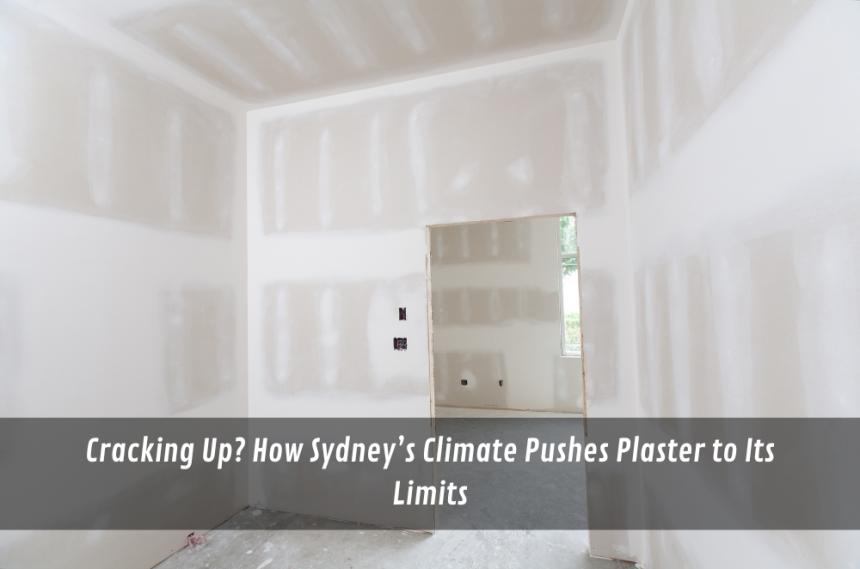

Cracking Up? How Sydney’s Climate Pushes Plaster to Its Limits
From hairline cracks to hollow knocks, Sydney’s weather plays rough with plaster walls. Learn how to spot trouble early and choose finishes that survive the city’s unique climate.
Homes across Sydney share a quiet quirk: the plaster never sits still for long. A run of scorching westerlies, then a week of sea-fog mornings, and suddenly a hairline fissure snakes across the living-room wall you painted last spring. While a small split isn’t an emergency, it can be an early warning that moisture swings, thermal movement or even framing creep are at work behind the surface.
Plasterboard and traditional wet-set plaster both need flexibility to absorb those stresses. The installation method, joint treatment and, most of all, the quality of the finish dictate how well the wall copes year after year. That is why renovators frequently lean on a trusted approach to interior finishes—one that factors in Sydney’s weather pattern rather than fighting it after the fact.
Sydney’s Shifting Weather and Your WallsMay to August used to be the quiet season for interior cracks. Then a string of La Niña years soaked the region, and now even winter brings humidity swings big enough to pop joints. Combine that with mid-summer heatwaves pushing room temperatures above 30 °C and you get constant expansion–contraction cycles.
- Thermal stress: Timber studs expand sideways as they warm, then shrink overnight. If the plaster finish is brittle, micro-movement concentrates along tape joints.
- Moisture absorption: Gypsum is hygroscopic. When the dew point shifts, it pulls in and releases moisture, weakening the bond to paint films.
- Settlement and creep: Apartment slabs in new towers can sink a few millimetres over the first couple of years. A rigid setting compound may crack rather than flex with the structure.
The table isn’t exhaustive. But it shows why matching the repair method to the root cause matters more than picking a cheaper filler.
Early Signs the Surface Is StrugglingMost homeowners only notice damage once daylight glints along a split. By then dust and moisture may have worked in, making repaint prep twice as fiddly. A hand-held LED torch at a shallow angle will reveal joint shadowing and shallow dimples months earlier. Marks to look for:
– A faint ridge where two boards meet suggests joint compound has dried back or lost adhesion.
– Speckled blistering indicates trapped moisture; sanding alone won’t cure it.
– A dull “thud” when you tap the wall often means debonding from the stud.
Readers diving deeper into prevention may find this explainer on how Sydney’s climate affects plaster durability useful before planning repairs.
DIY patches handle many cosmetic issues, yet the same patch compounds can make structural cracks worse if movement continues. Before you reach for mesh tape, ask: has the underlying cause slowed, or is the wall still shifting?
Choosing Materials That Bend Not BreakA dozen jointing products crowd hardware shelves, each claiming strength. Strength, however, isn’t always resilience. In a city where southerlies can drop room temperature ten degrees in an afternoon, flexibility keeps finishes intact.
– Lightweight compound: Easier to sand but shrinks more. Best reserved for final coats, never bedding.
– Setting compound with fibreglass fibres: Gains early hardness yet flexes fractionally; useful where framing tolerances are tight.
– Acrylic primers: Seal gypsum pores, reducing moisture inhale–exhale cycles that cause paint to peel.
– Low-voc elastic paints: Micro-stretch hides hairlines without the brittleness of old enamel formulations.
Installation matters as much as product choice. Fasteners need to sit ever-so-slightly below the paper face, not break it. Gaps larger than 5 mm between sheets create stress points once filled, so dry-fit accuracy saves hours of stopping woes.
When a Quick Patch Isn’t EnoughSome symptoms point to issues beyond surface repairs:
– Recurring diagonal cracks wider than 2 mm: May hint at frame rotation or slab movement.
– Soft or crumbling plaster near skirting: Often signals rising damp or persistent leaks.
– Multiple hollow knocks on one wall: Could be adhesive failure from poor initial trowelling.
Large-scale delamination often means sections must be cut out and resheeted. Skipping that step only masks the problem until next summer’s expansion exposes it again.
For heritage terraces with lime plaster, the stakes rise: using modern gypsum compound over lime can trap moisture and blow the finish clean off. Specialist advice is worth the call-out fee here, because testing salts and moisture content before selecting a breathable finish avoids repeat failures.
Sydney councils rarely mandate particular wall linings, yet most reference NSW Fair Trading guidance on “fit for purpose” outcomes. Insurers take a similar line: if cracking was pre-existing or caused by poor workmanship, cosmetic policies may not cover the rerun. Documenting each repair, including photos and moisture readings, builds evidence should you need to contest a claim later.
A sensible endpoint? Walls that flex with Sydney’s weather yet keep paint films smooth, breathable and free from recurring cracks. Spot the warning signs early, match the fix to the cause, and your plaster will settle in for the long haul—no dramatic patch-job reveals down the track.