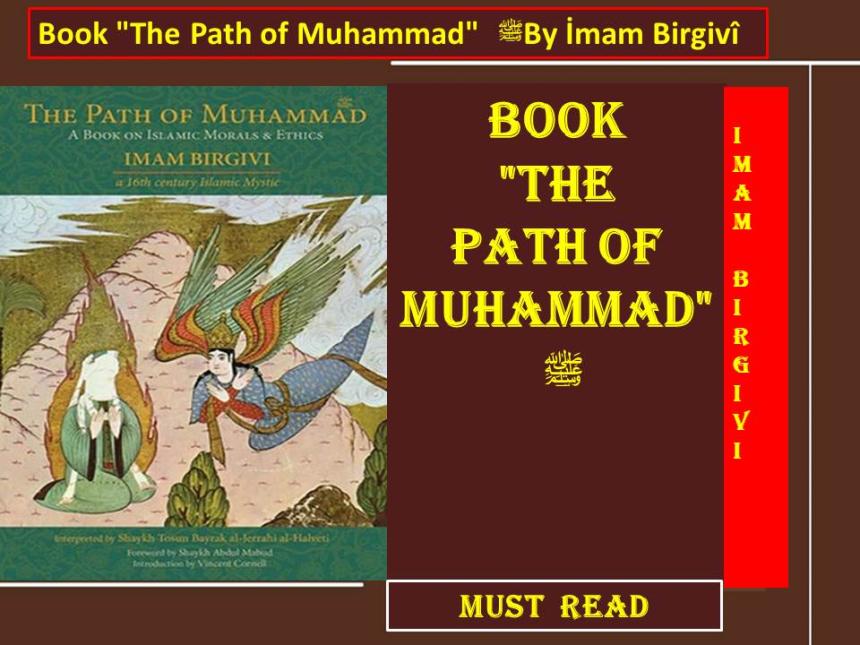

Book "The Path of Muhammad" ﷺ By İmam Birgivî
Muhammad Birgivi (1523–1573), known as Imam Birgivi, was a Hanafi Muslim jurist and scholar of the Ottoman Empire. This educational article introduces his book "The Path of Muhammad" ﷺ and summarizes its 27 chapters on Islamic morals, ethics, spiritual refinement, and following the Sunnah.
أَعُوذُ بِاللّٰهِ مِنَ الشَّيْطَانِ الرَّجِيمِ
بِسۡمِ ٱللهِ ٱلرَّحۡمَـٰنِ ٱلرَّحِيمِ
In the name of ALLAH, the Most Gracious, the Most Merciful
Book "The Path of Muhammad" ﷺ By İmam Birgivî
The Path of Muhammad: A Book on Islamic Morals & Ethics By İmam Birgivî
Muhammad Birgivi (1523 -1573), full name Taqī al-Dīn Muhammad ibn Pīr ʿAlī al-Birgivi and known simply as Imam Birgivi, was a Hanafi Muslim jurist and scholar who lived during the rule of the Ottoman Empire in Anatolia. The Ottoman scholar and mystic is also known as Mehmet Efendi or al-Birkawi (in Arabic). Imam Birgivi’s "The Path of Muhammad" ﷺ bridges the gap between celebrating the Prophet (PBUH) and actually living like him. Across 27 powerful chapters, this book acts as a spiritual mirror, transforming our love into action by teaching us how to replace modern vices—like anger, digital gossip, and arrogance—with the Prophet's ﷺunmatched humility, patience, and financial integrity.
“The Path of Muhammad. A Book on Islamic Morals & Ethics” is a book on Seerat of the Prophet Muhammad (s.a.w.s.); first published in 1573; composed in Arabic, and translated and interpreted into English by Shaykh Tosun Bayrak.
"The Path of Muhammad"ﷺ by Imam Birgivi, translated by Shaykh Tosun Bayrak, outlines 27 chapters addressing spiritual ailments and ethical remedies. It covers foundational faith, internal moral struggles like envy and arrogance, and practical guidelines for guarding one's senses and behavior. The work emphasizes Taqwa (mindfulness of God) and adhering to the Sunnah while providing cures for common spiritual vices.
The Introduction to "The Path of Muhammad"ﷺ—written by Islamic studies scholar Dr. Vincent J. Cornell for the Shaykh Tosun Bayrak translation—serves as an essential historical, biographical, and spiritual framework for Imam Birgivi's text. It outlines several core themes to prepare the reader for the text.
1. Historical and Cultural Context
The 16th-Century Ottoman Empire: The text establishes Imam Birgivi’s lifetime (1522–1573) during the height of Ottoman power. It frames his work as a response to perceived moral laxity, political corruption, and spiritual deviations within the empire.
Preserving Orthodoxy: It outlines how Birgivi sought to anchor the Muslim community back to the foundational sources of Islam during a period of imperial wealth and potential excess.
2. Spiritual Genealogy and Ideology
The Sufi Tradition: Cornell explains that al-Tariqah al-Muhammadiyya (The Path of Muhammadﷺ) functions as a handbook of spiritual practice. It is deeply tied to traditional Sufi lineages, specifically mirroring the methodologies of the Jazuliyyah branch.
Synthesis of Law and Mysticism: The introduction highlights Birgivi’s unique positioning. He was a strict legalist (a Hanafi scholar) yet a devout dervish in the Bayramiyyah order. The introduction explains how the book bridges the gap between Sharia (external law) and Tariqa (internal spiritual path).
3. The Triad of Spiritual Well-Being
The introduction highlights that true spiritual and psychological refinement is a structured, intentional process. It frames the upcoming chapters around three distinct phases:
Knowledge (Ilm): Acquiring the correct understanding of religious duties, virtues, and vices.
Intention (Niyyah): Purifying one's internal motivations exclusively for the sake of God.
Action (Amal): Physically applying ethics, controlling the ego, and actively executing righteous deeds.
4. The Universal Relevance of Prophetic Character
The Ultimate Role Model: Cornell stresses that the text uses the Sunnahﷺ (the Prophet's character and traditions) not just as historical data, but as a living, universal roadmap for ethical perfection.
Countering Modern Misunderstandings: The introduction frames the translation as highly relevant to modern readers. It presents traditional Islamic ethics as an antidote to contemporary secularism, moral confusion, and common misconceptions about Islam.
The Last Will and Testament ("Wasiyatnama") by Imam Birgivi is a foundational text, serving as a concise, spiritual guide focused on faith and ethical living. It offers a practical roadmap to salvation through sincere belief in God and Prophet Muhammad (S.A.W.S.), while emphasizing adherence to Sunnah and rejecting religious innovations.This work functions as a summary of the author's teachings regarding Islamic theology and moral conduct, outlining essential beliefs and instructions for life and death. It provides guidance on maintaining proper, lawful conduct and ethical behavior for believers.
CHAPTER 1 ON HOLDING FIRM TO THE HOLY BOOK AND THE TRADITIONS OF THE PROPHET (S.A.W.S.) In the first chapter of "The Path of Muhammad", ﷺ Imam Birgivi lays the groundwork for ethical living by focusing on the essential roles of the Qur'an and the Prophetic tradition (Sunnah) as the primary, authoritative sources of guidance. The text highlights that unity and salvation depend on holding fast to these divine, unifying principles, which distinguish truth from misguidance, while emphasizing that following the prophet is inseparable from obedience to God.
CHAPTER 2 ON PERNICIOUS INNOVATIONS.. Focuses strictly on the concept of Bid'ah (religious innovation), framing it as a major threat to the purity of faith. As a strict Hanafi legalist, Imam Birgivi outlines the dangers of introducing unauthorized changes into established Islamic worship and belief. The text highlights a foundational hadith narrated by Hadrat 'A'ishah: "In our religion, to invent and produce something that is not from it is unacceptable". Birgivi argues that trying to add new rituals to the religion implies that the initial message delivered by the Prophet Muhammadﷺ was incomplete. Because Islam is already perfected, any religious innovation is considered misguidance. The primary takeaway of Chapter 2 is that safety and spiritual elevation lie solely in strict adherence to the clear boundaries of the Qur'an and Sunnah. Inventing new practices to try and "out-worship" the Prophetﷺ is framed as a dangerous form of spiritual arrogance.
CHAPTER 3 ON ECONOMY IN DEEDS... advocates for moderation, urging believers to avoid both excessive, unsustainable worship and lazy neglect in favor of a balanced approach. It highlights the importance of consistency over intensity and encourages enjoying lawful, comfortable provisions without attachment, centering on the concept of the middle path. The chapter emphasizes maintaining a balanced life that respects human limitations as part of spiritual devotion.
CHAPTER 4 ELEMENTS OF BELIEF IN THE RELIGION BROUGHT BY THE PROPHET MUHAMMAD (S.A.W.S.)... outlines the essential tenets of Islamic belief (Aqidah), emphasizing that sound faith is the necessary foundation for proper behavior and spiritual integrity. It covers the six pillars of faith, the relationship between inner conviction and outer actions, and warns against theological innovation, while emphasizing that internal sincerity must accompany external actions.
CHAPTER 5 ON KNOWLEDGE... emphasizes the essential duty of acquiring religious knowledge, categorizing it into mandatory, prohibited, and spiritual knowledge needed for piety. The chapter highlights that knowledge is only truly beneficial when applied to action, warning against seeking learning solely for intellectual pride or social status. It strongly advocates that seeking knowledge is a fundamental obligation for all Muslims, aimed at nurturing inner and outer righteousness.
CHAPTER 6 ON RIGHTEOUSNESS.... shifts focus to internal spiritual practice, centering on Taqwa (righteousness) as the foundational, protective shield for a believer. It outlines levels of God-consciousness, ranging from avoiding harmful actions to eliminating subtle spiritual impurities and maintaining a reverent fear of God. This chapter serves as a crucial, preparatory gateway for overcoming inner vices described later in the text.
CHAPTER 7 ON THE DENIAL OF GOD... examines the grave spiritual consequences of denying God, highlighting how this, along with Shirk (associating partners with God), destroys all spiritual merit and invalidates good deeds. The text warns against both major and minor Shirk—such as Riya (showing off)—and emphasizes the necessity of maintaining pure Tawhid (monotheism) by guarding one's thoughts and intentions.
CHAPTER 8 ON SELF-INDULGENCE AND BLIND IMITATION.... examines the spiritual dangers of self-indulgence and blind imitation as "diseases of the heart" that prioritize ego and societal trends over divine law. The chapter outlines how over-reliance on limited human intellect, rather than revelation, distorts religious truths and leads to unlawful behavior.The text argues for submitting to divine command and practicing knowledgeable emulation of the Prophetﷺ, rather than blindly following cultural traditions.
CHAPTER 9 ON SANCTIMONY AND HYPOCRISY... examines the spiritual dangers of sanctimony (Riya) and hypocrisy (Nifaq), explaining how performing acts of worship for recognition or worldly gain invalidates them and renders them empty of spiritual value. The text provides guidance on overcoming these vices by cultivating sincerity through hidden acts of worship and constant internal monitoring of one’s intentions to align them purely with God's pleasure.
CHAPTER 10 ON AMBITION... defines unhealthy ambition as a spiritual sickness characterized by greedy, long-term worldly desires that cause one to neglect the inevitability of death. It outlines four dangers—wasted time, a hardened heart, delayed repentance, and neglected duties—while promoting a balanced middle path between excessive ambition and laziness.
CHAPTER 11 ON IDENTIFYING EVIL... focuses on identifying external spiritual threats, particularly the subtle deceptions of the Devil (Iblis). It explores how temptation can disguise itself as good, emphasizing the need for constant spiritual vigilance and knowledge to maintain sincerity. The text also discusses the limitations of human will, teaching that recognizing these limits is key to avoiding pride and spiritual pitfalls.
CHAPTER 12 ON ARROGANCE AND HUMILITY... examines the spiritual dangers of arrogance, defining it as looking down on others and rejecting truth. The text identifies roots of pride in knowledge, worship, and status, and argues that true humility arises from acknowledging one's place before God, which leads to spiritual elevation. Practical remedies offered include meditating on human frailty and actively serving others to combat the ego's desire for superiority.
CHAPTER 13 ON ENVY... explains that envy (hasad) is a destructive sickness and a major sin that stems from a desire for others to lose their blessings. While passing, unintentional negative thoughts are excused, intentionally fostering resentment is sinful and implies a questioning of God's wisdom. The text, which also links this vice to ambition, advises curing it by cultivating contentment with divine decree.
CHAPTER 14 ON ANGER... defines anger as a destructive force, comparable to a spark from hellfire that must be controlled through spiritual and physical discipline. He distinguishes between blameworthy, selfish anger and righteous, praiseworthy anger used for justice, offering practical remedies like wudu and changing one’s physical state to overcome rage.This chapter emphasizes mastering one's temper, highlighting that true strength lies in self-control rather than physical dominance.
CHAPTER 15 ON FORBEARANCE... focuses on Hilm (forbearance) as a powerful, prophetic virtue, defining it as the ability to remain calm and gentle when provoked. Birgivi refutes the notion that forgiveness is weakness, instead framing it as true inner strength that controls the ego, fosters community harmony, and resolves conflicts. The chapter encourages believers to cultivate this quality through intentional, gentle action and by focusing on divine reward.
CHAPTER 16 RELATING TO THE GOODS OF THIS WORLD: AVARICE, WASTEFULNESS, GENEROSITY, DETACHMENT... Imam Birgivi’s "The Path of Muhammad"ﷺ dedicates Chapter 16 to the ethical management of worldly goods, focusing on balancing spiritual integrity with material possession. The text contrasts harmful vices, such as avarice and wasteful extravagance, with the virtues of generosity and spiritual detachment, presenting wealth as a divine trust meant for responsible usage.This chapter explores how to cultivate contentment and trust in divine providence, providing a framework for avoiding the traps of material hoarding and reckless spending.
CHAPTER 17 ON MONEY: HOW TO USE IT AND NOT WASTE IT... shifts the broad discussion of worldly goods from the previous chapter into concrete, practical guidelines for handling money, earning a livelihood, and avoiding economic waste.The main teachings of Chapter 17 focus on the financial duties of a believer:
1. Money as a Tool, Not a Master
A Divine Instrument: Birgivi explains that money (gold, silver, and currency) has no intrinsic spiritual value; its value comes entirely from how it is used. It is a tool created by God to facilitate justice, trade, and the fulfillment of human needs.
The Danger of Hoarding: The text warns against the spiritual disease of loving money for its own sake. Accumulating wealth without circulating it or using it for lawful purposes corrupts the heart and damages society.
2. The Obligation of Lawful Earning (Halal)
Strict Financial Honesty: A major portion of this chapter is dedicated to the absolute necessity of earning money through pure, lawful means. Birgivi lists common financial sins that spoil wealth, including:
Engaging in usury or interest (Riba). Cheating, shortchanging, or misrepresenting goods in business transactions.Accepting bribes or participating in corruption.
Spiritual Consequences of Haram Wealth: The author emphasizes that wealth acquired through forbidden means invalidates a person's prayers, charity, and supplications (Dua).
3. Defining True Wastefulness (Israf)
The Middle Path in Spending: Birgivi defines wastefulness not just as spending large amounts, but as spending money on things that bring no benefit in this life or the Next.
Two Extremes to Avoid:Miserliness (Bukhl): Withholding money from where it is rightfully needed (such as neglecting charity, family maintenance, or paying debts).
Extravagance (Israf): Spending recklessly on luxury, vanity, or things that foster pride.
4. Proper Financial Stewardship
Prioritizing Expenditures: The chapter provides a clear hierarchy for spending money: first, fulfilling obligatory duties (Zakat, family support, paying off debts); second, meeting personal needs with moderation; and third, voluntary charity (Sadaqah) to help the community.
Trust in Divine Providence (Tawakkul): While believers must work honestly to earn a living, they must ultimately place their trust in God as the Provider, rather than relying blindly on their bank accounts.
CHAPTER 18 ON CARELESS HASTE... examines the psychological impulse of rashness ('Ajal), framing it as a major spiritual vulnerability that bypasses rational thought and sound judgment. The main teachings and core concepts of Chapter 18 include:
1. The Nature of Haste
An Emotional Impulse: Birgivi defines haste as an emotional urge that acts faster than human reason. Because emotions are quicker than the intellect, a person is pushed hurriedly toward a desired object or outcome without proper evaluation.
Lack of Reflection: The text highlights that rashness blocks Tadabbur (reflection) and Basirah (spiritual insight), leaving a person unable to evaluate if what they want is truly right, beneficial, or morally sound in the long run.
2. The Prophetic Warning
The Devil’s Tool: The chapter emphasizes the well-known Prophetic teaching: "Deliberation and patience are from Allah, while haste is from Satan."
Spiritual Vulnerability: Acting in careless haste means reacting blindly to raw impulses, making it easy for the ego (Nafs) and the Devil (Iblis) to misguide a believer into poor decisions, broken relationships, or sinful behavior.
3. Spiritual and Practical Consequences
Errors in Action: Careless haste leads to mistakes in worldly matters (like business transactions or speech) and in acts of worship (such as rushing through prayers without focus or humility).
Regret: The author warns that acting precipitously almost always yields immediate spiritual or social distress, turning temporary impatience into long-term regret.
4. Permissible Exception: Swiftness in Good Deeds
Healthy Urgency: Birgivi clarifies that while careless haste in worldly ambitions or emotional reactions is condemned, rushing to fulfill divine obligations is praised.
Promptness in Righteousness: Believers are encouraged to act swiftly and without delay in specific matters, such as offering obligatory prayers on time, paying debts, repenting for sins, burying the deceased, and feeding guests. This is classified as spiritual diligence rather than careless haste.
CHAPTER 19 ON HOPELESSNESS... Imam Birgivi highlights despair as a dangerous spiritual threat that can weaken a believer's faith, stemming from a lack of trust in God’s mercy. The chapter positions this despair as a tactic of the devil to cause spiritual ruin and outlines the remedy as meditating on divine compassion to restore hope.
CHAPTER 20 THE USE OF THE TONGUE... the text explores how speech serves as a critical, two-edged tool for spiritual salvation or ruin. It details various vices like backbiting and lying, urging believers to guard their words and prioritize mindful silence to prevent the destruction of their good deeds.
CHAPTER 21 ON LISTENING... focuses on the spiritual, moral responsibility to protect one's heart by avoiding sinful talk, such as gossip and backbiting, which can be seen as "adultery of the senses". The chapter highlights the need to guard the ears against negative influence, encouraging instead the consumption of productive knowledge and divine remembrance.
CHAPTER 22 ON LOOKING... Imam Birgivi emphasizes that guarding one’s sight is essential for protecting the heart from corruption. The text teaches that, while the first glance is forgiven, deliberately lingering on forbidden sights, such as for lust or envy, damages spiritual integrity and requires active, self-disciplined avoidance. This chapter underscores that lowering the gaze is a divine obligation, offering the reward of strengthened faith, and encourages focusing one's vision on constructive, pious, and reflective observations.
In Chapter 23, "On Touching," of "The Path of Muhammad",ﷺ Imam Birgivi concludes his focused section on guarding the physical senses. He explains that tactile sensations must be governed by divine boundaries to prevent spiritual corruption. The main teachings of Chapter 23 include:
1. The Power of Tactile Temptation
The Final Sensory Gate: Birgivi notes that touching is often the culmination of the errors made by looking or listening. While thoughts can be fleeting, physical touch grounds an impulse into a direct action, making it a highly critical boundary to manage.
Adultery of the Hands: The chapter references traditional Prophetic teachings that classify unlawful physical contact as the "adultery of the hands."
2. Legal and Moral Boundaries of Touch
Unlawful Contact: The text outlines strict prohibitions regarding physical contact between unrelated members of the opposite sex (non-mahrams). Birgivi warns that even seemingly casual contact, when unauthorized by sacred law, opens the door to deeper moral failings.
Intentional Harm: Beyond romantic or lustful temptation, this chapter also condemns touching that inflicts physical harm, oppression, or injustice upon another person or animal, framing it as a direct violation of Islamic ethics.
3. Spiritual Consequence and Protection
Hardening of the Heart: Engaging in forbidden physical contact darkens a believer's inner state and creates a barrier between the soul and divine light.
The Remedy: The author stresses that the remedy is strict adherence to the Sharia boundaries, immediate repentance (Tawbah) if a boundary is crossed, and cultivating a deep sense of Haya (spiritual modesty) that extends to all bodily actions.
In Chapter 24, "On Eating and Drinking," of "The Path of Muhammad",ﷺ Imam Birgivi shifts from the physical senses to the crucial rules of consumption, highlighting that what enters the body fundamentally shapes a person's spiritual purity and capacity for worship.The core tenets and themes detailed in Chapter 24 include:
1. The Spiritual Necessity of Halal Sustenance
The Root of All Worship: Birgivi stresses that consuming strictly lawful (Halal) food and drink is the absolute foundation of a healthy spiritual life. The text notes that if a person's food is unlawful (Haram), their acts of worship, prayers, and supplications (Dua) are rejected by God.
Guarding the Source: Believers are urged to rigorously inspect not just the food itself, but the money used to buy it, ensuring it does not stem from usury, cheating, or exploitation.
2. The Dangers of Gluttony and Excess
Overeating as a Spiritual Malady: The author heavily critiques overeating, framing it as a vice that hardens the heart, breeds laziness, strengthens the base desires (Nafs), and dulls the intellect.
The Prophetic Measure: The chapter reminds readers of the ideal Islamic standard for consumption: allocating one-third of the stomach for food, one-third for drink, and leaving one-third empty for air (breath).
3. Etiquette of the Table (Adab)
Birgivi outlines the practical, daily traditions of the Prophet regarding meals to turn a mundane physical necessity into an act of worship:
Before the Meal: Washing the hands, sitting humbly on the floor rather than reclining, and starting with the remembrance of God (Bismillah).
During the Meal: Eating with the right hand, consuming what is directly in front of oneself, and avoiding criticizing food (if the Prophet disliked a dish, he simply left it without complaining).
After the Meal: Washing the hands, cleaning the plate to avoid waste, and offering sincere gratitude (Alhamdulillah) to the Provider.
4. Condemnation of Extravagance
Arrogance through Food: The text warns against using food as a status symbol or throwing lavish feasts meant purely for social validation and pride. Wastefulness (Israf)—such as throwing away perfectly good food—is strictly forbidden.
In Chapter 25, "On Sex," of "The Path of Muhammad",ﷺ Imam Birgivi frames human biology and sexuality as intentional, divine gifts meant to be expressed within clear legal and spiritual boundaries.The core tenets and themes detailed in Chapter 25 include:
1. The Dual Purpose of Intimacy
A Precious Gift: Birgivi compares the reproductive organs to the tongue. Just as the tongue is gifted to facilitate communication and harmony, sexual organs are gifted to allow mankind to experience love, deep attachment, and procreation.
Channeling the Ego: The text explains that marital intimacy is a lawful means to satisfy human desires. This satisfaction protects a believer from falling into spiritual corruption and immorality.
2. Sins of the Intimate Organs
The author outlines specific physical behaviors that completely corrupt a believer's spiritual state:
Fornication and Adultery (Zina): Categorized as major sins that devastate both the individual soul and the ethical fabric of society.
Unlawful Expressions: The chapter explicitly prohibits non-reproductive deviations and any sexual activity that violates clear Sharia boundaries.
Spiritual Impurity: Engaging in forbidden acts strips away a believer's Haya (spiritual modesty), distancing them from divine mercy.
3. Guarding the Complete Process
The Culmination of the Senses: Birgivi warns that sexual sins rarely happen in a vacuum. They are almost always the direct consequence of failing to guard the earlier sensory gates—specifically looking (Chapter 22) and touching (Chapter 23).
The Remedy: Spiritual protection requires managing the entire sequence of temptation, starting from a passing glance all the way to physical proximity.
CHAPTER 26 ON COMING AND GOING...Imam Birgivi outlines the ethical, purposeful, and humble approach a believer should adopt for all physical movements and travel, highlighting the importance of avoiding arrogance and respecting others. Key teachings include maintaining a purpose for every step, adhering to the Prophetic gait, observing proper etiquette during travel, and ensuring public spaces remain safe and respectful.
In Chapter 27, "Other Private and Social Offenses to be Avoided," Imam Birgivi concludes "The Path of Muhammad"ﷺ by addressing remaining communal and interpersonal behaviors that harm societal peace and individual spiritual well-being. The core tenets and themes detailed in Chapter 27 include:
1. Sins of Financial and Social Injustice
Bribery and Usury: The text strictly condemns receiving or offering bribes, as well as engaging in usury (Riba), noting that these practices corrupt legal and economic systems.
Cheating and Fraud: Birgivi details the spiritual severity of using false weights, deceiving customers in the marketplace, or hiding defects in goods for financial gain.
2. Sins of Speech and Social Disharmony
Backbiting and Slander: The text outlines the destructive nature of gossip, backbiting (Ghibah), and malicious slander (Namimah), emphasizing that these vices ruin relationships and break community trust.
Mockery and Derision: Believers are forbidden from mocking, humiliating, or naming others with insulting nicknames to protect the dignity of every individual.
3. Vices of Personal Conduct
Intoxication: The chapter reiterates the strict prohibition against manufacturing, selling, or consuming intoxicants and alcohol, framing them as a path to losing rational self-control.
Gambling: Participating in games of chance is condemned for fostering greed and relying on luck rather than honest labor and trust in God.
4. Preservation of the Ideal Islamic Society
The Final Call to Action: The chapter serves as a summation of the book's core premise: that individual internal reform must naturally translate into a safe, just, and moral public sphere based on the Prophetic model.
The Conclusion
Based on Imam Birgivi’s comprehensive framework in "The Path of Muhammad"ﷺ, several vital lessons emerge for contemporary Muslims navigating the complexities of the modern world:
1. Prioritize Internal Character Over External Appearance
The Sincerity Check: In an era dominated by social media and public image, Chapter 9 (Sanctimony and Hypocrisy) warns against performing righteous deeds for validation or worldly gain.
Heart Purification: True Islamic practice requires constant monitoring of internal intentions (Niyyah), ensuring that actions are driven by sincerity to God rather than spiritual arrogance.
2. Safeguard the Senses from "Digital Contamination"
Conscious Consumption: The highly detailed chapters on guarding the tongue, ears, and eyes (Chapters 20, 21, and 22) serve as a direct blueprint for navigating the internet, social media, and modern media entertainment.
Rejecting Toxic Discourse: Muslims are reminded that actively consuming or participating in online gossip, backbiting, cyberbullying, or looking at unlawful content darkens the heart and erodes spiritual well-being.
3. Seek a Balanced, Sustainable Middle Path
Avoid Burnout and Laxity: Chapter 3 (Economy in Deeds) explicitly discourages religious extremism that leads to spiritual burnout, as well as lazy negligence.
Consistency Wins: Modern Muslims are encouraged to practice steady, moderate, and consistent acts of devotion that respect human limitations while maintaining high ethical standards in everyday life.
4. Practice Ethical Financial Stewardship
Resisting Consumerism: Chapters 16 and 17 challenge modern consumer culture by drawing clear boundaries between healthy provision, hoarding, and wasteful extravagance (Israf).
Absolute Financial Integrity: The text emphasizes that the spiritual acceptance of one's prayers and worship is directly tied to the absolute honesty of one's income—urging modern professionals to strictly avoid exploitation, usury, and deceptive business practices.
5. Cultivate Emotional Intelligence and Self-Control
Mastering Impulses: The chapters on Anger, Haste, and Envy (Chapters 13, 14, and 18) highlight that true strength is not physical dominance or fast reaction times, but the ability to pause, reflect, and remain patient under provocation.
The Power of Forbearance: Cultivating Hilm (forbearance) is presented as the primary prophetic tool to heal fractured families, broken relationships, and divided communities.
My Dear Brothers and Sisters in Islam! Make reading the Seerat-un-Nabi (PBUH) a non-negotiable, daily habit. The book written centuries ago using deeply authentic sources, "The Path of Muhammad" ﷺ is not mere literature—it is a direct mirror for our soul. Let's Not try to change overnight; instead, master one consistent, prophetic habit at a time, like pausing before we speak or guarding our eyes. True love for the Prophet Muhammad ﷺ is found in the quiet, sincere alignment of your daily actions with his unmatched character.
Yesterday, our hearts were filled with love and reverence as we celebrated Milad-un-Nabi—the birth of the Prophet Muhammad (PBUH). While sending greetings and expressions of love is beautiful, the ultimate way to honor his legacy is to actively revive his character within ourselves. Let yesterday’s celebration be the spark, and let this book be our daily guide to walking in his footsteps.

Small Business CFO in Calgary: Finance Leadership Sized for Owner-Run...
Small Business CFO in Calgary: Finance Leadership Sized for Owner-Run Companies

Como Escolher as Melhores Consultoria de Compliance para Sua Empresa
Como Escolher as Melhores Consultoria de Compliance para Sua Empresa