Running a successful organization requires more than just hiring the right people. Businesses also need the right systems to manage productivity, labor needs, employee experience, and compliance. This is where a workforce management system and HR software come into play. Both solutions support people operations, yet they serve different objectives. Understanding how they differ helps companies invest in the tools that truly match their operational requirements.
What Is HR Software?
HR software focuses on managing the employee lifecycle from recruitment to retirement. It acts as a centralized system for HR teams to store personal records, handle benefits, and support payroll processing. Many HR platforms help companies with:
- Talent acquisition and onboarding
- Employee data and document storage
- Payroll and compensation management
- Compliance with labor regulations
- Performance reviews and role changes
The primary goal of HR software is to ensure smooth HR administration and maintain accurate personnel information. It supports the strategic aspect of human resources—hiring, retaining, and developing the workforce.
What Is a Workforce Management Platform?
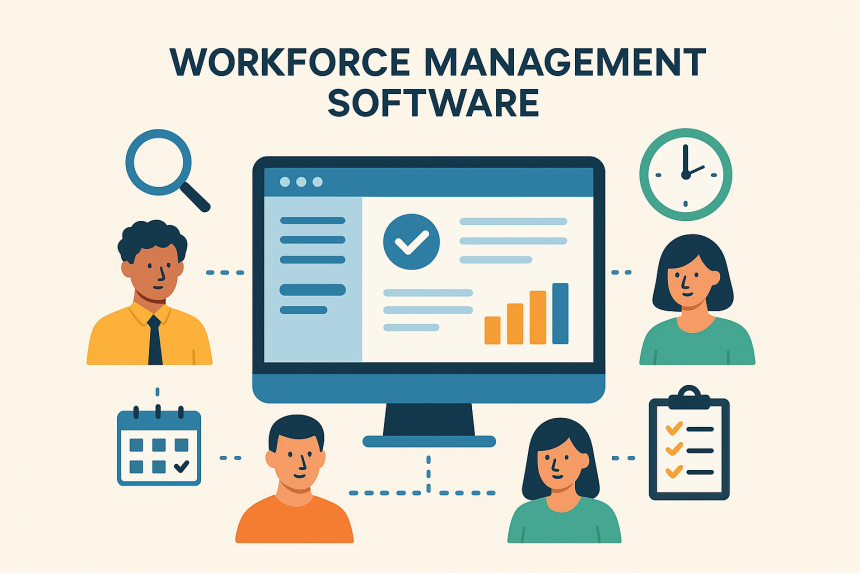
A workforce management software solution focuses on managing how employees work daily. It optimizes labor resources, tracks performance, and helps managers make informed staffing decisions. Typical features include:
- Time and attendance tracking
- Shift scheduling and roster planning
- Task assignment and progress visibility
- Real-time productivity insights
- Leave and absence management
- Cost control through labor forecasting
Rather than focusing on the paperwork behind employment, a workforce management platform concentrates on operations, ensuring the right people are in the right place at the right time.
Core Difference: Strategy vs Operations
One of the major differences lies in their core purpose:
Feature FocusHR Software Workforce Management Platform Main Role Administers employee lifecycle Optimizes daily labor and productivityTeam SupportedHR staffManagers, team leaders, and operationsData TrackedPersonal records and career historyAttendance, work hours, tasks, productivityOutcomeStrong HR compliance and employee experienceEfficient workforce utilization and cost control
HR software is about “people management,” while a workforce management system is about “work management.”
Impact on Business Efficiency
A workforce management platform directly influences operational efficiency. It gives managers real-time visibility into employee presence, work patterns, and performance bottlenecks. Automated scheduling reduces guesswork and ensures workloads are distributed fairly.
Meanwhile, HR software supports long-term planning. It strengthens roles, supports career development, and ensures employees are properly compensated and supported. While valuable, its impact on day-to-day productivity is indirect.
Having both solutions working together creates a balanced approach—great employee experience combined with efficient output.
Technology and User Experience
A workforce management software tool is designed with mobile access and operational dashboards for frontline teams. It enables employees to check shifts, request leave, or track time through apps or kiosks. Reporting is detailed with productivity analytics and workforce trends.
HR software tends to focus more on self-service portals for personal information, training modules, and payroll queries. Its dashboards are geared toward HR professionals rather than supervisors handling field work.
Compliance and Accuracy
A workforce management system helps maintain legal compliance by accurately recording work hours and making sure employees are not over-scheduled or under-paid. Real-time attendance ensures payroll aligns with true labor usage.
HR software ensures compliance with hiring laws, record-keeping rules, and benefit regulations. It reduces paperwork errors and audit risks.
Both are essential for protecting the organization, but they operate in different compliance areas.
Which One Does Your Business Need?
Choosing the right solution depends on your priorities:
- If you want to enhance HR processes like hiring, onboarding, and performance reviews → HR software is the right fit.
- If your goal is to improve scheduling, productivity, and labor cost optimization → a workforce management platform delivers greater value.
- For growing companies managing large or distributed teams → combining both provides a complete workforce ecosystem.
Organizations with hourly workers, retail environments, field services, and construction teams often find a workforce management system indispensable for operational success.
Conclusion
HR software and workforce management platforms are not competitors—they complement each other. HR software focuses on people-centric processes, while a workforce management system ensures daily work is executed efficiently. With both tools aligned, organizations can build a productive environment where employees feel supported and operations run smoothly.