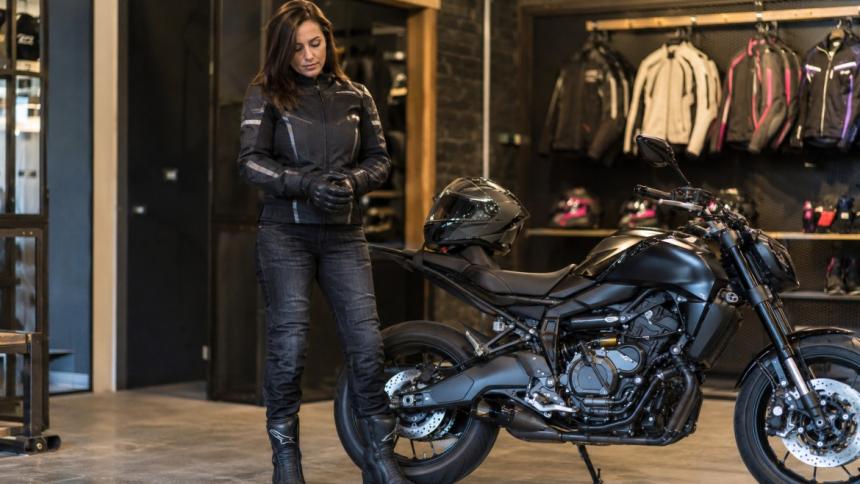

Women's Motorcycle Gear Guide: What's Actually Changed and What Still Needs To
Women now make up 19% of motorcycle riders. This guide covers what's changed in women's motorcycle gear, what still falls short, and how to buy for real protection.
In 1998, women made up approximately 8% of motorcycle riders in the United States. By 2024, that figure had risen to 19% of all motorcycle owners, according to data from the Motorcycle Industry Council's Owner Survey. That is not a small demographic shift. It is a near-doubling of female participation in motorcycling over a 25-year period, and the gear market has been scrambling to catch up with it ever since.
The catching up has been uneven. Some parts of the industry have responded thoughtfully, producing genuinely female-specific gear built around female body proportions, certified to the same protection standards as men's products, and available in styles that do not treat pink colorways as the primary design differentiator. Other parts of the market are still doing what critics have long called shrink it and pink it, reducing a men's pattern, applying a different color scheme, and marketing the result as women's gear without addressing the fundamental fit and protection issues that make male-pattern gear inadequate for female riders.
This guide exists to help female riders navigate that spectrum clearly, understand what protection standards actually apply to their gear, and make purchasing decisions based on fit, certification, and construction rather than marketing.
Why Fit in Motorcycle Gear Is a Safety Issue Specifically for WomenThe fit problem in women's motorcycle gear is not a comfort issue. It is a safety issue, and the distinction matters.
CE-certified armor in a motorcycle jacket, suit, or trouser works by sitting precisely over the joint it was designed to protect. Shoulder armor must be positioned over the shoulder joint. Elbow armor must sit over the elbow tip with the arm in the riding position. Knee armor must cover the kneecap precisely. When it does not, the certification on the label is describing what the armor can do in the correct position, not what it will do in a crash if it has shifted 30mm off-center.
Men's and women's bodies differ in ways that matter specifically for armor placement. Women typically have a shorter distance between shoulder and elbow, a narrower shoulder width relative to bust size, a more pronounced waist-to-hip differential, and a different torso length relative to leg length. A jacket cut to a male body pattern and scaled down to a smaller size does not correct for any of these proportional differences. The seams land in different positions on the body, the armor pockets sit at different heights, and the protection shifts away from the joints.
Research from Frontiers in Materials, studying ill-fitting personal protective clothing on female workers in high-risk professions, found that 80% of female subjects experienced fit issues with PPE designed around male body patterns, with the fit failures concentrated precisely at the interface zones where protection is most critical. The parallel to motorcycle gear is direct. A jacket that bunches at the waist while pulling across the chest and hips is a jacket where the armor pockets are not where they need to be.
The Gear Categories and What to Prioritize in EachWomen's Motorcycle Jackets and SuitsThe jacket is the most consequential purchase in a female rider's gear kit because it covers the shoulders, elbows, and back simultaneously. All three are primary impact zones in a motorcycle crash.
What genuinely female-specific construction looks likeA properly designed women's motorcycle jacket differs from a scaled-down men's jacket in these specific ways:
- Shorter sleeve length proportional to a shorter distance between shoulder and elbow
- Narrower shoulder width that does not require the seam to sit inboard of the shoulder joint
- A defined waist shaping that holds the jacket in position rather than allowing it to ride up in the riding position
- Hip accommodation that allows the jacket hem to sit correctly without the torso section pulling upward
- Armor pockets placed at the correct heights for a female skeletal geometry
For riders doing track days or high-speed road riding, CE certification under EN 17092 is non-negotiable. At minimum, Class A with CE Level 2 armor at shoulders and elbows. For serious performance riding, Class AA or AAA with Level 2 armor at all four limb positions plus a Level 2 back protector.
The women's riding gear collection at this specialist brand covers both the protective clothing and the motorcycle gear built specifically around female proportions, which gives a practical reference for what purpose-built female construction looks like when protection standards rather than aesthetics are the primary design brief.
CE certification applies identically to women's and men's gearEN 17092 does not have a different standard for women's gear. The abrasion resistance tests, the seam burst strength requirements, the armor pocket retention tests, the impact protector standards under EN 1621-1 and EN 1621-2 all apply equally. A women's jacket that does not carry EN 17092 certification has not been tested to any verified performance standard regardless of how it is marketed.
When reading a product label, look for the EN 17092 standard reference, the class designation (A, AA, or AAA), and the armor CE level (Level 1 or Level 2). If any of these are absent, the garment's protection claims are unverified.
Women's Motorcycle Trousers and Riding JeansLower body protection is where the fit issue is most acute for female riders and where the market has historically done the worst job.
Standard motorcycle trouser patterns are built around a male hip-to-waist ratio. Female riders typically have a wider hip relative to waist, meaning a trouser that fits at the waist gaps at the hips or one that fits at the hips cannot be fastened at the waist. Neither outcome keeps the knee armor in the correct position.
What correct knee armor placement requiresKnee armor in motorcycle trousers must sit directly over the kneecap with the rider in the seated position, legs bent at the angle used when riding. When fitting any motorcycle trouser, sit on a bike or replicate the seated riding position and check:
- Knee armor centers exactly over the kneecap, not above or below it
- Hip armor sits over the hip joint, not on the upper thigh
- The trouser waist remains in position without the knee armor pulling the garment downward
- The hem length is sufficient to overlap with the boot shaft without creating a gap in coverage
Motorcycle jeans with aramid or Dyneema fiber reinforcement are a popular option for riders who want something wearable off the bike. For these to provide meaningful protection, the reinforcement must extend across the full seat, outer thigh, and knee area. EN 17092 certification applies to motorcycle jeans as well as dedicated riding trousers, and the same class system applies.
Women's Motorcycle GlovesHand protection follows the same fit principles as other gear but has a specific challenge. Female hands are on average smaller and proportioned differently than male hands, with a shorter palm-to-finger ratio and a different circumference pattern across the knuckles.
A glove sized to fit a smaller hand but built on a male proportional pattern will typically leave excess material at the fingertips while being tight across the palm. Excess material at the fingertips reduces tactile feedback on brake and throttle levers, which is a control precision issue as well as a comfort issue. A tight palm restricts blood flow, creating numbness on longer rides.
For certified gloves under EN 13594:2015, the armor placement challenge is the same as for jackets. Knuckle armor must sit over the knuckle joints. Palm sliders must be positioned at the heel of the palm. Female-specific gloves address these placements using proportional geometry rather than simple scaling.
Women's Motorcycle BootsBoot fit is where most riders of any gender make the least informed decisions, partly because the foot appears to be a less critical protection area. The statistics do not support that assumption. Lower extremity injuries occur in approximately 47% of all motorcycle collisions, and ankle fractures are among the most commonly occurring and slowest healing injuries in the category.
Female feet are not simply smaller versions of male feet. Women tend to have a narrower heel relative to forefoot width, a higher arch, and a shorter foot length relative to leg length. Boots built on male lasts, scaled to smaller sizes, will typically fit poorly in the heel area and provide inadequate ankle coverage height relative to lower leg length.
For riding boots, CE certification under EN 13634:2017 applies regardless of the rider's gender. The four-digit certification code covering shaft height, abrasion resistance, impact cut resistance, and transverse rigidity is the objective measure of the boot's protection capability. Female riders should apply the same specification standards as male riders: Level 2 across all four categories for road riding at speed, and full-height shaft construction for track use.
What Has Actually Changed in Women's Motorcycle GearThe genuine progress in the category over the past decade is worth acknowledging because it reflects real investment by manufacturers who took female riders seriously as a market.
Female-specific race suits now exist with CE AAA certification, FIM homologation for competition use, and construction built around female body geometry. Women's armored hoodies designed for commuter use now carry CE AA certification with Level 2 armor in female-specific armor pocket positions. Women's gloves certified to CE Level 2-KP, the highest achievable standard under EN 13594, are available from multiple manufacturers.
The women's gear market was valued at USD 1.8 billion in 2024, according to Verified Market Reports, and is projected to reach USD 3.5 billion by 2033 at a compound annual growth rate of 8%. That level of market investment attracts genuinely engineered products, not just cosmetically differentiated versions of existing men's lines.
The Women Riders Now publication provides one of the most accessible ongoing resources for tracking how the female riding community is growing and what the market is producing in response. Their coverage of the Motorcycle Industry Council data on female ridership trends provides the demographic context behind the gear category's growth.
What Still Needs to ChangeHonest coverage of this topic requires acknowledging what the market still gets wrong, because progress is uneven and some of the persistent gaps have direct safety implications.
Sizing range limitationsMany manufacturers who have introduced women's-specific lines offer a narrower size range than their men's equivalents. A rider who falls outside the standard size range for women's gear faces the same proportional fit problem as a rider buying men's gear scaled down. Made-to-measure options are becoming more available, but they carry a price premium that puts them out of reach for many riders.
Back protector inclusion in women's jacketsBack protectors are not required by EN 17092 for jacket or suit certification, which is a gap in the standard that affects all riders. In practice, back protectors are included or offered as optional accessories in men's jackets at a higher rate than in women's equivalents. Spine protection is equally critical regardless of the rider's gender, and any jacket purchase should include assessment of whether a CE Level 2 back protector can be added to the armor pocket system.
Transparency in protection claimsSome women's gear in the market uses protection language without certification backing. Terms like abrasion resistant, protective panels, and reinforced zones describe construction features but do not indicate tested performance to any standard. The only reliable indicator of verified protection is the CE label referencing the specific standard the garment was tested to.
The Bennetts BikeSocial guide on reading CE clothing labels correctly is one of the most practical resources available for understanding what the labels on any piece of motorcycle gear are actually telling you, and applies equally to women's and men's products.
A Practical Checklist Before Any Women's Gear PurchaseBefore buying any piece of motorcycle protective clothing, these questions establish whether the product genuinely meets your protection needs:
- Does the garment carry EN 17092 certification with a visible class designation on the label?
- Is the armor CE Level 1 or Level 2, and is that level appropriate for your riding?
- Was the garment constructed using female-specific pattern geometry, or is it a scaled men's pattern?
- Does the armor sit correctly over your joints in the riding position, not standing upright?
- Is a back protector included, and if not, is there a pocket for one?
- Has the manufacturer provided sizing information based on actual body measurements rather than generic size labels?
These questions apply to every category of riding gear. They are not unique to women's products, but the market reality is that female riders have historically needed to ask them more carefully because the default assumption in gear design was a male body. That assumption is changing, but not uniformly, and the responsibility for verifying protection still rests with the buyer.
Letterdrop Account Transfer Scam Exposed: The Ultimate Guide to Protec...
Letterdrop Account Transfer Scam Exposed: The Ultimate Guide to Protecting Yourself Onlin...

Flodesk Account Fake Verification Warning: The Complete Expert Guide
Flodesk Account Fake Verification Warning: The Complete Expert Guide In today’s digital l...

Buy Zelle Account Marketplace Investigation: The Ultimate Expert Guide
Buy Zelle Account Marketplace Investigation: The Ultimate Expert Guide The rise of peer-t...