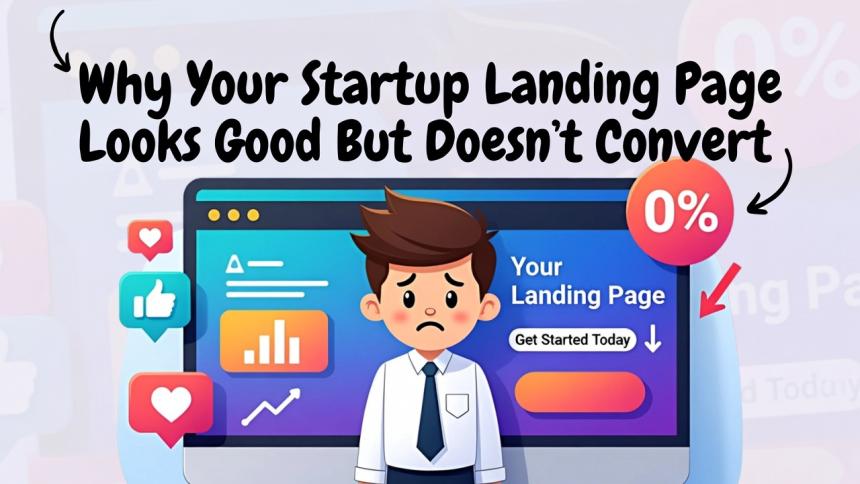

Why Your Startup Landing Page Looks Good But Doesn't Convert
Why do so many startup landing pages look perfect but fail to convert? Key design mistakes teams make when using templates.
You picked a clean template. The design looks professional. You hit publish. And then… nothing. Low signups, high bounce rate, crickets.
Sound familiar? You're not alone.
The problem isn't your template — it's the structure behind it.
Clarity beats creativity every time
Your headline has one job: tell visitors exactly who this is for and what they'll get. "Transform your workflow" means nothing. "Help desk software for e-commerce teams under 10 people" means everything. Specificity builds instant relevance, and relevance keeps people on the page.
One page, one action
Every time you add a second CTA — a blog link, a social follow, a "learn more" button — you split attention and reduce conversions. Pick one primary action and make everything else on the page support it. Secondary options can exist, but they should never compete.
Trust belongs near your CTA, not at the bottom
Most startup pages bury testimonials and case studies at the footer. But hesitation happens right before the form. Move your social proof up — place it directly above or beside your signup button — and watch conversion confidence improve without changing a single word of copy.
Templates are a starting point, not a finish line
The teams that win with templates are the ones who treat them as conversion systems. That means rewriting default copy in real audience language, trimming sections that don't serve a decision, and running weekly optimization cycles instead of occasional redesigns.
A simple weekly rhythm beats a big quarterly overhaul
Test one headline variation. Adjust proof placement. Tighten the FAQ. Small, consistent changes compound over time and give you clean data to make better decisions.
For a full breakdown — including an 8-block landing page architecture and a 30-day optimization plan built specifically for startups — this guide is a great place to start: 🔗https://unicornplatform.com/blog/landing-page-templates-for-startups-seeking-an-easy-solution/
The formula isn't complicated. Clear message + well-timed trust + focused action + consistent iteration. That's what turns a template into a growth engine.
Best cancer care treatment Hospitals India
Best cancer care treatment Hospitals India


How Experienced Mechanics Ensure Vehicle Reliability and Safety
Experienced Miranda mechanics understand how these systems interact and can identify devel...