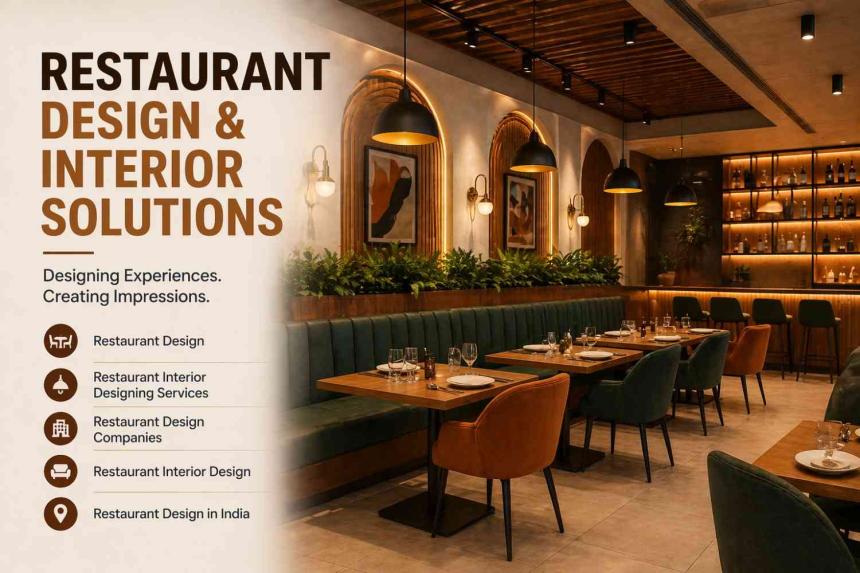

Why Professional Restaurant Design Matters for Business Growth
A restaurant doesn’t start failing in the kitchen. It starts failing in the seating plan, the lighting choices, and the way staff keep bumping into each other during service. That’s where Restaurant Design quietly decides whether a business grows or struggles.
Most owners realise this too late. After the opening rush. After customers start complaining about waiting time. After staff begin improvising because the space simply doesn’t support real operations.
There’s a pattern we’ve seen since 2013—good food survives bad interiors for a while. Not long, though.
The Spec Detail Most Buyers Ignore in Restaurant Interior DesignMovement Flow Between Kitchen and FloorThis is where money is lost without anyone noticing. If a server walks an extra 8–10 steps per order cycle, it doesn’t feel like much. Multiply that across 300 covers a day and the inefficiency becomes visible in labor fatigue and slower table turns.
Surface Materials That Age Under PressureWhich means not everything that looks premium survives service conditions. High-traffic restaurants in India see cleaning cycles 4–6 times a day. Low-grade finishes start peeling or dulling within 6–9 months. We’ve replaced entire counters mid-contract because of this.
Lighting That Changes BehaviourAnd yet, many spaces still treat lighting like decoration. It isn’t. Warm lighting can slow down dining pace, while overly bright setups push customers out faster than intended. Both can hurt revenue depending on your model.
Noise Control Nobody Plans ForMost Restaurant Interior Designing Services ignore acoustics until complaints start. Hard surfaces bounce sound everywhere. Once the restaurant crosses 65–70 dB during peak hours, guests subconsciously shorten their stay.
Service Bottlenecks Hidden in DesignHere’s something operators notice but designers often don’t: where do waiters pause during rush hours? If there’s no designed “breathing space,” staff start blocking aisles without realising it.
What a Bad Supplier Conversation Actually Sounds Like- “We’ll fix it during execution.”
- That usually means there is no real design logic yet. Execution becomes damage control.
- “Material is standard quality.”
- That sentence has caused more post-install disputes than any other. It’s vague on purpose.
- “We’ve done many restaurants.”
- No numbers, no locations, no outcomes. Just volume without proof.
- “Minor issues can be adjusted later.”
- That’s not flexibility. That’s shifting risk to the client after payment.
- “We don’t coordinate with kitchen or HVAC teams.”
- Then you don’t have a restaurant design system—you have interior decoration.
And that difference shows up within the first month of operations.
Why Good Restaurant Design Protects Your MarginsBetter design doesn’t feel like savings on day one. It shows up in fewer problems later.
A well-planned layout reduces staff walking distance. That directly improves service speed during peak hours when every minute affects table turnover.
Better seating efficiency can quietly increase revenue per square foot by 5–15%, depending on format. Most owners don’t calculate this until after launch.
Durable material selection reduces replacement cycles. Instead of yearly repairs, you stretch maintenance to 2–3 years in stable conditions.
Lighting consistency influences ordering patterns. We’ve seen dessert sales shift noticeably just by adjusting warmth levels in dine-in zones.
Even staff retention is affected. Poorly designed spaces exhaust teams faster, and replacement costs in hospitality are rarely below ₹25,000 per hire once training is included.
Which means design isn’t cost. It’s risk management.
Restaurant Design in India Is Not a Single MarketCalling it Restaurant Design in India as one category is misleading. Conditions change every 200–300 kilometers.
Humidity in coastal cities affects materials differently than dry northern zones. Supply chains in metro cities move faster, but labour coordination is more expensive. Smaller towns often struggle with skilled finishing teams, which impacts final output more than drawings ever do.
We’ve worked across projects where the same material behaved differently just because storage conditions changed during transport. One delay in Delhi, and suddenly Mumbai execution is affected too.
That’s why most Restaurant Design Companies struggle—not with creativity, but with coordination across regions.
About UsWe don’t treat Restaurant Interior Designing Services as a presentation exercise.
We’ve had projects where a single delay in tile delivery forced us to re-sequence the entire site plan. That kind of issue doesn’t show up in design software—it shows up on-site at 9 AM with 12 workers waiting.
Since 2013, we’ve worked across multiple Indian cities where vendor coordination mattered more than design approval. We’ve even rejected batches of finished materials after physical inspection because they didn’t match tested durability standards. Not because it was easy—but because fixing it later costs more for everyone involved.
That’s how we operate at Defos Design.
Share your floor plan, location, and expected seating capacity. We’ll respond within 24 hours with practical feedback—not just design ideas, but execution reality.
Minimum engagement starts from 1,000 sq. ft., depending on scope. Defos Design works best when you bring actual constraints, not just inspiration references.
ConclusionStrong Restaurant Design is rarely noticed when it’s done right. It simply makes everything work without friction—staff, space, and service.
And in a market like India, where margins are tight and competition is constant, that silent efficiency is what decides who survives longer.
The spaces that perform tomorrow will be the ones designed with operational thinking today.
FAQs1. How do Restaurant Interior Designing Services affect operations?They decide how fast service moves and how comfortably staff can work. If the layout is wrong, delays show up immediately during peak hours.
2. What should I expect from Restaurant Design Companies?Clear plans, material details, and coordination with other site teams. If they avoid specifics and stay general, issues usually come later during execution.
3. Is Restaurant Interior Design costly in India?It depends on material choice and scale. Lower budgets often lead to higher maintenance later, so cutting corners usually costs more over time.
4. How long does Restaurant Design take to complete?Most projects take 6–12 weeks. Delays usually happen because of materials or coordination gaps, not the design itself.
5. Can small outlets benefit from Restaurant Design in India?Yes. Small spaces depend more on layout efficiency because there’s no extra space to waste.
Golden Visa in Dubai: Complete Guide to UAE Long-Term Residency
Learn everything about the Dubai Golden Visa including eligibility, application process, b...