What Should Australian Schools Review When Planning Their Cleaning Requirements?
Planning school cleaning requires more than maintaining classrooms and common areas. From student bathrooms and specialist rooms to sports facilities and shared spaces, every part of a campus has different cleaning requirements. Discover what Australian schools should review when planning school cleaning Brisbane requirements, including cleaning schedules, product selection, high-contact areas and quality inspections, to maintain a clean, hygienic and well-managed learning environment.
School environments experience constant activity, from classroom lessons and sporting activities to assemblies, staff meetings and community events. Each part of the campus has a different purpose, which means cleaning requirements can vary throughout the day. When reviewing school cleaning Brisbane requirements, school administrators should consider more than the appearance of classrooms and corridors. They also need to examine how student movement, shared facilities, school events and daily timetables affect the maintenance of the entire campus.
A school is not a single-use building.
It may contain classrooms, libraries, administration offices, science rooms, sports facilities, kitchens, bathrooms, staff rooms and outdoor learning areas.
These spaces experience different levels of use and may require different cleaning procedures.
For example, a library may need attention to dust and shared furniture, while a canteen may require more frequent cleaning of food preparation and dining surfaces.
A campus-wide plan helps schools organise these requirements instead of treating every room in the same way.
School activities follow a structured timetable, and cleaning arrangements should work around it.
Cleaning during lessons can create noise, distractions and unnecessary movement through occupied spaces.
However, certain shared areas may need attention during school hours.
Administrators should consider:
- Classroom schedules.
- Break and lunch periods.
- Assembly times.
- After-school activities.
- Weekend events.
- Holiday programmes.
For example, cleaning staff may be able to maintain selected shared areas during quieter periods while arranging more extensive classroom cleaning after students leave.
The timetable should also account for examinations, parent meetings and special school events.
Students and staff regularly use the same doors, desks, switches, handrails and shared equipment.
These surfaces can accumulate fingerprints, dirt and everyday residue.
Schools should identify frequently touched areas and establish suitable cleaning frequencies based on their usage.
Important locations may include:
- Classroom door handles.
- Staircase handrails.
- Reception counters.
- Library desks.
- Shared computer areas.
- Staff room surfaces.
- Common access points.
The objective is to maintain these areas consistently without interrupting normal school activities.
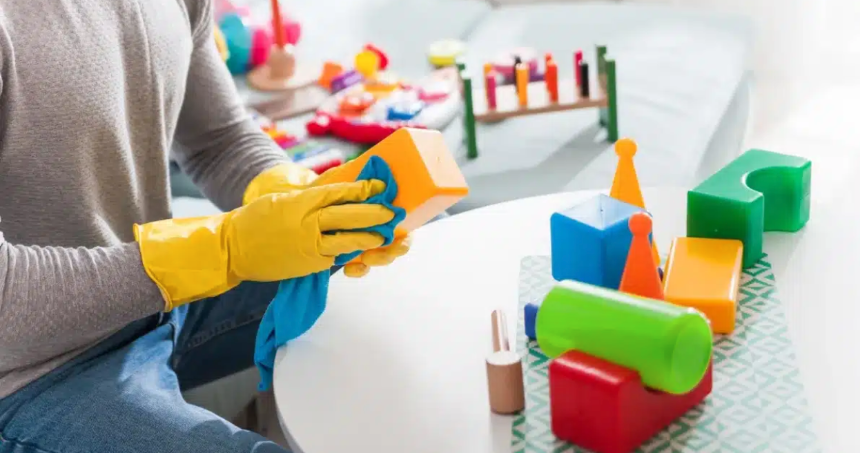
Classrooms contain several surfaces that may be overlooked during routine cleaning.
Dust can accumulate on accessible shelves, window ledges, storage units and furniture.
Shared learning resources can also require attention depending on their material and use.
A classroom cleaning checklist may include:
Desks and tables: Remove visible dirt and clean accessible surfaces.
Floors: Vacuum, sweep or mop according to the flooring type.
Bins: Empty waste and check surrounding areas.
Door and window areas: Address visible fingerprints and accumulated dust.
Shared surfaces: Clean accessible furniture and other frequently used areas.
Schools should also clarify which responsibilities belong to teachers and which are included in the cleaning contract.
Student bathrooms and change rooms can experience considerable use throughout the school day.
These spaces need a suitable cleaning schedule based on student numbers, facility layout and usage patterns.
Areas requiring attention include:
- Toilets and cubicles.
- Washbasins and taps.
- Mirrors and accessible surfaces.
- Floors and surrounding fixtures.
- Soap and paper supply points.
- Waste bins.
- Change room benches and shared facilities.
Schools should establish procedures for reporting spills, supply shortages and maintenance issues.
It is also important to distinguish cleaning duties from plumbing and repair responsibilities.
Some school facilities need different cleaning arrangements because of the activities taking place inside them.
Science laboratories, art rooms, technology workshops and food preparation areas may contain materials that should not be handled using ordinary cleaning methods.
For instance, science laboratories may have specific procedures for chemical handling and surface decontamination.
Cleaning staff should only perform tasks they are trained and authorised to undertake.
School management should provide clear instructions covering restricted areas, approved cleaning products and specialist responsibilities.
School cleaning requirements do not stop when regular lessons finish.
Holiday periods can provide an opportunity to complete work that is difficult to arrange during the academic term.
Depending on the campus, planned activities may include:
- Detailed classroom cleaning.
- Carpet maintenance.
- Floor treatment.
- Window cleaning.
- Cleaning of shared furniture.
- Attention to less frequently used areas.
Schools may also need additional cleaning after sports carnivals, performances, parent events and community activities.
These requirements should be discussed in advance rather than added unexpectedly to the regular schedule.
Schools should consider the suitability of cleaning products for their facilities and the people using them.
Product selection should account for surface materials, manufacturer instructions, ventilation and the intended cleaning task.
Administrators can ask providers about:
- Product information and safety documentation.
- Correct dilution and application procedures.
- Safe storage arrangements.
- Appropriate use around students.
- Ventilation and drying requirements.
- Availability of suitable lower-odour alternatives.
Products should never be selected solely because they have a strong fragrance or create the impression of cleanliness.
School administrators need a practical way to monitor cleaning performance.
A cleaning checklist can help identify missed tasks and recurring problems.
A simple review may cover:
School areaWhat to inspectClassroomsDesks, floors and waste binsBathroomsFixtures, floors and suppliesLibraryShared surfaces and floor conditionStaff areasKitchen and common surfacesCorridorsFloors, corners and visible marksSports facilitiesShared areas and amenitiesSchools should also nominate a contact person for reporting problems.
Regular communication helps cleaning teams understand changing requirements and respond to concerns more efficiently.
The frequency depends on class size, daily usage, flooring and the school's cleaning policy. Frequently used classrooms generally require consistent routine attention.
After-hours cleaning can reduce disruption to lessons and student movement. However, some shared facilities may require attention during the school day.
This depends on the agreed scope. Gyms, change rooms, sports amenities and shared indoor areas should be clearly identified in the service agreement.
Schools should review experience, service coverage, staff procedures, product suitability, safety arrangements and quality inspection processes.
A well-organised school cleaning plan should reflect the different activities taking place across the campus. Classrooms, bathrooms, specialist rooms and sports facilities all have their own requirements, so a single routine may not be suitable for every area. Reviewing schedules, product selection and inspection procedures can help schools maintain consistent standards throughout the academic year. Brisbane Office Clean provides commercial cleaning services in Brisbane for different facility types, including educational environments that require organised and reliable cleaning arrangements.


Upgrade Your Business Interior with Modern Office Furniture in Dubai,...
A professionally designed office creates an environment where employees feel comfortable,...

Beyond Base Metals: Uncovering the Price Drivers of Specialty Commodit...
Non-ferrous metals weakened across most of the grouping in October as a firmer dollar


What Are the Signs of Hidden Water Damage in a Basement?
If homeowners ignore these early warning signs, hidden water damage can weaken building ma...