What is Revenue Cycle Management? A Step by Step Breakdown
Discover what Revenue Cycle Management is with our step by step breakdown. Learn how professional health care revenue cycle management services optimize billing and increase revenue.
What is Revenue Cycle Management? A Step by Step Breakdown
In the modern healthcare landscape, providing exceptional patient care is only one half of the equation. For a medical practice or hospital to remain sustainable, it must manage its finances with the same precision it applies to clinical procedures. This financial process is known as Revenue Cycle Management (RCM).
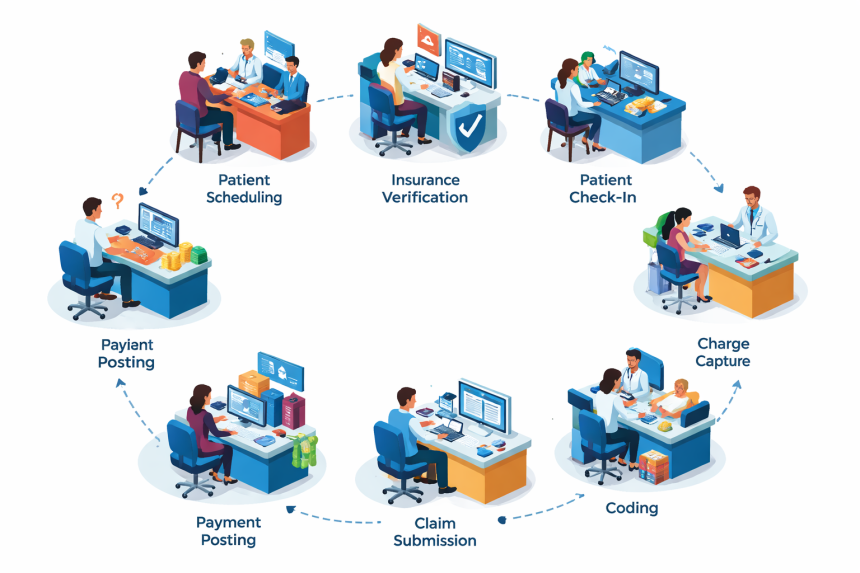
As the administrative backbone of any medical facility, RCM tracks the entire life cycle of a patient account. From the moment a patient schedules an appointment to the final payment of a balance, RCM ensures that providers are reimbursed accurately and timely. Given the complexity of insurance billing and shifting regulations, many organizations now rely on specialized health care revenue cycle management services to keep their operations running smoothly.
In this guide, we will break down the RCM process step by step and explore why it is vital for the financial health of the medical industry.
Why Revenue Cycle Management Matters
Revenue Cycle Management is not just about getting paid. It is about creating a seamless flow of data that connects clinical encounters with financial outcomes. When the revenue cycle is optimized, providers experience fewer claim denials, faster payment cycles, and improved patient satisfaction.
Without efficient health care revenue cycle management services, a practice can suffer from “leaky” revenue. This occurs when administrative errors, coding mistakes, or a lack of follow-up result in lost income. In an era of high overhead costs and declining reimbursement rates, managing the revenue cycle effectively is a prerequisite for survival.
The Step-by-Step RCM Breakdown
The revenue cycle is a multi-stage journey. Each step is dependent on the accuracy of the one before it. Here is a detailed look at the process.
1. Preregistration and Patient Scheduling
The cycle begins long before the patient meets the doctor. During the preregistration phase, administrative staff collect essential patient information, including personal demographics and insurance details.
At this stage, health care revenue cycle management services often emphasize insurance verification. Verifying coverage upfront ensures that the patient’s policy is active and that the planned services are covered. This proactive approach prevents future claim denials based on “ineligible coverage.”
2. Patient Registration and Check-In
When the patient arrives at the facility, the registration team confirms the information collected during preregistration. Any changes to the patient’s address or insurance provider are updated in the system.
This is also the ideal time to collect point of service payments, such as copays. Collecting these small amounts early reduces the burden of patient collections later in the cycle.
3. Charge Capture
Charge capture is the process of recording the services provided to the patient. This includes everything from the office visit and diagnostic tests to surgical supplies used. If a service is performed but not captured, the provider effectively works for free.
Modern health care revenue cycle management services utilize electronic health records (EHR) to automate this process, reducing the risk of human error and ensuring that every billable action is accounted for.
4. Medical Coding
Once the services are captured, they must be translated into standardized medical codes. This involves using ICD-10 codes for diagnoses and CPT or HCPCS codes for procedures.
Medical coding is one of the most critical steps in the revenue cycle. A single digit error can lead to an immediate claim rejection. Expert coders ensure that the documentation supports the codes assigned, which is essential for both reimbursement and legal compliance.
5. Claim Submission
After coding, the “claim” (the bill sent to the insurance company) is prepared. Before it is sent, most health care revenue cycle management services use “clearinghouses” to perform claim scrubbing.
Claim scrubbing is a digital audit that checks for errors, missing information, or coding inconsistencies. Once the claim is “clean,” it is electronically transmitted to the payer (the insurance company).
6. Remittance Processing
After the insurance company reviews the claim, they send an Explanation of Benefits (EOB) or an Electronic Remittance Advice (ERA). This document explains what the insurance company paid, what they discounted, and why any portions were denied.
Remittance processing involves “posting” these payments to the patient’s account. This step provides a clear picture of what the patient still owes and what the insurance company has fulfilled.
7. Insurance Follow-Up and Denials Management
It is rare for every claim to be paid on the first attempt. Insurance follow-up is the process of chasing down unpaid claims. If a claim is denied, RCM specialists must investigate the reason, correct the error, and resubmit the claim within the payer’s time limits.
Effective health care revenue cycle management services have dedicated teams for denials management. By analyzing trends in denials, they can identify root causes and implement changes to prevent the same mistakes from happening again.
8. Patient Collections
Once the insurance company has paid its portion, the remaining balance is billed to the patient. This includes deductibles and coinsurance.
Patient collections can be a sensitive area. Clear communication, transparent billing statements, and flexible payment plans are essential. Providing an online portal where patients can view and pay their bills significantly increases the likelihood of full payment.
The Benefits of Professional Health Care Revenue Cycle Management Services
Many healthcare providers find that managing this entire process in-house is overwhelming. Between hiring staff, staying updated on coding changes, and managing expensive software, the overhead is high. This is why outsourcing to professional health care revenue cycle management services has become a standard practice.
The benefits include:
- Reduced Administrative Burden: Doctors can focus on patients while experts handle the paperwork.
- Faster Reimbursements: Specialists know how to bypass common bottlenecks that delay payments.
- Lower Denial Rates: Dedicated RCM firms have a higher success rate for “first-pass” claims.
- Compliance: RCM services stay updated on HIPAA regulations and billing laws, protecting the practice from audits.
Challenges in Revenue Cycle Management
Despite technological advancements, RCM remains challenging. Staffing shortages can lead to backlogs in billing. Furthermore, the shift toward “Value-Based Care” means that providers are increasingly paid based on patient outcomes rather than just the volume of services. This adds a layer of complexity to how revenue is calculated and tracked.
Additionally, rising patient deductibles mean that a larger portion of revenue now comes directly from patients rather than insurance companies. This requires a more robust approach to patient billing and financial counseling.
Conclusion
Revenue Cycle Management is the heartbeat of a healthcare organization’s financial health. From the initial phone call to the final balance payment, every step requires accuracy, speed, and expertise. By understanding the breakdown of these stages, providers can identify where their processes might be failing.
For those looking to maximize their revenue and minimize stress, partnering with health care revenue cycle management services is a strategic move. It ensures that the business of medicine supports the practice of medicine, allowing for better care and a stronger bottom line.
Frequently Asked Questions
1. What is the difference between medical billing and RCM?
Medical billing is a subset of RCM. While billing focuses on submitting claims and collecting payments, RCM encompasses the entire process, including patient scheduling, coding, and clinical documentation.
2. How can I reduce claim denials?
The best way to reduce denials is through “claim scrubbing” and rigorous insurance verification at the preregistration stage. Most denials are caused by simple data entry errors or missing information.
3. What is a “clean claim” rate?
A clean claim rate is the percentage of claims that are successfully processed and paid on the first submission. High-performing health care revenue cycle management services aim for a rate of 95 percent or higher.
4. How does RCM impact the patient experience?
When RCM is handled efficiently, patients receive accurate bills and clear communication regarding their financial responsibility. This prevents the frustration of “surprise bills” and improves trust in the provider.
5. Why should I outsource my revenue cycle management?
Outsourcing allows you to leverage specialized technology and expert coders without the cost of in-house training and benefits. It often leads to higher collection rates and lower operational costs.

Booklet "The Life and Teachings of Muhammad (PBUH) By Annie Besant



Top High-Puff Disposables Ranked - Why Maskking IceX Leads the Cooling...

Discover Inspiring Music Education for Children and Adults in Singapor...
Professional Teeth Whitening and Emergency Dental Services in Bristol...
Maintaining a healthy and attractive smile often requires a combination of preventive care...