
How a High-Converting Webinar Funnel Can Grow Your Business
Discover how webinar funnels attract leads, build trust, automate follow-ups, and convert webinar attendees into customers with a strategic funnel system.
Webinars have become a powerful way for businesses, coaches, consultants, educators, and agencies to build trust with their audiences. Unlike a traditional landing page, a webinar gives prospects an opportunity to learn, interact with a brand, understand a problem, and see why a particular solution may be right for them. But getting people to register for a webinar is only one part of the process. To turn webinar traffic into meaningful business results, you need a carefully planned funnel behind the event.
A webinar funnel connects every stage of the customer journey, from the first registration page to the follow-up emails and final offer. Businesses looking for a more structured approach can explore a dedicated webinar funnel service to create a conversion-focused experience designed around their specific goals.
What Is a Webinar Funnel?
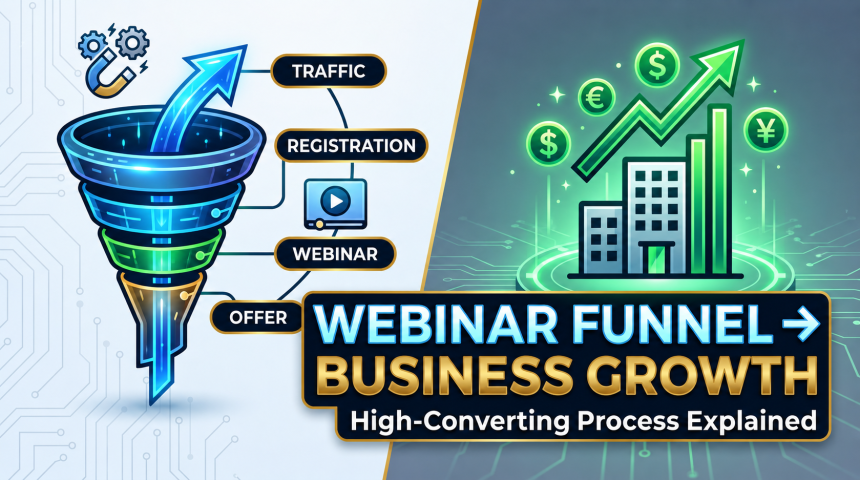
A webinar funnel is a series of connected marketing pages, messages, and automated actions designed to move a visitor toward registering for, attending, and taking action after a webinar.
Instead of sending potential customers directly to a generic website, a webinar funnel creates a focused journey. Each step has a specific purpose.
A typical webinar funnel may include:
- Webinar registration page
- Confirmation or thank-you page
- Calendar or reminder integration
- Webinar presentation page
- Email reminder sequence
- Live or automated webinar experience
- Offer or sales page
- Follow-up email sequence
- Checkout or booking page
- Post-webinar nurturing
When these components work together, businesses can provide prospects with relevant information at the right stage of their decision-making process.
Why Webinar Funnels Matter
A webinar can provide considerably more context than a short advertisement or ordinary sales page. Instead of immediately asking visitors to buy something, the business can first educate them.
This educational approach is particularly useful for products and services that require explanation.
For example, a consultant may use a webinar to explain a complicated business problem. A software company can demonstrate how its platform works. A coach can teach a useful framework before introducing a paid program.
The webinar creates an opportunity to establish authority while addressing questions and objections.
However, the quality of the webinar alone does not guarantee conversions. If the registration page is confusing, reminders are poorly timed, or the post-webinar follow-up is missing, valuable leads can disappear.
That is why the funnel surrounding the webinar is just as important as the presentation itself.
Key Elements of a Successful Webinar Funnel
1. A Conversion-Focused Registration Page
The registration page is usually the first major step in the webinar funnel.
Its job is simple: communicate the value of attending and encourage visitors to register.
A strong registration page should clearly explain:
- What the webinar is about
- Who should attend
- What attendees will learn
- When the webinar takes place
- What makes the presenter credible
- What problem the webinar addresses
- What the visitor should do next
Avoid overwhelming visitors with unnecessary information. The page should guide attention toward the webinar's value and the registration action.
2. A Clear Webinar Promise
People are unlikely to register simply because something is called a webinar.
They need a reason to spend their time attending.
A strong webinar promise focuses on the transformation or knowledge the attendee can gain. Instead of using a vague headline, communicate a specific problem, desired outcome, or useful lesson.
For example, a business webinar could promise to teach attendees how to identify common conversion problems in their sales funnel.
The more specific the promise, the easier it becomes for the right audience to recognize the webinar's relevance.
3. A Simple Registration Process
Every additional obstacle can create friction.
A registration form should request only information that is genuinely useful. Depending on the business model, a basic form might ask for a name and email address.
For higher-ticket services, additional qualification questions may be appropriate. The important thing is to balance lead quality with conversion rate.
A complicated form may discourage registrations, while a simple form can make it easier for interested prospects to enter the funnel.
4. Confirmation and Thank-You Pages
After registration, visitors should immediately know what happens next.
A confirmation page can provide:
- Webinar date and time
- Calendar options
- Access instructions
- Important reminders
- Social sharing options
- Additional resources
- A secondary offer when appropriate
This page is also an opportunity to reinforce the value of the upcoming webinar.
Instead of simply saying "You're registered," remind the attendee why they made a smart decision by signing up.
Email Automation Makes the Funnel Stronger
One of the biggest advantages of a webinar funnel is the ability to automate communication.
People register at different times, become busy, forget appointments, or miss emails. Automated reminders can help bring registrants back into the experience.
A typical sequence could include:
Immediately after registration: Send confirmation and access information.
A few days before the webinar: Explain what attendees can expect.
One day before: Remind them of the event and highlight the key benefit.
A few hours before: Send a short reminder with the access link.
When the webinar starts: Provide a final access reminder.
After the webinar: Share the next step or relevant offer.
The exact sequence depends on the audience and webinar format, but consistent communication can significantly improve attendance and engagement.
Live vs. Evergreen Webinar Funnels
Webinar funnels can support both live and automated experiences.
Live Webinar Funnels
A live webinar happens at a scheduled date and time.
This format can work particularly well when interaction is important. Participants may ask questions, join discussions, and receive answers directly from the presenter.
Live webinars can also create a stronger sense of urgency because everyone is expected to attend at the same time.
Evergreen Webinar Funnels
An evergreen webinar is designed to be available repeatedly, often through an automated system.
Instead of requiring the business owner to host every session manually, prospects can access the presentation through a scheduled or on-demand experience.
This approach can be useful for businesses that want to generate leads and sales continuously.
The funnel still needs strong registration pages, reminders, presentation content, follow-ups, and conversion paths.
Automation does not replace strategy; it makes a good strategy easier to scale.
The Importance of Post-Webinar Follow-Up
Many businesses put most of their effort into getting registrations and delivering the webinar. Then they stop communicating with attendees.
That can be a costly mistake.
Some prospects are ready to buy immediately. Others need more information before making a decision.
A post-webinar sequence can help address this difference.
Follow-up messages may include:
- Webinar replay information
- Key lessons from the presentation
- Answers to common questions
- Customer stories
- Additional educational content
- Product or service information
- Limited-time incentives
- Consultation or booking opportunities
The goal isn't simply to send more emails. The goal is to continue the conversation that started during the webinar.
Webinar Funnels and Conversion Optimization
A webinar funnel should not be treated as a "build it once and forget it" project.
Performance data can reveal where prospects are dropping out.
For example:
- Many visitors but few registrations may indicate a registration-page problem.
- High registrations but low attendance may suggest weak reminders.
- Strong attendance but few sales may indicate an offer or presentation issue.
- High engagement but low checkout completion may indicate friction during the buying process.
Tracking these stages helps businesses identify where improvements are needed.
Conversion rate optimization can then be applied to headlines, calls to action, forms, page layouts, offers, emails, and other funnel elements.
Building a Webinar Funnel Around the Customer Journey
The most effective funnels are designed around the prospect rather than the technology.
Before building the funnel, consider the customer's journey.
What problem brings them to your business?
What information do they need before trusting you?
What objections might prevent them from buying?
What result are they hoping to achieve?
What should happen after they attend the webinar?
Answering these questions helps create a funnel that feels logical rather than forced.
For example, a consultant selling a high-ticket service might use the webinar to educate prospects about a common business challenge. After the webinar, the funnel could invite qualified attendees to schedule a consultation.
A course creator might instead direct attendees toward a program enrollment page.
The funnel should match the business model and the action the company ultimately wants the prospect to take.
Why Professional Webinar Funnel Development Can Help
Creating a webinar funnel involves more than designing attractive pages.
The registration page, automation, messaging, integrations, tracking, webinar experience, follow-up sequence, and offer need to work together.
Professional funnel development can help businesses avoid common implementation problems and create a more consistent customer journey.
A specialized funnel team can also help identify opportunities to improve the user experience, clarify messaging, connect third-party tools, and optimize important conversion points.
For businesses already generating traffic, improving the funnel can be especially valuable because it helps make better use of visitors they are already attracting.
Final Thoughts
A webinar can be much more than an online presentation. With the right funnel strategy, it can become a complete customer acquisition system that educates prospects, builds trust, generates qualified leads, and supports sales.
The strongest webinar funnels combine clear messaging, focused landing pages, simple registration, automated reminders, engaging presentations, strategic offers, and consistent follow-up.
Whether you are launching your first webinar or trying to improve an existing campaign, the key is to think about the entire customer journey rather than treating the webinar as a standalone event.
A well-planned webinar funnel gives every stage of that journey a purpose-and that can make your marketing efforts more measurable, scalable, and conversion-focused.

Building a Healthier, Substance-Free Life Through Comprehensive Addict...


NPK Price Trend Q3 2026 | Global Price Trends, Forecast, Chart, Prices...