
أَعُوذُ بِاللّٰهِ مِنَ الشَّيْطَانِ الرَّجِيمِ
بِسۡمِ ٱللهِ ٱلرَّحۡمَـٰنِ ٱلرَّحِيمِ
In the name of ALLAH, the Most Gracious, the Most Merciful
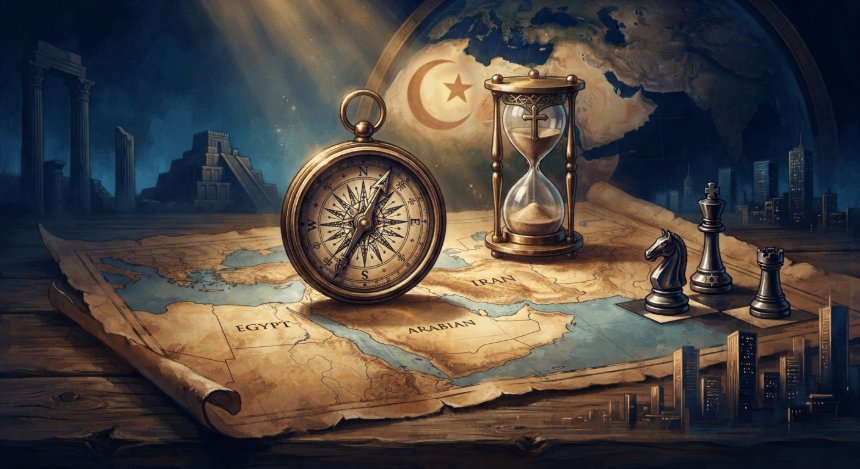
The US-Iran Conflict a Prelude to The Antichrist?
There are two starkly different perspectives regarding the underlying motives for the conflict or tensions between the United States, Israel, and Iran: one based on political and military analysis, and the other on a religious and ideological narrative. According to the beliefs held by extremist Zionists and certain Evangelical groups, some radical religious circles in Israel—along with conservative Evangelical Christians in the United States—view this conflict as the fulfillment of religious prophecies. In Jewish tradition, the expected savior is known as "Mashiach" (the Messiah)—a figure identified in Islamic belief as the *Masih Dajjal* (the Antichrist). Certain Zionist factions consider the reconstruction of Solomon’s Temple in Jerusalem and the occurrence of major wars in the region as necessary prerequisites for his appearance. Many influential figures within the US administration—known as Christian Zionists—have supported such conflicts, viewing them as part of the biblical "End Times" battle, or Armageddon. They believe that these wars will ultimately lead to the return of Jesus (AS).
Conversely, experts in global politics and neutral observers maintain that wars at the state level are not waged merely to fulfill religious prophecies; rather, they are driven by concrete material, military, and geopolitical interests. Israel and the United States seek to maintain their influence in the Middle East, while Iran and its allies strive to dismantle American and Israeli hegemony in the region. Fundamentally, this is a struggle for power and supremacy. In short, from the perspective of political and military leadership, this conflict was fought to determine the balance of power, ensure security, and secure control over resources in the Middle East. However, religious prophecies and beliefs—including those concerning the Temple of Solomon and eschatological concepts—have certainly been employed as a potent ideological weapon to garner public support and provide justification for war.
A devout, observant Jew adheres to the Torah and strives to live in accordance with it; yet, there exists another type of Jew—one who invokes the name of the God of Moses (peace be upon him) while remaining a slave to his own base desires—much like the vast majority of humanity.
This Jew, obsessed with 'Lakshmi' (a metaphor for wealth and hedonism in Hindu Faith), is empowered by the 'Zionist Jew'—a faction led for the past five centuries by the Rothschild family, operating from London, England. These Zionists draw people of every generation into their scheme, compelling them to prostrate themselves before various 'deities'—such as the idol of Baal or the intoxicating allure of wine—in pursuit of material wealth and indulgence. Those who consent to this form of 'worship' find favor with the Zionists, and are subsequently rewarded with a windfall of dollars. In truth, these Zionists are worshippers of wealth alone; religion is merely a tool used to deceive the simple-minded. Over the last five hundred years, they have been the ultimate beneficiaries of numerous wars. Has the capital generated by conflicts involving America, Israel, and Iran not ultimately flowed into their own coffers?
What, then, was the true nature of this entire game?
Throughout human history, moments of profound geopolitical upheaval have often led thinkers, theologians, and observers to interpret global events through the lens of sacred prophecy and civilizational strategy. From the ancient landscapes of the Middle East to the modern financial capitals of London and New York, the intersection of religion, global finance, and imperial geography raises enduring questions about how spiritual traditions and political movements shape the rise and fall of nations. Examining religious concepts surrounding the *Dajjal* (the Antichrist in Islamic tradition)—alongside the absence of the United States in ancient scripture, the geopolitical reliance on insular power centers, and the prospect of a dramatic political realignment following the U.S. midterm elections in November 2026—provides a comprehensive lens through which to analyze contemporary global dynamics.
To understand this civilizational dichotomy, one must first examine the divide between the Abrahamic religions—rooted in the Eastern world—and the secular West. Judaism, Christianity, and Islam all emerged from the interconnected landscapes of Western Asia and the ancient Near East. Their foundational texts were composed between approximately 1200 BCE and 100 CE—long before the Western Hemisphere became known to the Afro-Eurasian civilizations. The Abrahamic prophets focused on the empires of their respective eras, anchoring human society within a vertical relationship—one defined by the divine, cosmic order, and collective justice. In contrast, European civilization evolved from the Greco-Roman traditions of horizontal logic and imperial statecraft; it subsequently embraced Christianity, and later, underwent the Enlightenment of the seventeenth and eighteenth centuries. This era replaced religious authority with secular nationalism, industrial banking, and global capitalism, thereby separating the church from the state.
If one were to investigate the origins of Zionism, modern digital sources would suggest that "the movement was founded in the late 19th century in Eastern and Central Europe as a response to the rising antisemitism and persecution faced by Jews. Theodor Herzl is considered the founder of this movement; in his 1896 book, *The Jewish State*, he proposed the concept of an independent Jewish state. To translate this vision into reality, Herzl organized the First Zionist Congress in Basel, Switzerland, in 1897, which led to the establishment of the World Zionist Organization. The primary objective was to gather Jews—scattered across the globe—in Palestine (the Holy Land) and establish political sovereignty there."
However, this is a deception—a narrative crafted to keep the true architects hidden behind a veil. That veil is now beginning to lift. Dr. Mujahid Kamran, drawing upon the writings of various Western historians, has shed light on these concealed figures, tracing the movement’s origins to a banking family based in London. See his books, "The International Bankers, World Wars I, II, and Beyond" and "Secrets of the Federal Reserve" by Eustace Mullins...
From a geopolitical perspective, the rise of modern Western power—associated with the emergence of political Zionism—relied heavily on "insular geography" to shield itself from the upheavals of the Eurasian continent. During the 18th and 19th centuries, Great Britain—an island nation—became the hub for global maritime trade, bullion markets, and international banking networks. As traditional European empires collapsed under the strain of two world wars, the center of financial and strategic power shifted across the Atlantic to the United States—a continental-sized "island" protected from land-based Eurasian threats by two vast oceans. While economists often explain this transition through wartime industrial capacity and the 1944 Bretton Woods monetary framework, geopolitical observers note that this geographical shift solidified a transatlantic alliance with a strong focus on maintaining strategic control over the Levant and the Middle East.
Within the Islamic scholarly tradition, certain prophetic narrations (*Hadith*)—which describe the signs preceding the end of time—attribute symbolic significance to islands and eastern regions. In one well-known *Hadith* recorded in authentic collections, a group of sailors recounted a story to the Prophet Muhammad (peace be upon him) in which they... Following a storm at sea, an encounter took place with Al-Masih ad-Dajjal (the False Messiah)—who was bound in chains—on a remote, unknown island. He was awaiting the occurrence of certain events on Earth that would precipitate his release ahead of the appointed time. Other traditions state that he will eventually emerge from the East—specifically from Isfahan, in modern-day Iran—accompanied by seventy thousand followers. While traditional Islamic scholars have historically viewed this island as a location hidden somewhere in the oceans—categorizing these prophecies as part of *al-ghayb* (unseen knowledge known only to God)—modern observers, particularly those within certain Zionist-Jewish circles, often map these symbols onto contemporary maritime empires and flashpoints in the Middle East.
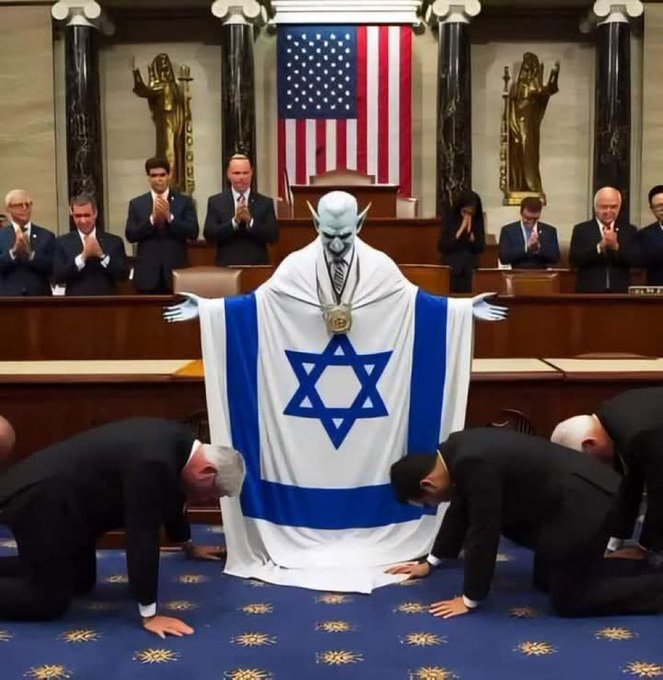
USA Mention in Bible?
The absence of the United States from biblical scripture has become a subject of intense debate in America, with a vast amount of content dedicated to it on YouTube. Several key aspects and implications arising from this discussion include:
• A challenge to the concept of "American Exceptionalism": Many American Christians have long held the belief that the United States was specifically chosen by God to lead the world. However, the observation that biblical end-times prophecies explicitly mention regions such as the Middle East, Europe, and Asia—while omitting any clear reference to the United States—has cast doubt upon this traditional belief.
• The emergence of diverse religious interpretations: Given that the United States is not explicitly named in the Bible, various explanations are being offered across YouTube and social media. Some scholars suggest that, regarding the end times... First, the United States will lose its status as a superpower; meanwhile, some others attempt to link the symbolic names mentioned in the Bible—such as "Babylon" or the "islands of the West"—to the United States.
• An increase in content driven by fear and sensationalism: Due to YouTube’s algorithms, there has been a proliferation of sensationalist videos on this subject. Many present these ideas as signs of America’s decline, economic collapse, or an impending major natural disaster, fueling both anxiety and curiosity among the general audience.
• A shift in religious and political thought: A significant consequence of this discourse is that, within conservative (Evangelical) circles in the United States, there is a deepening tendency to view global politics—particularly affairs in the Middle East—through the lens of religious prophecy.
This topic serves as a compelling example of the intersection between religious belief, history, and modern media, where interpretations of an ancient text are being applied to contemporary global politics.
Within the administration of President Donald Trump, individuals who hold conservative Evangelical and Christian nationalist views occupy key positions. Notably, the Secretary of Defense—a role now frequently referred to in public and political discourse as the "Secretary of War"—Pete Hegseth, appears to openly espouse this perspective.
Some key aspects and ground realities of this situation are as follows:
• Pete Hegseth’s overt religious narrative: Since assuming leadership at the Pentagon, Pete Hegseth has openly framed U.S. military operations—particularly in the Middle East and regarding recent tensions and conflict with Iran—as a religious and civilizational clash, or a "crusade." He has initiated formal prayer gatherings within the Pentagon, altered regulations concerning military chaplains (religious leaders), and frequently cites biblical passages to characterize American military might as an expression of divine will.
• Biblical prophecies and Middle East policy: Other prominent members of the Trump administration—such as U.S. Ambassador to Israel Mike Huckabee—along with evangelical advisors, firmly believe that the complete supremacy of Israel and major transformations in the Middle East are essential for the return of Jesus and the fulfillment of end-times prophecies. As the Bible contains no direct mention of the United States, this group seeks to have America leverage its full power to position itself as a central player in the realization of these prophecies through its involvement in Israel and the Middle East.
• Intense backlash and opposition within the United States: This policy, championed by Hegseth and the administration, has drawn sharp criticism domestically. Constitutional experts and organizations advocating for religious freedom point out that the U.S. Constitution mandates the separation of state and religion; yet, the current leadership is utilizing the military to advance a specific religious agenda. Even within the military, several personnel have lodged complaints that commanders are framing the war in terms of "Armageddon" and biblical prophecies.
• Political Consequences: This blend of religious nationalism and an aggressive foreign policy has also divided the American public. Analysts attribute the difficulties and defeats faced by the Republican Party in the recent midterm elections largely to this extremist narrative and the entanglement in Middle Eastern wars.
In short, a discourse that was once confined to YouTube and churches has now become part of the policymaking process within the White House and the Pentagon—with repercussions felt globally, particularly across the Middle East.
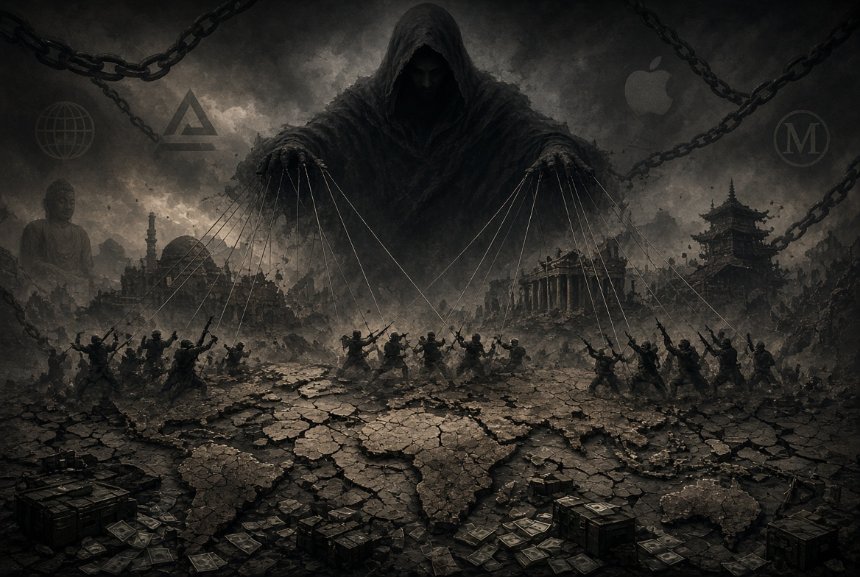
The war with Iran was an "Antichrist Gamble."
Within this interpretive framework—often referred to as the "Antichrist Gamble"—critics argue that drawing the United States into protracted regional wars in the Middle East was a high-stakes miscalculation that risked overextending American economic and military power. For decades, the alignment between Washington’s strategic orientation and the Israeli state was presented under the guise of shared democratic values and regional stability. However, the democratization of information, the ongoing humanitarian crises in Gaza, and the economic toll of the conflict with Iran—which began in early 2026—have fundamentally altered the American political landscape. By the time of the November 2026 midterm elections, public frustration—driven by rising costs, foreign military entanglements, and the dominance of lobbying in the legislative process—manifested in a decisive electoral backlash, with the Democrats securing control of both the House of Representatives and the Senate.
The election results immediately triggered a marked shift in the rhetoric emanating from the highest levels of the U.S. government, signaling that the geopolitical "game" had entered a new, unforeseen phase. In the wake of the Republican losses, Vice President J.D. Vance acknowledged—on more than one occasion—that "the reason we lost is the war." He urged his party to end the conflict with Iran, focus on domestic inflation, prioritize an "America First" agenda, and re-evaluate U.S.-Israel relations. Concurrently, President Donald Trump—while defending his initial decision to confront Tehran—acknowledged that the war and the resulting surge in fuel prices had harmed the Republicans at the ballot box. He engaged in mediated diplomatic talks (involving Qatar), effectively halted military operations, and signaled plans to terminate unconditional military aid to Israel.
This domestic reckoning also resonated directly within the Pentagon. A few days after the elections, Republican Representative Thomas Massie introduced eight articles of impeachment against Secretary of Defense Pete Hegseth, accusing him of engaging in unauthorized hostilities against Iran—as well as conducting operations in Yemen, Venezuela, and the Caribbean—without Congressional approval. Although the outgoing Republican-led House easily sidelined the resolution in a 211–204 procedural vote—with Trump and Vance publicly dismissing the move as partisan theater—rising Democratic leaders warned that rigorous Congressional oversight and new accountability efforts would commence once the new Congress convenes in January.
Is AIPAC Losing Control of Congress and Senate in America?
The November 2026 midterm results have fueled a heated debate in Washington over whether the American Israel Public Affairs Committee (AIPAC) is losing its long-standing grip on the United States. House and Senate. While AIPAC announced that more than 234 of its endorsed candidates in both parties won their races — including top Democratic leaders Chuck Schumer and Hakeem Jeffries — independent campaign finance analyzes revealed a sharp shift in the group's political leverage. According to data compiled by responsible statecraft, AIPAC and its affiliated super PACs, the United Democracy Project (UDP) spent more than $84 million during the 2026 cycle, yet nearly two-thirds of their total spending of $55 million went to candidates who lost. High-profile defeats in competitive Senate races underscored the threat: In Michigan, Democrat Abdul-Said defeated AIPAC-backed opponents in the primary and general election despite spending more than $30 million against him, while in Texas the Senate victories of Troy Jackson and James Tallerico in Maine—both vocal critics of unconditional military aid to Israel—further eroded the lobby's aura of invincibility. Faced with a growing voter backlash where official AIPAC endorsements increasingly serve as a political liability rather than an asset, the organization has even announced plans to restructure its operations away from direct PAC endorsements toward unaffiliated individual donor networks. Although pro-Israel lobbying groups maintain substantial financial resources and institutional allies on Capitol Hill, the 2026 election has shown that decades of bipartisan consensus in Congress are crumbling under the weight of public scrutiny.
Ultimately, this development marks a profound moment of historical transition. Critics have long argued that reducing the ancient Abrahamic faiths to instruments of a militarized statecraft imposes a per secular logic on a region that has historically served as a cradle of transcendental revelation. From the perspective of those analyzing this "antichrist gamble," the transatlantic financial establishment, anchored in London and Western capitals, has overplayed its hand by insisting on confrontation with Iran—a strategic blow on the battlefield while eroding its long-held political advantage. Just as the systemic crises of 1914 and 1939 on Capitol Hill shattered the old imperial orders and reshaped the world map during World War I and World War II, the unraveling of today's unipolar consensus suggests that the world may be on the threshold of a major, historic recovery. Nations and societies demand sovereignty, accountability and lasting guarantees of peace.
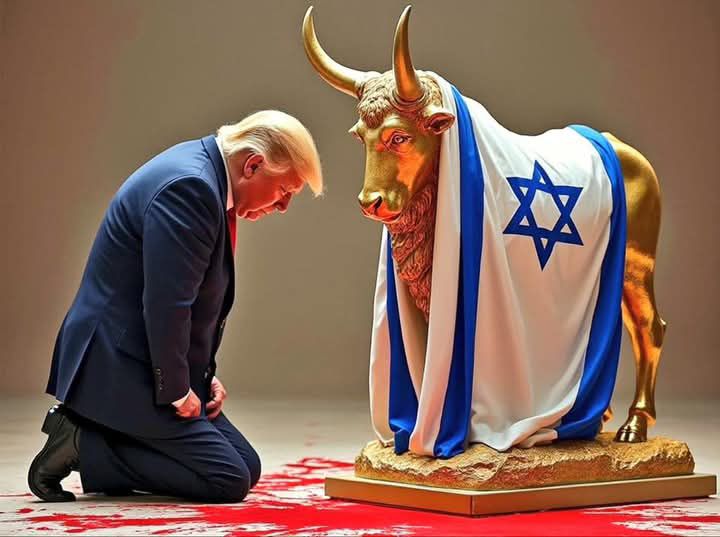
Have the Zionist Jews lost the antichrist gamble?
Answering this question requires an unbiased and historical analysis of the interrelationships and contradictions of American evangelical Christianity (Christian Zionism), political Zionism, and the global financial system (including the ideas of the Rothschild family). According to political, religious and historical analysts, there are two very different aspects of this situation, on the basis of which it is determined whether it will promote or harm Zionism:
1. Short-term promotion (ideological and political unity)
According to political observers, these policies of American conservatives immediately appear to strengthen Israel and political Zionism. The American evangelical leadership supports every military and territorial expansion of Israel based on their religious beliefs, giving Israel immense power and protection on the world stage. The interests of major financial institutions, corporate sectors and political lobbies in Western countries (including the US and UK) are often aligned with Western hegemony in the Middle East. Historically, the Rothschild family provided financial and political support to the Zionist movement in the 19th and early 20th centuries (such as at the time of the Balfour Declaration), but modern-day economists believe that today's global financial system is governed by large multinationals, central banks, and corporate funds rather than a single family.
2. Long-Term Risks and Causes of Failure (Internal Conflicts and Global Responses)
On the other hand, historians and international affairs experts believe that extremist religious policies can prove harmful to Zionism itself and Western hegemony in the long run. It is an important fact that American evangelical Christians and Jewish Zionists are temporarily allied, but their ultimate religious beliefs are at odds with each other. According to evangelical belief, a large number of Jews will perish in the final war (Armageddon) and the survivors will convert to Christianity. For this reason, many serious Jewish circles themselves consider this extreme Christian support dangerous to their existence. In American politics itself, the gulf between "America First" advocates and Israel-sacrifice constituencies is widening. When American economic and military resources are spent on foreign wars, there is a strong domestic backlash.
When American foreign policy is presented as a purely religious war or as being subservient to the interests of another nation, it triggers a strong backlash among ordinary American citizens—particularly the younger generation. The ongoing conflicts and humanitarian catastrophes in the Middle East—most notably in Gaza, Palestine—have turned the younger generation in Western nations (including the U.S. and the UK), as well as global public opinion, firmly against Israel and the Zionist narrative. Zionism no longer enjoys the moral or international support it once commanded. In recent years, public sentiment within the United States has shifted rapidly against the unconditional support for Israel—a trend that could potentially weaken American aid and political backing in the future.
Persistent wars and aggressive policies in the Middle East have damaged the global reputation of both the United States and Israel. Consequently, China, Russia, and the "Global South" (developing nations) are in the process of establishing an alternative global and financial order, one that challenges Western financial and political hegemony. Regarding the influence of the global financial elite and long-established banking dynasties (such as the Rothschilds), historians note that their monopoly is no longer what it once was. Today, the rise of Eastern powers (China, Russia), the BRICS alliance, and alternative financial systems is eroding the unilateral control previously held by Western financial hubs like London and New York.
Concluding Remarks
In short, it could be argued that the conflict involving the United States, Israel, and Iran was orchestrated in alignment with the prophecies of certain Zionist Jews—a sequence of events intended to facilitate the emergence of the Antichrist (the Dajjal). The religious and military policies of the current American leadership may provide immediate military and political strength to Israel and the Zionist agenda; however, in the long term, these policies could trigger a severe public backlash, internal divisions within Western societies, and global isolation—ultimately leading to the weakening and decline of the system itself.
On the other hand, many global observers, economists, and even Western analysts themselves believe that these extremist policies are, in fact, a precursor to the decline and defeat of Zionist influence. Yet, the Zionists remain unconcerned; for once the *Masih-e-Dajjal* (the Antichrist) emerges, who would dare to challenge them? At that point, they would effectively become the deputies of the Divine. If one considers the potential consequences of a conflict involving the United States, Israel, and Iran, it appears that the Zionist strategists stand to lose this gamble. What, then, might be their next move?