Venous Leakage (Venogenic Erectile Dysfunction)
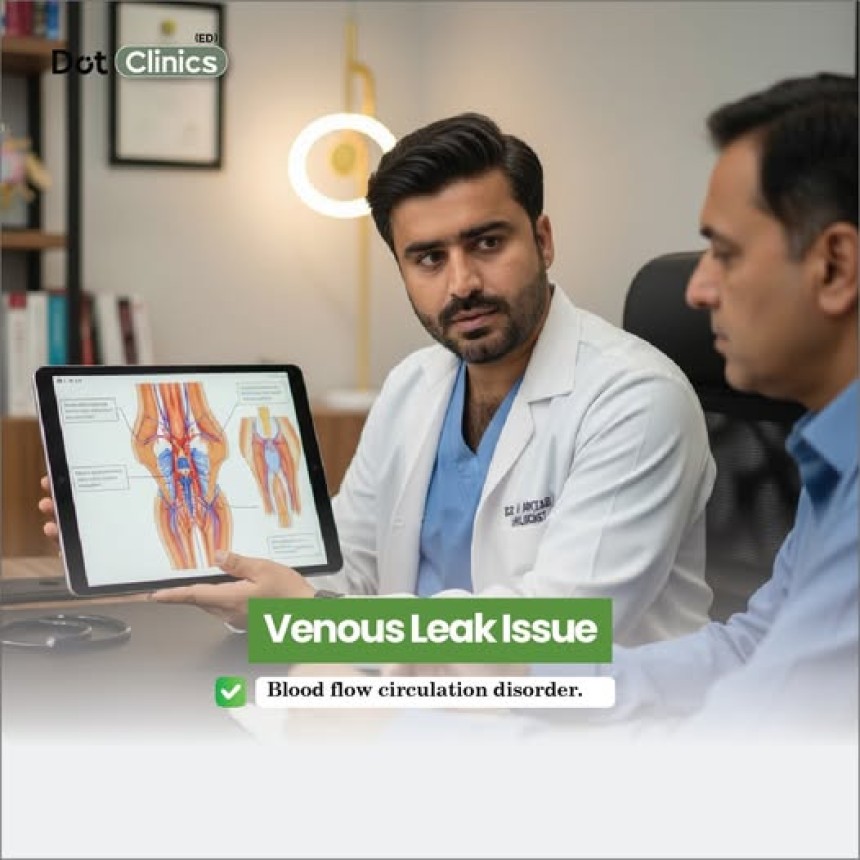
Venous leakage, medically referred to as venogenic erectile dysfunction, is a vascular condition in which a man is unable to maintain an erection due to abnormal venous outflow from the penis.
Venous Leakage (Venogenic Erectile Dysfunction)
Venous leakage, medically referred to as venogenic erectile dysfunction, is a vascular condition in which a man is unable to maintain an erection due to abnormal venous outflow from the penis. Although blood enters the penis normally during sexual arousal, it fails to remain trapped inside the erectile chambers, leading to weak, soft, or short-lasting erections. Venous leakage is one of the most complex and commonly misunderstood causes of erectile dysfunction (ED), especially in younger and middle-aged men.
This condition can significantly affect a man’s sexual confidence, emotional well-being, and marital life. Understanding its causes, diagnosis, and treatment options is essential for effective management.
To fully understand venous leakage, it is important to know how a normal erection occurs.
During sexual stimulation:
- The brain sends signals to the penile nerves
- Penile arteries dilate and increase blood inflow
- Blood fills the corpora cavernosa (erectile chambers)
- Expanding tissues compress the veins against the tunica albuginea
- This compression traps blood inside the penis, maintaining rigidity
An erection is maintained only as long as venous outflow is adequately blocked. Any failure in this veno-occlusive mechanism results in erectile weakness.
Venous leak occurs when the veins of the penis fail to close properly during erection. As a result, blood drains out too quickly, preventing sustained rigidity. The problem is not reduced blood inflow but excessive blood outflow.
Venous leakage is not a single disease; rather, it is a functional outcome of structural, vascular, or smooth muscle abnormalities within the penis.
Venous leakage can be classified into different types based on severity and cause:
Primary (Congenital) Venous Leakage- Present from birth
- Often diagnosed in younger men (late teens to early 30s)
- Caused by abnormal venous anatomy or weak tunica albuginea
- Develops later in life
- Associated with chronic medical conditions or penile tissue damage
- More common in middle-aged and older men
Multiple factors can lead to venous leakage, often in combination:
Vascular and Structural Causes- Loss of elasticity of penile smooth muscles
- Weakness or degeneration of the tunica albuginea
- Abnormal penile venous channels
- Endothelial dysfunction
- Diabetes mellitus
- Hypertension
- Atherosclerosis
- Chronic kidney disease
- Hormonal imbalance, especially low testosterone
- Peyronie’s disease (penile plaques and curvature)
- Penile trauma or fracture
- Prior penile or pelvic surgery
- Cigarette smoking
- Excessive alcohol intake
- Obesity and sedentary lifestyle
- Long-term stress and anxiety
Although venous leakage is primarily organic, anxiety and performance stress can worsen symptoms by impairing erection quality.
Men with venous leakage often report the following symptoms:
- Inability to maintain erection during intercourse
- Erections that become soft within seconds or minutes
- Better erections during masturbation than intercourse
- Better rigidity while lying down than standing
- Poor or decreasing response to oral ED medicines
- Normal sexual desire but reduced performance confidence
Importantly, venous leakage usually does not affect ejaculation, orgasm, or penile sensation.
Venous leakage typically develops gradually over months or years. However, it may appear suddenly after:
- Penile trauma
- Pelvic or prostate surgery
- Severe psychological stress
In many cases, the underlying venous dysfunction has been present for a long time but becomes noticeable when erectile reserve declines.
Accurate diagnosis is critical before labeling a patient with venous leakage.
Detailed Medical and Sexual HistoryIncludes duration of ED, response to medications, nocturnal erections, lifestyle factors, and comorbid diseases.
Physical ExaminationAssessment of penile structure, plaques, testicular size, and secondary sexual characteristics.
Penile Doppler UltrasoundThis is the gold-standard initial test. After injection of a vasoactive drug, Doppler ultrasound measures:
- Arterial inflow
- End-diastolic velocity (EDV)
- Venous outflow
Persistent high EDV indicates venous leakage.
Dynamic Infusion Cavernosometry and Cavernosography (DICC)Used in selected cases to precisely identify venous leak sites, especially before surgical intervention.
Laboratory Tests- Serum testosterone
- Blood glucose (HbA1c)
- Lipid profile
- Thyroid function (if indicated)
Treatment depends on severity, age, expectations, and response to conservative therapy.
1. Lifestyle Modification and Risk Factor Control- Smoking cessation
- Weight loss
- Regular physical activity
- Optimal control of diabetes and blood pressure
These measures improve overall vascular health but may not fully correct venous leakage.
Medications such as sildenafil, tadalafil, and vardenafil:
- Improve smooth muscle relaxation
- Enhance arterial inflow
They are most effective in mild cases and early disease. Advanced venous leakage often shows poor response.
- Non-invasive option
- Uses negative pressure to draw blood into the penis
- A constriction ring maintains erection
Effective for some patients but may feel unnatural.
Medications injected directly into the penis include:
- Alprostadil
- Papaverine
- Phentolamine
These bypass venous mechanisms and can produce reliable erections, but long-term compliance is limited.
- Improves microvascular circulation
- Enhances endothelial function
May benefit selected patients with mixed vascular ED but is not a definitive cure for severe venous leakage.
- Aims to block leaking veins
- Variable success rates
- Long-term outcomes often disappointing
Not routinely recommended in older patients.
Penile Implant SurgeryPenile prosthesis implantation is the most effective and permanent solution for severe venous leakage:
- Provides consistent rigidity
- Independent of blood flow
- High satisfaction rates (>90%)
- Long-term durability (10–15 years)
Venous leakage is usually not completely reversible, especially in advanced stages. However, it is highly treatable. Early diagnosis allows symptom control, while advanced cases can be definitively managed with surgical solutions.
Chronic erectile failure can lead to:
- Performance anxiety
- Depression
- Relationship stress
Addressing psychological health alongside medical treatment improves outcomes.
You should consult a urologist if:
- ED persists for more than 3 months
- Oral medications stop working
- Erections are consistently short-lived
- You have diabetes, hypertension, or pelvic surgery history
Early evaluation prevents progression and unnecessary anxiety.
Venous leakage is a complex but manageable cause of erectile dysfunction. While it often develops slowly, its impact on sexual health can be profound. With modern diagnostic tools and a wide range of treatment options—from medications to penile implants—most men can regain satisfactory sexual function and confidence. Professional evaluation by an experienced urologist is the key to choosing the right treatment pathway.


Small Business CFO in Calgary: Finance Leadership Sized for Owner-Run...
Small Business CFO in Calgary: Finance Leadership Sized for Owner-Run Companies

Como Escolher as Melhores Consultoria de Compliance para Sua Empresa
Como Escolher as Melhores Consultoria de Compliance para Sua Empresa