
Venogenic Erectile Dysfunction: Causes, Diagnosis, and Modern Treatment Solutions
Venous Leak Treatment at Dot Clinics is a specialized and comprehensive program designed to address one of the most common causes of erectile dysfunction.
Venogenic Erectile Dysfunction Treatment in Pakistan
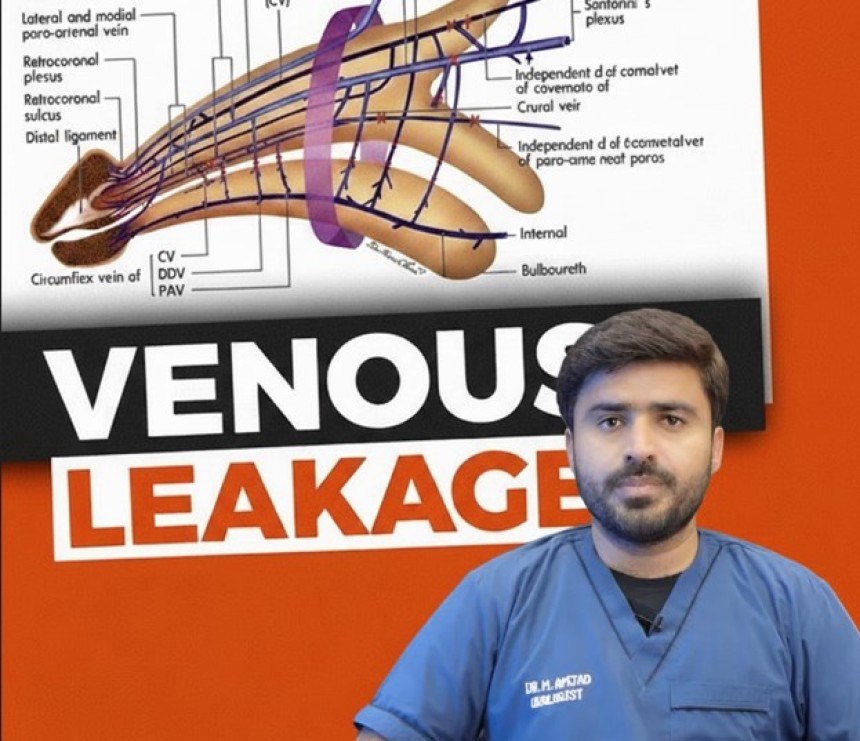
Erectile dysfunction (ED) affects millions of men worldwide, with causes ranging from psychological stress to vascular disease. While most cases are linked to poor arterial blood flow or hormonal imbalance, there is a specific and often underdiagnosed condition known as Venogenic Erectile Dysfunction (VED) — also referred to as Veno-Occlusive Dysfunction or Venous Leak.
Venogenic ED occurs when the veins of the penis are unable to trap blood effectively during an erection. This results in an erection that cannot be sustained long enough for satisfying sexual activity. Although it’s one of the more complex forms of ED, today’s medical advancements offer effective diagnostic tools and modern treatments that can restore normal sexual function.
An erection requires a delicate balance between blood inflow and blood retention. During arousal, blood flows rapidly into the penile arteries and fills the corpora cavernosa, causing them to expand. This expansion compresses the veins that drain blood from the penis, trapping the blood and maintaining rigidity.
In venogenic erectile dysfunction, this natural trapping mechanism fails. The venous system cannot hold blood inside the corpora cavernosa, leading to premature leakage. The result is a partial, weak, or short-lived erection — even when desire and arterial inflow are perfectly normal.
Venogenic ED can develop due to structural, vascular, or lifestyle-related factors. The most common causes include:
1. Aging and Loss of ElasticityWith age, the smooth muscle tissue and collagen fibers in the penile chambers lose their flexibility. This weakens the ability of the penis to compress the veins and retain blood, leading to venous leakage.
2. Vascular DiseaseConditions like diabetes, hypertension, and atherosclerosis damage blood vessels, reducing the efficiency of the veno-occlusive mechanism responsible for maintaining erections.
3. Fibrosis and Scar TissuePenile trauma, surgery, or Peyronie’s disease can lead to fibrosis — stiff scar tissue that disrupts normal venous compression.
4. Hormonal DeficiencyLow testosterone affects nitric oxide production, smooth muscle tone, and vascular function, indirectly contributing to venous leak.
5. Nerve DamageInjury to the pelvic or cavernous nerves from prostate surgery, spinal cord injury, or pelvic trauma can interfere with the neural signals that control penile blood flow.
6. Congenital or Structural Venous DefectsSome men are born with abnormal venous drainage patterns that predispose them to venogenic ED.
7. Lifestyle FactorsSmoking, excessive alcohol use, obesity, and lack of exercise accelerate vascular damage and increase the risk of both arterial and venous dysfunction.
The hallmark symptom of venogenic ED is the inability to maintain an erection despite normal arousal and initial firmness. Other symptoms include:
- Erection that fades quickly during intercourse
- Weak or short-lived nighttime erections
- Normal libido but poor erection sustainability
- Minimal response to oral ED medications
- Gradual decline in erectile performance
If these symptoms persist for several months, professional evaluation is essential to rule out venous leakage.
Accurate diagnosis is key to effective treatment. A specialist urologist or men’s health expert will use several diagnostic tests to confirm venogenic ED and identify the underlying cause.
1. Medical and Sexual HistoryThe evaluation begins with a detailed review of medical conditions, medications, and sexual performance history.
2. Physical ExaminationThe doctor examines the penis and surrounding tissues to detect fibrosis, curvature, or vascular abnormalities.
3. Penile Doppler UltrasoundThis is the gold standard test for diagnosing venogenic erectile dysfunction. A vasoactive drug is injected to trigger an erection, and ultrasound measures:
- Peak Systolic Velocity (PSV): Arterial inflow
- End Diastolic Velocity (EDV): Venous outflow
If EDV remains above 5 cm/s, it indicates that blood is escaping too quickly — a clear sign of venous leak.
4. Cavernosometry and CavernosographyThese advanced tests measure intracavernosal pressure and visualize leaking veins using contrast imaging. They pinpoint the exact site and severity of the venous leak.
5. Nocturnal Penile Tumescence (NPT) TestingThis measures spontaneous erections during sleep. A lack of nocturnal erections supports an organic (physical) cause like venogenic dysfunction rather than psychological factors.
Venous leak treatment depends on the severity and the patient’s overall health. A multi-step approach combining non-surgical, regenerative, and interventional therapies delivers the best outcomes.
Common drugs such as Sildenafil (Viagra), Tadalafil (Cialis), and Vardenafil (Levitra) enhance nitric oxide activity and increase blood flow into the penis.
However, in venogenic ED, the problem lies in blood retention, not inflow, so these medications often offer only partial relief. They may still help when used with other treatments.
2. Vacuum Erection Devices (VED)A vacuum pump draws blood into the penis using negative pressure. Once engorged, a constriction ring is applied to prevent venous leakage.
Benefits:
- Non-invasive
- No drugs or surgery
- Effective for mild cases
Limitations:
- May feel mechanical
- Requires proper training and comfort adjustment
Penile rings help sustain erections by restricting venous outflow. They are safe, inexpensive, and can be used along with oral medication, but must not be worn longer than 30 minutes.
Medications such as Alprostadil, Papaverine, or Trimix are injected directly into the penis to produce a strong erection. This bypasses nerve signaling and stimulates direct smooth muscle relaxation.
While effective, this is a temporary solution and does not correct the underlying venous problem.
Advanced and Definitive TreatmentsFor men with confirmed venogenic erectile dysfunction, the following advanced treatments offer lasting and often curative results.
Venous embolization is a minimally invasive procedure performed by an interventional radiologist to seal off leaking veins.
Procedure Overview:
- Local anesthesia is used.
- A tiny catheter is inserted into a vein (usually in the groin or perineum).
- Under imaging guidance, the leaking veins are identified and sealed using coils, glue, or sclerosant foam.
Advantages:
- No surgical incision
- Quick recovery (1–2 days)
- Natural erections restored
- High success rate (70–90% in suitable patients)
Embolization directly treats the root cause — excessive venous drainage — and often eliminates the need for medications.
PRP therapy uses growth factors from your own blood to stimulate regeneration of penile tissues, improve circulation, and strengthen vascular walls.
It enhances smooth muscle health and venous sealing ability, making it an ideal companion therapy after embolization or shockwave treatment.
Key Benefits:
- 100% natural and biocompatible
- Improves blood retention
- Supports tissue healing and elasticity
Shockwave therapy is a non-surgical, drug-free procedure that uses acoustic waves to trigger new blood vessel formation and tissue remodeling in the penis.
Benefits:
- Enhances both inflow and outflow control
- Painless and safe
- Boosts natural erectile function over time
A standard course involves 6–12 sessions. Many patients combine shockwave therapy with PRP or medication for optimal results.
Stem cell therapy is an emerging solution aimed at regenerating smooth muscle and vascular tissue at a cellular level.
By injecting stem cells derived from fat or bone marrow, doctors can promote natural repair of the veno-occlusive system.
Though still being studied, early results show significant improvement in erectile rigidity and duration.
5. Penile Implant SurgeryFor men who do not respond to any conservative or interventional treatment, penile implant surgery offers a permanent and reliable solution.
Types of Implants:
- Inflatable Prosthesis: Provides natural-feeling erections controlled by a hidden pump.
- Malleable Prosthesis: Bendable rods that maintain semi-rigidity for easy use.
Advantages:
- Immediate, firm erections
- High satisfaction rate (over 90%)
- Lifelong durability
Healthy living plays a vital role in preventing and managing venogenic ED. Recommended lifestyle modifications include:
- Quit smoking to protect vascular health
- Exercise regularly (especially cardio and pelvic floor workouts)
- Maintain a balanced, low-cholesterol diet
- Control blood sugar and blood pressure
- Limit alcohol intake
- Manage stress and ensure adequate sleep
These habits not only support erectile health but also enhance the results of any treatment.
Venogenic erectile dysfunction is highly treatable when properly diagnosed. With advanced solutions like venous embolization, shockwave therapy, and PRP, men can regain strong, natural erections and long-term sexual satisfaction.
Early evaluation is crucial. Ignoring symptoms or relying solely on oral medication can lead to worsening vascular damage and reduced treatment success. Consulting a specialist ensures personalized care and optimal recovery.
Venogenic Erectile Dysfunction (Veno-Occlusive Dysfunction) is a complex but reversible cause of erectile difficulties. It occurs when penile veins fail to retain blood, leading to unstable or short-lived erections.
Modern medicine now provides targeted treatments — from embolization and PRP therapy to shockwave and stem cell treatments — that address the root cause and restore confidence, performance, and quality of life.
If you experience persistent difficulty maintaining erections, consult a urologist or men’s health expert. With accurate diagnosis and personalized treatment, a full and satisfying sexual life is absolutely within reach.