
Ultrasonic Jewelry Cleaner: How It Works, Best Models, and Safe Usage Tips
Discover how an Ultrasonic Jewelry Cleaner works, its benefits, the best models and features to consider, and expert safety tips for cleaning jewelry effectively and safely.
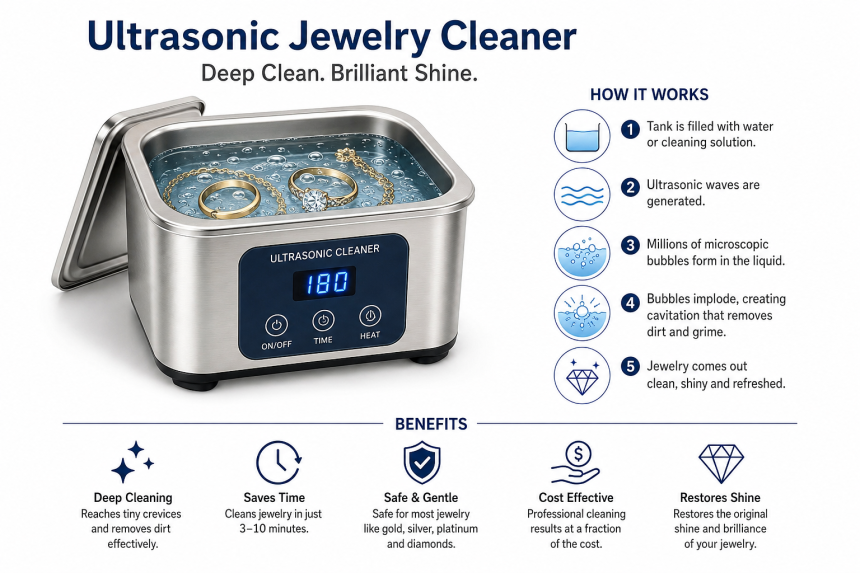
An Ultrasonic Jewelry Cleaner uses high-frequency sound waves to create microscopic bubbles in a cleaning solution. These bubbles implode rapidly through a process called cavitation, removing dirt, grease, oils, and debris from jewelry surfaces and hidden spaces.
Key Benefits:
- Deep cleaning without scrubbing
- Restores shine and brilliance
- Reaches intricate details
- Saves time and effort
- Suitable for many gold, silver, platinum, and diamond jewelry items
An Ultrasonic Jewelry Cleaner is a specialized cleaning machine designed to remove contaminants from jewelry using sound-wave technology.
Unlike traditional cleaning methods that rely on brushes or polishing cloths, ultrasonic cleaners penetrate tiny gaps and detailed settings to provide a more thorough clean.
- Professional jewelers
- Jewelry manufacturers
- Repair workshops
- Retail jewelry stores
- Watch technicians
- Home jewelry enthusiasts
Because of their effectiveness and ease of use, ultrasonic cleaners have become a standard tool throughout the jewelry industry.
The cleaning process relies on a scientific principle known as cavitation.
Step 1: Fill the Cleaning Tank
The machine tank is filled with:
- Water
- Specialized jewelry cleaning solution
- Mild cleaning concentrate (depending on manufacturer recommendations)
Step 2: Generate Ultrasonic Waves
The transducer inside the machine converts electrical energy into high-frequency sound waves.
Typical operating frequencies range from:
- 20 kHz to 40 kHz for powerful cleaning
- 40 kHz to 80 kHz for more delicate cleaning applications
Step 3: Create Microscopic Bubbles
The sound waves generate millions of tiny bubbles throughout the cleaning liquid.
Step 4: Cavitation Process
The bubbles rapidly collapse and release small bursts of energy that:
- Loosen dirt
- Remove grease
- Eliminate polishing residues
- Clean hidden crevices
Step 5: Reveal Cleaner Jewelry
After a short cleaning cycle, jewelry appears noticeably cleaner, brighter, and more polished.
Ultrasonic cleaning offers several advantages compared to manual cleaning methods.
Deep Cleaning Performance
The cleaning action reaches:
- Stone settings
- Chain links
- Engravings
- Small grooves
- Decorative patterns
Faster Cleaning
Most cleaning cycles require only:
- 3–5 minutes for lightly soiled jewelry
- 5–10 minutes for deeper cleaning
Professional Results
Users often notice:
- Enhanced sparkle
- Improved shine
- Cleaner gemstones
- Better overall appearance
Reduced Manual Effort
No extensive brushing or polishing is required.
Versatile Applications
Many ultrasonic cleaners can also clean:
- Eyeglasses
- Watches
- Coins
- Dental appliances
- Metal accessories
Not all ultrasonic cleaners are created equal. Choosing the right model depends on your specific needs.
Important Features
Look for:
- Compact size
- Simple controls
- Moderate tank capacity
- Affordable pricing
Consider:
- Larger capacity tanks
- Continuous operation capability
- Adjustable power settings
- Industrial-grade construction
Many jewelry materials respond exceptionally well to ultrasonic cleaning.
- Gold jewelry
- Sterling silver
- Platinum jewelry
- Diamond rings
- Diamond earrings
- Stainless steel accessories
- Hard gemstones
A diamond engagement ring worn daily may accumulate:
- Soap residue
- Skin oils
- Dust particles
- Cosmetic products
An ultrasonic cleaner can effectively remove these contaminants and restore brilliance within minutes.
While ultrasonic cleaning is highly effective, certain materials require extra caution.
Avoid Cleaning
- Pearls
- Opals
- Emeralds
- Coral
- Turquoise
- Amber
- Soft gemstones
Additional Items to Avoid
- Jewelry with loose stones
- Antique jewelry
- Cracked gemstones
- Damaged settings
Ultrasonic vibrations may:
- Worsen existing fractures
- Loosen stones
- Damage delicate materials
When in doubt, consult a professional jeweler before cleaning valuable pieces.
Following proper procedures helps protect both the jewelry and the cleaning equipment.
Before Cleaning
Always inspect jewelry for:
- Loose stones
- Damaged prongs
- Cracks
- Weak clasps
During Cleaning
Follow these best practices:
- Use approved cleaning solutions
- Avoid overcrowding the tank
- Follow manufacturer instructions
- Select appropriate cleaning times
After Cleaning
For the best results:
- Rinse jewelry thoroughly
- Remove any remaining solution
- Dry with a soft lint-free cloth
- Store jewelry properly
Many users unknowingly reduce cleaning effectiveness by making simple mistakes.
Using Harsh Chemicals
Avoid:
- Bleach
- Strong acids
- Abrasive cleaners
Overloading the Tank
Too many items can:
- Reduce cleaning efficiency
- Cause jewelry pieces to collide
- Increase the risk of scratches
Excessive Cleaning Cycles
Long cleaning sessions do not always improve results.
Ignoring Maintenance
Regularly:
- Empty the tank
- Replace cleaning solution
- Clean machine components
Ultrasonic cleaning plays a critical role throughout the jewelry manufacturing and repair process.
Common Industry Uses
- Post-casting cleaning
- Polishing residue removal
- Stone-setting cleanup
- Final product preparation
- Quality control inspections
Companies such as Hisashi Industries understand the importance of precision cleaning systems in maintaining product quality and delivering professional results.
For both consumers and businesses, ultrasonic cleaners offer significant advantages.
- Professional-grade cleaning at home
- Faster maintenance routines
- Better jewelry appearance
- Improved customer presentation
- Long-term jewelry care
For jewelry retailers and manufacturers, ultrasonic cleaning has become an essential part of quality assurance and product presentation.
An Ultrasonic Jewelry Cleaner is one of the most effective tools available for maintaining the beauty and brilliance of jewelry. By utilizing high-frequency sound waves and cavitation technology, these systems provide deep cleaning that traditional methods often cannot match.
Whether you are a jewelry owner looking to restore sparkle at home or a professional seeking consistent cleaning performance, ultrasonic technology offers an efficient, reliable, and time-saving solution. Understanding which jewelry can be cleaned safely and following proper usage guidelines will help ensure excellent results while protecting your valuable pieces.
1. Can an Ultrasonic Jewelry Cleaner clean diamond rings?
Yes. Most diamond rings can be cleaned safely if the stones are secure and the setting is in good condition.
2. How often should I use an ultrasonic jewelry cleaner?
For regularly worn jewelry, cleaning every few weeks is typically sufficient.
3. Is ultrasonic cleaning safe for gold jewelry?
Yes. Gold jewelry is generally safe for ultrasonic cleaning when properly maintained.
4. Can I use tap water in an ultrasonic cleaner?
Yes, but specialized cleaning solutions usually provide superior cleaning performance.
5. What should never go into an ultrasonic jewelry cleaner?
Pearls, opals, emeralds, coral, turquoise, amber, and jewelry with loose stones should generally be avoided.
Looking for advanced ultrasonic cleaning solutions for jewelry manufacturing, repair, retail, or industrial applications?
Hisashi Industries provides high-performance ultrasonic cleaning systems engineered for precision, efficiency, and long-term reliability.
Contact us today to find the ideal ultrasonic cleaning solution for your business needs.
Visit Our Website:https://hisashiultrasonic.com
Sophos XG to XGS Firewall Upgrade Services India
Businesses using older Sophos XG firewalls may need to evaluate their options for upgradin...




Before You Fly for Panchakarma Treatment in Rishikesh
: What to send before Panchakarma treatment in Rishikesh — nights, medicines, arrival time...

How Do Property Sale Platforms Aid Foreclosure Prevention Strategies?
Fast house sale platforms foreclosure prevention offers an alternative by connecting homeo...