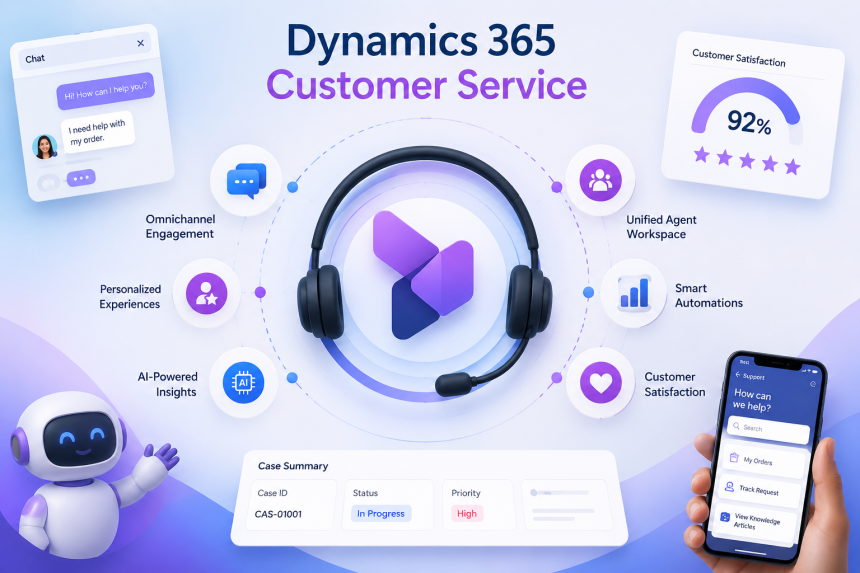

Transform Customer Service with Dynamics 365 Customer Service
Learn how Dynamics 365 Customer Service improves customer experiences with AI, automation, omnichannel support, and intelligent case management.
Introduction
Customer service has become one of the most influential factors in determining business success. In an increasingly digital world, customers expect quick responses, personalized interactions, and seamless support across multiple communication channels. Businesses that consistently meet these expectations build stronger relationships, improve customer loyalty, and gain a significant competitive advantage.
However, delivering exceptional customer service is not always easy. Many organizations still rely on disconnected systems, manual processes, and fragmented customer data, making it difficult for support teams to provide fast and effective assistance. As customer expectations continue to evolve, businesses need modern solutions that empower service teams with the tools, insights, and automation necessary to deliver outstanding experiences.
The future of customer support lies in intelligent service platforms that unify customer interactions, streamline workflows, and provide actionable insights. Organizations that invest in these technologies are better positioned to create meaningful customer relationships and drive sustainable growth.
The Growing Importance of Customer Experience
Modern customers value experiences just as much as products and services. A single positive interaction can strengthen trust, while a poor experience can quickly lead customers to seek alternatives.
Today’s customers expect businesses to:
- Respond quickly to inquiries
- Provide personalized assistance
- Maintain consistent communication
- Resolve issues efficiently
- Offer support through preferred channels
Meeting these expectations requires a customer-first approach supported by modern technology and efficient service processes.
Challenges Faced by Customer Service Teams
Despite understanding the importance of customer satisfaction, many organizations struggle to deliver consistent support due to operational challenges.
Fragmented Customer Information
Customer data is often spread across different platforms, making it difficult for agents to access complete customer histories.
High Volumes of Service Requests
As businesses grow, support teams must manage increasing numbers of inquiries without compromising service quality.
Inconsistent Customer Experiences
Different communication channels can create disconnected experiences if systems are not properly integrated.
Manual Processes
Repetitive administrative tasks consume valuable time that agents could spend helping customers.
Limited Visibility
Without accurate reporting and analytics, organizations may struggle to identify service gaps and improvement opportunities.
Creating a Connected Service Environment
To overcome these challenges, businesses are adopting modern customer service platforms that centralize customer information and automate routine activities. A connected service environment enables support teams to access the right information at the right time while maintaining consistency across every interaction.
When service agents have a complete view of customer histories, preferences, and previous conversations, they can provide more personalized and effective support. This not only improves customer satisfaction but also enhances agent productivity and operational efficiency.
Organizations that embrace digital transformation can create customer experiences that strengthen loyalty and support long-term growth.
How Dynamics 365 Customer Service Modernizes Support Operations
Businesses seeking to improve customer engagement and service efficiency are increasingly turning to Dynamics 365 Customer Service as a comprehensive solution for modern support management.
Designed to unify customer interactions and streamline service delivery, Dynamics 365 Customer Service provides organizations with a centralized platform for managing cases, communication channels, customer records, and service activities. This enables support teams to deliver faster and more personalized assistance while maintaining consistency across every touchpoint.
One of the platform’s key strengths is its omnichannel capability. Customers can connect through email, phone, live chat, social media, or self-service portals, while service representatives maintain a complete view of all interactions from a single workspace. This unified approach reduces response times and improves the overall customer experience.
Artificial intelligence further enhances productivity by providing intelligent recommendations, automating routine processes, and helping agents identify the best solutions for customer issues. These capabilities reduce manual effort and allow support teams to focus on more complex customer needs.
The platform also offers advanced reporting and analytics tools, enabling managers to monitor performance, identify trends, and continuously improve service operations.
Key Features That Drive Better Customer Experiences
Omnichannel Engagement
Support teams can manage customer interactions across multiple communication channels from one centralized interface, ensuring consistency and convenience.
Intelligent Case Management
Automated case routing and prioritization ensure customer inquiries reach the most qualified agents quickly.
AI-Powered Assistance
Artificial intelligence helps agents resolve issues faster by recommending solutions, knowledge articles, and next-best actions.
Self-Service Portals
Customers can access information independently through knowledge bases and support portals, reducing wait times and improving satisfaction.
Knowledge Management
A centralized repository ensures agents have access to accurate and up-to-date information when assisting customers.
Real-Time Analytics
Interactive dashboards provide visibility into customer satisfaction, service performance, and operational efficiency.
Benefits for Businesses
Implementing a modern customer service solution creates measurable benefits across the organization.
Improved Customer Satisfaction
Personalized support and faster response times help create positive customer experiences.
Enhanced Agent Productivity
Automation reduces repetitive administrative work, allowing agents to focus on higher-value tasks.
Increased Operational Efficiency
Centralized data and streamlined workflows eliminate unnecessary delays and improve collaboration.
Better Decision-Making
Real-time insights provide valuable information for optimizing service strategies and improving performance.
Scalability
Businesses can easily adapt to growing customer demands without sacrificing service quality.
The Future of Customer Service
Customer service is rapidly evolving through advancements in artificial intelligence, automation, and predictive analytics. Organizations are shifting from reactive support models to proactive customer engagement strategies that anticipate customer needs before issues occur.
Emerging trends include:
- AI-powered virtual assistants
- Predictive service recommendations
- Automated customer interactions
- Advanced sentiment analysis
- Proactive issue resolution
Companies that embrace these innovations will be better equipped to meet changing customer expectations and maintain a competitive advantage.
Conclusion
Customer service has become a critical component of business success. Organizations that deliver fast, personalized, and consistent support experiences are more likely to retain customers and build lasting relationships.
Dynamics 365 Customer Service empowers businesses with the tools needed to modernize support operations, improve customer engagement, and increase service efficiency. By combining omnichannel communication, intelligent automation, AI-driven insights, and real-time analytics, organizations can transform customer service into a strategic asset that drives growth and customer loyalty.
As customer expectations continue to evolve, investing in modern customer service technology will be essential for businesses seeking long-term success in an increasingly competitive marketplace.
Modern Biomass Station Upgrades for Reliable Power Generation
Modern Biomass Station Upgrades for Reliable Power Generation


Dish Network Installers Near Me: Professional Satellite Dish Installat...