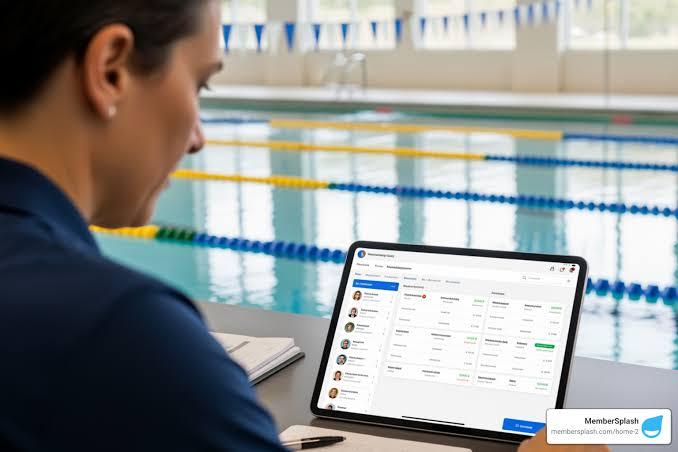

Top Swimming Club Management Software Platforms for Swim Clubs
Discover the top 7 swimming club management software platforms for swim clubs. Compare features, pricing, and tools to streamline club operations.
Top 7 Swimming Club Management Software Platforms for Swimming Organizations
Swimming clubs operate around structured schedules, recurring training sessions, athlete development, competitions, coaches, memberships, and facility availability. Unlike many one-team sports, swimming organizations can have large numbers of participants using the same facilities at different times.
This makes administration particularly dependent on accurate scheduling and organized participant information.
Swimming club management software can help centralize these activities and create a more structured operational environment.
Top seven platforms can be considered by swimming clubs, academies, and aquatic organizations.
1. Waresport
Waresport provides Swimming Club Management Software designed for sports organizations that need connected tools for managing their sporting operations.
Swimming organizations can use a centralized environment to organize teams, participants, schedules, competitions, and related activities. The broader platform approach can also be relevant when a swimming club operates multiple programs or needs to coordinate its sporting activities with facility management.
For organizations where venue availability plays a major role, swimming administration should not be separated from facility operations. Pool schedules, training sessions, competitions, and other activities can all depend on the same limited resources.
Waresport's sports-focused environment allows clubs to consider these operational requirements together rather than relying on disconnected systems.
2. TeamSnap
TeamSnap provides team management and communication tools used across youth and recreational sports.
For swimming organizations, team-oriented software can help coordinate schedules, participant information, events, and communication.
Clubs should assess whether team-level functionality is sufficient for their structure, particularly when several training groups and competitive programs operate simultaneously.
3. SportsEngine
SportsEngine provides tools for sports organizations covering areas such as registration, scheduling, communication, and administration.
For swimming clubs, centralized registration can simplify the process of managing athletes across different programs and seasons.
Scheduling functionality is also important because swimming programs often operate around fixed pool availability.
4. Upper Hand
Upper Hand provides sports management capabilities for programs, athletes, schedules, and organizational activities.
Swimming academies and training organizations can consider this type of platform when their operations involve structured programs and recurring participant activities.
A useful evaluation should consider how well athlete information, program schedules, and administrative activities are connected.
5. Mindbody
Mindbody provides management technology for fitness, wellness, and activity-based businesses.
Aquatic organizations that combine swimming programs with broader fitness or wellness services may consider a platform with broader membership and scheduling capabilities.
However, competitive swimming organizations should also examine whether the system fits their specific team and competition structures.
6. EZFacility
EZFacility focuses on facility and sports business management.
Swimming facilities can have particularly complex booking requirements because pool lanes, training areas, classes, teams, and other activities may compete for the same resources.
A facility-centered platform can therefore be relevant to organizations where venue utilization is central to daily administration.
7. PlayMetrics
PlayMetrics provides management tools for sports organizations, particularly those operating structured youth sports programs.
Although swimming has its own operating model, clubs can still evaluate general sports management capabilities such as participant organization, communication, registration, and administrative workflows.
What Should Swimming Clubs Evaluate?
Swimming clubs should begin by identifying the activities that consume the most administrative time.
Registration, class allocation, team management, scheduling, competitions, communication, payments, and facility coordination can all influence operational efficiency.
The software should also be assessed for scalability. A club managing several training groups may have very different requirements from a large organization operating multiple programs and competitive teams.
Facility Management Is Part of Swimming Administration
Swimming is closely tied to physical facility availability. Pool lanes cannot be allocated to multiple groups at the same time, and training schedules often need to be coordinated around fixed operating hours.
This makes sports facility management software relevant when evaluating technology for a swimming organization.
A platform that connects participant and scheduling information with facility operations can help administrators maintain a more complete view of how the organization operates.
Final Thoughts
Swimming club management involves more than maintaining athlete records. It requires coordination between participants, coaches, programs, schedules, competitions, and facilities.
The seven platforms above represent different approaches to sports, team, program, and facility management.
Clubs should therefore evaluate software according to their operating model, number of participants, facility structure, competitive requirements, and future growth rather than selecting a platform based on a single feature.
Vigortrix Review: Is It Worth Trying? Results, Pricing & Where to Buy
What Is Vigortrix? Vigortrix is a men's vitality dietary supplement designed to support e...




Golden Touch Fusion CBD – Premium Quality and Natural Wellness Support
What Are Golden Touch Fusion CBD? Golden Touch Fusion are a cannabidiol (CBD) supplement...