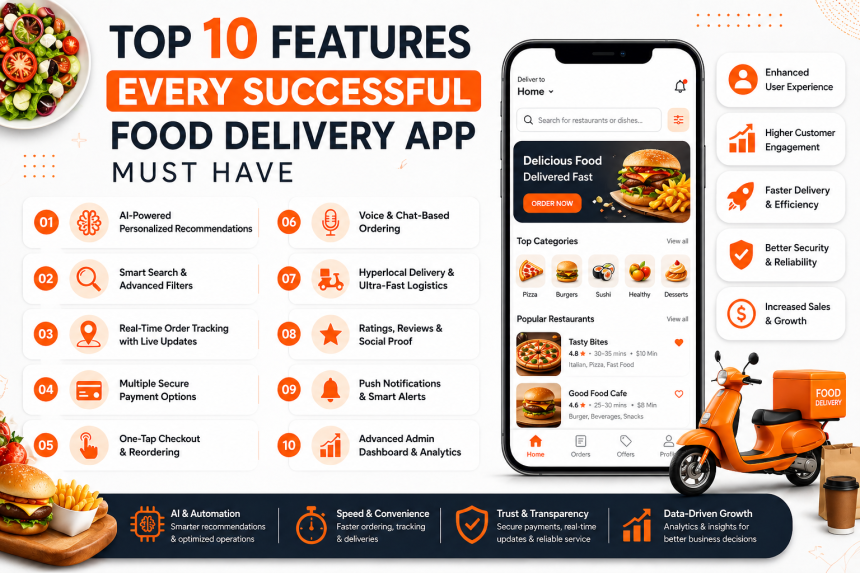

Top 10 Features Every Successful Food Delivery App Must Have in 2026
The food delivery industry has transformed dramatically over the past decade. What started as a convenience-based service has now evolved into a highly competitive, technology-driven ecosystem. In 2026, success in this space is no longer about simply listing restaurants and enabling orders—it’s about delivering speed, personalization, and a seamless user experience.
With the global food delivery market projected to reach trillions in value over the next few years, businesses are increasingly investing in food delivery app development to stay competitive.
If you're planning to build a modern food ordering platform or looking to upgrade your existing system, understanding the essential features is critical. This article explores the top 10 features every successful food delivery app must have in 2026 to meet evolving user expectations and drive business growth.
1. AI-Powered Personalized RecommendationsIn 2026, personalization is no longer optional—it’s expected.
Modern users want apps that understand their preferences, behavior, and habits. AI-powered recommendation systems analyze user data such as past orders, browsing history, time of day, and even weather conditions to suggest relevant meals.
For example, a user who frequently orders healthy food during weekdays might see salad options at lunchtime, while weekends may highlight fast food deals.
This feature:
- Increases user engagement
- Boosts repeat orders
- Enhances customer satisfaction
AI-driven personalization is now a core component of any custom food delivery app development company strategy.
2. Smart Search & Advanced FiltersUsers expect to find their desired food within seconds. A robust search system combined with advanced filters significantly improves usability.
Key functionalities include:
- Search by cuisine, dish, or restaurant
- Filters for price, ratings, delivery time
- Dietary filters (vegan, gluten-free, etc.)
A smooth search experience reduces friction and prevents users from abandoning the app. According to industry insights, user experience remains the biggest differentiator in food delivery apps.
3. Real-Time Order Tracking with Live UpdatesReal-time tracking is now a standard feature—but in 2026, it goes beyond just showing location.
Advanced tracking systems provide:
- Live GPS tracking of delivery partners
- Order preparation status
- Traffic-based ETA updates
- Notifications like “Order arriving in 3 minutes”
This transparency builds trust and reduces customer anxiety, making it a must-have feature in food ordering app development.
4. Multiple Secure Payment OptionsPayment flexibility is crucial for user convenience.
A successful food delivery app should support:
- UPI payments
- Credit/Debit cards
- Mobile wallets
- Net banking
- Cash on Delivery (COD)
Secure payment gateways ensure data protection and smooth transactions, reducing cart abandonment rates.
In markets like India and the UAE, offering localized payment options is essential for better conversion rates.
5. One-Tap Checkout & ReorderingSpeed is everything in 2026.
Users don’t want to go through long checkout processes. Instead, they expect:
- Saved addresses
- Stored payment methods
- One-tap reorder functionality
This feature is especially useful for repeat customers and daily users. It significantly increases order frequency and improves user retention.
Fast checkout systems are a key element of any high-performing food delivery app development solution.
6. Voice & Chat-Based OrderingVoice technology is reshaping how users interact with apps.
In 2026, many users prefer:
- Voice search (“Order my usual pizza”)
- Chat-based ordering systems
- AI-powered assistants
This feature enhances accessibility and simplifies the ordering process, especially for busy users or those unfamiliar with app navigation.
7. Hyperlocal Delivery & Ultra-Fast LogisticsSpeed has become a major competitive advantage.
With the rise of hyperlocal delivery models, users now expect:
- 10–15 minute delivery times
- Location-based restaurant suggestions
- Faster service within nearby areas
Companies are investing in micro-fulfillment centers and AI-based route optimization to meet these expectations.
8. Ratings, Reviews & Social ProofUser-generated content plays a crucial role in decision-making.
A successful app must include:
- Customer reviews
- Ratings for restaurants and dishes
- Verified feedback systems
These features:
- Build credibility
- Help users make informed decisions
- Improve restaurant quality
Trust-driven platforms tend to retain users longer and generate higher engagement.
9. Push Notifications & Smart AlertsPush notifications are powerful—but only when used correctly.
In 2026, smart notifications are:
- Personalized
- Context-aware
- Non-intrusive
Examples include:
- Order status updates
- Personalized offers
- Reorder reminders
When implemented effectively, notifications can significantly boost user engagement and conversions.
10. Advanced Admin Dashboard & AnalyticsBehind every successful app is a powerful admin panel.
An advanced dashboard allows businesses to:
- Manage orders and deliveries
- Track performance metrics
- Monitor user behavior
- Optimize operations
Analytics tools help identify trends, improve decision-making, and enhance overall efficiency. A strong backend system is essential for scaling any food delivery app development company project.
Bonus Features That Will Define the FutureWhile the above features are essential, future-ready apps are also integrating:
AI Route OptimizationEnsures faster delivery and reduces fuel costs.
Eco-Friendly Delivery OptionsElectric vehicles and sustainable packaging are gaining popularity.
Drone & Robot DeliveriesAutonomous delivery systems are being tested to reduce delivery time and costs.
Super App IntegrationApps are expanding beyond food to include groceries, travel, and more, creating a unified user experience.
Why These Features Matter in 2026The food delivery market is more competitive than ever. Users now expect:
- Faster delivery
- Smarter recommendations
- Seamless experiences
Apps that fail to meet these expectations risk losing users instantly.
Modern platforms like Swiggy and others have already set high standards by focusing on speed, innovation, and customer-centric design.
To succeed, businesses must adopt a feature-rich and scalable food delivery app development strategy that aligns with evolving user demands.
Final ThoughtsBuilding a successful food delivery app in 2026 requires more than just basic functionality. It demands a combination of advanced technology, user-centric design, and operational efficiency.
From AI-powered personalization to ultra-fast delivery systems, the features discussed above are essential for creating a competitive and future-ready platform.
If you’re planning to invest in custom food delivery app development, focusing on these features will not only improve user satisfaction but also drive long-term business growth.