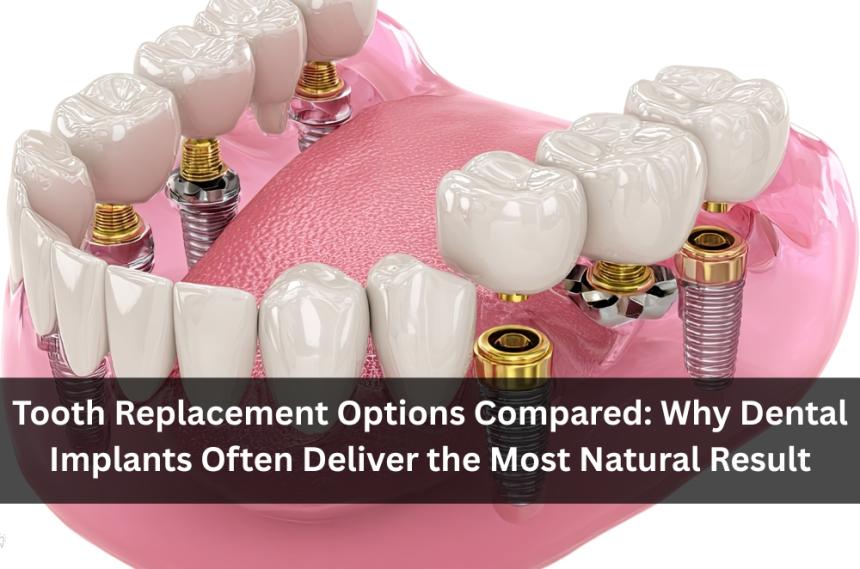

Tooth Replacement Options Compared: Why Dental Implants Often Deliver the Most Natural Result
Weighing up dentures, bridges or implants? Discover how each option stacks up for comfort, appearance, jaw-bone health and long-term maintenance, and why many Melbourne patients gravitate toward dental implants for the most natural result.
Missing a tooth can do more than dent your confidence—it can affect speech clarity, chewing efficiency and even the long-term health of the jaw-bone beneath. Melbourne patients looking to restore their smile typically find three main clinical pathways on the table: removable dentures, fixed dental bridges and dental implants. Each has a role, but they differ markedly in comfort, appearance, bone preservation and longevity. Below, we unpack the pros and cons so you can decide which solution best matches your lifestyle, oral health and budget priorities. We’ll also explore the benefits of titanium teeth implants, including their durability, biocompatibility and ability to support long-term jaw-bone health.
1. Why Acting Quickly MattersWhen a tooth is lost, the surrounding bone no longer receives the gentle stimulation that chewing usually provides. Over time, this lack of load can lead to bone resorption—gradual thinning or shrinking of the ridge that once supported the tooth. According to guidance on the dental health guidance, early intervention helps preserve both bone and neighbouring teeth, limiting downstream complications.
2. The Three Main Tooth-Replacement Pathways at a GlanceBefore delving into finer details, it helps to understand what each option fundamentally involves.
Readers exploring modern teeth implant options who want a deeper dive into cutting-edge implant advancements can also explore for additional context.
2.1 Removable Dentures (Full or Partial)• Custom acrylic (sometimes cobalt-chrome) plates that rest on the gums.
• Held in place by suction, clasps or dental adhesive.
• Can replace several or all missing teeth in one arch.
2.2 Fixed Dental Bridge• One or more prosthetic teeth fused to crowns on the adjacent natural teeth.
• These “abutment” teeth must be reshaped to accommodate the crowns.
• Best suited to gaps bounded by healthy neighbouring teeth.
2.3 Dental Implants• A small biocompatible titanium or zirconia post inserted into the jaw-bone.
• Bonds with bone (osseointegration) to act like an artificial tooth root.
• Supports a custom crown, bridge or even full-arch prosthesis.
Quick Comparison TableBelow is a snapshot of how each solution compares across key everyday factors.
FactorRemovable DenturesFixed Dental BridgeDental ImplantsDay-to-day comfortMay feel bulky; can shift slightlyFeels like joined crowns; generally stableFeels and functions like an independent toothAppearance over timeAcrylic can wear or stain; gum shrinkage showsAesthetic but relies on abutment tooth healthCrown emerges from gum like a natural tooth; bone support maintainedImpact on jaw-boneDoes not prevent bone loss under plateLimited bone stimulation under ponticProvides direct load to bone, helping maintain volumeTypical service life*5–7 years (with relines)7–12 years10–20 years or longer with maintenanceCleaning & hygieneRemove nightly; soak and brushThreaded floss or interdental brushes neededBrush and floss like a natural tooth; regular reviewsEffect on neighbouring teethNone, but clasps may trap foodRequires reduction of adjacent teethLeaves neighbouring teeth untouched*Service life varies by oral hygiene, biotype, bite forces and regular dental reviews.
3. How Dental Implants Mimic Nature So CloselyThe standout difference between implants and traditional prosthetics is the replacement of the root—not just the visible crown. Once an implant integrates with the bone, every bite and chew transmits force through the post, signalling the body to keep that bone healthy and dense. This helps preserve facial contours, prevents the “sunken” look sometimes seen with long-term denture wearers and offers stability that patients often describe as indistinguishable from a natural tooth.
For those weighing up advanced dental implant options—including immediate-load techniques, ceramic implants or full-arch solutions—the root-like integration is the common denominator delivering a natural feel. While up-front costs and surgical requirements are higher, many Melbourne patients view the investment as a one-off pathway to long-term normality.
4. When Might Dentures or Bridges Still Be the Better Call?Dentures and bridges haven’t faded into history—they simply serve slightly different needs:
• Extensive bone loss: If significant resorption has already occurred and grafting is declined, a well-fitted denture may restore appearance and function without surgery.
• Complex medical history: Certain systemic conditions or medications can complicate implant healing; your dentist or specialist must assess candidacy.
• Younger patients with developing jaws: Bridges or temporary partial dentures sometimes act as interim solutions until growth stabilises.
• Budget or timing constraints: Bridges and dentures often involve fewer appointments and lower immediate costs.
Importantly, choosing a denture or bridge today doesn’t preclude implants tomorrow, provided the bone volume is retained or can be grafted later.
5. Maintenance and Longevity: Looking Beyond the First Five YearsLongevity data tell a nuanced story. Dentures typically need relining as gums remodel, and acrylic teeth may require replacing due to wear. Bridges rely on the health of the crowned abutment teeth; if decay, cracks or root canal issues arise, the entire bridge can be compromised.
Implants, by contrast, can last decades, but they’re not “set-and-forget”. Peri-implantitis—a gum infection around the post—can jeopardise integration if plaque control lapses. Research shows favourable 10- to 15-year success rates when patients:
- Brush twice daily with low-abrasive toothpaste.
- Use floss, interdental brushes or water flossers to clean around the implant.
- See their dentist or hygienist every six months for professional review.
For more detailed daily care strategies, the earlier related post on implant maintenance provides a handy routine checklist.
Signs You Need a Professional Check-UpRed FlagPossible CauseRecommended ActionBleeding when brushingGingivitis or peri-implant mucositisBook hygiene appointment; review techniqueLooseness or movementMechanical complications or bone lossImmediate dental assessmentBad taste or odourTrapped food or infectionProfessional clean and possible X-rayChipping of denture tooth / bridge porcelainWear, impact or bite stressesRepair or remake by dentistIf you notice any of the above, early intervention is usually simpler, less invasive and more cost-effective.
6. Making the Decision: Questions to Ask Your Provider- Do I have enough bone for implant placement without grafting?
- How will each option feel day to day given my bite strength and lifestyle?
- What are the likely maintenance costs over ten years?
- Are there health factors—such as smoking, diabetes or certain medications—that affect success?
- Can I speak to previous patients or view case photos to visualise outcomes?
Taking the time to understand trade-offs ensures you choose the path that matches your comfort level with surgery, ongoing care and long-term goals.
Final ThoughtsEvery tooth-replacement solution has its place, yet dental implants continue to gain traction because they tackle the missing-root problem head-on. For many Melburnians, that translates into a prosthetic that looks, feels and functions so naturally it fades into the background of everyday life. Weigh the factors above, ask plenty of questions, and—should you choose implants—know that meticulous planning and consistent maintenance are the twin pillars of lasting success.



Loto188 Blue: A Trusted Platform for Modern Online Gaming
Loto188 Blue: A Trusted Platform for Modern Online Gaming

MU A Modern Online Gaming Platform Designed for Entertainment and Conv...
MU A Modern Online Gaming Platform Designed for Entertainment and Convenience