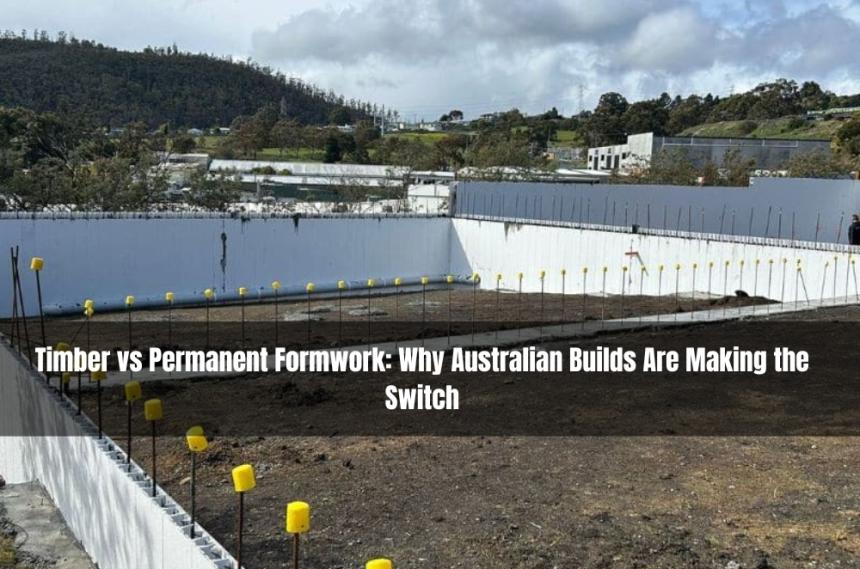

Timber vs Permanent Formwork: Why Australian Builds Are Making the Switch
Comparing timber and permanent formwork? Learn the practical pros, cons and code considerations that shape long-term wall performance in Australia.
Comparing timber and permanent formwork? Learn the practical pros, cons and code considerations that shape long-term wall performance in Australia.
Choosing what holds fresh concrete in place may not sound glamorous, yet it can set the tone for an entire project’s durability, labour bill and compliance story. Across Australia, a quiet shift is underway as builders and engineers behind leading Rise Constructions projects weigh up whether the time-honoured timber formwork approach still earns its keep, or whether permanent formwork wall systems now offer a smoother path to code-ready, long-lasting walls.
What the National Construction Code Expects from Wall Systems
The National Construction Code (NCC) asks every load-bearing wall to do more than simply stand straight. It must achieve minimum durability, meet relevant fire-resistance levels, manage moisture and, in certain regions, resist cyclonic winds or bushfire embers. The Australian Building Codes Board (ABCB) provides plain-language summaries of these NCC performance requirements, a handy starting point for material selection decisions Australian Building Codes Board (ABCB).
Key performance expectations include:
• Structural adequacy for the design life of the building.
• Resistance to termite and decay attack where relevant.
• Fire-resistance levels matching the building’s classification and separation requirements.
• Moisture control detailing so that condensation, groundwater or wind-driven rain do not compromise the structure.
How different formwork materials help—or hinder—these goals is where the comparison becomes practical.
Timber Formwork: Where It Still Fits (and Where It Doesn’t)
Traditional timber or plywood formwork is a familiar sight on Australian sites. Carpenters can cut it to fit almost any shape, and on small pours it offers flexibility at a modest upfront cost. Yet the same features that make timber convenient early on can create headaches later.
- Re-use limits. Even with excellent site discipline, plywood faces wear from moisture and handling. Panels usually survive only a handful of cycles before edges swell or faces delaminate, sending more waste to skip bins.
- Labour hours. Skilled labour is needed to assemble, brace, strike and clean the forms. As wages rise and trade shortages bite across the country, time on the tools quickly outweighs the material’s nominal cheapness.
- Consistency. Achieving the smooth, ready-to-finish surface modern clients expect often requires additional lining, patching or cladding—more steps, more cost.
- Performance under fire or moisture. Untreated timber struggles to hit high Bushfire Attack Level (BAL) ratings and may warp if rain interrupts a pour schedule.
For smaller, low-risk pours, timber will likely stay in the toolbox. But for multi-storey walls, basements or sites chasing waste-reduction targets, many teams now look to pre-engineered alternatives. Readers wanting a deeper dive into concrete-based wall longevity can also explore this practical guide to permanent concrete wall systems.
Why Permanent Formwork Is Gaining Ground in Australia
Permanent formwork walls replace the assemble-pour-strip cycle with modular panels that stay in place, acting as both the mould and part of the finished wall. For Australian builders, three advantages stand out:
• Speed and predictability. Interlocking panels arrive site-ready, so crews spend less time cutting and bracing. Once reinforcement is installed, concrete is placed and the wall’s external face is already aligned and often pre-finished.
• Less waste, fewer skip bins. Without disposable timber faces to strip and dump, sites pursuing Green Star or NABERS waste targets see measurable reductions.
• Built-in performance. Many systems use durable fibre-cement or polymer-coated materials that shrug off moisture, achieve compliant fire ratings and resist termite attack.
When specifying, decision-makers increasingly ask for reliable Rise equipment solutions because the system anatomy—panel geometry, joint design and accessory range—has been tuned for Australian conditions as well as US code pathways. Selecting a supplier with proven local testing is vital, but the broader material benefits generally include:
• Bushfire resilience: non-combustible skins help achieve higher BAL ratings.
• Cyclone readiness: panelised systems simplify anchorage detailing at footing level.
• Design freedom: slim wall build-ups free valuable floor space in tight urban envelopes.
Real-World Efficiency Gains
Independent builders report that switching from timber to permanent formwork on a three-storey residential shell saved approximately one week in programme and reduced site waste bins by half. While savings vary by crew size and sequencing, the direction of travel is clear: material choice shapes downstream productivity.
Side-by-Side Comparison
Below is a snapshot of how the two approaches stack up on common decision points.
FactorTimber FormworkPermanent Formwork Wall SystemDurability of finished wallDepends on follow-up cladding and waterproofing; risk of voids if forms shiftDense concrete skin plus integrated facing; reduced risk of honeycombingLabour hoursHigh: assemble, brace, strip, clean, patchLower: install panels, place reinforcement, pour onceOn-site wasteOff-cuts and worn panels disposed each cycleMinimal packaging waste; panels remain in wallFire & termite resistanceRequires treated timber, extra liningsNon-combustible or termite-resistant skins standardCode compliance path (NCC)Must layer additional materials to meet FRL/BALMany systems pre-tested for FRL/BAL targetsTypical reuse cycles3–5 (plywood) before replacementN/A – stays in place
The table highlights why project teams chasing programme certainty and durability often gravitate to permanent solutions once they run the numbers.
Common Mistakes When Switching Materials (and How to Avoid Them)
- Treating panels like removable forms. Because permanent formwork remains in place, tolerances on join alignment and reinforcement cover matter more. Crews should follow the manufacturer’s guide rather than traditional timber rules of thumb.
- Ignoring moisture detailing. While the external faces resist moisture, water can still track through penetrations if services are not sealed during construction.
- Underestimating training. Even experienced formworkers need a short induction to familiarise themselves with panel locks, corner details and bracing substitutions.
- Forgetting to plan for finishes. Some projects over-specify secondary linings out of habit. Often the panel surface can take direct render or can be left as the structural face, trimming costs.
- Skipping local code checks. While national test data is valuable, cyclone-prone North Queensland or BAL-40 bushfire areas may have extra fixing or sealant requirements. Early liaison with certifiers prevents late-stage redesigns.
Checklist: Questions to Ask Before You Specify Your Next Wall System
• What structural loads, BAL or cyclone ratings must the wall reach?
• Does the formwork supplier provide local test data and engineer sign-off?
• How many reinstatement steps (patching, grinding) will be needed after pour?
• Can the system integrate insulation or services without complicated chases?
• What training or tooling change will site crews require?
• How will the switch impact the waste-management plan and Green Star targets?
• Are there long-term maintenance differences the facility owner should know?
Addressing these questions early keeps specifications realistic, prevents mid-build surprises and ensures the chosen wall system supports both compliance and project economics.
Final Thoughts
Material choice in wall construction is no longer a simple matter of cost-per-sheet plywood. With labour constraints, stricter code demands and rising sustainability expectations, permanent formwork wall systems present a compelling alternative for many Australian projects. They are not a silver bullet—timber will still earn its place on bespoke pours and tight budgets—but understanding how each option performs against durability, waste and compliance benchmarks empowers builders and specifiers to make decisions that age well.

Halal Burger or Smash Burger? Understanding the Difference Before You...

Casino Senza Documenti: Guida Completa ai Vantaggi, al Funzionamento e...
Casino Senza Documenti: Guida Completa ai Vantaggi, al Funzionamento e agli Aspetti da Con...

Looking for Shops for Sale in Ahmedabad? Start Here ⭐
Ahmedabad has always been a city that's comfortable growing. Not loudly. Not all at once...