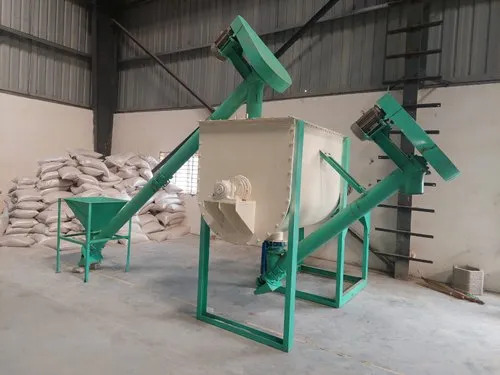

Tile Adhesive Production Plant Project Report 2026: Raw Materials, Machinery Cost and ROI Analysis
The growing pace of urbanization, expanding construction activities, and increasing infrastructure development are major factors supporting the demand for tile adhesives. The ongoing transition from traditional cement-sand mortar to ready-mix, factory-formulated adhesive solutions is further contributing to market growth
Establishing a tile adhesive manufacturing plant requires a structured production process that includes raw material procurement and storage, accurate weighing and batching, dry mixing, homogenization, screening, quality testing, and final packaging and labeling. The facility typically requires specialized equipment such as raw material handling and storage systems, precision weighing units, industrial dry mixers, screening machines, dust collection systems, and automated packaging and sealing lines. As tile adhesives must provide strong bonding, consistent workability, easy application, and long-term durability, manufacturers need to maintain strict quality control procedures and comply with applicable construction material standards. Preparing a detailed tile adhesive production plant DPR 2026 is also important for assessing the project's technical, financial, and operational requirements, including capital investment, machinery selection, production capacity, operating expenses, manufacturing efficiency, and overall business feasibility.
The tile adhesive industry is expected to maintain steady growth through 2026, supported by increasing construction activity and the rising preference for reliable tile installation solutions across residential, commercial, and industrial applications. The global tile adhesive market was valued at USD 3.10 billion in 2025 and is projected to reach USD 5.89 billion by 2034, registering a CAGR of 6.9% during 2026–2034. Growing investments in residential housing, commercial infrastructure, and large-scale development projects, along with the wider adoption of factory-produced and ready-to-use construction materials, are contributing to market expansion. Tile adhesives offer advantages such as strong bonding performance, ease of application, uniform coverage, and enhanced surface durability. These benefits are strengthening their role in modern tiling, flooring, and finishing applications.
IMARC Group's report, titled "Tile Adhesive Production Cost Analysis Report 2026: Industry Trends, Plant Setup, Machinery, Raw Materials, Investment Opportunities, Cost and Revenue," provides a complete roadmap for setting up a tile adhesive production plant. It covers a comprehensive market overview to micro-level information such as unit operations involved, raw material requirements, utility requirements, infrastructure requirements, machinery and technology requirements, manpower requirements, packaging requirements, transportation requirements, etc.
Request for a Sample Report: https://www.imarcgroup.com/tile-adhesive-manufacturing-plant-project-report/requestsample
Tile Adhesive Industry Outlook 2026The growing pace of urbanization, expanding construction activities, and increasing infrastructure development are major factors supporting the demand for tile adhesives. The ongoing transition from traditional cement-sand mortar to ready-mix, factory-formulated adhesive solutions is further contributing to market growth. With more than 4 million businesses operating in the construction industry in the United States, contractors and construction professionals are increasingly seeking solutions that offer faster application, consistent quality, improved bonding performance, and reduced material wastage. This shift is boosting the adoption of standardized tile fixing products across residential, commercial, and infrastructure projects.
In addition to conventional cementitious adhesives, the rising demand for flexible, fast-setting, and specialized formulations is expanding the scope of the industry. Products designed for large-format tiles, wet areas, exterior applications, and demanding installation conditions are gaining increasing importance. Technological advancements in dry-mix processing, automated batching, precision dosing, and dust control are also improving manufacturing efficiency and product consistency. Moreover, the growing emphasis on low-dust, environmentally compliant, and polymer-modified formulations is helping manufacturers enhance adhesive performance while reducing the environmental impact of production and application.
Despite these favorable growth prospects, establishing a tile adhesive production facility involves several challenges. Fluctuations in the prices of key raw materials, including cement, polymers, and chemical additives, can affect production costs and profit margins. High initial investments in land, machinery, infrastructure, and automation systems may also influence project feasibility. Additionally, energy consumption, environmental compliance requirements, and evolving construction regulations can create operational and strategic challenges. Careful planning, efficient process design, reliable raw material sourcing, and strong quality management are therefore essential for ensuring the long-term success and profitability of a tile adhesive manufacturing plant.
Key Insights for setting up a Tile Adhesive manufacturing plantDetailed Process Flow- Product Overview
- Unit Operations Involved
- Mass Balance and Raw Material Requirements
- Quality Assurance Criteria
- Technical Tests
- Land, Location and Site Development
- Plant Layout
- Machinery Requirements and Costs
- Raw Material Requirements and Costs
- Packaging Requirements and Costs
- Transportation Requirements and Costs
- Utility Requirements and Costs
- Human Resource Requirements and Costs
- Capital Investments
- Operating Costs
- Expenditure Projections
- Revenue Projections
- Taxation and Depreciation
- Profit Projections
- Financial Analysis
- Total Income
- Total Expenditure
- Gross Profit
- Gross Margin
- Net Profit
- Net Margin
- Raw Materials:
- The primary cost driver, accounting for approximately 75–85% of total operating expenses, including cement, graded fillers, polymer modifiers, and performance-enhancing additives essential for tile adhesive formulation.
- Energy Costs:
- Tile adhesive manufacturing requires significant electricity for dry mixing, sieving, and dust control operations, along with compressed air for material handling and pneumatic conveying systems.
- Machinery and Equipment:
- Capital investment in raw material storage and handling systems, precision weighing and batching units, high-efficiency dry mixers, sieving and dust control equipment, and automated packaging and sealing machines, along with ongoing maintenance costs.
- Labor:
- Includes salaries, training, and benefits for skilled and unskilled workers involved in plant operation, batching, quality control, and packaging.
- Utilities:
- Costs for electricity, compressed air, dust collection systems, and other utilities essential for continuous, dust-free production, typically accounting for 5–10% of operating expenses.
- Packaging and Transportation:
- Expenses related to bagging, storing, and distributing finished tile adhesive to dealers, distributors, or end users, including logistics infrastructure.
- Depreciation and Financing:
- Depreciation of fixed assets and interest or repayment obligations for loans or capital investment in plant setup.
- Compliance and Safety:
- Investment in dust control systems, environmental compliance, safety measures, and waste management facilities.
- Overheads:
- Administrative costs such as insurance, office operations, licensing, marketing, and general plant management.
Speak to an Analyst for Customized Report: https://www.imarcgroup.com/request?type=report&id=7805&flag=C
Economic Trends Influencing Tile Adhesive Plant Setup Costs 2026Cement & Polymer Price Volatility: As cement, graded fillers, and polymer modifiers are the primary raw materials for tile adhesive manufacturing, fluctuating global cement and petrochemical prices directly impact both capital and operating costs. Higher material prices raise production expenses, making material efficiency optimization and supplier diversification more critical.
Carbon Pricing & Environmental Policies: Growing regulatory focus on cement-related greenhouse gas emissions and dust control increases costs related to emission monitoring, dust collection, and compliance systems. Carbon pricing mechanisms and tighter environmental rules around cement usage may elevate initial capital outlay for new plant setups.
Inflation & Interest Rates: Rising inflation inflates the cost of building materials, civil construction, labor, and machinery, while higher interest rates increase the cost of loans and financing needed for plant construction, equipment procurement, and commissioning of batching and mixing lines.
Government Subsidies & Stimulus: Policies supporting affordable housing, infrastructure development, and domestic manufacturing especially in emerging construction markets can reduce setup costs through grants, low-interest loans, or tax incentives aimed at building material plant investments.
Technological Advancements: Innovations in automated dry-mix batching, precision weighing systems, digital dust control, and inline quality monitoring can increase upfront CapEx but offer significant productivity gains, reduced material waste, and lower per-unit costs, enhancing long-term ROI.
Supply Chain Localization: Efforts to reshore building material production and reduce dependence on imported polymers or additives are incentivizing in-country investment in plant equipment and raw material sourcing. This may increase initial costs if domestic supply of specialty polymers is limited but improves supply chain resilience and delivery turnaround.
Labor Market Considerations: Shortages in skilled labor for operating automated batching lines, dust control systems, and packaging equipment can drive up wages or necessitate investment in operator training and retention programs raising both initial setup and ongoing operational expenses.
Challenges and Considerations for Investors- Feedstock Price Volatility:
- Tile adhesive manufacturing heavily depends on cement and polymer-based feedstocks. Fluctuations in global cement and petrochemical prices can significantly impact production costs and profit margins.
- High Capital Intensity:
- Establishing a tile adhesive plant requires substantial investment in precision batching units, dry mixers, and dust control systems. Long payback periods can deter risk-averse investors.
- Environmental Compliance:
- Stringent environmental regulations on dust emissions, effluent discharge, and carbon footprint require additional investment in pollution control technologies and sustainable practices.
- Market Competition:
- The global tile adhesive market is competitive, with several established multinational players and excess production capacity in some regions. Investors must focus on operational efficiency or niche differentiation to remain viable.
- Logistics and Distribution:
- Transporting bulk tile adhesive bags requires reliable infrastructure and storage facilities. Poor logistics can lead to distribution bottlenecks and increased delivery costs.
- Technological Barriers:
- Staying competitive requires adopting advanced, automated production technologies. Outdated systems lead to higher operational costs and greater material wastage.
- Policy and Regulatory Risks:
- Changes in government policies, such as construction material standards or environmental regulations, can alter market dynamics abruptly and affect investment outcomes.
About Us:
IMARC Group is a global management consulting firm that helps the world's most ambitious changemakers to create a lasting impact. The company excels in understanding its client's business priorities and delivering tailored solutions that drive meaningful outcomes. We provide a comprehensive suite of market entry and expansion services. Our offerings include thorough market assessment, feasibility studies, company incorporation assistance, factory setup support, regulatory approvals and licensing navigation, branding, marketing and sales strategies, competitive landscape, and benchmarking analyses, pricing and cost research, and procurement research.
Contact Us:
IMARC Group
134 N 4th St. Brooklyn, NY 11249, USA
Email: [email protected]
Tel No: (D) +91 120 433 0800
United States: (+1-201-971-6302)
Médicaments et santé en France : informations essentielles pour des ch...

Guide des médicaments en ligne en France : information, sécurité et ch...
Oat Milk Manufacturing Plant Cost 2026: Setup Details, Capital Investm...

N-Butanol Production Plant Report 2026: Project Details, Machinery Req...