
The Silent Haunting of Infertility: When Repeated IVF Failure Becomes More Than a Medical Journey
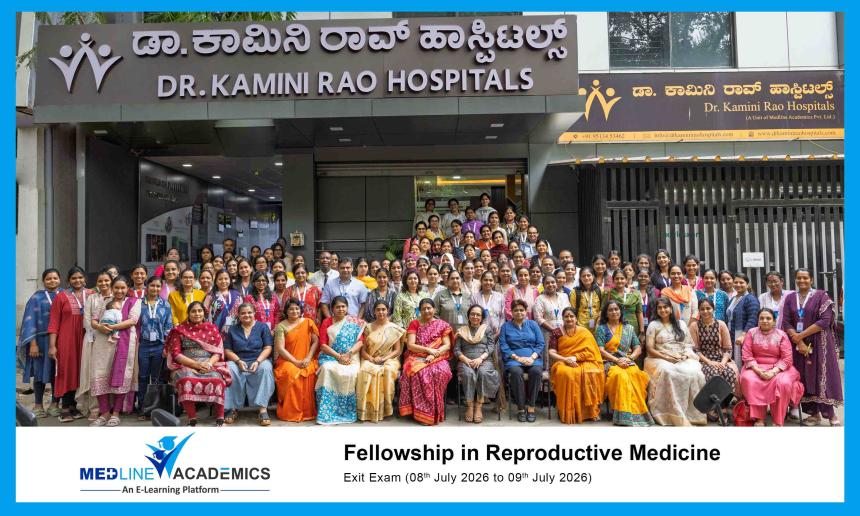
Medline Academics is one of the best and highly-rated institutes for Fellowship in IVF and Reproductive Medicine, aiming to provide quality and practical education to future medical professionals.
Diagnosis, hormone levels, ovarian reserve, and sperm parameters, embryo quality and treatment protocols are a few of the parameters used to describe infertility. However, one of the most eerie truths about infertility is that it can't be measured by a blood test or an ultrasound: it's the emotional weight that is left when pregnancy doesn't occur again and again. Recurrent implantation failure can be one of the most heart-wrenching experiences of an infertile couple's journey as it can lead to a pattern of hope and disappointment. A couple can go through investigations, medications, egg retrieval, growth of the embryos and transfer of embryos, only to find out that the pregnancy test is negative. In recent research published in 2026, it was concluded that the quality of life and psychological burden (anxiety and depression) are both linked to recurrent implantation failure.
It's not just the negative test that's the chilling part. It's a progression from hope to fear. Following a failed IVF treatment, a couple can convince themselves that the following treatment attempt might be successful. But if one suffers a second or third failure, then the anticipation itself can be scary. The patient could start to feel a sense of hope and fear for each injection, scan, blood test and embryo transfer. As opposed to the question "Will this work?" the mind begins to question, “What if it doesn't work again?” This thinking change can make it seem like being infertile is something that happens to them "outside the clinic. Studies of women who have struggled with infertility and IVF treatment have found that they might feel grief, anxiety, hopelessness, guilt, shame, insomnia, isolated and have a feeling of reproductive trauma.
It feels like there are a lot of numbers there, a lot of numbers, but there's a reality behind the numbers. One statistic is one person who may have medical appointments to attend, social problems to resolve, financial concerns to address or the emotional pain and confusion of being consumed by the parenting cycle and not knowing what's next for the rest of their lives.
One of the most miserable conditions is infertility; where one suffers from grievous loss but has no real loss. It may not be a funeral, it may not be a public form of grieving or there may not be anything for anyone to mourn for. But each failed cycle can be a missed opportunity in a hoped for future. The patient might have envisioned, holding a baby, naming a baby, telling family or observing a partner become a parent. If it fails, your dreams for the moments may be gone in a heartbeat. A systematic review found that women reported psychological response to becoming pregnant as a result of the treatment for infertility such as depression, derailment, loss of hope, guilt, anger, anxiety and frustration.
If implantation failure is a problem that occurs repeatedly, it can make this crash even worse as the couple may feel they have done everything. Followed medical advice, taken medications, gone to appointments and emotionally/financially invested in medical treatment. If they still don't implant, the patient can start looking for an explanation and may even think that it is their fault. Have you done something wrong? Have you exercised too much? Or maybe too much stress? The causes of implantations failure are complicated and a fertility treatment should be carefully evaluated clinically, not blamed on the patient.
This is the expertise and practical experience of reproductive medicine specialists that comes into play. IVF is not only a technique it is a set of decisions – ovarian stimulation, tracking follicles; removal of the oocytes; fertilization of the oocytes; monitoring their growth; evaluation of the endometrial surface; embryo transfer; and follow-up. The clinical practitioner involved in the management of the infertile patient should be knowledgeable about reproductive endocrinology, embryology, male infertility, uterine and tubal abnormalities, genetics, evaluation of ovarian reserve and psychological issues related to management of the infertile patient. One way for doctors to build a foundation is by having structured postgraduate training. Advanced training and a Fellowship in Infertility may provide greater depth of exposure with regard to the evaluation and management of infertility and understanding of the complexities of ART.
The programme curriculum of a modern fellowship in reproductive medicine is clearly very specialised. The Fellowship in Reproductive Medicine at Medline Academics focuses on various aspects of reproductive medicine such as Reproductive Endocrinology, Male Infertility, Female Infertility, Ovarian Reserve, Endometriosis, Ultrasound, Ovulation Induction, IUI, IVF Stimulation protocols, OUP, Embryo grading, IVF-ICSI, Endometrial transfer, Recurrent Implantation failure, Recurrent Pregnancy loss, Genetics, Immunology, Third party reproduction, ART counselling. The program also outlines the simulation training of the procedures like egg pickup, embryo transfer, IUI, laparoscopy and hysteroscopy. This extensive exposure is beneficial due to the need of fertility medicine to require more than a single treatment technique.
The difference between knowing the theory and understanding the practical aspects of a Fellowship in IVF is key, particularly for those clinicians who are specifically interested in undergoing a Fellowship in IVF. It is very easy to read about IVF protocols, but very hard to comprehend what is actually decided in a real clinical situation. A clinician should have an understanding of the effect of patient factors on stimulation regimens, monitoring of follicular development, and the anticipation of complications; understand the interactions between embryology and clinical decisions; and communicate treatment with the patient. According to Medline Academics its fellowship is a hybrid program and says that their fellowship programs include one year of fellowship, and their curriculum includes academic learning and a training component that is based on simulation.
One of the biggest lessons to be learned from the bad news of infertility is that the choice of fertility provider shouldn't be based on the technology used by the clinic, or a guaranteed success.
If he/she is searching online for the best IVF doctors in Bangalore then the question that he or she may have is not, “Which doctor has the highest success rate?” Instead, potential patients should consider the doctor's qualifications, experience with the reproductive system, diagnostic methods, treatment options, lab policies and procedures, a multidisciplinary approach to care, and the personal touch. Dr. Kamini Rao has been working in the field of assisted reproduction/reproduction medicine in India, for quite a while. She is the Co-Founder and Chairperson of Medline Academics, a new organization in the field of infertility, and trained in the best universities around the world before going into assisted reproduction. The bottom line is that a fertility journey should be based on information, and not on marketing statements or assurances.
So would be the case for the training of a doctor. Fellowship in Assisted Reproductive Technology should not be considered as a qualification to be added next to one's CV. The real goal is to educate clinicians to understand the science of infertility, and to become familiar with the nuances of challenging cases, integrate with the embryology/laboratory team, and recognize when to modify treatment and when to communicate with the patient during one of the most sensitive periods of a woman's life. Medline Academics offers their Fellowship in Reproductive medicine to all professionals who have various topics such as reproductive endocrinology, evaluation of infertility, ART, recurrent implantation failure and counselling.
There is something so disturbing about not being able to conceive that often the physical treatment is over before the emotional treatment is over. A "failed cycle" might be part of a medical record as a result of treatment, but can be extremely personal to the patient. Hence the two sides of the coin infertility – its biology of reproduction and its psychology of hope – must be taken into consideration in the modern fertility care. There has to be a greater focus on all the outcomes of pregnancy for the future of reproductive medicine, and patients treated with dignity, clarity and compassion through the entire process.
Medline Academics is one of the best and highly-rated institutes for Fellowship in IVF and Reproductive Medicine, aiming to provide quality and practical education to future medical professionals. With an impressive history of training and empowering more than 1,000+ students around the globe, our training programs comprise expert mentoring, hands-on experience and knowledge in order to equip future professionals with what it takes to excel in the field of reproductive medicine. Nowadays, many of our graduates are working in the best hospitals around the world, utilizing the knowledge that they acquired during their time at Medline Academics and making contributions to the higher success rates of their respective practice.
Infertility may start off as a medical issue but for many couples can be an experience that affects identity, relationships, finances, family expectations and emotional wellbeing. That is not the solution to minimizing that pain or telling them all treatments will work out. It's better science, better training, better communication and better support. If you are a future fertility specialist, the right education can help you develop the knowledge you need to handle greater and greater complexities in reproductive cases, including through a Fellowship in Infertility. When looking for the best IVF doctors in Bangalore, the priority must be to locate doctors and institutions who can provide clinical expertise with evidence-based, ethical and compassionate fertility care. The synergy between cutting edge reproductive technology and human understanding opens the door to the potential of a life-altering roadmap to infertility that can be transformed into one of knowledge, tangible hope and meaningful support.



CNC Turning vs Manual Turning: Cost, Quality, and Scalability for Mode...
The decision between manual and computer-controlled machining shapes everything from unit...

Precision and Process Control in CNC Turning: A Practical Engineering...
Modern component manufacturing depends heavily on CNC Turning to convert raw bar stock int...
