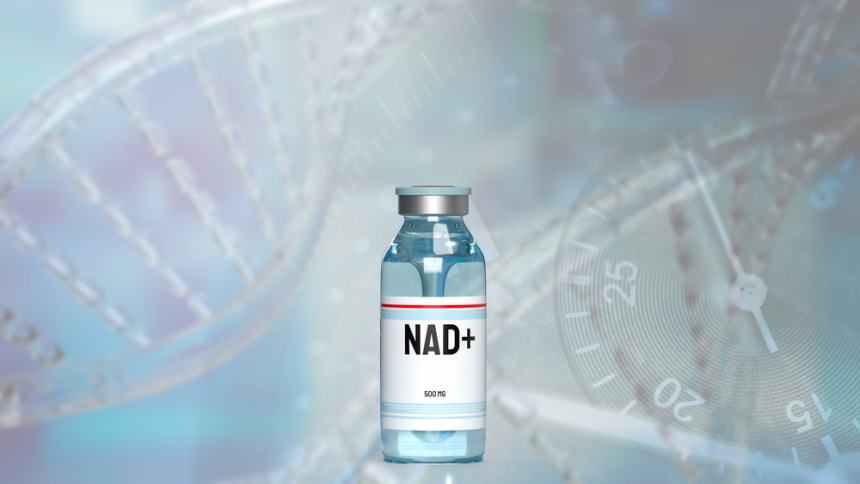
The Science Behind NAD+: How It Fuels Cellular Health
Discover the science behind NAD+, its role in cellular energy, DNA repair, aging, and what research really says about NAD+ IV therapy in Dubai.
NAD+ has become a major topic in the world of longevity and cellular wellness, but what does this molecule actually do inside the body? Interest in NAD+ IV therapy in Dubai has grown alongside research into cellular energy, metabolism, DNA repair, and healthy aging. NAD+ is not simply a trendy wellness ingredient—it is a naturally occurring coenzyme involved in several fundamental processes that keep cells functioning. Understanding its biology can help separate the established science from the more ambitious claims surrounding NAD+ treatments.
What Is NAD+ and Why Is It Important?
NAD+ stands for nicotinamide adenine dinucleotide. It is a coenzyme found throughout the body's cells and exists primarily in two forms: oxidized NAD+ and reduced NADH. These forms continuously participate in oxidation-reduction reactions, helping cells transfer energy during metabolism.
One of NAD+'s most important roles is supporting the production of adenosine triphosphate (ATP), the molecule cells use as an immediate source of energy. During cellular respiration, NAD+ accepts electrons and becomes NADH. NADH can then contribute those electrons to the mitochondrial electron transport chain, helping drive ATP production.
This means NAD+ is closely connected to the way cells convert nutrients into usable energy. When NAD+ metabolism is disrupted, processes involving energy production and cellular signaling can also be affected.
NAD+ is also used by enzymes involved in DNA repair and cellular regulation. In particular, enzymes such as poly(ADP-ribose) polymerases (PARPs) and sirtuins consume NAD+ as part of their activity.
How NAD+ Supports Cellular Energy Production
The relationship between NAD+ and mitochondrial energy production is one of the clearest reasons scientists are interested in this molecule.
When carbohydrates, fats, and proteins are metabolized, electrons are transferred through a series of biochemical reactions. NAD+ acts as an electron carrier, temporarily becoming NADH. The NADH molecule then transfers those electrons toward mitochondrial ATP production.
In simple terms, NAD+ helps cells turn the food we eat into energy they can use.
This process is particularly important for tissues with high energy requirements, including the brain, heart, and skeletal muscles. However, it would be misleading to describe NAD+ as a direct "energy supplement." Increasing NAD+ does not automatically mean a person will experience more energy, because energy levels depend on many interconnected systems.
Research suggests that NAD+ availability changes with age and can also be influenced by metabolic stress and other physiological factors. Reviews of the scientific literature have therefore examined whether restoring or increasing NAD+ availability could support healthier cellular function.
NAD+, DNA Repair, and Cellular Protection
NAD+ does more than participate in metabolism. It also acts as a substrate for enzymes involved in maintaining cellular integrity.
One important group is PARPs, which participate in detecting and responding to DNA damage. When DNA is damaged, PARP enzymes can use NAD+ to help coordinate repair-related processes. Because this activity consumes NAD+, extensive cellular stress can influence NAD+ availability.
Sirtuins are another family of NAD+-dependent enzymes. They are involved in processes including gene regulation, metabolism, stress responses, and cellular maintenance. Because sirtuin activity depends on NAD+, changes in NAD+ availability can influence these signaling pathways.
This connection is one reason NAD+ has attracted attention in longevity research. However, laboratory findings should not automatically be interpreted as proof that increasing NAD+ in humans will reverse aging or prevent age-related disease.
Current reviews emphasize that much of the exciting evidence comes from cellular and animal research, while the clinical evidence in humans remains an evolving area of investigation.
Why Do NAD+ Levels Change With Age?
Research indicates that NAD+ availability tends to decline with aging. Scientists are investigating several possible reasons, including changes in NAD+ synthesis, increased consumption by NAD+-dependent enzymes, and alterations in cellular metabolism.
The body maintains NAD+ through several metabolic pathways. One particularly important route is the salvage pathway, which recycles nicotinamide back into NAD+. The enzyme NAMPT plays a central role in this pathway.
The decline in NAD+ with age has led researchers to ask an important question: if lower NAD+ availability is associated with aging, could restoring NAD+ help maintain healthier cellular function?
Animal studies have produced intriguing results. Raising NAD+ through precursor compounds has been associated with improvements in various measures of metabolism and physiological function in experimental models. Yet translating these findings into meaningful benefits for healthy humans is much more complicated.
NAD+ IV Therapy: What Does the Science Say?
The growing popularity of NAD+ IV therapy comes from the idea of delivering NAD+ intravenously rather than relying on the body's normal production or oral precursors. Intravenous administration can introduce a substance directly into the bloodstream, but that does not by itself establish a particular clinical benefit.
This distinction is important because the biological importance of NAD+ is well established, while the evidence for intravenous NAD+ as a wellness or anti-aging intervention is still developing.
A systematic review evaluating NAD and NADH in human clinical conditions found that NAD is involved in numerous biological processes, including oxidative phosphorylation, ATP production, DNA repair, calcium signaling, and gene expression. However, the review also highlights the need for additional clinical evidence regarding effectiveness and appropriate therapeutic applications.
More recent human research is beginning to examine intravenous NAD-related interventions directly. A 2026 pilot study reported short-term tolerability findings for NAD+ and nicotinamide riboside infusions, but these early findings should not be treated as proof of broad anti-aging or performance benefits.
For someone considering NAD+ IV treatment, several questions are therefore worth discussing with a qualified healthcare professional:
- What is the specific goal of treatment?
- Is there strong human evidence for that intended benefit?
- What substance and formulation are being administered?
- What are the potential side effects and contraindications?
- Is the treatment being used for a medically established indication or as a wellness intervention?
These questions help keep expectations realistic while the research continues to develop.
NAD+ and Healthy Aging: Promise Versus Proof
NAD+ is particularly interesting in longevity research because several processes associated with aging intersect with NAD+ biology. These include mitochondrial metabolism, DNA repair, oxidative stress responses, and cellular signaling.
However, the phrase "anti-aging molecule" can create unrealistic expectations. Scientific evidence does not currently establish that raising NAD+ in humans can reverse biological aging or extend lifespan.
Human studies of NAD+ precursors such as nicotinamide riboside (NR) and nicotinamide mononucleotide (NMN) have increased substantially, but reviews have noted that evidence for meaningful improvements in overall physiological function remains unclear.
This is an important distinction between mechanism and outcome. Scientists may understand how a molecule participates in cellular pathways without yet knowing whether manipulating that pathway produces a significant improvement in long-term health.
In other words, NAD+ biology is compelling, but promising cellular mechanisms are not the same thing as proven clinical outcomes.
How Lifestyle Factors Relate to NAD+ Biology
NAD+ metabolism does not operate independently of everyday health. Cellular energy production is influenced by physical activity, nutrition, sleep, metabolic health, and other physiological factors.
For people interested in supporting healthy cellular function, foundational habits remain important. Regular physical activity, a balanced diet, adequate sleep, and management of metabolic risk factors are supported by a much broader body of evidence than emerging longevity interventions.
This does not make NAD+ research unimportant. Instead, it places the molecule in the appropriate context: NAD+ is a fascinating part of normal human biology, while interventions designed to manipulate its levels are still being studied.
The Future of NAD+ Research
The science surrounding NAD+ is moving quickly. Researchers are studying NAD+ precursors, metabolic pathways, mitochondrial function, DNA repair, and potential applications across different age-related conditions.
Future clinical trials will be particularly important because they can clarify whether increasing NAD+ produces measurable improvements in human health, which populations might benefit, what treatment approaches are appropriate, and how long any benefits last.
For now, the strongest conclusion is that NAD+ is biologically essential and participates in multiple pathways central to cellular health. The bigger question—whether deliberately increasing NAD+ can meaningfully improve health or slow aging in humans—still requires stronger evidence.
Conclusion
NAD+ is far more than a wellness buzzword. It functions as a critical coenzyme in energy metabolism and contributes to processes involving mitochondrial function, DNA repair, cellular signaling, and stress responses. Research also shows that NAD+ availability can change with aging, making its biology an important area of longevity research.
At the same time, it is important to distinguish established biology from claims that remain under investigation. NAD+ IV therapy may be an area of growing clinical interest, but the evidence for broad anti-aging, energy, or longevity benefits in humans is not yet definitive. Anyone considering treatment should discuss the potential benefits, limitations, risks, and alternatives with a qualified healthcare professional.