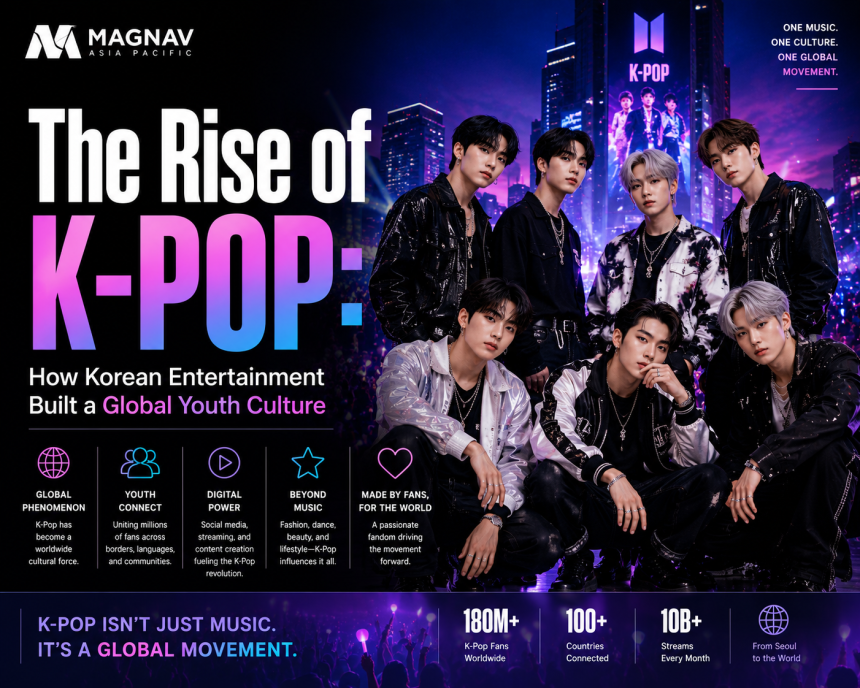

The Rise of K-Pop: How Korean Entertainment Built a Global Youth Culture
The global entertainment industry has experienced many cultural movements over the years, but few have achieved the international influence of K-pop. What started as a music genre within South Korea has grown into a worldwide cultural phenomenon that impacts fashion, beauty, social media, marketing, and youth culture.
The global entertainment industry has experienced many cultural movements over the years, but few have achieved the international influence of K-pop. What started as a music genre within South Korea has grown into a worldwide cultural phenomenon that impacts fashion, beauty, social media, marketing, and youth culture.
In 2026, K-pop is no longer viewed simply as Korean music. It has become a global lifestyle movement followed by millions of fans across different countries and cultures. Artists regularly appear on international charts, sell out stadium tours, collaborate with luxury brands, and influence consumer trends worldwide.
The rise of K-pop is not only a story about music. It is a story about innovation, audience engagement, digital transformation, and cultural influence. Understanding how K-pop achieved global success provides valuable insights into the future of entertainment and modern consumer culture.
K-Pop Created a New Entertainment ModelOne factor that separates K-pop from many other music industries is its comprehensive entertainment model.
Rather than focusing only on songs, Korean entertainment companies build complete artist brands. Every aspect of an artist's public image is carefully developed, including:
- Music production
- Performance skills
- Visual concepts
- Fan engagement
- Content creation
- Global communication
This strategy creates a deeper connection between artists and audiences.
Fans are not simply consuming music; they are following stories, personalities, and ongoing creative journeys.
Content Never StopsTraditional music industries often focus on album releases and promotional periods. K-pop operates differently.
Artists consistently provide new content through:
- Practice videos
- Behind-the-scenes footage
- Live broadcasts
- Reality programs
- Social media updates
- Fan-focused content
This constant stream of content keeps audiences engaged throughout the year.
Instead of disappearing between album releases, artists remain active participants in their communities.
This approach has become one of the strongest reasons behind K-pop's long-term popularity.
Global Accessibility Changed the IndustryThe growth of K-pop coincided with the expansion of digital media platforms.
International fans can now watch performances, stream music, and interact with artists instantly.
This accessibility has helped K-pop reach regions that were previously difficult for foreign entertainment industries to enter.
Digital platforms removed many traditional barriers and allowed Korean artists to compete directly in global markets.
As a result, K-pop transformed from a regional genre into an international entertainment category.
Storytelling Plays a Major RoleMany successful K-pop artists use storytelling as part of their creative strategy.
Albums, music videos, and performances often connect through larger narratives that unfold over time.
This approach encourages fans to:
- Analyze concepts
- Follow story developments
- Share interpretations
- Engage with content repeatedly
Storytelling creates deeper audience involvement and helps artists build strong emotional connections with fans.
The experience becomes more immersive than simply listening to individual songs.
K-Pop Changed the Relationship Between Artists and FansOne of K-pop's most influential innovations is its approach to fan relationships.
Artists regularly communicate with audiences through digital platforms and interactive content.
Fans often receive:
- Personal updates
- Live interactions
- Exclusive content
- Community experiences
This level of accessibility creates a stronger sense of connection compared with traditional celebrity culture.
Many supporters feel actively involved in an artist's journey rather than simply observing from a distance.
Fashion Became an Important Part of K-Pop CultureFashion plays a central role in the K-pop industry.
Every comeback introduces new visual concepts that often influence fashion trends worldwide.
Artists frequently experiment with:
- Contemporary streetwear
- Luxury fashion
- Gender-fluid styling
- Creative accessories
- Modern tailoring
Global fashion brands increasingly collaborate with Korean artists because of their influence on younger consumers.
These partnerships continue strengthening K-pop's presence beyond the music industry.
K-Pop Expanded South Korea's Cultural InfluenceThe success of K-pop has contributed significantly to South Korea's international cultural presence.
As fans engage with Korean music, many also become interested in:
- Korean television
- Korean cinema
- Korean beauty products
- Korean cuisine
- Korean language learning
- Korean tourism
This broader cultural interest has created new economic opportunities and strengthened South Korea's global reputation.
K-pop has become one of the country's most effective cultural exports.
Young Audiences Drive Global GrowthGeneration Z and Generation Alpha continue to support the expansion of K-pop worldwide.
These audiences value:
- Interactive entertainment
- Digital engagement
- Authentic communication
- Community participation
- Creative expression
K-pop aligns closely with these preferences, making it particularly appealing to younger consumers.
Its ability to adapt quickly to changing digital habits helps maintain strong audience engagement.
Businesses Are Learning From K-PopMany companies outside the entertainment industry study K-pop's success.
The industry has demonstrated the importance of:
- Community building
- Consistent content creation
- Customer engagement
- Global branding
- Digital communication
Businesses in fashion, technology, beauty, and retail increasingly apply similar strategies to strengthen customer relationships.
K-pop's influence now extends far beyond music.
What Comes Next for K-Pop?The future of K-pop will likely involve even greater integration of technology and global collaboration.
Industry developments may include:
- Virtual fan experiences
- AI-enhanced content
- International artist partnerships
- Interactive entertainment formats
- Expanded digital communities
As audiences become more connected globally, K-pop is expected to remain one of the most influential forces in modern entertainment.
ConclusionThe rise of K-pop represents more than the success of a music genre. It reflects the power of digital connectivity, strategic storytelling, audience engagement, and cultural innovation.
By combining music, visual creativity, technology, and community building, K-pop has developed a model that influences industries around the world. Its impact can be seen in fashion, marketing, beauty, social media, and global youth culture.
As entertainment continues to evolve, K-pop remains a powerful example of how creative industries can build lasting international influence.
Frequently Asked Questions (FAQ)What does K-pop stand for?K-pop stands for Korean popular music and includes a wide range of artists, groups, and entertainment content produced in South Korea.
Why is K-pop so popular globally?Its popularity comes from high-quality production, strong fan engagement, digital accessibility, creative storytelling, and global marketing strategies.
How does K-pop influence fashion?Many K-pop artists introduce fashion trends and collaborate with luxury brands, influencing consumer style choices worldwide.
Why are younger generations attracted to K-pop?K-pop offers interactive content, community engagement, creative visuals, and digital experiences that align with modern media habits.
Is K-pop still growing in 2026?Yes. Global audiences continue to expand through digital platforms, international collaborations, and growing cultural interest in South Korean entertainment.
Reliable Dumpster Rental Services in Elk, NJ
Reliable Dumpster Rental Services in Elk, NJ for home cleanouts, renovations, roofing, con...

How to Match Fine Pearl Jewelry With Halloween Festival Outfits and Ac...

Bullet Types and Weights Across the Old, the Odd and the New
Bullet designs and brand lines change over time. Read the bullet type and weight on the bo...