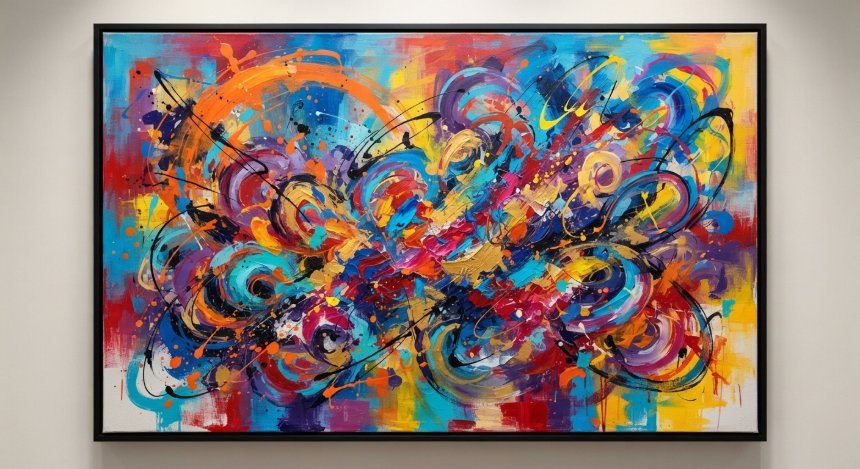

The Miracle of Pure Abstraction
"The Miracle of Pure Abstraction" is a profound, socio-political, and satirical critique that uses the symbolic Urdu poetry of to expose the breakdown of logic and human expression in contemporary society. The essay masterfully blends biting satire—such as absurd technological overreaches—with deep existential reflections on human dignity, authority, and the historical struggle against oppression. By weaving together iconic verses from classical and modern poets, it laments the forced silence of humanity while celebrating the resilient, echoing voice of creation. Ultimately, the narrative transforms from a somber critique of puppet-like compliance into a powerful anthem of public awakening and enduring cosmic hope.
أَعُوذُ بِاللّٰهِ مِنَ الشَّيْطَانِ الرَّجِيمِ
بِسۡمِ ٱللهِ ٱلرَّحۡمَـٰنِ ٱلرَّحِيمِ
In the name of ALLAH, the Most Gracious, the Most Merciful
The Miracle of Pure Abstraction
A couplet by the renowned Urdu poet, Mr. Jalil Aali, recently caught my attention, making me realize that in modern Urdu literature, it stands as a unique addition to symbolic and transcendent poetry. Let us first look at the couplet:
All the characters are silent, and objects speak
A certain magical chapter has unfolded in the fable
The attempt to understand this couplet leads us into a profound depth where another world seems to be sobbing. It appears as though the creator has not merely presented an alternative scenario but has completely upturned the chessboard of the universe and human opportunism. This portrays a society where logic has breathed its last, and "The Miracle of Pure Abstraction" reigns in all its glory. A glimpse of this miracle can be seen in the recent news that to overcome the country's egg shortage, a machine has been invented through which roosters will now lay eggs! When such absurd, nature-defying inventions emerge as saviors, the silence of characters and the speech of inanimate objects cease to be surprising.
1. The Inversion of the Natural Order of Expression
The couplet begins with an anomalous and unusual situation. In any narrative, story, or fable, the natural order dictates that its living characters—whose primary means of expression are their dialogues, actions, and statements—should speak and move the wheels of the story forward. Here, that order is entirely reversed. The characters, who possess the inherent right to speak, are dead silent, while the objects, from which speech is normally never expected, have suddenly broken into words.
According to William Shakespeare, this amounts to an insult to the characters on this world's stage—meaning us, humans. O Lord! Have we become victims of a tragedy even before the miracle of Artificial Intelligence and the Day of Reckoning? What kind of era and what kind of time does this picture portray, where characters have fallen silent and inanimate objects have started speaking?
O people! This is the utter disruption of the natural system of expression. Does a question not instantly arise in your minds as to what oppression, what opportunism, or what dreadful catastrophe has sealed the lips of us living, dynamic characters? What kind of fable is this where, when lips are stitched, writings begin to shriek on silent faces? When voices are snatched away, sobs begin to rise—not from the mouth, but from the eyes—and the soul begins to wail. In this mysterious and fear-inducing atmosphere, speechless objects emerge as the true expression of these characters' grief and hidden truths. The reason behind this dreadful silence is perhaps that system whose map Imdad Akash draws:
The elders drank the Water of Immortality, and the children
Were never brought into existence; the earth was too scarce
This means that the older generation (could this be a reference to the 'boomers'?), have seemingly drunk the Water of Immortality (Aab-e-Baqa). They are not leaving this world—meaning they are unwilling to vacate their positions—and remain tightly clung to the power and authority of the earth. Consequently, no room or scope is left to bring the new generation or new children into the world. They were either blocked from being born or could not emerge from non-existence into existence. The poet identifies the primary reason for this as the earth becoming so small that, in the permanent presence of the old guard, no space or resources remain for the new. Symbolically, this couplet points toward absolute stagnation, where obsolete ideas and entrenched people refuse to clear the path, preventing new thought and the younger generation from flourishing.
2. The Refutation of "Loquacity" in the Context of the Word "Magical"
In the second line of the couplet, the word "Magical" (Fusoni) is mentioned within the fable. Is this worldly life itself anything more than a mere fable—which the Quran defines as "Mata'ul Ghuroor" (the illusion of deception)? Furthermore, this word "Magical" casts a mesmerizing canopy over the entire narrative. In this context, bringing up the interpretation of "loquacity" or "insolence" (Zaban-Darazi) regarding the speaking objects is entirely misplaced. The term "loquacity" carries a negative connotation of arrogance, audacity, or crossing boundaries, whereas the scenario praised by Jalil Aali is not born out of rebellion, but is under the spell of a cosmic charm.
Here, the speaking of objects is not a result of their own stubborn will or insolence, but a consequence of this "magical" or talismanic state that has gripped the entire environment. This is a mystical and extraordinary turning point where living beings have frozen due to opportunism or fear... O Lord! You had decreed this law of sealed lips for the Day of Judgment, so are we passing through the Resurrection right now?
But no, Judgment Day has not yet arrived. So, what authority has established the spectacle of Resurrection in this world? Do Pharaohs still exist today, sitting as self-proclaimed gods? It fills me with dread, forcing me to act upon the advice of Komal Joya:
Though the sips of patience are very bitter, drink them down
For there is a fear of public disgrace if you scream out loud
O Son of Adam! The turning of days, the bitterness of circumstances, and the pain and trials inflicted by fellow humans are so harsh and unpalatable that enduring them is extremely difficult. Yet, despite this, humans must not let go of the garment of patience; they must swallow this bitterness in silence—meaning they must endure it. If a human abandons patience and makes a loud hue and cry over their sorrows, or creates a spectacle of their suffering before the world, it will not fix the circumstances. Instead, it will tarnish their own self-respect and bring the risk of humiliation across the universe. Humans must learn to maintain their dignity and self-worth even in the harshest moments of life and deepest emotional traumas. Rather than exposing one's pain to others through screaming and wailing, the etiquette of silence and patience proves to be a far better and more honorable path.
Has the custody of bearing witness been handed over to inanimate objects just to maintain the balance of nature? Has some calamity or phantom possessed us humans on this earth today? Are we, the children of Adam, no longer occupying the position of the Vicegerency of the Earth (Khilafat-e-Arzi) like our ancestor? What force is it that limits us, the deputies of God? What tyranny is this, and what is the ultimate boundary of oppression, where it is not the human who reacts upon being struck, but every atom of the universe begins to hum under the philosophy of Rahi Masoom Raza:-
Whenever a wound afflicted the mind and heart, a window opened toward life
We too are like the strings of an instrument; we kept receiving blows, we kept humming
Whenever we humans encountered a mishap in life or a deep wound pierced our mind and heart, it did not plunge us into permanent despair. Instead, every wound gave a new vastness to our thinking, opened a new window (Dareecha) of consciousness, and granted the courage to view life from a fresh perspective. Sorrows do not break a human; rather, they refine their personality.
Here, the poet has compared human existence to the strings of a musical instrument (like a sitar or guitar). Just as no beautiful melody or music can be produced from the strings of an instrument until they are struck, similarly, when the blows of circumstances fall upon a human, creativity, melody, and a beautiful yearning for life are born from within. Instead of weeping over our afflictions, we transformed them into melodies. This teaches humans to live with courage, bravery, and vitality even in the grimmest situations.
3. The Upturning of the Fable's Board and the End of the Spell
Look closely, dear readers, at how a "magical chapter" has overtaken the story of us humans. This symbolizes the entry of a hidden influence or an unseen power into the story, one that completely alters the rules of the ordinary world. In this world of illusions, we have perhaps reached an intellectually turbulent, deceptive (Dajjali) era where a talismanic state turns the entire landscape upside down. The magical realism employed by Jalil Aali in this couplet is, in reality, a reflection of that extreme edge of human society where, when the truth-tellers are struck dumb, the doors, walls, and the inanimate pages of history themselves scream out to bear witness.
Yet, this "Miracle of Pure Abstraction" and this puppet show are not permanent.
God did not create this earth as a permanent playground for falsehood, but as a place of trial (Dar-al-Imtihan) for the Son of Adam, and humans must end this spectacle using their God-given spiritual insight... Thus, we see the famous poet, Mr. Iftikhar Arif, ripping open the veil of this temporary magic, saying:-
All these puppets will remain dancing only for the night
Before the dawn breaks, the entire spectacle will end
The organizers of the show have already been informed
As to when the curtain will fall, when the spectacle will end
O restless heart, why remain so deeply despondent?
When the masses rise, all this trickery and spectacle will end
O people! A ray of hope always pierces the darkness of despair, and Iftikhar Arif's message against political and social injustices must be understood as a profound metaphor. Console your restless, anxious, and dissatisfied hearts that despite the breakdown of situations, tyranny, and injustice, there is no need to lose hope to the point of giving up entirely. My dear people! "The masses" (Khalq) refers to the public or ordinary citizens. "Trickery and spectacle" (Kartab Tamasha) refers to the cunning ploys and machinations of power-hungry rulers, tyrants, and those pulling the strings from behind the scenes. The message here is that this game of tyranny and the dance of puppets exist only as long as the public remains silent. The day the masses awaken, stand up for their rights, and unite, all the cunning, deceit, and grand spectacles of the worshippers of power will vanish in a single moment. The ultimate conclusion of the discourse is the recognition of public power. It demonstrates that true power always rests with the people, and the tyrant's show runs only as long as the oppressed remains silent.
And perhaps this very sentiment was echoed by Qateel Shifai when he said:-
Qateel, I have not seen a hypocrite greater than him
Who silently endures oppression but does not revolt
In any living nation, the hope for the breaking of the spell and illusion of every kind of "magical chapter" always remains alive. In the words of Saulat Bano, the journey of light continues right inside this darkness:
Look not merely at the desolations of the night-stricken eye
Hidden within it is the treasure-house of the hope of a tulip garden
Therefore, until this magical mist and artificial restrictions clear away, and until the characters receive their stolen voices back, holding onto the hem of hope and keeping the branch of desire green remains the true essence of life. As the poet says:-
Keep blessing the coming and going seasons
At the very least, let the branch of desire remain fruitful


Convenient Ways to Buy Wine Online Ontario
Exploring options to buy wine online Ontario helps wine enthusiasts discover selections fr...
