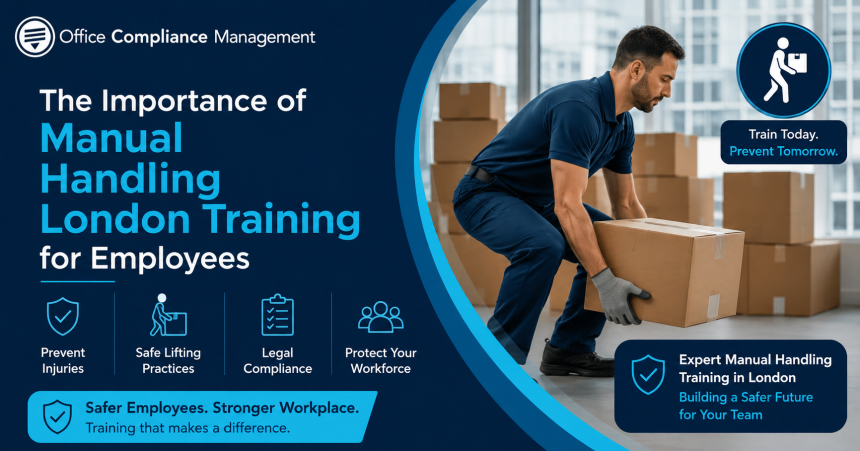

The Importance of Manual Handling London Training for Employees
Manual handling is a common part of many workplaces, from offices and warehouses to construction sites, retail premises and manufacturing facilities. Employees may regularly lift, carry, push, pull or move objects as part of their daily responsibilities. Without suitable knowledge and training, these activities can result in injuries, lost working time and increased workplace risks. This is why Manual Handling London training is an important part of creating a safer and more responsible working environment.
For businesses across London, providing appropriate manual handling training can help employees understand potential hazards, use safer techniques and reduce the likelihood of avoidable workplace injuries.
What Is Manual Handling?Manual handling refers to activities that involve moving or supporting an object using physical effort. This can include lifting boxes, carrying equipment, pushing trolleys, moving furniture, loading materials or handling stock.
Manual handling risks are not limited to heavy objects. Awkward shapes, repetitive movements, poor posture, restricted spaces and excessive carrying distances can also increase the risk of injury.
Effective Manual Handling London training helps employees recognise these risks and understand how to approach handling tasks more safely.
Why Manual Handling Training MattersOne of the main reasons for providing manual handling training is to reduce the risk of workplace injuries. Incorrect lifting techniques or repeatedly handling loads without appropriate precautions can place unnecessary strain on muscles and joints.
Employees may experience problems involving the back, shoulders, arms or other parts of the body. Some injuries can happen suddenly, while others develop gradually because of repeated physical strain.
Training gives employees practical knowledge about safer working practices and helps them understand why correct techniques matter.
Teaching Employees Safer Lifting TechniquesA key element of manual handling training is teaching employees how to approach lifting tasks correctly. Workers can learn how to assess a load before attempting to move it and identify factors that could make the task more difficult.
Training can cover areas such as:
- Assessing the weight and stability of an object
- Planning the safest route before moving a load
- Maintaining a stable position while lifting
- Using appropriate lifting techniques
- Avoiding unnecessary twisting
- Keeping loads at a manageable height
- Asking for assistance when required
- Using suitable handling equipment
These practices can help employees make safer decisions during everyday workplace activities.
Reducing Workplace Injury RisksManual handling injuries can have consequences for both employees and businesses. An injured employee may require time away from work, while the organisation may experience reduced productivity and additional operational costs.
Preventing injuries is therefore generally more effective than responding to them after they occur.
By investing in Manual Handling London training, employers can give workers the knowledge needed to identify risks and take sensible precautions before carrying out physical tasks.
Understanding the Importance of Risk AssessmentManual handling training should work alongside appropriate workplace risk assessments. Employers should consider the nature of the task, the load being moved, the working environment and the individual carrying out the activity.
For example, moving a lightweight object over a short distance may present relatively little risk, while moving a heavy or awkward load through a narrow area may require additional controls.
Employees who understand basic manual handling principles can contribute more effectively to workplace safety by recognising hazards and reporting concerns to supervisors or managers.
Encouraging the Use of Handling EquipmentEmployees should not always rely on physical strength to move workplace materials. Depending on the task, suitable equipment may make handling safer and more efficient.
Examples can include trolleys, lifting aids, pallet trucks or other equipment designed for moving loads.
Manual Handling London training can help employees understand when assistance or mechanical equipment may be appropriate. Using the right equipment can reduce unnecessary physical strain and make demanding tasks easier to manage.
Protecting Employees in Different WorkplacesManual handling risks can exist in almost every type of workplace. In warehouses, employees may move stock and packages. In retail environments, workers may handle deliveries and shelving. In offices, staff may occasionally move furniture, boxes or equipment.
Construction and industrial environments can involve more frequent and demanding manual handling activities.
Because workplaces have different risks, training should be relevant to the actual tasks employees are expected to perform. Practical and workplace-specific instruction can make training more useful and easier to apply.
Building a Stronger Safety CultureTraining does more than teach individual lifting techniques. It can help create a workplace culture where employees actively consider safety before carrying out physical tasks.
Workers who understand manual handling risks may be more likely to report unsafe conditions, request assistance and use appropriate equipment instead of taking unnecessary risks.
Regular communication between employees and management can further strengthen this safety culture.
Supporting Workplace ResponsibilitiesEmployers have a responsibility to manage workplace risks and take reasonable steps to protect employees. Manual handling should form part of a wider approach to occupational health and safety.
Training, risk assessments, appropriate equipment, supervision and safe working procedures can all contribute to better risk management.
Businesses should also review their arrangements when workplace activities change, new equipment is introduced or employees take on different responsibilities.
The Benefits of Professional Manual Handling TrainingProfessional training can provide employees with structured information and practical guidance that is relevant to workplace activities. Rather than simply telling workers to “lift correctly,” effective training can explain how to assess risks, plan tasks and use safer methods.
For London businesses, arranging suitable Manual Handling London training can demonstrate a proactive approach to employee safety while helping workers develop practical skills that they can apply in their everyday roles.
Training should also be refreshed when necessary, particularly where employees perform manual handling tasks regularly or workplace risks change.
ConclusionOffice Compliance London is an everyday workplace activity, but it should never be underestimated. Poor lifting techniques, repetitive movements, awkward loads and unsuitable working conditions can contribute to injuries and disruption.
Effective Manual Handling London training helps employees understand these risks and develop safer working practices. From learning how to assess a load to understanding when to seek assistance or use handling equipment, employees can become better prepared to carry out physical tasks responsibly.
For businesses, investing in appropriate manual handling training is an important step towards protecting employees, reducing avoidable risks and supporting a positive workplace safety culture. When combined with risk assessments, suitable equipment and effective safety procedures, training can help create safer and more productive workplaces across London.
How Can Scalable Web Applications Support Long-Term Business Growth?

dead animal removal Melbourne
Protect your home or business with professional pest control South East Melbourne services...