The Essential Role of Advanced Surgical Sutures in Modern Healthcare
In the ever-evolving world of medical science, the precision, safety, and effectiveness of surgical materials play a pivotal role in determining successful outcomes. Among these, Polypropylene mesh, Polydioxanone suture, Polyglactin 910 Suture, and Plain catgut suture have emerged as some of the most reliable materials used in various surgical disciplines. These products represent the culmination of years of research and innovation aimed at improving wound healing, tissue integration, and post-operative recovery.
Orion Sutures India Private Limited, a trusted name in the medical device manufacturing industry, is at the forefront of producing these high-quality surgical sutures and meshes, designed to meet the demanding needs of healthcare professionals worldwide.
Sutures are indispensable in surgery. They help close wounds, ligate blood vessels, and promote tissue healing. Depending on the type of surgery and the biological environment, surgeons choose different suture materials that best align with the healing timeline and the type of tissue being repaired. Each type of suture—whether absorbable or non-absorbable—has its unique set of benefits and applications.
Let’s explore some of the most widely used sutures and meshes that have become an integral part of surgical procedures globally.
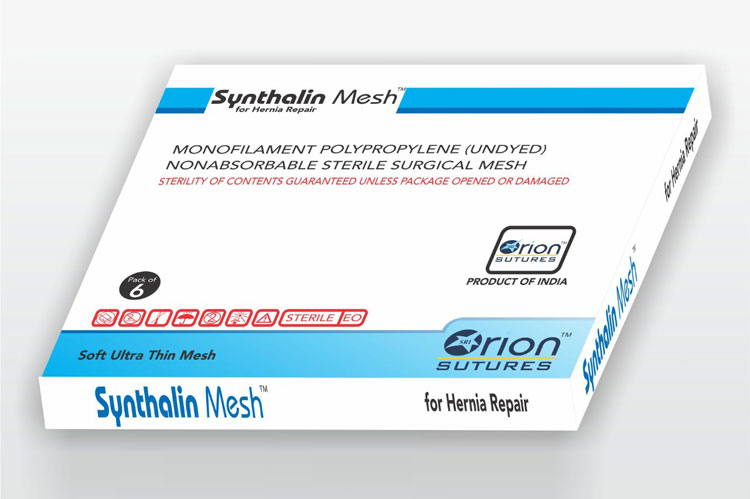
Polypropylene Mesh: A Foundation for Hernia RepairThe Polypropylene mesh is a synthetic, non-absorbable mesh primarily used in hernia repair surgeries and soft tissue reinforcement. Known for its high tensile strength and excellent biocompatibility, this mesh offers long-term stability within the body.
Because of its non-absorbable nature, it provides permanent support to weakened or damaged tissues, reducing the chances of hernia recurrence. The Polypropylene mesh is lightweight, flexible, and easy to handle during surgery, which helps surgeons position it accurately and minimize post-operative discomfort. Additionally, its porous structure facilitates tissue ingrowth, leading to better integration with the surrounding tissue and faster patient recovery.
In short, this mesh has revolutionized the way surgeons approach abdominal wall and pelvic floor repairs, setting new standards for surgical excellence.
Polydioxanone Suture: Reliable Absorbable StrengthThe Polydioxanone suture stands out as a monofilament, absorbable suture that provides extended wound support while being absorbed by hydrolysis. Its main advantage lies in its ability to retain tensile strength for an extended period, typically up to six weeks, making it ideal for internal tissues that take longer to heal.
This suture material is particularly valuable in pediatric cardiovascular surgery, abdominal closures, and orthopedic procedures, where prolonged support without long-term foreign material presence is essential.
Because of its smooth texture and minimal tissue reaction, the Polydioxanone suture offers reduced infection risks and better cosmetic outcomes. Its uniform absorption profile ensures predictable healing, which is why many surgeons prefer it over other synthetic absorbable sutures.
By combining strength and biocompatibility, it allows for secure wound closure without compromising patient comfort or long-term safety.
Polyglactin 910 Suture: The Versatile Workhorse of SurgeryAmong all absorbable sutures, the Polyglactin 910 Suture is perhaps the most versatile and widely used. Composed of a copolymer made from glycolide and lactide, this braided suture offers excellent handling characteristics and secure knotting properties.
Surgeons appreciate the Polyglactin 910 Suture for its predictable absorption rate—generally within 60 to 90 days—and its ability to maintain strength during the critical wound-healing period. It’s commonly used in general surgery, gynecology, ophthalmology, orthopedics, and even dental procedures.
Its braided structure ensures smooth passage through tissue with minimal trauma, while its coating provides excellent knot security. Moreover, because it is synthetic, the risk of tissue reaction or infection is significantly lower than with traditional natural sutures.
This combination of performance, safety, and reliability has made Polyglactin 910 Suturean industry standard for absorbable sutures worldwide.
Plain Catgut Suture: A Time-Tested Natural OptionWhile synthetic sutures dominate the modern surgical landscape, the Plain catgut suture continues to hold value, especially in specific medical scenarios. Derived from purified collagen extracted from the intestines of healthy animals, it is one of the oldest absorbable sutures still in use.
The Plain catgut suture is favored for its natural origin and rapid absorption properties, making it ideal for rapidly healing tissues like mucous membranes or small, superficial wounds. It’s commonly used in obstetrics, oral surgery, and ophthalmic procedures.
Although it tends to lose tensile strength faster than synthetic options, it remains an economical and reliable choice in cases where long-term wound support isn’t necessary. The Plain catgut suture also offers flexibility and ease of handling, qualities that have ensured its continued use for centuries.
The Commitment to Quality and InnovationHigh-quality suture manufacturing requires precision engineering, strict quality control, and adherence to international medical standards. Companies like Orion Sutures India Private Limited have invested heavily in advanced technology and rigorous testing protocols to ensure every product meets the highest levels of safety and performance.
Their dedication to producing superior surgical sutures—whether synthetic or natural—reflects a deep understanding of surgical needs and patient outcomes. By focusing on innovation and consistency, such manufacturers contribute significantly to the success of medical professionals and the well-being of patients worldwide.
Final ThoughtsThe progress in suture materials—from natural options like Plain catgut suture to sophisticated synthetics like Polyglactin 910 Suture, Polydioxanone suture, and Polypropylene mesh—demonstrates how medical technology continues to evolve toward better healing and patient safety.
Surgeons today have access to an array of reliable tools that enable them to perform complex procedures with precision and confidence. The ongoing innovation in this field ensures that surgical outcomes will continue to improve, paving the way for faster recoveries and enhanced quality of life for patients everywhere.