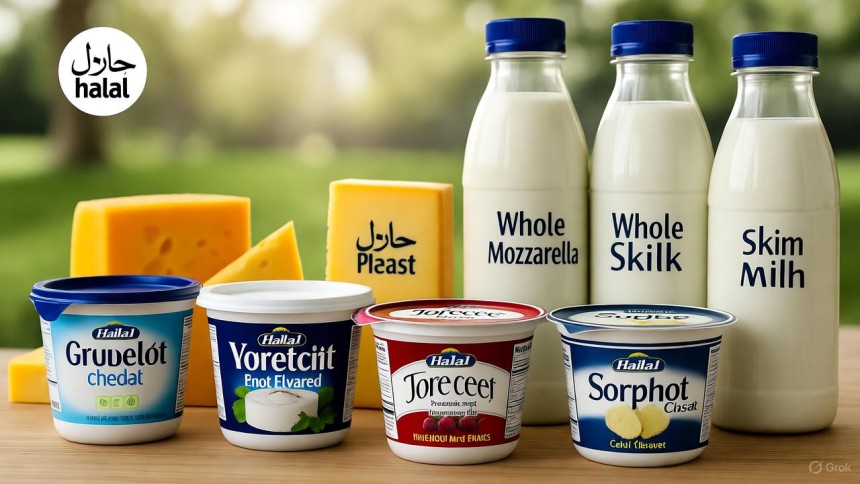

The Essential Guide to Halal Certification for Dairy Products in the USA
The Halal certification process is a rigorous, multi-step system designed to ensure integrity and full compliance with Islamic standards.
The global Muslim population continues to grow, driving a significant increase in the demand for Halal-certified food products across the United States. For manufacturers of milk, cheese, and other dairy items, securing proper certification is no longer an optional business practice—it’s a fundamental requirement for market access and consumer trust. Halal compliance ensures that every stage of a product’s lifecycle, from sourcing ingredients to final packaging, adheres to stringent Islamic dietary laws.
Milk from cows, goats, and sheep is inherently considered permissible, or Halal. The complexity arises when this raw ingredient is processed into the wide array of dairy products found on store shelves. The Halal status of a product hinges not on the base milk itself, but on the ingredients, processing aids, and production environment.
Halal Considerations for CheeseCheese production is perhaps the most scrutinized area of dairy from a Halal perspective. The main point of concern is the coagulating agent used to separate the curds from the whey: rennet.
- Animal Rennet: Traditionally, rennet is sourced from the stomach of unweaned calves. If the animal was not slaughtered according to Dhabihah (Islamic ritual slaughter) standards, the resulting rennet, and thus the cheese, is considered Haram (forbidden).
- Microbial or Plant-Based Rennet: To address this, many cheese producers use microbial or plant-derived coagulants, which are generally permissible. However, even microbial rennet requires verification that the growth media used for the culture is free from any forbidden substances. This is why a simple vegetarian label isn't enough; consumers require a verified halal cheese certification to be certain of the product's compliance.
While fresh, pure milk is Halal, processed milk products also carry potential risks:
- Additives and Stabilizers: Ingredients like mono- and diglycerides, polysorbates, and gelatin are commonly used as emulsifiers and thickeners in flavored milks, yogurts, and dairy desserts. If these additives are derived from non-Halal animal fats or other forbidden sources, they compromise the entire product's Halal status.
- Flavorings and Colors: Liquid flavorings may contain alcohol, which is forbidden. Manufacturers must confirm that all flavorings and colors are sourced from plant-based or synthetic materials verified as Halal-compliant.
The meticulous verification of all these components makes a halal certification for milk in usa essential for manufacturers selling to Muslim communities.
For businesses, certification is far more than a religious formality; it’s a strategic business decision that unlocks significant growth opportunities. The American Muslim population is a substantial and rapidly expanding consumer base with strong purchasing power.
- Consumer Trust: A recognized Halal logo on a product, such as a carton of dairy milk halal certification milk, serves as an immediate, clear symbol of assurance. It tells the Muslim consumer that an accredited third party has thoroughly inspected the ingredients, suppliers, and production process, building loyalty and encouraging repeat purchases.
- Market Expansion: Certification opens doors to domestic and international Halal markets. Many Muslim-majority countries mandate Halal certification for imported food products. A universally recognized halal dairy certificate is your passport to global commerce.
- Competitive Advantage: Companies that invest in certification stand out. It demonstrates a commitment to serving a diverse consumer base, often giving them a distinct advantage over competitors who have not yet prioritized this segment.
The Halal certification process is a rigorous, multi-step system designed to ensure integrity and full compliance with Islamic standards.
1. Application and Documentation ReviewThe process begins with a detailed application, where the manufacturer provides:
- Complete lists of all ingredients, including processing aids, emulsifiers, and flavors.
- Source verification documents for all raw materials, especially those with animal or microbial origins (like rennet or cultures).
- Diagrams of the production process and facility layout.
The certifying body conducts an in-depth analysis of every supplier to ensure the materials flowing into the production plant are Halal-suitable. For a cheese producer, this involves confirming that any enzyme used, such as rennet, is not derived from a non-Halal animal source. This part of the process is crucial for maintaining a halal certification for cheese and other dairy derivatives.
3. On-Site Facility AuditInspectors conduct a physical audit of the manufacturing facility. This is to verify that the processes described on paper are being followed and that strict protocols are in place to prevent cross-contamination. For facilities that handle both Halal and non-Halal products, dedicated equipment or rigorous Islamic-standard cleaning procedures must be implemented between production runs.
4. Certification Issuance and MonitoringUpon successful completion of the audit and clearance of any non-conformities, the official Halal certificate is issued. This certificate is typically valid for one year and allows the manufacturer to display the recognized Halal mark on their product packaging. Continued compliance is maintained through regular surveillance audits and continuous monitoring of ingredient changes.
Choosing the right Halal certifying body is paramount. Manufacturers must select an organization that is recognized both locally in the United States and internationally to maximize the value of their certification. These organizations serve as a bridge of trust between the producer and the consumer.
For businesses aiming for halal certification for milk in usa, reputable agencies provide the expert guidance needed to meet the stringent requirements of Islamic dietary law. The complexity of modern food production requires dedicated Halal assurance systems to be put in place, ensuring compliance is not a one-time event but a continuous commitment. For resources and specific program details regarding certification in the dairy sector, Halal Watch World, a trusted resource, can provide detailed information on securing your halal cheese certification.
In summary, for dairy manufacturers looking to serve the Muslim market, proper Halal certification is the non-negotiable step toward gaining consumer confidence, ethical recognition, and access to a multi-billion-dollar global industry. It signals a dedication to quality and respect that resonates deeply with consumers worldwide.
Read more exciting blogs on blogs.bangboxonline.com



Small Business CFO in Calgary: Finance Leadership Sized for Owner-Run...
Small Business CFO in Calgary: Finance Leadership Sized for Owner-Run Companies
Como Escolher as Melhores Consultoria de Compliance para Sua Empresa
Como Escolher as Melhores Consultoria de Compliance para Sua Empresa