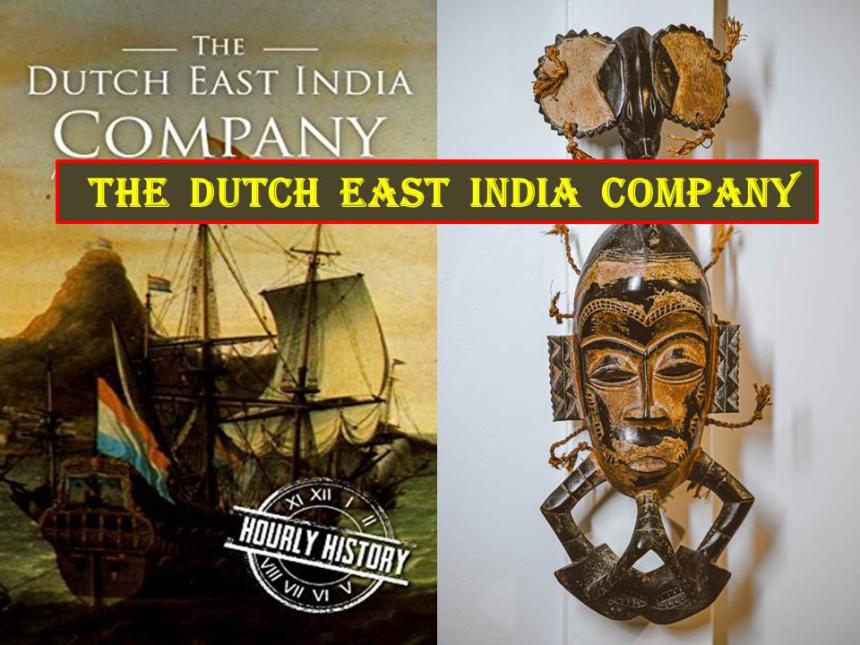

The Dutch East India Company
In the late 16th century, European powers were scrambling to secure trade routes to Asia. Portuguese were the first to explore colonization in the North African and then came the Spanish, Dutch, Portuguese, British and Russians; expanding on the whole of Asia, Africa and South America. This write up is about Dutch East India Company, which established a dominant hold on the spice trade and key territories in Southeast Asia, particularly the Indonesian Archipelago.
أَعُوذُ بِاللّٰهِ مِنَ الشَّيْطَانِ الرَّجِيمِ۔
بِسۡمِ ٱللهِ ٱلرَّحۡمَـٰنِ ٱلرَّحِيمِ
In the name of ALLAH, the Most Gracious, the Most Merciful
The Dutch East India Company
In the late 16th century, European powers were scrambling to secure trade routes to Asia, driven by the desire to bypass Ottoman-controlled, high-cost Mediterranean routes and dominate the lucrative spice, silk, and porcelain markets. Portugal was the first European power to establish a maritime presence, capturing Malacca in 1511 and reaching as far as Japan. However, by the late 16th century, Portuguese dominance began to decline due to competition from the English and Dutch, high costs of maintaining their trading network, and the Iberian Union (1580-1640), which diverted their focus.
The late 16th century marked the start of serious competition from the Dutch, with the first Dutch expedition reaching the East Indies in 1596. This culminated in the formation of the Dutch East India Company (VOC) in 1602, which challenged Portuguese posts throughout India, Sri Lanka, and Indonesia. Spain, having initiated a westward route in the early 16th century, established a stronghold in the Philippines by 1565. The Manila galleon trade, beginning in the 1560s, linked Spanish America with Asia, allowing them to trade New World silver for Chinese silk and spices.
The race to Asia was fueled by the desire to gather windfall profit and spread Christianity and expand global power. This competitive period reshaped Asian-European trade, as new, less dangerous maritime routes replaced the traditional Silk Road. This era saw the transition of Asian trade from Portuguese pioneering efforts to the more aggressive, joint-stock company approach of the Dutch and English, setting the stage for the colonial expansion of the 17th century.
Let's now Imagine a time, when one company controlled vast territories, maintained armies, and governed whole regions, all while making financial history. This was the Dutch East India Company (In Dutch, Vereenigde Oost-Indische Compagnie or VOC), a business titan that revolutionized modern finance, governance, and the very nature of international trade. The VOC (DEIC) was born out of the need, combining private investment with government support to launch an expedition that would shape global trade.
The Colonial Corporate Global Expansion
The ‘Age of Discovery’, a period of European overseas exploration from the 15th to 17th century and considered by some to be the beginnings of globalization, is synonymous with the expansion of global capitalism and the explosion of maritime trade. At the start of the 17th century, the popularity of maritime trade was evident in the creation of global trading companies that attempted to monopolize trade routes and expand to the newly ‘discovered’ areas of the world.
One of these companies – the Dutch East India Company – facilitated a global corporate expansion that impacted and fundamentally transformed the local societies they operated in. The company was granted a state-issued charter that gave it monopoly rights over Dutch trade in Asia, along with unprecedented powers. It could wage wars, sign treaties, govern colonies, and maintain its own army and navy. In essence, the VOC was both a corporation and a state actor, a unique combination that set it apart from any modern enterprise.
Dutch East India Company
Dutch East India Company, trading company founded in the Dutch Republic (present-day Netherlands) in 1602 to protect that state’s trade in the Indian Ocean and to assist in the Dutch war of independence from Spain. The company prospered through most of the 17th century as the instrument of the powerful Dutch commercial empire in the East Indies (present-day Indonesia). It was dissolved in 1799.
DEIC (VOC) became the first multinational corporation and, at its peak, was valued at over $8.2 trillion in today’s dollars, a feat that remains unmatched in corporate history. Today, companies like Apple, Amazon, and Microsoft wield similar influence, controlling vast portions of global wealth and economies. But what exactly made the VOC such a monumental entity, and what can we learn from its rise and fall? Let’s take a closer look at this pioneering company and its lasting impact.
The VOC’s operations were grounded in a unique set of legal and governance structures that blended corporate and governmental powers. This made it a precursor to modern multinational corporations, yet it also had distinct powers that no corporation today would possess. The Dutch government granted the VOC a charter that gave it exclusive rights to trade in the East Indies, effectively functioning as a quasi-constitution. The charter defined its legal authority, governance, and commercial privileges, and was renewed every 21 years.
Rise and Fall of Dutch East India Company
The VOC held a legal monopoly over Dutch trade in Asia, and was authorized to:-
Wage war and sign treaties (effectively acting as a state).
Govern overseas territories (especially in Indonesia and South Africa).
Maintain a private army and navy.
Mint it’s own currency.
Operate courts and enforce laws.
This combination of corporate and sovereign powers was unique in the business world and set the VOC apart from any company operating today. However, as powerful as the VOC became, its eventual decline is a cautionary tale about the risks of corporate overreach and mismanagement. The company’s downfall was brought about by a combination of corruption, internal strife, and external pressures, including military conflicts and competition from other European powers. By the time it was nationalized in 1795, the VOC had lost its grip on the global trade empire it once commanded.
While the VOC’s financial success during its heyday was immense, its legacy serves as a reminder that businesses must remain vigilant in their operations and governance. Over time, the company’s immense power became a burden, and its inability to adapt to changing conditions ultimately led to its dissolution. Today, as we consider the importance of responsible governance and sustainable growth, the lessons from the VOC are as relevant as ever.
Historical Shame; Regretful Legacy
As early as from 1415, when the Portuguese first used convicts (degredados) for colonization purposes in the North African enclave of Ceuta, till 1960s and the dissolution of Stalin’s gulags, global powers including the Spanish, Dutch, Portuguese, British, Russians, Chinese and Japanese transported millions of convicts to forts, penal settlements and penal colonies all over the world.
Convicts (Degredados) were Portuguese convicts, ranging from common criminals to political/religious prisoners, exiled from Portugal to overseas colonies (mainly Africa and Brazil) between the 15th and early 20th centuries. The convicts (Degredados) were common criminals (murderers, thieves), political rebels, or "backsliding" New Christians (Jews). They were frequently male, under 40, and often from Lisbon or the Minho region.
Convicts (Degredados) were often served in place of the death penalty or long prison terms, with sentences of exile ranging from a few years to life. Initially used to learn local languages and scout lands, they later populated areas like São Tomé, Angola, and Brazil. They were used for constructing infrastructure and working in agriculture. They were crucial to imperial expansion, acting as initial settlers, forced labor, and military defenders.
A Global History of Convicts and Penal Colonies build on specific regional archives and literatures to write the first global history of penal transportation. The essays explore the idea of penal transportation as an engine of global change, in which political repression and forced labour combined to produce long-term impacts on economy, society and identity. They investigate the varied and interconnected routes convicts took to penal sites across the world and the relationship of these convict flows to other forms of punishment, unfree labour, military service and indigenous incarceration. They also explore the lived worlds of convicts, including work, culture, religion and intimacy, and convict experience and agency.
They took four case studies; Batavia, Dutch Formosa, Mauritius and the Dutch Cape Colony – show how the VOC’s global corporate expansion impacted these areas through characteristics of globalisation – namely migration, exchange of flora and fauna, mixing of cultures and language and the linking of economies – that ultimately fundamentally changed their societies. By extrapolating these examples to other parts of the world influenced by the Dutch, it is clear that the VOC did facilitate corporate globalisation and that the effects of this process can still be witnessed today. In the following one example of an Island country "Mauritius" is being taken:-
Mauritius is a volcanic island nation in the Indian Ocean, located ~2,000 km off the southeast coast of Africa. Renowned today for its white-sand beaches, crystal-clear lagoons, and tropical climate, the country offers diverse cultural experiences with influences from India, China, Africa, and Europe, creating a vibrant, multicultural society. However, the employees of the VOC were the first to inhabit the island of Mauritius, establishing a settlement in 1638. The purpose of settling in Mauritius was to prevent either the French or English from controlling it and to use it as a stop on the route to Asia.
The Dutch East India Company (VOC) officially established the first, albeit intermittent, settlement on Mauritius in 1638. Led by Cornelisz Simonsz Gooyer, the initial, mostly male, contingent of 24 colonists built Fort Frederik Hendrik at Grand Port Bay to secure the island from French or English encroachment and secure ebony, though the settlement was abandoned in 1710.
The VOC set up the settlement to utilize the island as a refreshing station on the route to Asia, not primarily for colonization. The main goal was the exploitation of valuable ebony trees, which led to significant environmental changes. The settlers faced severe hardships, including cyclone destruction, food shortages, and slave revolts, which led to the colony being abandoned for periods before being permanently abandoned in 1710. Though not a lasting colony, the Dutch introduced sugar cane, domestic animals, and deer, and their occupation is associated with the extinction of the dodo bird.
The most prominent characteristic of the first Dutch occupation of Mauritius was “an extreme form of exploitative development”. With no previous inhabitants on the island, there were abundant natural resources that the VOC completely exploited. One of the most well-known consequences of the environmental destruction was the extinction of the dodo bird within 30 years of the VOC’s arrival at Mauritius. A VOC crew member drew the first depiction of the dodo and described it as “good food”, foreshadowing their later demise. Secondly, on the VOC’s arrival, the island had forests of ebony trees that had been reduced by 10-15% once they left, changing the ecology of the area permanently. The migration of VOC members and their slaves to the island left Mauritius poorer “not only ecologically but also economically” and is considered the “most destructive human intervention in the environment per unit of time”
Another environmental change was the exchange of flora and fauna from several continents the VOC was stationed in, to Mauritius. The most common introduction was crops, such as rice, wheat, coconut, and sugar. The latter, from Batavia, would come to be the most important introduction to the island. In modern Mauritius, sugar cane fields are a common landscape (covering 90% of cultivated land) and placed third on the list of exports for 2018. The Dutch introduction of sugar to Mauritius would lead to it becoming known as the “sugar island”. The VOC also brought deer, rabbits and cattle, as well as rats and monkeys that traveled on the ships that became new predators to plant and animal life. The introduction of these invasive species destroyed indigenous fauna and flora and the deforestation by the VOC crew allowed these invasive species to dominate over the indigenous ones.
The VOC’s legacy is still evident across Mauritius, including in its given name; but the most notable effect of their corporate globalisation is on the environment. The Dutch left a completely different island without dodo birds, very few ebony trees, new crops and animals that altered the ecology and decimated some of the native plants, and a small population of ex-slaves. Facing problems with resources and natural disasters, the VOC left in 1710 in favour of their settlement at the Cape of Africa.
Lesson Learnt from Rise and Fall of VOC
The rise and fall of the Dutch East India Company (VOC)—the world's first multinational joint-stock company—provides a timeless cautionary tale on the limits of corporate power, the dangers of corruption, and the necessity of adaptability. The VOC was notorious for paying its staff low wages while forbidding private trading, creating an environment ripe for corruption. Employees often engaged in smuggling to enrich themselves at the company's expense. The VOC's focus on immediate profit over long-term sustainability resulted in a culture where corrupt practices were accepted or overlooked.
The VOC focused on the spice trade long after its profitability declined, while competitors like the British East India Company (EIC) shifted to tea, cotton, and textiles, which were in higher demand. Maintaining a monopoly required massive military spending on ships, forts, and private armies to fight both European rivals and local populations. The VOC operated as both a trading company and a state actor (a "company-state"). The bureaucratic overhead of governing colonies eventually ate up all trade profits.
The Fourth Anglo-Dutch War (1780-1784) destroyed half the VOC fleet and shattered its financial credibility. The VOC's fate was tied to the Dutch Republic; when the Republic weakened, the company lost its protective backing and was eventually nationalized.
Dutch East India company lacked "Ethical management" which is a critical, strategic necessity rather than just a moral preference, as it builds foundational trust, safeguards reputation, and drives long-term success. But then those were the times when such values were not essential attributes for any type of company and hoping "Convicts (Degredados)" to reflect ethical values is little far fetched.
The Dutch East India Company (VOC), founded in 1602, was far more than a commercial enterprise; it was a chartered "Company-State" that acted as a military arm of the Dutch Republic, using corporate wealth to secure colonial territory in Asia and Africa. Authorized by the Dutch government to wage war, build fortifications, and govern territories, the VOC used private armies and navies to create a monopoly on trade routes, effectively acting as a state within a state
Today in these times, "unethical managerial" behavior can lead to severe consequences, including costly lawsuits, fines, and terminal damage to a company's reputation, ultimately resulting in the loss of customers and stakeholders. The "say / do gap," where leaders preach ethics but behave differently, is particularly harmful to credibility and employee engagement. The western nations of Europe, who marched towards Asia and Africa and established strong holds and conducted "unethical" practices, shall be ashamed and seek formal apology from the population of the occupied lands.
Conclusion
The Dutch East India Company (VOC) pioneered modern capitalism by introducing the first publicly traded shares and the Amsterdam Stock Exchange in 1602. Its legacy is dual: it created unprecedented global trade networks and corporate structures, while simultaneously enforcing brutal monopolies, slave exploitation, and colonial violence in Indonesia, South Africa, and Taiwan. Its influence remains visible in today's global economic systems and the geopolitical landscapes of Southeast Asia and Africa.
The VOC was a major participant in the slave trade throughout its existence, importing slaves from South Asia, Southeast Asia, and Africa to work on plantations and in its trading posts. The VOC enforced harsh monopolies that destroyed local trade networks, forced laborers to cultivate cash crops rather than food, and left a legacy of deep-seated poverty and underdevelopment.
The Dutch East India Company (VOC) is widely regarded by historians as a pioneer in modern corporate structure and finance, but its legacy is predominantly characterized by extreme brutality, exploitation, and violence. In summary, the VOC's innovations laid the groundwork for modern capitalism and multinational corporations, however, that revolutionized global commerce was sustained by coercive methods of brutal conquest and exploitation, that had severe, often devastating, consequences for indigenous populations.

Empowering Modern Businesses with Agentic AI Solutions and Workforce A...
Agentic AI Solutions and Workforce AI Solutions are transforming how organizations automat...





Puri Diplomatic Residences Sector 111 Gurgaon || Reviews, Price, Payme...
