
The Cosmos and the Man
Albert Einstein the iconic scientist gave lectures at the numerous universities across the United States, the recurring question students asked him was ... Do you believe in God? He always replied; "I believe in the God of Spinoza". Baruch Spinoza was a leading 17th-century Dutch philosopher who shaped modern thought with his radical ideas about God, nature, and human freedom. This fictional story arranged with AI "The Cosmos and the Man" is about the Einstein's reply and Spinoza thoughts blended with local sages sayings.
أَعُوذُ بِاللّٰهِ مِنَ الشَّيْطَانِ الرَّجِيمِ
بِسۡمِ ٱللهِ ٱلرَّحۡمَـٰنِ ٱلرَّحِيمِ
In the name of ALLAH, the Most Gracious, the Most Merciful
The Cosmos and the Man
The late afternoon sun filtered through the high, arched windows of the physics department seminar room at a university in Lahore. Outside, the distant hum of traffic blended with the rustle of the campus eucalyptus trees. Inside, the chalkboard was covered in a sprawling mix of quantum mechanics formulas and scribbled philosophical terms.
Around a heavy oak table sat Professor Kamran, a physicist with silvering hair and a gentle demeanor, and three of his brightest undergraduate students: Zainab, an analytical mind who leaned heavily toward pure materialism; Bilal, a deeply spiritual student striving to harmonize his faith with his studies; and Hamza, the resident skeptic who loved a good intellectual debate. They had been debating the classic intersection of science and religious thought for nearly an hour.
"Look, Bilal," Zainab said, tapping her notebook with a pen. "Science requires empirical data. It operates on rigid equations. Religion operates on faith. They speak two entirely different languages. How can you expect them to coexist without compromise?"
"But Zainab," Bilal countered earnestly, "science uncovers the how, while faith explains the why. When I look at the mathematical precision of the universe—the way a flower grows or the orbit of the planets—I don't just see cold formulas. I see a divine signature."
Hamza leaned back in his chair, a smirk playing on his lips. "It’s a classic deadlock. History is full of brilliant minds who got stuck right where you two are standing. Even the absolute greats wrestled with it." He turned to the professor. "Sir, didn't Albert Einstein famously get cornered on this exact topic by a student during his lectures in America?"
Professor Kamran smiled, taking off his spectacles and setting them on the table. "Ah, you are thinking of the recurring question Einstein faced across university campuses. A student once stood up and asked him bluntly: 'You, Mr. Einstein... Do you believe in God?'"
"And what did he say?" Bilal asked, leaning forward.
"Einstein gave a very brief, elegant response," Professor Kamran said. "He replied: 'I believe in the God of Spinoza.'"
The room fell quiet for a moment. Zainab frowned. "Spinoza? The 17th-century philosopher? What did he mean by that?"
Professor Kamran walked over to the chalkboard, wiping away a corner of equations to write the name Spinoza. "To understand Einstein, you have to understand the poetic monologue that is often associated with Spinoza's philosophy. Imagine if the divine harmony of the universe itself could speak to a student sitting right here in this room. If it did, it would say: 'Stop praying and beating your chest! What I want you to do is go out into the world and enjoy your life. I want you to have fun, to sing, to learn... to make the most of everything I have done for you.'"
Bilal looked startled. "That sounds deeply unconventional, Professor."
"It is," Kamran nodded, continuing the monologue. "'Stop going to those dark, cold temples that you built yourself and which you say are my house! My house is in the mountains, in the woods, the rivers, the lakes. That is where I live with you... If you cannot read me at dawn, in a landscape, in the gaze of your friend, your wife, your husband, in the eyes of your son... You will not find me in a book! Stop frightening yourself. I do not judge you, I do not criticize you, I do not get angry, and I do not punish. I am pure love... I do not want you to believe in me; I want you to feel me in you. When you approach your little girl, when you pet your dog, when you bathe in the river... Do not seek me outside; you will not find me. I am here... Nature, the cosmos... That is me.'"
Zainab stared at the chalkboard, her analytical mind processing the concept. "So for Einstein, the universe itself was God. The strict, unyielding laws of physics—gravity, relativity, thermodynamics—were not created by a deity. They were the deity."
"Precisely," Professor Kamran said, adjusting his collar. "Einstein didn't see a conflict between science and religion because, to him, studying the laws of nature was his act of worship. He found a third path—one where the majesty of the cosmos replaces the fear of judgment."
Bilal shifted in his wooden chair, his fingers tracing the edge of his notebook. "Dear Professor," Bilal began, his voice respectful but firm. "The monologue you shared is beautiful, but it misses the core of what we believe. Allah speaks to humanity through Prophets and Holy Scriptures. The Quran, our final holy book, does not ask us to ignore it. Instead, it repeatedly urges its believers to look, observe, and ponder upon the earth and the universe. Ayat after Ayat asks us to look at the rain, the alteration of night and day, and the orbits of the sun and moon. In Islam, studying nature isn't an alternative to scripture; it is exactly what scripture commands us to do."
"You have touched upon a beautiful distinction, Bilal," the professor replied, leaning against the edge of the heavy oak table. "And you are absolutely right about the Islamic tradition. Think of verses like 'In the creation of the heavens and the earth... are signs for those of understanding.' Historically, it was this exact scriptural mandate that drove the great Muslim scientists of the Golden Age to pioneer physics and astronomy."
"So why did Einstein feel the need to reject a personal God who reveals Himself through text?" Bilal asked.
"Because Bilal," Zainab chimed in, "from a purely scientific viewpoint, Einstein was looking for absolute consistency. A God who sends books and laws through prophets is a God who can intervene. A God who can perform miracles or change the course of human history based on prayer. Einstein’s whole life was built on the absolute rigidity of physical laws. To him, if a deity could break the laws of physics to answer a prayer, the universe became unpredictable. He preferred Spinoza’s view because it meant the laws never bend."
"It is a bit deeper than that," Professor Kamran said gently. "Bilal is speaking of Revelation—the idea that the Creator actively communicates ethical boundaries, love, and guidance to mankind. Einstein and Spinoza, on the other hand, practiced what philosophers call Natural Religion. They believed the only valid revelation is the universe itself. If you look at the sunset or a complex tensor equation, Spinoza says 'This is all there is.' Bilal says, 'This is a beautiful signpost pointing to the One who created it.' The choice of how you view the horizon outside these windows... that belongs to each of you."
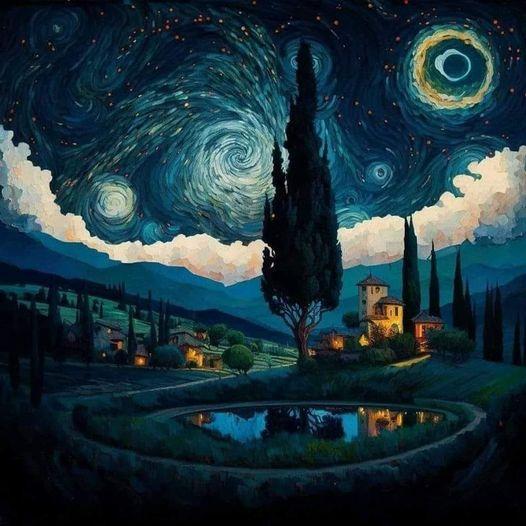
The sharp, rhythmic chime of the department bell signaled the end of the academic day. Gathering their notebooks and heavy physics texts, the group walked out into the cool evening air. They made their way to a quiet corner of the university canteen—an open-air courtyard shaded by ancient eucalyptus trees and bordered by a small, manicured garden.
Around them, the campus was alive. Students sat on iron benches gossiping about upcoming exams, steam rose from hot cups of doodh-patti chai, and a gentle breeze rustled the leaves overhead. Nature was no longer an equation on a dusty blackboard; it was alive and unfolding right before their eyes.
Hamza set down a tray with four steaming cups of chai and a plate of samosas. "Alright, Bilal," he said, taking his seat. "We are out in the open now. No blackboards. Just the sky, the trees, and the people. If Einstein were sitting here, he’d say this lively scene is the literal fabric of God. How does your theology handle this without putting walls around it?"
Bilal smiled, holding his warm cup of chai between both hands. He looked out at the garden, then at the vibrant, chaotic hum of human life moving around the courtyard.
"You think my faith restricts this view, Hamza, but it actually unlocks it," Bilal said softly. "You see, Einstein and Spinoza had to look to philosophy because Western science and institutional religion fractured deeply. But here in our soil, we have a completely different language for this. We have the Sufi Rung—the color of the mystics. Think about Sufi poets like Baba Bulleh Shah or Shah Abdul Latif Bhittai. They didn't separate faith from nature. They blended them completely. They lived out a beautiful, practical version of what Spinoza was trying to say, but they kept the warmth of divine love intact."
Zainab leaned forward, intrigued. "The Sufis? How do they bridge the gap between a mathematical universe and scripture?"
"Bulleh Shah didn't look for God just in the cold architecture of religious institutions," Bilal explained. "He looked at the world around him and famously wrote: 'Ranjha Ranjha kardi ni mein aape Ranjha hoyi...' To the Sufis, when you lose your ego and look deeply into creation, the boundary between the seeker, nature, and God completely dissolves. It’s what they call Wahdat-al-Wajood—the Unity of Existence. It’s strikingly similar to Spinoza’s idea that everything is one substance. But while Spinoza arrived there through cold, clinical geometry, Bulleh Shah got there through absolute, burning love."
"And Bhittai?" Zainab asked.
"Shah Abdul Latif Bhittai looked at the rugged landscape of Sindh, the wild winds, the birds, and the simple folk moving through the desert," Bilal continued, gesturing to the open courtyard. "In his poetry, the ocean, the clouds, and the rain are not just weather patterns. They are physical manifestations of divine mercy. When Bhittai sings to the rain clouds to bless the lands, he is looking at nature and seeing the Creator’s pulse beating inside it."
Hamza watched a dry leaf drift down from a eucalyptus tree, landing softly on the grass. "So, you're saying Spinoza’s God is a cold equation, but the Sufi’s God is a love song written in the language of nature?"
"Exactly," Bilal said, taking a sip of his chai. "The Quran tells us to look at the universe as a collection of Ayat—signs. The Sufis took that literally. They looked at a tree, a river, or a friend’s smiling face and said, 'This is a mirror reflecting the Divine.' Einstein felt an intellectual awe when he looked at physics. Bulleh Shah felt a spiritual ecstasy. But they were both looking at the exact same harmony."
Professor Kamran smiled, looking proudly at his three students gathered in the fading light. "This is the beauty of our heritage," the professor said softly. "Science gives us the eyes to measure the harmony of the universe, but our mystics give us the heart to feel it."

The gathering at the canteen broke up as the twilight gave way to a crisp, starlit night. Bilal walked out of the university gates alone, his heavy backpack slung over one shoulder. The walk home took him through the bustling heart of the neighborhood bazaar. It was here, amidst the vibrant rush of human life, that the thoughts from the afternoon truly bloomed into something profound. He stopped by the edge of a walkway, stepping back against an old brick wall to simply observe the waves of people moving around him.
The scene was a living kaleidoscope of human existence. Just feet away, shopkeepers and traders were frantically involved in their business, shouting prices, haggling over fabrics, and rushing to close their ledgers—their faces lined with the intense anxiety of daily bread. In stark contrast, a gentle stream of people was leaving the corner mosque after the night prayer. They walked quietly into the neon light of the bazaar, their fingers moving over prayer beads, their lips softly murmuring Allah’s names, moving with a profound peace that seemed to shield them from the chaos of the market. Down a small alley beside the shops, a group of kids was playing cricket with a taped tennis ball. They laughed loudly, diving into the dust, completely fearless and mindlessly unaware of what the next moment or tomorrow might bring, entirely anchored in the joy of the present.
As Bilal watched these contrasting waves of humanity—the anxious, the peaceful, and the innocent—he realized that regardless of how frantically humans run or how quietly they pray, they were all moving within the same vast, divine embrace. A profound warmth settled in his chest, and his mind filled with a beautiful, crystal-clear realization:
"Allah is man's best friend—One who never leaves you alone, regardless of the circumstances: whether in hardship or ease, night or day, at any time, in any place, or in any state. If He becomes displeased, He is quick to be appeased, and He never puts you to shame. He remains by your side and always stands with you."
He crossed the quiet street, leaving the noise of the bazaar behind. The philosophy they had discussed under the canteen's eucalyptus trees treated God as an abstract concept—a cosmic clockwork or a set of geometric laws. Einstein’s God was a magnificent structure, but it couldn't comfort a tired mind. Spinoza's God was a perfect equation, but an equation could never offer companionship.
As he turned down the familiar, quiet lane leading to his home, looking up at the stars peeking through the tree branches, the thought deepened, bringing a wave of absolute serenity over his spirit:
"And after befriending Allah, there comes a time when you no longer fear solitude; being alone does not feel unpleasant; tears do not well up in your eyes because of others; a smile constantly plays upon your lips; and whether anyone speaks to you or not, your heart remains at peace."

Bilal reached his front door, turned the key in the lock, and stepped into the quiet warmth of his home. The academic storm of equations and the bustling energy of the bazaar faded into a soothing domestic stillness.
He washed his hands and sat down at the small dining table, where a simple, home-cooked meal of warm daal and freshly made roti awaited him. He ate slowly, savoring each bite with a quiet mindfulness. For Bilal, even this humble meal was a part of the grand cosmic chain—the sun that grew the grain, the rain that watered the earth, and the health given to him to enjoy it. Every morsel was a tangible reminder of the friendship he had contemplated on his walk.
After finishing his meal, he cleared the table and prepared for sleep. He spread his prayer mat in the corner of his room to offer his final night prayers, the Isha prayer. Standing in the quiet room, he felt an immense sense of alignment. He bowed and prostrated, his heart fully anchored in the present moment, much like the children playing cricket in the alleyway.
Before finally turning off the lamp and slipping under the covers, Bilal raised his hands in a quiet, personal prayer of supplication. He closed his eyes and whispered, thanking Allah for the countless blessings of the day—the health of his body, the food on his plate, the roof over his head, and the beautiful minds of his friends and professor who challenged him to think deeper.
As he laid his head on the pillow, a profound optimism filled his mind. He thought of the next day at college—the physics lab, the upcoming lectures, the unresolved mysteries of quantum mechanics, and the laughter he would share with Hamza and Zainab. He did not fear the unknown of tomorrow, nor did he feel anxious about the rigorous demands of his studies. He felt deeply thankful for the opportunity to learn, to observe, and to live.
With a gentle, resting smile constantly playing upon his lips, Bilal closed his eyes. The universe outside his window continued its silent, mathematically perfect dance, and his heart remained at absolute, unwavering peace.


How to Buy a Diamond Engagement Ring in Greenbrae for a Halloween Prop...

Unlisted Shares in India: A Complete Guide to Private Market Valuation...