The Best Roof Coatings for UV Resistance in Hot Climates
Prolonged exposure to high temperatures and direct sunlight accelerates roof wear.
Hot climates present a significant challenge to building materials, especially rooftops, which take the brunt of sun exposure year-round. UV rays don’t just heat up the surface—they accelerate roof degradation, reduce energy efficiency, and increase indoor cooling costs. Choosing the right roof coating that reflects ultraviolet rays and withstands thermal stress is critical for long-term durability and energy performance.
This article explores the best roof coatings for UV resistance in hot climates. It breaks down the key properties to look for, compares common coating types, and explains why certain formulations outperform others in extreme sun exposure. Whether maintaining a commercial facility or a residential property, this guide helps identify coatings that perform reliably in heat-intensive environments.
Understanding the Role of Roof Coatings in UV and Heat Management
Prolonged exposure to high temperatures and direct sunlight accelerates roof wear. Effective coatings act as a barrier against UV degradation and excessive thermal absorption.
UV Radiation and Roof Material Breakdown
UV rays penetrate roofing surfaces, causing chemical breakdowns in traditional materials such as asphalt or tar. Over time, this leads to cracking, chalking, and surface delamination. Reflective coatings reduce UV penetration and extend roof lifespan.
Thermal Stress and Cooling Loads
Dark roofs absorb more heat, raising interior temperatures and increasing air conditioning demands. High-quality reflective coatings lower surface temperatures and reduce thermal cycling stress, minimizing expansion and contraction damage.
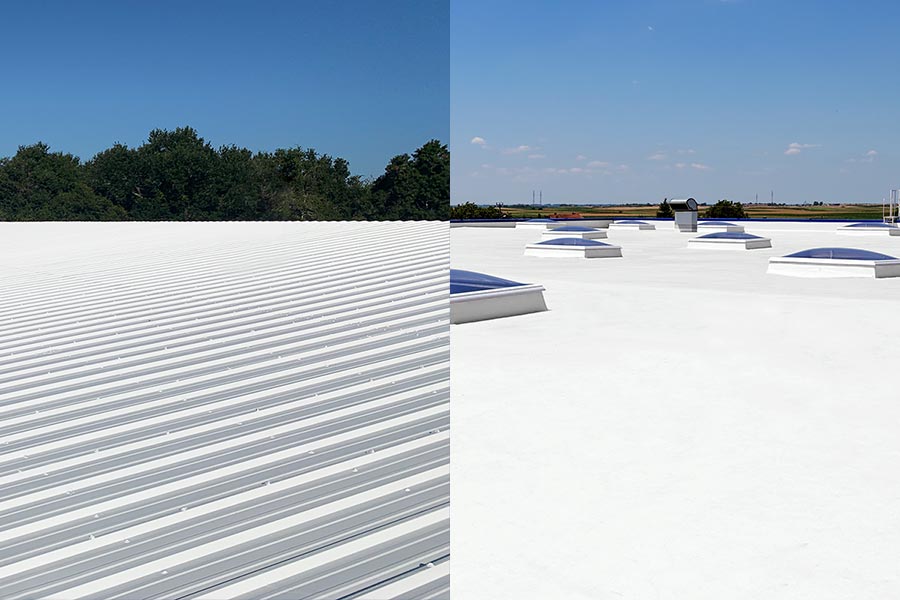
Key Types of UV-Resistant Roof Coatings for Hot Climates
Not all coatings are equally suited for sun-heavy environments. The following categories stand out for performance under UV exposure and high ambient temperatures.
Acrylic Roof Coatings
Acrylic coatings are widely used for their reflectivity and cost-effectiveness. These water-based coatings are best applied in dry, sunny climates where freezing isn’t a concern.
- Pros: High solar reflectivity, ease of application, affordable
- Cons: Less durable in ponding water or humid conditions
- Best Use: Sloped or well-draining roofs in dry climates
Silicone Roof Coatings
Silicone coatings are highly resistant to UV light and ponding water, making them a preferred option for flat roofs in hot, storm-prone regions.
- Pros: Excellent UV stability, long-lasting, resistant to moisture
- Cons: Higher upfront cost, difficult to recoat without primer
- Best Use: Flat or low-slope roofs exposed to constant sun and occasional rain
Polyurethane Roof Coatings
Often used in industrial settings, polyurethane coatings provide strong abrasion resistance and thermal insulation. They’re ideal where rooftop traffic or equipment is common.
- Pros: Durable against foot traffic, strong adhesion, good heat resistance
- Cons: Less reflective unless top-coated, more complex application
- Best Use: Commercial or mechanical rooftops with regular maintenance access
Elastomeric Roof Coatings
Elastomeric coatings provide flexibility and crack-bridging abilities, crucial in regions with intense daily temperature swings.
- Pros: Reflective, flexible, resistant to UV and weathering
- Cons: May require multiple coats, some types degrade over time
- Best Use: Metal, concrete, or foam roofs needing thermal movement protection
Performance Comparison Table
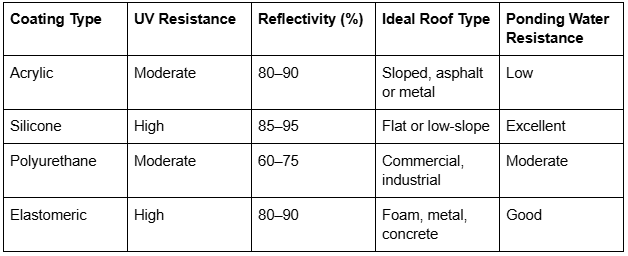
Factors That Influence UV Coating Performance
Several elements affect how a coating performs in direct sun exposure. Beyond material type, formulation, color, and substrate compatibility all influence efficiency.
Reflective Pigments and Emissivity
Roof coatings designed for hot climates often contain titanium dioxide or other high-reflectivity pigments. High solar reflectance and thermal emissivity ensure surfaces release absorbed heat quickly.
Coating Thickness and Application Quality
UV resistance depends on proper thickness and even application. Thicker doesn’t always mean better—adherence and curing quality also matter. Use manufacturer guidelines to ensure correct film build.
Substrate and Roof Type Compatibility
The performance of a coating depends on its interaction with the existing roof material. Some coatings bond poorly to bitumen or require primers. Check manufacturer recommendations for compatibility.
Maintenance and Lifespan Considerations
UV-resistant coatings reduce roof maintenance frequency, but periodic inspections are still essential. Coatings should be checked for chalking, blistering, and adhesion failure, especially before peak summer months.
Recoating Cycles and Cost-Effectiveness
- Acrylic: Recoat every 5–7 years
- Silicone: Recoat every 10–15 years
- Polyurethane: Maintenance varies based on exposure
- Elastomeric: Recoat every 8–12 years, depending on wear
Longevity depends on environmental exposure and installation quality. Even top-performing coatings degrade if improperly maintained.
Environmental Impact and Energy Efficiency
Cool roof coatings help mitigate urban heat island effects and reduce HVAC energy use. Many products qualify for Energy Star or Cool Roof Rating Council (CRRC) certifications.
VOC Content and Sustainability
Silicone and water-based acrylic coatings typically have lower volatile organic compound (VOC) levels, contributing to better indoor and outdoor air quality. Check labels for regulatory compliance.
Utility Rebates and Incentives
Some regions offer rebates for cool roof installations. Coatings that meet California Title 24 or LEED standards may qualify for incentives.
Common QuestionsHow long do UV-resistant roof coatings last in extreme heat?
High-performance coatings like silicone can last 10–15 years or longer with proper maintenance. Acrylic coatings typically last 5–7 years but may degrade faster in humid or high-traffic areas.
Can you apply roof coatings in direct sunlight?
Some coatings, especially silicone, can cure properly in full sun. Others, such as acrylic, may skin over too fast and require early morning or late afternoon application.
Do all reflective coatings reduce indoor temperatures?
Reflective coatings help lower roof surface temperatures, but the impact indoors depends on insulation, ventilation, and building design. Coatings work best when paired with good thermal insulation.
Is white the only color that reflects UV well?
White coatings are most reflective, but newer technologies offer reflective pigments in gray or tan shades that still provide effective UV resistance without the stark appearance.
Conclusion
Roof coatings that resist UV radiation offer a practical solution for reducing heat stress, extending roof lifespan, and cutting cooling costs in hot climates. Among the top-performing options, silicone and elastomeric coatings provide the best blend of durability and UV resistance, especially on flat or low-slope roofs. Acrylic coatings offer a budget-friendly choice for sloped roofs in dry environments.
Choosing the right roof coating comes down to more than reflectivity—it requires evaluating local climate, roof type, material compatibility, and long-term maintenance needs. By selecting a coating that balances these factors, property owners can achieve better energy performance and longer-lasting protection.
FAQs
What is the best roof coating for flat roofs in hot, sunny areas? Silicone coatings are ideal for flat roofs exposed to high sun and occasional rain. They offer superior UV resistance and handle ponding water without degrading.
Are UV-resistant roof coatings environmentally friendly? Many modern coatings are low in VOCs and meet green building standards. Products labeled with Energy Star or CRRC ratings offer proven environmental and energy benefits.
Can UV-resistant coatings be applied over existing roofing materials? Yes, but surface prep is key. Some roofs need primers or repairs before coating. Compatibility with existing materials should always be confirmed with the product manufacturer.
Do UV-resistant roof coatings qualify for tax credits or rebates? In some regions, yes. Coatings that meet specific energy standards may be eligible for local rebates or incentives, especially those aligned with LEED or Title 24.
How do roof coatings differ from roof paint? Coatings are thicker, more elastic, and engineered for protection and performance. Roof paint is typically cosmetic and doesn’t provide the same UV or waterproofing benefits.
Reviewer: Maria Lopez offered detailed feedback after reviewing this post. Her 10 years of experience in spray foam work helped guide the tone and suggestions toward realistic strategies.