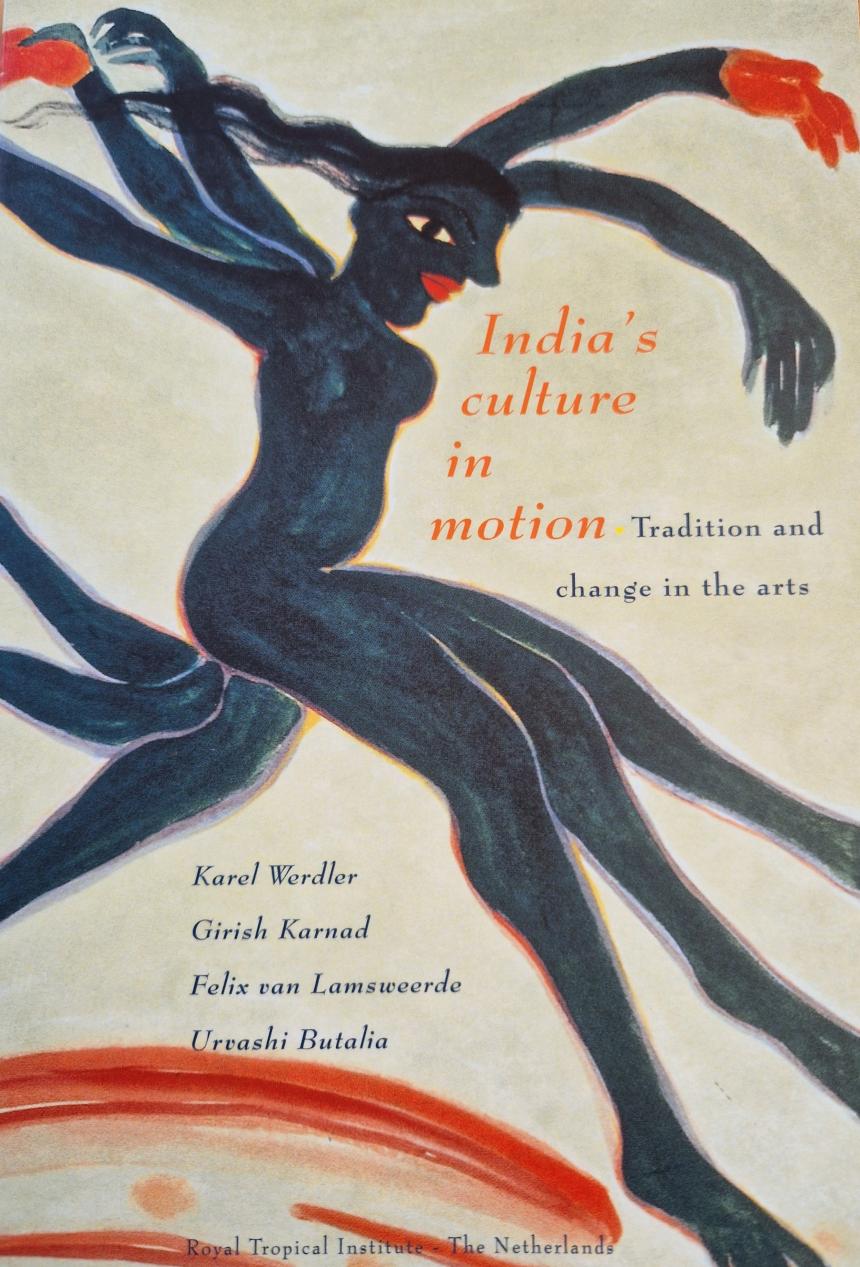

The Arts and Social Change in India By Girish Karnad
The Arts and Social Change in India’, published in a volume titled India’s Culture in Motion: Tradition and Change in the Arts by the Royal Tropical Institute in the Netherlands. The art and culture are so important for human livings that no one can disagree and reading about social change through art and culture is interesting.. This one is from India and makes a lot of sense for any one interested in the topic and is being shared here for wider audience.
The Arts and Social Change in India By Girish Karnad
In this book celebrating the 50th anniversary of Indian Independence, the central theme is to analyse the forces that have shaped the arts in my country in this half century. However, no one today believes that there is a clear disjunction between the colonial and post-colonial eras, at least in the field of culture. In India, the forces that have been active in the cultural field since Independence were, almost without exception, unleashed during the colonial period. So to understand the nature of these forces, one has to see the post-Independence period as only the most recent phase in a much longer process, and start one’s investigation virtually at the beginning of colonial rule.
I shall take two aspects of the British presence in India as starting points for my analysis. The first one was the imposition of the English language to impart ‘to the Native population knowledge of English literature and science’ and the exclusion of all ‘oriental’ learning from official funding. This policy, in effect, enabled the rulers to establish control over the very thinking process of the educated populace of the country. Every aspect of Indian life would now be presented to the Indians themselves in terms of new categories introduced by the imperial discourse, inevitably resulting in much violence to their experience of themselves. More fundamentally, a new hierarchy of values was set up which was to change the society’s understanding of what was acceptable and what was not in its own functioning.
The second was the development of the three colonial cities, Madras, Calcutta and Bombay, which introduced an entirely new ‘urban’ ethos in India. Most Indian cities until then were situated deep inland; the colonial cities, on the other hand, were seaports developed by the British as bases for their maritime trade. These cities had no pre-colonial Indian history of their own. The populations of these cities consisted of Indian merchant communities who had been attracted there by the trading facilities as well as the security offered by the British and had prospered financially under British protection. They thus formed a bourgeoisie which admired their British masters and, at least externally, aspired to ‘look’ like them. The major difference between the traditional Indian cities and the new colonial ones was that in the former the citizens shared with their cousins in the countryside certain assumptions regarding a person’s obligations to his family, caste, profession, faith and the society at large, while in the latter there was a sharp disjunction between the ‘urban’ and ‘rural’ spheres. Citizens of the ‘Indian’ cities had to measure up to the ‘roles’ handed down to them by their community traditions, while those of the colonial cities had to measure up to the foreign ‘gaze’.
The self-image of this urban bourgeoisie is what concerns us here. While it professed faith in the market economy based on free competition, individual merit, and denial of any consideration of caste and creed in public life, it took care to ensure that these imported values did not impinge on its homes, where considerations of family, caste and class loyalties continued to hold sway. Simultaneously, it saw itself as more modern and advanced than the rural population, which was held to be more or less still living in the Dark Ages.
Drama as ‘culture’
Imitation is always easiest in the sphere of public culture, for that’s where it hurts the least. Inevitably, the theatre created by the new urban elite imitated the European stage, two features of which were to alter their very understanding of ‘entertainment’. The proscenium arch drastically separated the audience from the stage, cutting out the traditional ritual participation by the audience. The convention of selling tickets further underlined the notion that theatre was only another part of the marketplace.
Common to these two British institutions — colonial theatre and English education — was the assumption that a playwright, William Shakespeare, was representative of all that was sublime in British civilization. Shakespeare was yet more proof of the British superiority over other — even European — cultures!
The notion that drama rather than ‘philosophy’ or ‘ancient lore’ could be the true measure of national culture posed a challenge of an entirely unprecedented kind to the Indian elite which, while emulating the British, had naturally had to establish its cultural equivalence. It was forced to re-evaluate its cultural inheritance. An Indian playwright had to be found as a counter-point to Shakespeare. Kalidasa, the Sanskrit playwright translated by Sir William Jones and praised by Goethe, was ready at hand. Kalidasa had always been admired as a great poet and playwright, but now he carried a cultural charge. In the second half of the nineteenth century, there were four separate translations of Kalidasa’s Shakuntala in Marathi alone and two in Kannada. The first play staged by Annasaheb Kirloskar (born 1843), the founding father of the professional Marathi stage, was Shakuntala. While turning to Indian classics for his material, Kirloskar was nevertheless explicit that he wished to create rasa (dramatic mood) in the ‘English manner’.
The ambiguous relation of the new bourgeoisie to Shakespeare and his nation is sharply illustrated by the careers of two Marathi playwrights of the next generation. Khadilkar (born 1872) wrote Keechakvadh, the play in which the rapist Keechak so clearly symbolised Lord Curzon (and his victim, Mother India) that it was banned by the British authorities in 1908 on the excuse that it incited political violence. Khadilkar’s anti-English politics did not prevent him from writing another play, in which the hero was modelled on Hamlet and the villain on Iago! Gadkari (born 1885) felt he was incomplete compared to Shakespeare and declared that his destiny as a playwright would be fulfilled only if he could write eighteen plays — half the number that Shakespeare wrote.
All these names — Kirloskar, Khadilkar, Gadkari — point to an even more fundamental change that was taking place in the Maharashtran society of the time, for they were all Brahmins. Until the middle of the nineteenth century, the Brahmins had looked with repugnance on theatre and other performing arts. Except when connected with temples or employed for ritual purposes, appearance on the public stage was considered unworthy and even immoral. Performances connected with secular entertainment — story-telling, singing, dancing, jugglery, acrobatics, magic — were considered ‘low caste’. A ‘high-born’ person could indulge in these activities only at grave risk to his social status. The British, on the other hand, considered theatre an occasion of immense social importance. Victorian theatre groups were invited to India. Members of the locally resident British community staged amateur productions in which female roles were played by the memsahibs themselves — a testimony to their snobbish appeal. This indulgence of the rulers was to affect the Maharashtran Brahmins deeply. By the 1880s, they had discarded their prejudice against theatre and launched a professional theatre, incorporating many of the attributes of the English and the already popular Parsi theatres. Kirloskar’s theatre company initiated an immensely successful theatre tradition, which prospered over the next 100 years — monopolized for the most part by the Brahmins. However, the urban theatre, with its proscenium stage, its modern financial structure and its valorization of the Brahmin lifestyle within which even the ‘mythologicals’ were recreated, took care to differentiate itself clearly from the ‘traditional’, ‘folk’ or ‘rural’ forms which were still sneered at.
A new and profound process of change had begun to alter Indian society. The pattern would from now on be repeated in different parts of the country in different ways in different art forms, but with results which were almost identical: occupations which had been traditionally kept at a distance by the upper castes would now be embraced as ‘art forms worthy of practice’ by them. With this acceptance, not merely the patronage but the actual practice of the arts would move physically from the villages and small towns to the new cities. It would become a metropolitan activity, a prerogative of the upper caste, urban population. In the process, the communities which had sustained performance arts over the centuries would be jettisoned.
The arts and national identity
As the urban middle class got involved in the struggle for Independence and began to define the notion of ‘national culture’ in its own image, it began to expropriate from the traditional practitioners those arts which could be held up as representative of national culture and through which the concept of a ‘national identity’ could be asserted. Thus, for instance, it became customary for the annual session of the Indian National Congress, which was founded in 1894, to be accompanied by an All India Music Conference. The 1927 session was held in Madras, and after the usual All India Music Conference (held for the first time in South India), it was decided to found the Madras Music Academy. Like the Congress party in the Madras Presidency, the Academy, too, was an essentially Brahmin organization. Until then, while public musical concerts by Brahmin men were routine, only women from the professional singing and dancing classes (the devadasis) sang in public. In 1933, D.K. Pattammal became the first Brahmin woman to give a music recital in public. Before long, ‘upper caste’ women had started giving public concerts. This change was enthusiastically welcomed as indicating a liberalization in the attitude toward women. However, it was really the women of the upper castes who were benefiting. The professional class was on its way out, and not only in music.
A similar displacement was taking place in the fine arts as well, but for entirely different reasons. In the nineteenth century, art schools were opened in the three cities in order to introduce Indians (men) to European art techniques and aesthetics. The norms taught by the schools were those sanctified by English academic painting. But it was not so much the content of the training as the social class structure of the students admitted that was to have a lasting sociological impact. Of the three art schools, only the one in Madras sought students from the hereditary artisan castes. The Calcutta school, along with the one in Bombay, had become elitist by the 1890s. In fact, the majority of the students in Calcutta by the turn of the century belonged to the Bhadralok, the ‘upper crust’ created in the society of Bengal by British administrative reforms, which was already dominating the fields of theatre, literature and education, while the art world, too, had become the exclusive domain of Bhadralok critics, journalists and patrons.
A new classification thus emerged on the Indian fine-arts scene. A member of the urban elite chose to go to the art school because he was personally ‘gifted’ in that direction: he became an ‘artist’. He pursued painting not to ensure a livelihood but to find expression for his ‘creativity’. ‘Originality’ became a norm by which the quality of an artist would be recognized. The ‘artist’ became distinct from the ‘artisan’, the latter term being reserved for the professional castes that practised ‘crafts’ handed down from generation to generation and stayed put in small towns and villages.
The situation developed differently in the field of dance. Historians of Indian dance often forget — or perhaps deliberately ignore — the fact that even here the ‘revival’ was partially initiated by the Western fascination for exotic India. In the first decades of this century, an American dancer, Ruth St Denis, whose exposure to India was limited to what she had seen recreated as an Indian village in an exhibition at the Hippodrome on Coney Island, launched her own immensely popular version of Indian dance. She sometimes used genuine Indian musicians, but more for their visual impact, one gathers, than for their music. In 1926, Ruth St Denis and her husband Ted Shawn toured India to give nearly 100 performances. It was then that she saw India for the first time and was shattered by its poverty. But her ‘Indian’ dance evidently carried enough conviction for the Nobel laureate, Rabindranath Tagore, to ask her to stay on to revitalize Indian dance.
For centuries dance in South India was the prerogative of the devadasis, professional women dancers-cum-singers hereditarily associated with the temples. Devadasi literally means the ‘slave of the gods’ and metaphorically the ‘one at the god’s feet’. The dance was known as dasiattam (the dance of the dasis) or sadir or nautch (words of Marathi/Urdu origin). The temple dancers had an important role to play in all temple rituals and socio-religious ceremonies like weddings and festivals. And as ‘women married to gods’, and therefore as those who would never be contaminated by widowhood, their participation in these festivities helped to ward off evil. Dance and music, two facets of the same art, figured prominently in the fulfillment of these duties.
In 1853, the British annexed the court of Tanjavur, the last of the courts to have patronized the devadasi system on a large scale. With the official support of the court and the temples gone, dance and music became means of earning a daily livelihood, and by the turn of the century the profession had become virtually identified with prostitution. By the 1920s, Madras had become the centre of the ‘anti-nautch’ movement led by Dr. S. Muthulakshmi Reddy, among others, who was herself from the devadasi class. The Madras Legislative Council was being asked to abolish the devadasi system altogether and, along with it, prohibit performances by professional dancing women.
It was E. Krishna Iyer, a secretary of the Madras Music Academy, who saw the peril facing dance. He sought to bring social acceptance to dance by inviting two young devadasis, the Kalyani sisters, to give a performance on the stage of the Academy. The event was poorly attended and did not even create a ripple, but there is scarcely any doubt that it is one of the most important events in the entire history of Indian dance. For on that day, dance left its twin locales of temple and court, discarded its association with ceremonies of social significance, and moved into a secular public space, into the domain of popular sponsorship. Following this, the Madras Music Academy decided to take upon itself the responsibility of salvaging dance from extinction. The first act was to give it a respectable name. Sadir and dasiattam were dropped, and the dance became bharatanatyam. Contrary to popular belief, the name has nothing to do with the author of the Natyashastra. Though sadir was performed invariably by women, the dance teachers were often men, many of them Brahmins connected with the temples. Bharatan is the honorific form of the title of a Brahmin dance teacher — as distinct from nattuvan, signifying a teacher of devadasi origins. The new name thus was clearly intended to evoke respectable associations and reflected the need of the pro-sadir group to win the acceptance and support of the powerful Brahmin intelligentsia of Madras. Once that was achieved, Iyer began to underplay the caste reference by arguing that the name was chosen as a homage to Bharata Muni, author of the ancient treatise on dance and drama, the Natyashastra (200 BC). Iyer’s strategy was to prove phenomenally successful: within a decade, the Brahmin community of South India had embraced bharatanatyam as an art form.
To fully grasp the caste/gender/patronage complexities of this very crucial period in the history of Indian arts, one could compare the lives of three women artists who dominated the art scene in Madras over the next half century. First there was Balasaraswathi, undoubtedly one of the great bharatanatyam dancers of all time. She was born a devadasi and remained fiercely loyal to the devadasi tradition of dance. She was invited to dance at the prominently Brahmin Academy and later given space to conduct her classes there. But she refused to seek a larger, popular (i.e., Brahmin) patronage by glamorizing her dance. Economic security eluded her until late in her life, and she had to face such difficulties socially that she was reluctant to pass her art on to her only daughter at a time when parents in Madras had begun to consider dance an essential accomplishment for their teenage daughters.
Then there is M.S. Subbulakshmi, the great karnatak singer. She was born a devadasi but met and married Sadasivam, an energetic and enterprising Brahmin journalist, who devoted his life to managing the career of ‘the most saleable musical property of the times’. Sadasivam was active in the nationalist movement and was a friend of C. Rajagopalachari, through whom Subbulakshmi met and moved with the top national leaders. Subbulakshmi was also an exceedingly beautiful woman, and her spectacular career had much to do with the way she managed to combine all these qualities to shed all traces of her devadasi past and transform herself into the perfect image of a Tamil Brahmin housewife.
The third person was Rukmini Devi, who was born a Brahmin but married an Englishman connected with the prestigious Theosophical Society. She fell in love with the devadasi art form and decided to take it up, easily overcoming social disapproval thanks to the support of her foreign husband. Though she was never much of a dancer, she set herself two goals: first, to wipe out traces of the historical association of the dance with the devadasis; and then, to purify it of all accretions resulting from this association. By 1955, Kalakshetra (the school she started to propagate bharatanatyam) had 80 students. By 1986, the number had swelled to 250, all from non-devadasi castes.
It was with her second achievement, however, the purification of the form, that Rukmini Devi developed a methodology that was to have seminal impact on other forms of dancing in other parts of India. With the assistance of Sanskrit scholars, musicologists and dance experts, she revamped, polished and extended the repertoire of gestures, physical postures and movements that formed the basic vocabulary of sadir. Dance poses sculpted in South Indian temples were studied and matched with the various gestures and steps described in the classical text, Abhinayadarpana by Nandikesvara. Traditional sadir dress was given up in favour of elaborate costumes, supposedly modelled on these sculptures. Brahmin musicians of stature were invited to compose new tunes. Rukmini Devi ‘Brahminized’ sadir. In fact, it could be said that she did to the dance what Subbulakshmi had done to her own personality.
An anecdote, recounted to me by Dr Narayana Menon, former Chairman of the Sangeet Natak Akademi, will elucidate the point I wish to make about the gender/caste context of the arts. At a seminar held in Delhi in the 1960s, Rukmini Devi spoke at length on how hard she had had to work to rid the dance of its vulgar past and bring out its pure artistic essence. In reply, Balasaraswathi said: ‘What Rukmini Devi has said is quite true. These upper-caste women have taken up our profession, and they have left us only our art.’ One is tempted to add that the impeccable Brahmin decorum of Subbulakshmi would not have allowed her to participate in such an exchange.
The acceptance of bharatanatyam as an art form by the Brahmin intelligentsia of Madras had immediate repercussions all over the country. Within the next couple of years, Rabindranath Tagore opened the Manipuri section in his school, Shantiniketan. Vallathol Narayan Menon, a Malayalam poet, started the Kerala Kala Mandalam to save kathakali. Within the next decade and a half, Shivaram Karanth was seeking the means to rejuvenate yakshagana in Karnataka. These were all members of the English-educated middle class.
With Independence the notion that traditional performance genres embody the true national identity of Indian culture received official backing. The Sangeet Natak Akademi (National Academy of the Performing Arts), founded along with two other academies, the Sahitya for literature and the Lalit Kala for the fine arts, rediscovered, publicized and funded many genres — from the medieval dhrupad singing and pandavani ballads to kutiyattam, probably India’s oldest surviving theatre form. The Festivals of India organized by Mrs Indira Gandhi as exercises in international public relations in London, Paris and the USA and the Zonal Cultural Councils created by Rajiv Gandhi virtually turned the arts into a government-sponsored industry.
The arts today
This brings us to the present. It will be easier to make sense of the state of the arts today if we group them into three distinct categories according to how they were affected by the colonial experience. First, there are those forms which, after all the tortuous questioning and self-justification they were subjected to, seem to have emerged stronger and more vibrant than ever before, confident of their firm foothold in their history and of their ability to handle their own future. Second, there are those which, thanks to colonial intervention, have almost lost their moorings in their own history and literally suffered from a kind of amnesia. Third, there are the forms which were introduced to us by the West and were part of the colonial gift package.
Prominent in the first category — arts displaying a renewed vitality — is music, followed at a distance by other arts dependent on music, such as dance and traditional theatre. Music has always occupied a privileged place in the life of an average Indian, enjoyed by no other art form. The credit for this must go to the Bhakti movement, a radical religious movement that swept across India between the eighth and fifteenth centuries insisting that one could seek union with God directly through music. Bhakti made it socially acceptable to sing anywhere if you sang of God. From about the twelfth century, Sufism also employed music extensively as a means of approaching the divine and thus helped overcome whatever clerical opposition there may have been to it. The Muslim rulers of North India were enthusiastic patrons of music. This emphasis on music from the two major religious traditions helped place music at the heart of the domestic and social life of the average Indian. Wherever Indians meet, they sing — in homes, in temples, at funerals, even at political meetings. It would in fact be no exaggeration to say that it is the one art form by which an Indian can immediately recognize himself or herself as an Indian.
Today, the fact that any person who is interested in music can take it up as a vocation if not as a profession has meant that an enormous amount of talent is going into music which traditionally would have been debarred access to it for reasons of caste, class, money or sex. Though the traditional method of handing down music from guru to disciple has broken down and no other satisfactory system has replaced it, there is an enormous amount of recorded information available, and any number of venues for the gifted. One can quite confidently say that never before in its history has India seen so many musicians and dancers of unquestionable excellence.
In the second category, forms which have suffered from historical dislocation, I would place painting, sculpture and architecture. I have already touched on the first two, and although there are many admirable buildings designed by individual architects scattered all over the country, one needs only a brief drive through any city to realize the wretched state of urban architecture. As I have tried to argue, the responsibility for much of the orphaned and alienated history of these arts can be laid at the door of colonial intervention. The entire urban/rural, artist/artisan, classical/folk dichotomy created by colonial efforts to impose Western norms on Indian arts, and the Indian acquiescence in the efforts, were to prove disastrous and stunted their growth. It took the fine arts a very long time indeed to repair the damage done by this truncation. Even in as important a medium as textile designing, the first efforts to bring back into circulation the rich store of traditional patterns, materials and techniques were made only after Independence. The difference between music and painting even today can perhaps be best summed up as follows: One can be a great musician in India without ever having heard, or even heard of, Beethoven. But no Indian painter can hope to get anywhere if he doesn’t know his Picasso or Klee.
The third category, the forms introduced by the West into India, are essentially products of the new technologies, such as printing, photography, gramophone, radio, television, video, audio cassettes, etc. Although literary forms like the novel and the lyric, which were gifts of the printing technology, transformed the notion of literature completely — and thereby chopped off modern Indian literature from its historical moorings — the total impact of literature on Indian society has been minimal, as the literacy level in the country even after a half-century of Independence is less than fifty percent. The multiplicity of languages has also made it difficult for ‘an’ Indian literary tradition to evolve. The real impact of printing technology has been through newspapers. Mahatma Gandhi, by involving the masses in the national movement, created a grassroots readership for newspapers. Before Independence, newspapers which upheld the nationalist cause, even in English, vastly outsold those that supported the government. In the post-Independence period, the two years of censorship under the Emergency led to a sudden upsurge in the readership for journals and newspapers. It would be no exaggeration to say that in most Indian languages, the modern written idiom has been shaped by journalism rather than literature.
The explosion of musical creativity noted earlier was helped by the various technologies which made that music accessible to the average Indian. Conversely, it is also true that these technologies have survived, indeed flourished, because of their reliance on music. The first gramophone recordings were made in 1902, and in no time, a vast music market had opened up, enabling Indian music to move out of the princely courts and courtesans’ quarters into middle-class homes. By 1930, when the invention of the ‘talkies’ further extended its boundaries, music was already an urban mass medium. As long as Indian films were silent, they were perennially threatened by the better-made and better-marketed Hollywood films. But once films began to speak (or, in India, sing), they instantly became part of the regional, musical culture. They became invulnerable to outside competition. It needs to be pointed out to those who sneer at Indian films because of their reliance on music that it is the film music that has saved the industry from being annihilated by Hollywood, a peril which faces almost every other film industry in the world. (One should mention here that after 100 years of spectacular reign, the main legacy of the Maharashtran theatre has also been in the realm of music.) Let me stress how consistently innovative and energetic film music has been over the past half-century and how it has enabled Indian music in general to absorb modernity on its own terms. Even MTV has had to make room for Indian music to become acceptable to the Indian youth.
The conclusion, however ironic, is inescapable, that if the song-less, neo-realistic genre of films made fashionable by the international success of Satyajit Ray in the mid-1950s had become the dominant style of film narrative, the Indian film industry would have become infinitely more vulnerable to being mauled, if not entirely finished off, by Hollywood. And yet, despite their enormous popularity, films remain an essentially urban medium. In 1998, there are only about 13,000 cinemas, including tents and temporary houses, in this country of 900 million people. More than half of them are situated in the four southern states. The medium that has truly reached every corner of India is radio. The transistor radio brought about a revolutionary change in Indian villages, filling their vast silences with music and dialogue. However, the full revolutionary potential of radio was never utilized because the medium has remained a tightly controlled monopoly of the government. The need to keep the vocal and politically effective urban middle class happy and quiet has led to a total neglect of the villages by politicians and bureaucrats. Regarding television, the case is even more tragic, since the government has now given up all pretense of social responsibility and wants Doordarshan, the state-owned national television, to compete with private channels, which inevitably are guided by the need to attract advertisers, who in turn are only interested in the urban consumers.
Indian cities underwent a traumatic metamorphosis in 1947. It is not Independence but the Partition of the country which makes that year significant in the history of India. Overnight, Calcutta, Bombay and Delhi swelled with refugees from across the border. This trauma was soon succeeded by another, as the poor from the hinterlands poured in, propelled by the industrialization, the population explosion and the collapse of the village economy. Within a decade, the educated middle class had begun to feel beleaguered. The urban poor were making their presence felt in every aspect of city life. They were hungry not just for food and shelter but also for entertainment. This demand was met most satisfactorily by the audio cassette tape: a cassette-player is inexpensive and handy, and it can be slung on the handle of a bicycle. The low investment required to record — or pirate — an audio-cassette has decentralized its production geographically, ensuring an endless flow of audio cassettes to the remotest corner of India. Every kind of music is available on cassettes. The hegemony of Hindi and Tamil film songs has been broken, and a wide variety of regional styles and modes has been brought into the market. It is also immensely democratic in that anyone who fancies herself or himself a singer can get her or his creation on the market. An attempt to exploit the reach and power of the medium to spread their communal propaganda was made by the right-wing Hindutva organizations in the wake of the Babri Masjid affair. It’s a safe bet, though, that in the final analysis the cassette industry cannot afford prose: its staple is music.
What then of the future?
The communication explosion is just hitting India and is shattering earlier priorities so completely that it is difficult in this confused moment to decide what lessons learnt from history would enable us to even attempt predictions. The new technology has permeated every corner of our life and in the process has endowed English with a fearsome power and fascination. International media culture seems poised to drown out regional and local languages and cultures. However, like printing, which initially seemed threatening but then led to the growth of modern Indian languages, the electronic technology may be found to have possibilities beneficial to local cultures. There is the additional fact that the multiplicity of Indian languages cushions local cultures against globalized media, who are not attracted to small markets.
The questions facing us today are: how will the new communication technology, which is linking India with the prosperous countries of the world, reach out to the world of the poor and interact with them? Will its potentials help us to reduce the distance between the ‘city’ and the ‘village’, a distance that has ceaselessly widened during the last two and a half centuries?
A lot depends on the answers.
NOTE: taken from the link >>> https://worldofgirishkarnad.substack.com/p/tell-it-again-11-a-note-from-ramachandra



Off-Grid Rooftop Solar in Uttarakhand – Reliable Energy Solutions by G...