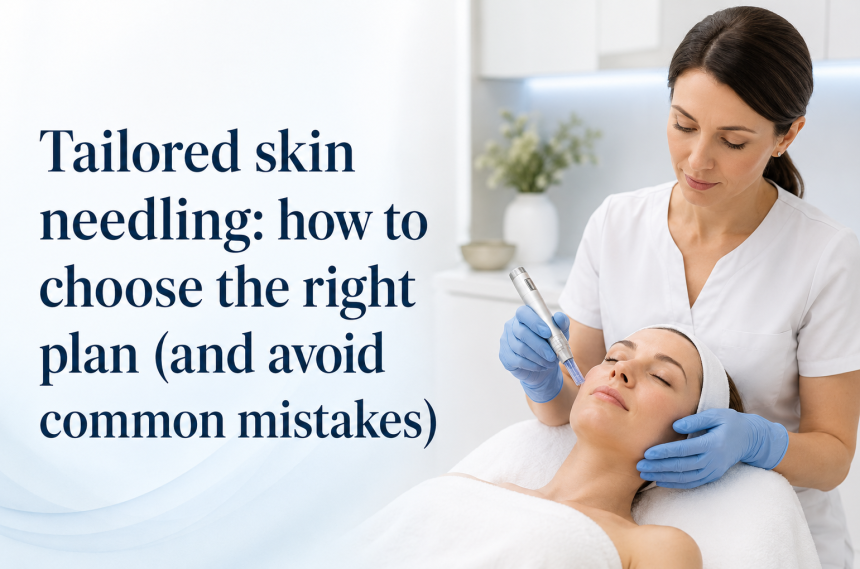

Tailored skin needling: how to choose the right plan (and avoid common mistakes)
Tailored skin needling is about creating a personalised treatment plan based on your skin goals, tolerance, pigment risk, downtime needs, and aftercare habits. Instead of chasing the deepest or most aggressive session, the best results usually come from controlled intensity, sensible spacing, calm recovery, and a routine you can realistically follow. A strong consult should cover your skin history, current products, sun exposure, downtime limits, and what would make the practitioner adjust or pause treatment.
Skin needling can look straightforward from the outside, but the results people are happiest with usually come from choices made before the first session. The phrase tailored skin needling approach should mean a clear, personalised plan that matches your goals, your skin’s tolerance, and your real-life schedule, not a one-size protocol with a nicer name. If you’re weighing it up, the most useful mindset is “dose and recovery,” because the best outcomes tend to come from the right level of stimulus paired with calm healing. What “tailored” actually means in skin needling Tailoring is about adjusting the variables that change how your skin responds: intensity, spacing, technique, and what you do (and avoid) around the appointment. It’s also about choosing a pace you can stick with, because consistency often matters more than one aggressive session. A good plan typically starts with your primary goal (texture, scarring, fine lines, overall quality, uneven tone), then layers in constraints like sensitivity, pigment risk, downtime tolerance, and the products you use week to week. That’s why two people can book “microneedling” and have very different experiences, because the safest and most effective settings for each person aren’t identical. One sign of real tailoring is when the consult includes “stop points” (what would make the practitioner go gentler, delay a session, or adjust the aftercare plan). Who tends to benefit and who should pause Skin needling is commonly explored for rough texture, the look of acne scarring, and early lines, especially when someone prefers gradual, compounding improvements over time. It can suit people who are willing to follow aftercare, avoid unnecessary sun exposure, and keep their routine simple while the barrier settles. If you’re prone to prolonged redness, have a history of post-inflammatory pigmentation, or you’ve had melasma flare from irritation, you’ll usually want a more conservative strategy and careful recovery support. If you’re dealing with active infection, open lesions, or a significant inflammatory flare, it’s typically better to stabilise first and then revisit treatment. You don’t need “perfect skin” to be a candidate, but you do need a plan that fits how your skin behaves and what you can realistically do after the session. Decision factors that change outcomes Depth and intensity Depth isn’t a badge of honour; it’s a dosing decision. Going deeper than your skin can comfortably recover from can lead to more irritation, more downtime, and sometimes less consistency across a treatment course. A tailored plan uses enough stimulus to be meaningful while keeping inflammation controlled, especially if you’re pigment-prone or reactive. When someone says they want “results fast,” the safest translation is usually “results predictably,” because predictable healing is where compounding improvements happen. Your goal: texture, tone, or scarring Texture concerns and scar patterns often need a different approach from uneven tone, and pigment risk deserves extra respect. If tone is the priority, particularly with melasma tendencies, the strategy often leans toward conservative sessions, longer spacing, and strict sun protection, because irritation can trigger unwanted colour changes. For acne scarring, it’s worth going in with a longer horizon and a willingness to reassess after a couple of sessions rather than expecting a single appointment to do everything. This is where good expectation-setting matters most. Technique, hygiene, and practitioner judgement The device matters less than the fundamentals: technique, hygiene standards, and the practitioner’s ability to adjust mid-session if your skin is reacting. Ask what’s single-use, what’s sterilised, and what they do to minimise infection risk and avoid unnecessary trauma. You’re looking for a process that prioritises safety and controlled recovery over “maxing out” settings. Pre-care and aftercare: where most people accidentally sabotage results What you use in the two weeks before and after can influence how inflamed your skin becomes. Strong exfoliants, retinoids, and certain brightening actives can be useful tools, but timing matters, and “more” can be the wrong answer around treatment. If you’re unsure, the practical move is to bring your product list to the consult and ask for a simple stop/start schedule rather than guessing. A calm, boring routine for a short window often beats complicated optimisation. Downtime and scheduling reality Plan around your calendar, not wishful thinking. Even if you recover quickly, it’s smart to assume a few days where your skin looks “worked on,” and to avoid booking right before major events or heavy sun exposure. Common mistakes that waste sessions or irritate skin The most common problems after skin needling are usually predictable, and they’re often avoidable with better timing and clearer expectations. Mistake 1: Treating it like a relaxing facial. Skin needling is a controlled injury with a repair phase, so the goal is to protect the process, not add extra stimulation immediately after. Mistake 2: Chasing intensity instead of consistency. A conservative plan done well and repeated appropriately often beats one aggressive session followed by weeks of redness, flaking, or product intolerance. Mistake 3: Restarting actives too soon. Your skin can look “fine” before the barrier is fully settled, so reintroducing strong products too early can prolong irritation. Mistake 4: Underestimating sun exposure. Sun plus inflammation is a common recipe for uneven pigment, and it’s especially relevant if you’re outdoors a lot or drive long distances in strong light. Mistake 5: Skipping the awkward history details in consult. Cold sores, pigment issues, past reactions, and recent flare-ups are exactly the details that help a practitioner tailor safely. Most “bad outcomes” stories begin with a mismatch between the plan and the person, rather than the concept of skin needling itself. Operator Experience Moment I’ve noticed the best consults are the ones where someone admits what they actually do at home, like pushing through stinging because they think it’s “working,” or restarting actives the moment redness fades. When that comes out early, the plan usually becomes gentler and clearer, and the recovery period gets easier to manage. It’s rarely about willpower; it’s about removing guesswork. A simple first-actions plan for the next 7–14 days This is general guidance, not personal medical advice, and a qualified practitioner should tailor it to your history and skin behaviour. Days 1–3: Get specific about goals and constraints Write down your top two goals (for example, “rough texture” and “old acne marks”) plus your biggest constraint (for example, “I can’t look visibly red on weekends”). Note how your skin reacts to change: does it sting, peel easily, flush for long periods, or pigment after spots? Make a short list of anything you suspect matters but forget in appointments (cold sores, melasma history, eczema patches, recent flare-ups, medications). These details help a practitioner decide whether to start conservatively, adjust spacing, or add extra recovery support. Days 4–7: Prepare consult questions that force clarity Ask what a reasonable outcome looks like after one session and after a small course. Ask what “too much” looks like (what would be outside normal downtime) and what you should do if that happens. Ask how they decide depth and spacing for someone with your goals and your tolerance. Then ask what they want you to stop and when, and what they want you to restart and how. Days 8–14: Simplify your routine and protect recovery Reduce variables so it’s easy to identify what your skin tolerates. If you’re told to pause strong actives, do it early enough that your barrier isn’t already irritated on treatment day. Schedule around sun and stress where possible, because both can worsen inflammation and prolong recovery. If your lifestyle includes lots of outdoor time, build in practical protection steps you can stick to. The goal is not perfection; it’s a calmer baseline and a plan you can follow without second-guessing. Local SMB mini-walkthrough (Australia) A café owner in Newcastle wants skin needling but can’t be noticeably red on busy weekends. They book a consult mid-week and bring a list of actives they use when their skin is “behaving.” The plan starts conservatively to avoid prolonged redness during peak trade. Sessions are spaced away from school holidays to reduce accidental high-UV days. Aftercare is kept simple because they can’t keep changing products during long shifts. They reassess after two sessions instead of escalating intensity too early. Practical Opinions If your skin is reactive, consistency beats intensity almost every time. If pigment is a concern, controlling inflammation is the main lever you have. If you can’t commit to aftercare and sun caution, postpone treatment until you can. How to choose a provider without getting overwhelmed Choosing a provider is less about marketing and more about how well they can explain their decision-making. A strong consult usually includes questions about your skin history, your product routine, your downtime needs, and the triggers that have caused trouble in the past. Look for someone who can clearly describe what they’ll adjust (depth, technique, spacing, pre-care, aftercare) and why those choices fit your goals and constraints. It’s also a good sign if they can tell you when they wouldn’t treat, or when they’d modify the plan, because that’s part of safe tailoring. Don’t be shy about asking how they manage pigment risk and prolonged redness, especially if you’ve had either before. You’re not asking for guarantees; you’re asking for a plan with sensible guardrails. Key Takeaways Tailoring means matching intensity, spacing, and aftercare to your goals and your skin’s tolerance. Most setbacks come from mistimed actives, underestimated sun exposure, or overly aggressive first sessions. A good consult makes trade-offs explicit and gives you a recovery plan you can actually follow. Use the next 7–14 days to simplify your routine, prepare questions, and schedule around real life. Common questions we get from Aussie business owners Q1) Is skin needling worth it if I can’t afford much downtime? Usually it can be, but only if the plan is built around your work calendar and your recovery speed. A practical next step is to ask for a conservative first session and a clear estimate of what you’ll look like at 24, 48, and 72 hours. In Australia, where outdoor time can be hard to avoid, also plan sun protection and avoid booking just before high-UV weekends. Q2) Can I keep using my usual active skincare products around treatments? It depends on what you use and how reactive your skin is, because some actives can increase irritation if restarted too soon. A practical next step is to bring your product list to the consult and ask for a simple stop/restart schedule in writing (even a few bullet points). In most Australian cities, day-to-day UV exposure is a real factor, so “gentle routine plus sunscreen” often matters more than squeezing in extra actives. Q3) How do I tell if a clinic is tailoring properly or just running a standard protocol? In most cases you’ll be able to tell by the questions they ask and whether they explain their choices in plain language. A practical next step is to ask what would make them change depth, session spacing, or aftercare for someone with your exact constraints (events, visibility at work, sensitivity, pigment history). In Australia, where many people juggle outdoor commuting and weekend sport, a provider who proactively discusses sun timing and recovery routines is usually a safer bet. Q4) What if I’m worried about pigmentation getting worse? Usually the safest approach is to treat pigment risk as a primary decision factor from the start. A practical next step is to tell your practitioner about any history of post-inflammatory pigment or melasma and ask what adjustments they’d make to reduce inflammation and support barrier recovery. In Australia’s high-UV context, conservative dosing and consistent sun protection are often the difference between steady improvement and a frustrating flare.
Pourquoi les Joueurs Préfèrent Aujourd’hui le Casino en Ligne
Pourquoi les Joueurs Préfèrent Aujourd’hui le Casino en Ligne