
Spray Foam vs Blown-In Insulation: Find the Best Solution for Your Worcester Property
Choosing the right insulation for your Worcester property depends on your budget, the age of your building, and your energy efficiency goals. Spray foam insulation in Worcester provides a superior air seal and high thermal resistance in compact spaces. Conversely, blown-in insulation offers a cost-effective way to fill large, open cavities. Both options significantly improve comfort, but your choice hinges on whether you prioritize immediate savings or long-term performance.
This guide explores how these two popular materials perform in the New England climate. You will find data-driven comparisons and practical advice to help you select the most effective thermal barrier for your home or commercial space. Experts note that a well-insulated property can reduce monthly utility costs by an average of 15% to 20%.
The Functional Benefits of Spray Foam Insulation
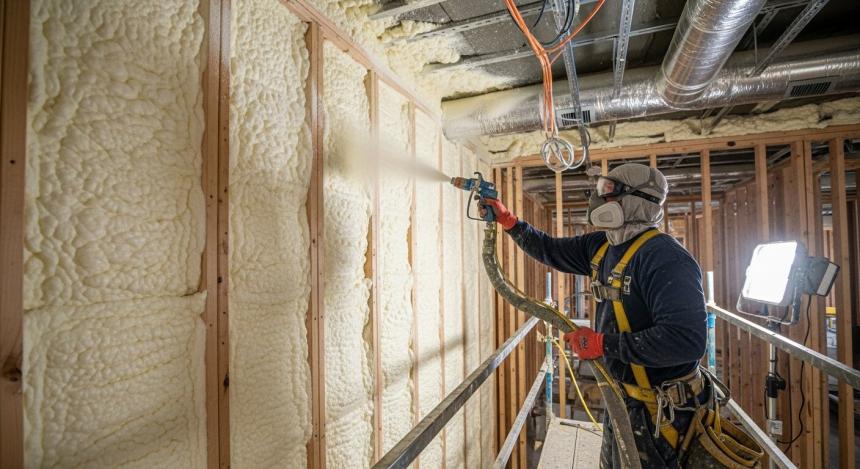
Spray foam is a liquid plastic that expands into a solid cellular mass to create a highly effective thermal envelope. It comes in two primary types: open-cell and closed-cell foam. Each variety serves a different purpose based on your structural needs and the level of moisture resistance required for your specific area.
Closed-cell spray foam is particularly dense and acts as a built-in vapor barrier. This is especially helpful in regions with high humidity or damp conditions. Because it hardens into a rigid state, it also adds structural strength to walls and rooflines. This material offers exceptional thermal resistance, outperforming almost any other product on the market today.
Open-cell spray foam is lighter and more flexible. It provides excellent sound dampening and is usually more affordable than closed-cell options. While it does not act as a water barrier, it still creates a formidable air seal that prevents drafts. This makes it a popular choice for interior walls and between floors where temperature regulation and noise reduction are both important.
Bonus Tip When you opt for spray foam, ensure the workspace is clear of sensitive electronics or uncovered furniture. The expansion process is rapid and requires a clean environment to bond correctly to your building's surfaces.
The Practicality of Blown-In Insulation Materials
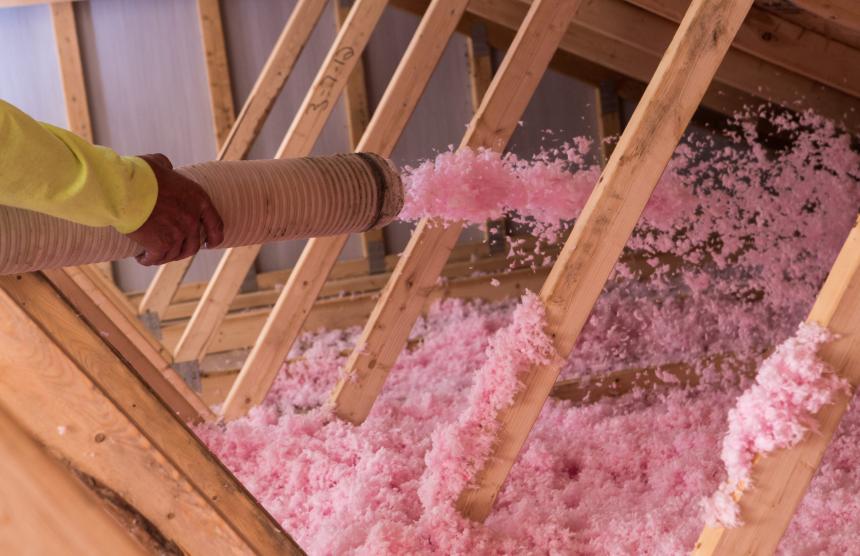
Blown-in insulation, often called loose-fill, consists of small particles of fiber or foam. It is typically made from cellulose or fiberglass. Installers use a mechanical blower to distribute the insulation evenly across floors or into wall cavities through small access holes.
Cellulose is a popular choice because it is made primarily from recycled paper treated with fire retardants. It is dense enough to provide reliable thermal resistance and is often praised for its eco-friendly composition. Many owners prefer this method because it can be installed over existing insulation to boost performance without a full tear-out.
Fiberglass loose-fill is another common option made from molten glass spun into fibers. It is naturally fire-resistant and resists settling over time. This type of insulation is excellent for reaching tight corners and irregular spaces where traditional batts would leave gaps.
Comparing Performance and Value
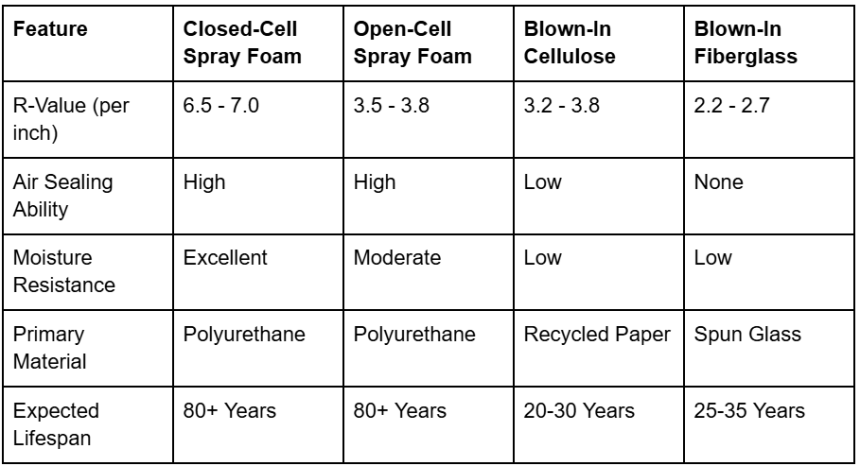
Understanding the technical differences between these materials helps you determine which one fits your needs. The following table highlights the key characteristics of each insulation type to simplify your decision.
How the Worcester Climate Affects Your Insulation Choice
Worcester experiences significant temperature swings, featuring freezing winters and humid summers. These conditions put a heavy load on heating and cooling systems. High-performance insulation acts as a shield, keeping conditioned air inside while blocking harsh New England elements.
Spray foam is highly effective at preventing ice dams, which are common in this area. By sealing gaps where warm air escapes, spray foam keeps the roof deck at a consistent temperature. This prevents snow from melting and refreezing at the eaves, protecting your gutters and roof structure from water damage.
Blown-in insulation is often used in floor joists and flat areas to create a thick thermal blanket. In a climate where the ground stays cold for months, a deep layer of cellulose or fiberglass helps maintain warm floors. This is a budget-friendly way to meet local energy codes and improve comfort. However, climate needs are only one part of the equation; you must also consider the physical constraints and history of your property.
Bonus Tip If you choose blown-in insulation, check your existing ventilation. It is vital to keep soffit vents clear so air can circulate, which prevents moisture buildup even with high insulation levels.
Factors to Consider Before Selecting Your Material
Before committing to a material, evaluate the current state of your property. Older buildings in Worcester may have knob-and-tube wiring, which generally cannot be covered by certain insulation types due to fire risks. A professional inspection can identify these hidden issues before work begins.
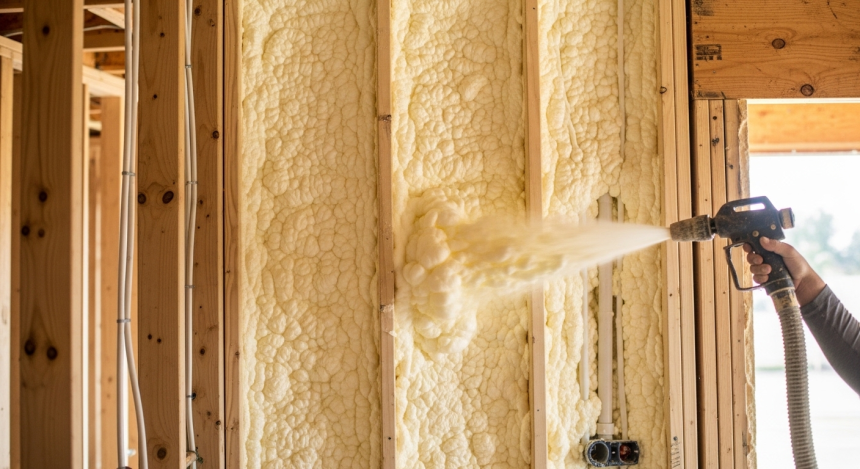
Accessibility is another major factor. If you have finished walls that you do not want to disturb, blown-in insulation is usually the best path. Installers can drill small holes and fill cavities with minimal disruption. Conversely, if you are doing a major renovation or new construction, spray foam is easier to apply while the wall studs are exposed.
Consider your long-term plans. While spray foam has a higher upfront cost, its durability and superior air sealing lead to lower energy bills over several decades. If you plan to stay in your property for many years, the investment often pays for itself. For those looking for a quick, effective upgrade on a tighter budget, blown-in materials provide immediate relief at a lower price point.
Which Insulation Type Provides the Best Return on Investment
The return on investment for insulation is measured by property value increases and decreased energy costs. Spray foam often yields a higher monthly return because it addresses air leakage. Eliminating drafts means your HVAC system runs less frequently.
Blown-in insulation offers a faster "payback period" because the initial cost is much lower. For many owners, the savings generated over three to five years will cover the entire installation cost. This makes it an attractive option for landlords or those looking to improve a property before a sale.
Both methods contribute to a quieter indoor environment. Spray foam excels at blocking high-frequency outdoor noises like traffic. Blown-in cellulose is excellent for absorbing low-frequency sounds, making it a great choice for multi-family units where privacy is a priority.
How Do You Determine the Best Path Forward for Your Building?
The final decision should balance your current budget with the physical requirements of the structure. If your property suffers from significant drafts and moisture issues, the air-sealing properties of spray foam are likely necessary. If you simply need to top off existing layers to meet modern standards, blown-in materials are a logical choice.
Evaluate how each room is used and where you lose the most heat. Professional contractors can use thermal imaging to show exactly where cold air enters your building. This data allows you to target your investment where it will have the biggest impact on your comfort and your wallet.
Professional Insulation Services for Your Property
Finding the right team is just as important as choosing the right material. For local residents, Lamothe Insulation offers expert guidance on both spray foam and blown-in options. They can help you assess your property and provide a detailed plan to improve your energy efficiency.
They are known for their precision and commitment to quality. You can reach out to them for a free quote to see which solution fits your needs best. Contact them at (508) 847-0119 or via email at [email protected] to start your property improvement. You can also find their location and reviews at https://maps.app.goo.gl/5TkKeBcraYVd4kt68 to learn more about their reputation in the community.
Frequently Asked Questions
How long does spray foam insulation last in a typical building?
Spray foam is designed to last for the lifetime of the structure, often exceeding 80 years without degrading or settling.
Can blown-in insulation be installed over existing fiberglass batts?
Yes, you can add blown-in cellulose or fiberglass over existing insulation to increase the total R-value of your space.
Is spray foam insulation effective for soundproofing between rooms?
Open-cell spray foam is an excellent sound dampener that significantly reduces the transfer of noise through walls and floors.
Does blown-in insulation attract pests or rodents?
Modern cellulose insulation is treated with borates that act as a fire retardant and naturally deter pests and insects.
How long does the installation process take for a standard property?
Most insulation projects can be completed in one to two days depending on the size of the area and the material chosen.




Windscreen Damage in Sydney: When to Repair, When to Replace, and How...