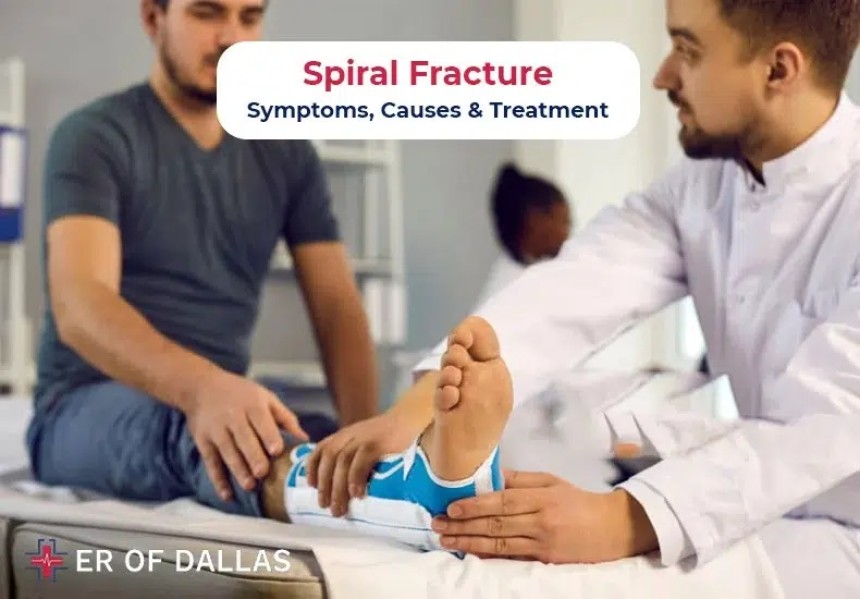

Spiral FX: Top 10 Facts About Causes, Treatment & Recovery (2025 Guide) - ER of DALLAS
Learn everything about spiral fx (spiral fracture) – causes, symptoms, treatment, and recovery. ER OF DALLAS provides expert emergency and orthopedic care for fractures.
Introduction
A spiral fx (spiral fracture) is a type of bone injury that happens when a bone is twisted with force, causing it to break in a spiral shape. This type of fracture is often seen in accidents, sports injuries, or falls. Unlike a clean break, a spiral fracture wraps around the bone, making it more complex to treat. At ER OF DALLAS, patients with such injuries receive advanced diagnostic imaging, immediate emergency care, and specialized orthopedic support to ensure safe and effective recovery.
A spiral fracture, also known as spiral fx, occurs when a long bone such as the femur, tibia, humerus, or fibula is subjected to a strong twisting force. This results in a fracture that spirals around the bone, resembling a corkscrew pattern.
- Fracture Pattern: The bone breaks in a helical (spiral) shape.
- Common Sites: Legs (tibia, fibula), arms (humerus, radius), and occasionally hips.
- Severity: It may involve complete breaks or partial fractures, sometimes extending into surrounding tissues.
Spiral fractures are caused by a rotational force applied to the bone. Common causes include:
- Sports Injuries: Football, skiing, basketball, or wrestling accidents.
- Accidental Falls: Slipping while twisting the leg or arm.
- Motor Vehicle Accidents: Sudden twisting force during impact.
- Childhood Injuries: Often linked with playground accidents.
- Occupational Hazards: Heavy machinery accidents or workplace falls.
Identifying a spiral fracture quickly is essential to prevent complications. Symptoms include:
- Severe pain at the injury site.
- Swelling and bruising.
- Bone deformity or abnormal limb position.
- Inability to move the affected limb.
- Audible "snap" or "pop" during the injury.
- In open fractures: bone protruding through the skin.
Doctors at ER OF DALLAS use advanced diagnostic tools for accurate fracture detection:
- X-rays: First-line imaging to reveal fracture patterns.
- CT Scan: Provides detailed bone structure imaging.
- MRI: Helps assess surrounding soft tissue damage.
- Physical Examination: Checking swelling, tenderness, and mobility.
Spiral fractures vary depending on severity and complexity:
- Simple Spiral Fracture – Bone breaks but remains aligned.
- Displaced Spiral Fracture – Bone fragments move out of alignment.
- Open Spiral Fracture – Bone pierces through the skin (high risk of infection).
- Comminuted Spiral Fracture – Bone shatters into multiple pieces.
- Stable Spiral Fracture – Bone remains stable and easier to treat.
At ER OF DALLAS, treatment depends on the fracture type, location, and severity.
1. Emergency Care- Stabilization of the limb.
- Pain management (IV pain relief).
- Immobilization with splints.
- Casting or Splinting: For simple, stable fractures.
- Traction Therapy: Aligns bone using pulling force.
- Open Reduction Internal Fixation (ORIF): Screws, plates, or rods are used to stabilize bones.
- External Fixation: Metal frame outside the body holds the bone in place.
- Bone Grafting: Used if bone loss or severe damage is present.
Healing time for spiral fractures varies depending on age, health, and fracture complexity.
- Recovery Time: 6–8 weeks for minor cases, up to 6 months for severe fractures.
- Rehabilitation:
- Physical therapy for restoring strength and flexibility.
- Gradual weight-bearing under medical guidance.
- Regular follow-ups with orthopedic specialists.
- Follow doctor’s instructions strictly.
- Maintain a protein-rich, calcium-rich diet.
- Avoid unnecessary pressure on the injured limb.
- Attend physical therapy sessions consistently.
If untreated or poorly managed, spiral fractures can lead to:
- Malunion (bone heals incorrectly).
- Nonunion (bone fails to heal).
- Infection (especially in open fractures).
- Nerve or blood vessel damage.
- Long-term stiffness and chronic pain.
While accidents are unavoidable, certain preventive steps can reduce the risk:
- Use protective sports gear.
- Wear non-slip shoes.
- Maintain bone health with vitamin D and calcium.
- Exercise regularly to strengthen muscles and bones.
- Follow safety measures at work and during physical activities.
ER OF DALLAS is fully equipped to handle emergency bone injuries like spiral fractures.
- 24/7 Emergency Care: Immediate treatment without long wait times.
- Advanced Imaging: On-site CT, MRI, and X-ray facilities.
- Expert Orthopedic Specialists: Skilled in fracture management and surgery.
- Patient-Centered Care: Focus on quick pain relief and recovery.
- Comprehensive Rehabilitation: Support from diagnosis to full recovery.
Q1: How serious is a spiral fracture?
A spiral fracture can be serious, especially if displaced or open. It requires immediate medical care.
Q2: How long does it take for a spiral fx to heal?
On average, 6–12 weeks, depending on severity and treatment method.
Q3: Can a spiral fracture heal without surgery?
Yes, simple and stable fractures may heal with casting, but many cases require surgical fixation.
Q4: What is the difference between spiral and oblique fractures?
A spiral fracture twists around the bone, while an oblique fracture runs diagonally.
Q5: When should I go to ER OF DALLAS for a suspected fracture?
If you experience severe pain, swelling, deformity, or inability to move a limb after injury, seek emergency care immediately.
Spiral fractures are painful and complex injuries that demand timely and specialized care. Whether caused by sports, accidents, or falls, early diagnosis and proper treatment are essential for full recovery. At ER OF DALLAS, patients receive world-class orthopedic and emergency care, ensuring the best outcomes for bone injuries.
Como Avaliar a Reputação de um Casino: Opiniões, Queixas e Sinais de C...
Como Avaliar a Reputação de um Casino: Opiniões, Queixas e Sinais de Confiança
Atlas Pro IPTV : Comprendre la Compatibilité entre Applications et App...
Atlas Pro IPTV : Comprendre la Compatibilité entre Applications et Appareils
Article France : comment trouver et lire des informations fiables sur...
Article France : comment trouver et lire des informations fiables sur l’actualité français...