
“Song to the Mankind”
"Song to the Mankind" is a powerful modern anthem that fuses the revolutionary spirit of Percy Bysshe Shelley with the humanistic unity of Paul Laurence Dunbar. By incorporating the cascading awareness of Lawrence Tribble and the cautionary realism of Robert Polito, the poem serves as a radical critique of the digital epoch. It exposes how modern systems utilize geopolitical caging, neo-colonial resource plunder, and algorithmic exploitation to turn human connectivity into a tool of corporate and state control. Ultimately, it stands as a stirring call for global digital sovereignty, urging humanity to unite and reclaim its labor to build a free, harmonious world.
أَعُوذُ بِاللّٰهِ مِنَ الشَّيْطَانِ الرَّجِيمِ
بِسۡمِ ٱللهِ ٱلرَّحۡمَـٰنِ ٱلرَّحِيمِ
اللہ کے نام سے شروع جو بڑا مہربان نہایت رحم کرنے والا ہے
In the name of ALLAH, the Most Gracious, the Most Merciful
“Song to the Mankind”
The Digital Hive: Neo-Feudal Exploitation and the Global Networked Awakening
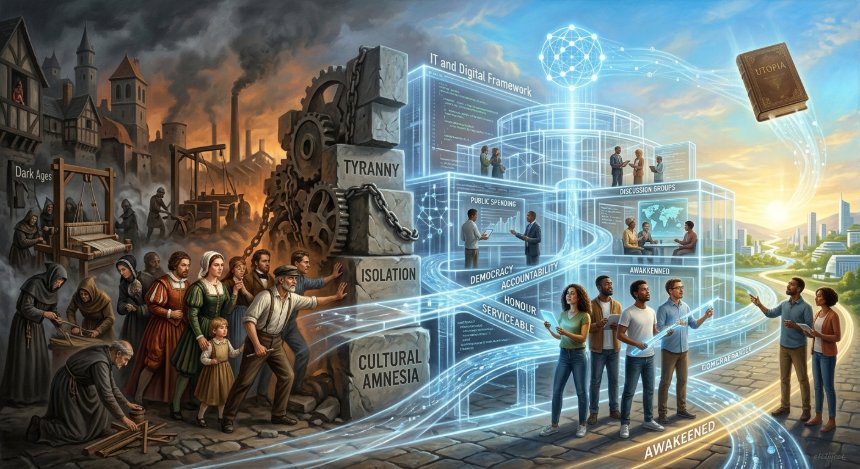
In 1819, following the bloody suppression of working-class protestors at the Peterloo Massacre, Percy Bysshe Shelley penned "Song to the Men of England." His poem exposed a fundamental paradox of the Industrial Revolution: that the working class toiled to produce the food, clothes, and weapons of society, only to be left starved, naked, and defenseless by the "stingless drones" of the ruling aristocracy. More than two centuries later, the core conflict Shelley identified has evolved but remains fundamentally unchanged. The modern world has transitioned from fields and textile mills to data centers and digital networks. The contemporary anthem, "Song to the Mankind," synthesizes the romantic radicalism of Shelley with the humanistic unity of Paul Laurence Dunbar and the cascading consciousness of Lawrence Tribble. By filtering these classical perspectives through the cynical, cautionary lens of Robert Polito, it delivers a profound critique of the digital age: a global economic system that uses geostrategic caging, corporate resource plunder, and algorithmic exploitation to weaponize the shared infrastructure of humanity against the very people who built it.
I. The Paradigm of Global Awakening and the Networked Matrix
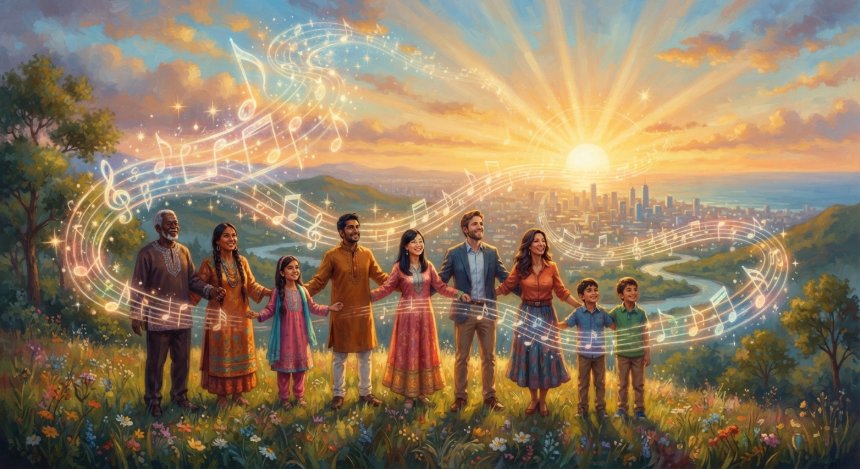
The poem begins not with a grievance, but with a vision of human potential. Drawing from Dunbar's foundational premise that "life is sweet if we are united and free," the narrative establishes solidarity as a natural, joyous state of human existence. However, the unique contribution of the modern text is how it pairs Lawrence Tribble’s concept of cascading awareness with the physical infrastructure of the 21st century.
Tribble’s original architecture relied on physical proximity—one person awakening a next-door neighbor, who then awakens a village, then a city, and finally a country. In the digital epoch, this geometric progression is supercharged "through fiber and air." The internet, theoretically designed as a borderless matrix of minds, allows a spark of resistance or an awakening of consciousness in one corner of the globe to reverberate instantly across continents.
Yet, this ease of connectivity introduces a critical vulnerability. Because global connection is simple, it becomes a prime target for control. The poem immediately issues a warning that this borderless matrix must be actively defended from "cruel tech conglomerates and tyrants." The infrastructure meant to liberate humanity has become the very cage used to contain it, transforming a tool of universal solidarity into a centralized panopticon.
II. Geostrategic Caging and Neo-Colonial Resource Plunder
Before analyzing the digital realm, the poem grounds its critique in the physical realities of modern geopolitics. The exploitation of the common man is structurally maintained by what can be termed "geostrategic caging." Ordinary citizens find their lives and futures dictated by lines traced on a diplomat’s map. Proxy conflicts—engineered by modern empires and executed by corrupt local puppets—turn ancestral lands into theaters of war, trapping the working class in endless cycles of violence and displacement.
This geopolitical caging serves an economic purpose: it facilitates the raw plunder of mineral resources. While state apparatuses enforce artificial borders and high tariff walls to restrict the movement and wealth of ordinary people, multinational corporate syndicates operate without borders. They drain developing regions of the foundational elements of the modern economy:
- Cobalt mined under brutal conditions to power electronic vehicles and smartphones.
- Gold extracted to back global financial systems.
- Oil siphoned away to fuel industrialized empires.
This modern manifestation of Shelley's "lords who lay ye low" demonstrates that traditional colonialism has merely evolved into a corporate-state alliance, extracting physical wealth from the earth while leaving the local populace with nothing but a "bitter crust from your own soil."
III. Digital Feudalism: Exploitation of Labor and Attention
The most innovative layer of the poem is its translation of Shelley’s worker’s paradox into the information age. In the 19th century, the laborer sowed the seed and wove the robes. In the 21st century, the primary currency of exploitation is digital labor and human attention.
The poem challenges the software engineers, content creators, and everyday users—the "minds of the globe"—who spend their lives coding and building. These creators construct massive digital networks with "keystrokes and care," only to see those networks monopolized by "digital lords" who use them to censor voices and centralize power. This is the birth of digital feudalism, where tech monopolies act as landlords over the digital spaces where humanity gathers.
Furthermore, this system exploits not just the conscious labor of creators, but the very psychology of consumers. The poem notes that from the "digital cradle to the online grave," individuals are trapped in a cycle of feeding, clicking, and saving. Algorithmic drones systematically drain human attention and personal data, treating them as commodities to be harvested. The reward for this endless engagement is an illusion of fulfillment: a "ceaseless scroll," a "bitter feed," a "targeted ad," and a "notification raw." These digital breadcrumbs are engineered to manipulate human behavior, keeping users compliant and dependent on the tech master’s law.
IV. The Digital Theft Paradox and the Call to Data Sovereignty
The climax of the poem mirrors the turning point of Shelley's original work, establishing a direct structural parallel between the industrial worker and the digital user:
Industrial Paradox (Shelley)Digital Paradox ("Song to the Mankind")The seed ye sow, another reapsThe data ye sow, another reapsThe wealth ye find, another keepsThe wealth ye find, another keepsThe robes ye weave, another wearsThe networks ye weave, another wearsThe arms ye forge, another bearsThe tools ye forge, another bearsThis direct comparison exposes the total alienation of modern humanity from its digital output. Users generate billions of data points daily, creating the immense financial valuations of tech giants, yet they retain no equity, ownership, or control over the networks they populate or the tools they build.
The solution, therefore, is a revolution of digital sovereignty. The poem transitions from an indictment into a strategic directive: "Sow data,—but let no tyrant reap." This is a call to dismantle centralized, monopolistic platforms in favor of decentralized networks, open-source cooperatives, and community-governance models. Just as Shelley urged workers to forge weapons for their own defense, the modern anthem commands humanity to forge digital tools that remain firmly in the hands of the global community.
V. The Cautionary Reckoning: Resisting Performative Awareness
Before reaching its ultimate resolution, the text introduces a crucial layer of existential and political gravity, borrowing from the disillusioned, reflective atmosphere of Robert Polito’s "The Great Awakening." Polito's thematic influence shifts the poem away from pure utopian optimism to confront a dark modern reality: the capacity of digital systems to trivialize genuine human tragedy.
In a hyper-connected world, catastrophic human losses risk being buried away in the deep ocean of infinite content. Genuine historical and systemic struggles are frequently reduced to media cycles, dismissed by some as mere performative hype ("Much Ado") or swallowed entirely by a return to societal apathy ("Big Sleep"). The poem warns against the desensitization of the modern observer, where earnest pleas for justice vanish like ghosts in a simulated, corporate-owned internet space.
By labeling the machinations of tyrants and tech lords as "cold, boyish games," the text strips the global elite of their perceived sophistication. It serves as a necessary warning that awareness alone is insufficient. If a global awakening is treated merely as a digital trend or a simulation, the real-world sacrifices of millions will "avail nothing under the morning dew."
Conclusion: A Vision for an Undivided Globe
"Song to the Mankind" serves as a vital conceptual bridge between the industrial past, the digital present, and a cautionary future. It illustrates that whether oppression manifests as a landlord hoarding grain, an empire extracting cobalt, or an algorithm harvesting attention data, the structural mechanism remains identical: the extraction of value from the many for the enrichment of the few.
Ultimately, the poem resolves its internal tension with a final surge of democratic optimism. By navigating through the corporate cages of diplomat maps, the digital shadows of algorithmic control, and the performative traps of the internet age, it envisions a world reborn. The defense of digital networks is ultimately revealed to be synonymous with the defense of human consciousness. When the global matrix of minds is liberated from tyrannical monopolies, humanity can finally achieve what Dunbar promised: a sweet, harmonious, and prosperous life where "one human heart, triumphant, beats for all."
Poem "Song to the Mankind" (AI Generated)
O People of the World, look up and see,
You should know that life could be so sweet;
Why don't you know the hours could speed so fleet?
Let me tell you, life is sweet if we are united and free.
O People of the World, if only one of us is awake,
That single awakened soul soon awakens another,
And the second quickly awakens his next-door brother;
Then from the next village, to the next city, across the country it breaks,
Until the spark multiplies to the globe, and the whole world awakes!
Through fiber and air, our global connection is simple and easy to weave,
A borderless matrix of minds where the shackled can finally achieve;
Yet stand in the breach to defend it, shield the light from the corporate hand,
Lest the cruel tech conglomerates and tyrants cage the soul of every land!
Why trace the lines on a diplomat’s map,
Where proxy conflicts lay the common man's trap?
Why let geostrategic empires cage your land,
And bleed your borders by a puppet's hand?
Why build the borders and the high tariff walls,
While the wealth of your soil to the syndicate falls?
Wherefore let corporate empires plunder and drain
The cobalt, the gold, and the oil for their gain?
Minds of the globe, why do you code and build
For the digital lords by whom your voices are stilled?
Wherefore construct with keystrokes and care
The massive networks your tyrants wear?
Wherefore feed and click and save,
From the digital cradle to the online grave,
Those algorithmic drones who drain
Your attention like rain, your data like wine?
What find ye for your ceaseless scroll?
A bitter feed to consume your soul?
A targeted ad, a notification raw,
To satisfy a tech master's law?
The data ye sow, another reaps;
The wealth ye find, another keeps;
The networks ye weave, another wears;
The tools ye forge, another bears.
Sow data,—but let no tyrant reap;
Find wealth,—let no impostor keep;
Weave networks,—for your own communities to wear;
Forge tools,—in your own hands to bear!
Yet what of the losses we bury away in the deep,
While some call it Awakening, others Much Ado or Big Sleep?
Shall our tragedies vanish like ghosts in a simulated space,
Leaving earnest, unanswered pleas raining down on a deadened place?
We cannot let everything be lost to the cold, boyish games of the few,
Lest the sacrifices of millions avail nothing under the morning dew.
Raise high the standard of a world reborn,
Where every soul greets freedom's golden morn.
No chains shall bind, no digital shadows fall—
One human heart, triumphant, beats for all!
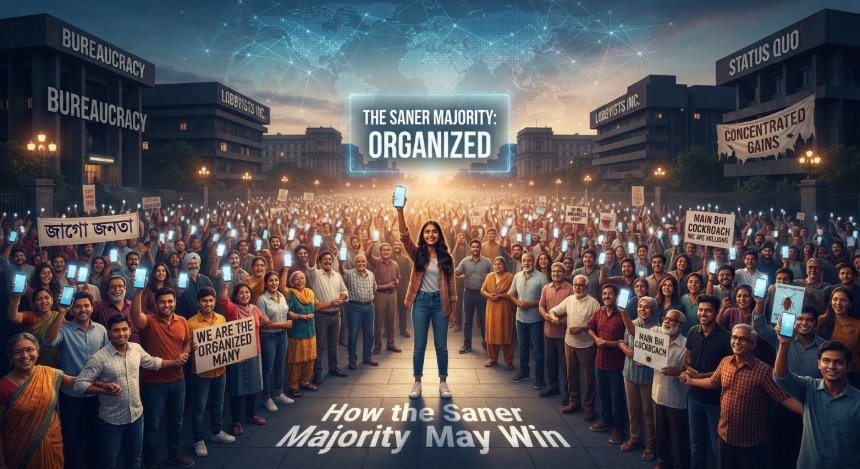
Stanza Wise Commentary
Stanza 1: The Invitation to Unity
The opening stanza establishes humanity's shared potential for a joyful, collaborative existence. Borrowing from Paul Laurence Dunbar's "The Awakening," this verse sets a tone of optimistic urgency. It contrasts the fleeting nature of time with the inherent sweetness of life, positioning universal solidarity as the ultimate antidote to human suffering.
Stanza 2: The Ripple Effect and Defense of Digital Connectivity
This expanded stanza illustrates how grassroots awareness spreads exponentially and finds a powerful accelerator in modern digital infrastructure. It fuses Lawrence Tribble's geometric progression metaphor (individual to neighbor, village to city) with a contemporary reality: technological networks make global connection seamless and instantaneous ("through fiber and air"). Crucially, it shifts from an observation into a battle cry, warning that this vital, borderless matrix must be actively defended from censorship and containment by authoritarian governments and monopolistic tech conglomerates.
Stanza 3: Geopolitical Caging
This stanza critiques how arbitrary borders and proxy wars exploit ordinary citizens. It exposes how macro-level statecraft and geostrategic posturing turn local lands into conflict zones. The "puppet's hand" represents corrupt local regimes or elite factions executing agendas dictated by foreign empires at the expense of their own citizens' lives.
Stanza 4: Resource Plunder and Economic Barriers
The focus here shifts to how international trade policies and corporate syndicates strip developing regions of raw wealth. By explicitly naming critical modern materials like cobalt alongside gold and oil, the poem directly targets neo-colonial exploitation. Tariff walls are presented as artificial instruments designed to trap local labor while multinational corporations freely extract mineral wealth.
Stanza 5: The Exploitation of Digital Labor
This section updates Percy Bysshe Shelley's critique of manual labor for the information age. Instead of physical weavers and farmers, the targets are tech developers and digital creators. The stanza questions why creative tech workers willingly construct monopolistic, centralized networks that end up censoring, de-platforming, or silencing their own creator communities.
Stanza 6: The Monetization of Human Attention
This stanza tackles the psychological extraction embedded within the modern attention economy. The "digital cradle to the online grave" represents lifelong data tracking. By modifying Shelley's original imagery, human attention and digital footprints are framed as resources aggressively drained by algorithms to generate corporate profit.
Stanza 7: The Illusion of Digital Consumption
This verse confronts consumers directly about the empty rewards of modern digital immersion. The "bitter feed," "targeted ad," and "notification raw" represent the psychological breadcrumbs users receive in exchange for their time. It highlights how consumer behavior online is constantly modified to serve the financial laws of major technology platforms.
Stanza 8: The Digital Theft Paradox
A direct modern translation of Shelley's iconic worker's paradox. It outlines the complete alienation of modern internet users and tech workers from their digital output. The user generates data, builds community networks, and designs open-source tools, yet the financial equity and structural control remain concentrated in the hands of platform owners.
Stanza 9: Digital Sovereignty and Reclamation
This serves as a strategic call to action for technological self-governance and decentralized infrastructure. It shifts the poem from a critique into active resistance. It advocates for alternative frameworks—such as decentralized networks, open-source cooperatives, and community-owned platforms—where data and tools directly benefit the people who create them.
Stanza 10: The Cautionary Reckoning (The Robert Polito Theme)
This penultimate stanza introduces a somber, reflective warning against performative awareness and the trivialization of real human tragedy. Drawing from the disillusioned atmosphere of Robert Polito’s "The Great Awakening," the verse contrasts monumental historical sacrifices with a world that often reduces them to digital noise—dismissing deep systemic struggles as mere hype ("Much Ado") or slipping back into collective apathy ("Big Sleep"). It directly critiques the detached, clinical nature of modern conflicts, warning that if we treat human suffering like a virtual simulation or a cold game played by the powerful, the genuine sacrifices of millions will be erased without ever achieving real justice or structural change.
Stanza 11: The Vision of a Harmonious Global Society
The poem concludes with a hopeful vision of a free, democratic global society working in harmony. It brings the journey full circle by overcoming physical chains, trade barriers, and digital surveillance ("digital shadows"). The final metaphor of "one human heart" calls for global solidarity, peace, and shared prosperity for all mankind.
Vigortrix Review: Is It Worth Trying? Results, Pricing & Where to Buy
What Is Vigortrix? Vigortrix is a men's vitality dietary supplement designed to support e...


Golden Touch Fusion CBD – Premium Quality and Natural Wellness Support
What Are Golden Touch Fusion CBD? Golden Touch Fusion are a cannabidiol (CBD) supplement...