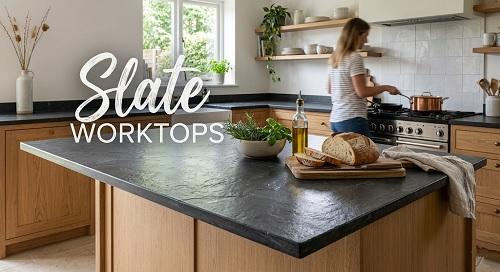

Slate Worksurface Ideas for Rustic and Industrial UK Kitchens
Slate worksurfaces add natural character and a distinctive finish to rustic and industrial UK kitchens. With their dark tones, textured appearance, durability, and easy maintenance, they create a practical yet stylish focal point for modern and traditional kitchen designs.
Slate isn't the first material most homeowners think of when they start planning a new kitchen, and that's exactly its appeal. A slate work surface brings a texture and depth that quartz and granite simply don't offer: a naturally matte, almost velvety finish that suits kitchens built around warmth and character rather than polish and shine. If you're drawn to rustic or industrial interiors, it's well worth a proper look.
What Makes Slate Different
Slate is a fine-grained natural stone that splits into thin, layered sheets, giving it a distinctive textured surface unlike the polished uniformity of granite or quartz. It typically comes in deep charcoal and near-black tones, occasionally with subtle green or grey undertones depending on the quarry, and its naturally matte finish absorbs rather than reflects light, which is precisely why it suits moodier, more atmospheric kitchen designs so well.
Unlike granite, slate has almost no visible crystal structure or heavy veining, giving it a much more consistent, understated appearance across a full worktop run. For homeowners who love the idea of dark grey kitchen worktop but find polished black granite a touch too glossy or formal, slate offers a genuinely different, more tactile alternative.
Where Slate Worksurfaces Work Best
Slate suits certain kitchen styles particularly well:
- Rustic and farmhouse kitchens, where its raw, quarried texture pairs beautifully with exposed beams, reclaimed wood and Belfast sinks.
- Industrial-style kitchens, especially alongside exposed brick, black metal fittings and factory-style pendant lighting.
- Scandinavian-influenced kitchens, where slate's muted, matte tone complements pale wood cabinetry and minimal styling.
- Utility and boot rooms, where its hard-wearing, slightly textured surface is both practical and visually distinctive.
It also pairs particularly well with warm wood cabinetry, since the contrast between slate's cool, dark tone and the natural grain of oak or walnut creates a grounded, layered look that's become a defining feature of 2026's earthier, more textured kitchen trends.
Practical Considerations Before You Choose Slate
Slate is a genuinely hard-wearing material, but it does behave a little differently to quartz or granite day to day:
- Naturally heat-resistant: slate copes well with hot pans, making it a practical choice around a hob.
- Some porosity: slate benefits from an occasional oiling or sealing treatment to maintain its rich, dark colour and resist staining, similar to granite.
- Texture is part of the character: a honed or riven slate work surface has a natural, slightly uneven texture that some homeowners love and others find less practical for very fine food prep; a smoother, calibrated finish is available if that matters to you.
- Shows dust and pale marks like other dark worksurfaces; flour and light-coloured spills are more visible than they would be on a pale worktop, though this is easily wiped away.
Slate Worksurface Cost in the UK
Slate sits in a broadly similar price bracket to standard granite, generally ranging from £250 to £500 per square metre supplied and fitted, depending on the finish and thickness chosen. It's a comparatively niche material in the UK market compared with quartz or mainstream granite, so it's worth allowing a little extra lead time when sourcing slabs, and confirming with your fabricator that they have direct experience working with it, as the splitting and honing process differs from other stone types.
Combining Slate With Other Materials
Slate doesn't have to cover an entire kitchen to make an impact. Many homeowners use it as a feature worksurface on an island or a run of base units, while keeping quartz or granite on the main prep and hob area for easier day-to-day maintenance. This hybrid approach gives you the tactile, moody character of slate exactly where you'll appreciate it most, without exposing your busiest work zone to a material that needs slightly more routine care.
Getting the Look Right
Because slate varies more in texture than colour, seeing and feeling an actual sample is genuinely important before committing; photographs rarely convey the surface texture accurately.
Specialist worktop suppliers such as KML Worktops can source and template slate worksurface alongside more mainstream materials, making it easier to compare a slate sample directly against granite or quartz options before making a final decision.
In Conclusion, slate worksurface won't suit every kitchen, and it was never meant to; it's a deliberate, characterful choice for homeowners who want their kitchen to feel raw, grounded and a little different from the quartz-and-granite mainstream. For the right rustic or industrial space, that's exactly the point.
Vigortrix Review: Is It Worth Trying? Results, Pricing & Where to Buy
What Is Vigortrix? Vigortrix is a men's vitality dietary supplement designed to support e...




The Connection Between Employee Development and Organizational Perform...
Golden Touch Fusion CBD – Premium Quality and Natural Wellness Support
What Are Golden Touch Fusion CBD? Golden Touch Fusion are a cannabidiol (CBD) supplement...