
Self Pierce Riveting Solutions for Efficient Manufacturing
Explore reliable self pierce riveting solutions from Heron-Welder for strong joints, efficient production, and demanding automotive applications.
In modern manufacturing, joining different materials efficiently and securely is essential for achieving lightweight designs and dependable products. Self pierce riveting provides an effective mechanical joining method for applications where conventional welding may not be ideal. Heron-Welder delivers professional joining and automation solutions designed to support demanding production environments, helping manufacturers improve consistency, productivity, and process reliability.
What Makes Self Pierce Riveting Valuable?Manufacturers increasingly work with combinations of aluminum, high-strength steel, coated materials, and other lightweight sheet metals. These materials can present challenges for traditional joining processes, particularly when heat input needs to be controlled.
Self pierce riveting creates a mechanical joint by driving a specially designed rivet through multiple layers of material without requiring a conventional pre-drilled hole. The rivet penetrates the material and forms an interlock on the underside, creating a secure connection.
This approach can offer several advantages:
- Efficient joining of multiple material layers
- Reduced preparation requirements
- Suitable for lightweight automotive structures
- Consistent mechanical fastening
- Reduced thermal influence on joined materials
- Compatibility with automated production systems
- Improved manufacturing flexibility
Heron-Welder focuses on advanced industrial joining equipment that helps manufacturers integrate dependable fastening technologies into modern production lines.
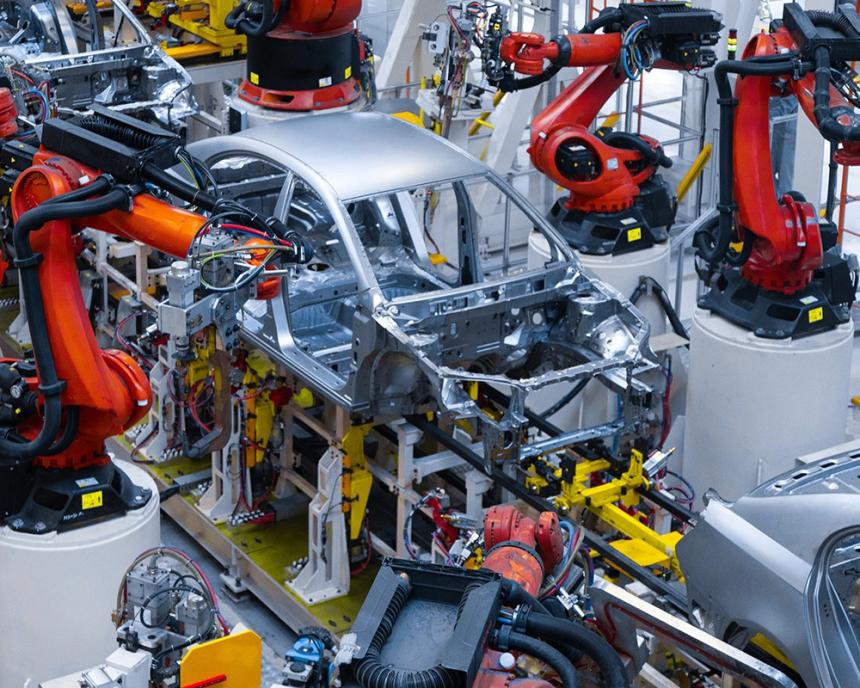
Supporting Lightweight Vehicle ManufacturingThe automotive industry has become a major application area for self pierce riveting. As vehicle manufacturers pursue lighter structures while maintaining strength and safety, joining dissimilar materials has become increasingly important.
Aluminum and high-strength steel can be combined in strategic areas of vehicle structures to achieve weight reduction and performance objectives. However, these material combinations may require joining technologies capable of handling different material characteristics.
Self pierce riveting provides manufacturers with a mechanical joining option that can be incorporated into automated assembly processes. Heron-Welder's equipment solutions are designed to support industrial applications where repeatability, production speed, and process control are essential.
Advantages for Automated ProductionAutomation plays a major role in modern manufacturing. Production lines need joining systems that can operate consistently while integrating with robotic equipment and other automated processes.
A professionally configured self pierce riveting system can support:
Consistent Joint FormationAutomated control helps maintain repeatable rivet placement and joining conditions throughout production.
Faster Production CyclesEfficient riveting operations can help manufacturers maintain production throughput while reducing unnecessary manual handling.
Improved Process ControlModern equipment can provide controlled joining parameters, helping manufacturers establish consistent production standards.
Flexible IntegrationRiveting equipment can be incorporated into automated assembly environments, including robotic production cells.
Heron-Welder's focus on industrial automation allows manufacturers to pursue joining solutions that complement broader production strategies.
Why Equipment Selection MattersChoosing suitable riveting equipment requires careful consideration of the application. Material combinations, thicknesses, rivet specifications, required joining force, cycle times, and production layout can all influence equipment selection.
Manufacturers should evaluate several factors before implementing a new system:
- Material type and thickness
- Number of material layers
- Rivet size and design
- Required joint strength
- Production volume
- Required cycle time
- Automation requirements
- Tool accessibility
- Component geometry
- Quality control expectations
Heron-Welder takes an application-oriented approach to industrial joining equipment. This helps manufacturers identify solutions that align with their specific production requirements instead of relying on a one-size-fits-all configuration.
Improving Production EfficiencyProduction efficiency depends on more than machine speed. Reliable joining processes should minimize unnecessary rework, support consistent quality, and integrate smoothly with the overall manufacturing workflow.
A well-designed self pierce riveting process can contribute to these goals by providing repeatable mechanical fastening without some of the preparation requirements associated with conventional joining methods.
For high-volume manufacturing, this can translate into more streamlined assembly operations. Automated riveting can also reduce repetitive manual tasks, allowing production personnel to focus on monitoring and higher-value activities.
Heron-Welder supports manufacturers seeking to improve joining efficiency through professional equipment designed for modern industrial applications.
Heron-Welder: A Partner for Advanced JoiningHeron-Welder has extensive experience in industrial welding and joining technologies. Its product portfolio includes resistance welding equipment, riveting systems, automated machinery, and solutions developed for demanding manufacturing applications.
This broad technical capability gives manufacturers access to equipment solutions suited to different production requirements. Heron-Welder emphasizes dependable machine construction, practical engineering, and process-oriented solutions that can support long-term manufacturing objectives.
For businesses considering self pierce riveting, working with an experienced equipment provider can simplify the transition from manual or conventional joining processes to a more automated production approach.
Building a More Flexible Manufacturing ProcessModern manufacturers need joining technologies that can adapt to evolving materials and production requirements. Lightweight structures, mixed-material assemblies, and increasing automation are changing how components are manufactured.
Self pierce riveting offers a practical solution for applications requiring reliable mechanical joining across multiple material layers. When combined with appropriate equipment and process control, it can support efficient and repeatable production.
Heron-Welder provides manufacturers with the technology and industrial expertise needed to pursue advanced joining applications. Its focus on automation, equipment reliability, and application-specific engineering makes it a strong choice for businesses seeking to modernize their manufacturing operations.
ConclusionSelf pierce riveting can help manufacturers address the challenges of lightweight construction, mixed-material assembly, and high-volume production. Its ability to create reliable mechanical joints without conventional pre-drilling makes it valuable across modern industrial applications.
With Heron-Welder's professional joining equipment and automation expertise, manufacturers can develop more efficient, consistent, and production-ready fastening processes. Investing in the right equipment can help businesses improve assembly performance while preparing their production lines for the evolving demands of modern manufacturing.
#SelfPierceRiveting
#SelfPierceRivet
#RivetingMachine
#RivetingTechnology
#IndustrialRiveting
Modern Biomass Station Upgrades for Reliable Power Generation
Modern Biomass Station Upgrades for Reliable Power Generation

Dish Network Installers Near Me: Professional Satellite Dish Installat...